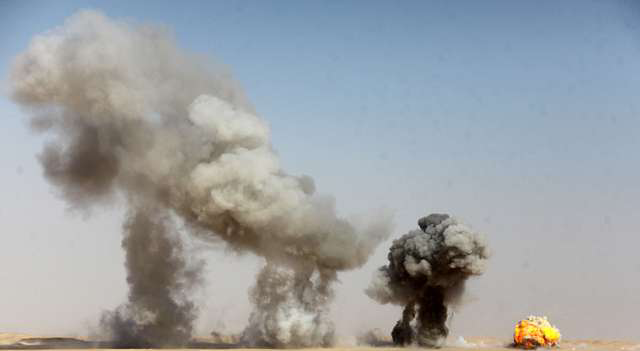
Legalities didn’t stop the U.S. campaign against Iran. Trump simply declared that a ceasefire between the two countries had been in place since April 7, 2026, effectively arguing that no Congressional authorization is needed to continue military operations.
Following the same logic, recent strikes on Iranian radar installations and drone command centers in Goruk and on Qeshm Island shouldn’t reset the clock simply by being justified as retaliation for Iran’s “aggressive actions,” including the downing of a U.S. MQ-1 drone over international waters.
What matters is that the Strait of Hormuz remains closed, and while investors celebrate record highs in the S&P 500 and Nasdaq, the economic costs of the conflict continue to accumulate.
Starting with inflation, headline PCE inflation accelerated to 3.8% year-over-year in April from 3.5% previously, while core PCE remained stuck at 3.3% — still far above the Federal Reserve’s 2% target. Thus, even with Kevin Warsh leading the Fed, hopes for meaningful rate cuts look increasingly misplaced.
Could the good news, then, be that the growth picture is also weakening, as the weaker the employment figures are this week, the stronger the case for eventual monetary easing in the name of preserving full employment becomes?
Under normal circumstances, yes. The problem now is that if the conflict drags on and the Strait of Hormuz remains blocked, oil prices could move dramatically higher. Strategic petroleum reserves are finite, spare production capacity is limited, and there is still no realistic substitute for oil at the scale required by the global economy.
Should that happen, inflationary pressures could intensify further, forcing regulators to raise interest rates — something financial markets would find much harder to ignore. And with reports that Iran has suspended talks with the U.S. amid the escalation of hostilities in Lebanon, this no longer appears to be an unlikely scenario.
Leave a Reply