Author: Matthew Collom

  • Astrid Intelligence plc Expands Its Role in the Decentralized AI Economy

    Astrid Intelligence plc Expands Its Role in the Decentralized AI Economy

    The rapid convergence of artificial intelligence and blockchain infrastructure is creating an entirely new technological landscape. At the centre of this emerging ecosystem is Astrid Intelligence plc (AQSE:ASTR), a company focused on building and investing in infrastructure for decentralized machine intelligence networks.

    In a recent interview on The Watchlist, Chairman Mark Creaser and CEO Siam Kidd outlined the company’s strategy, its involvement in the rapidly growing Bittensor ecosystem, and how it intends to capture value from the next generation of AI technologies.

    AI Investment — Not a Crypto Gamble

    Despite operating within a blockchain-based environment, Astrid Intelligence positions itself first and foremost as an AI investment company.

    Creaser explained that while the infrastructure supporting future AI systems may rely heavily on blockchain technology, the company’s core focus is firmly on AI businesses themselves.

    The confusion, he noted, comes from the fact that many next-generation AI systems will operate using crypto-based financial rails. As autonomous AI agents become more common, traditional banking systems may no longer be practical for machine-to-machine transactions.

    Rather than opening bank accounts or using debit cards, AI agents will likely transact using blockchain networks and digital tokens. In that context, crypto becomes infrastructure, not the end goal.

    “Astrid Intelligence makes investments into AI businesses,” Creaser said. “We’re not gambling on crypto, we’re investing in the future of machine intelligence.”

    Understanding Bittensor

    A major focus for Astrid Intelligence is the Bittensor ecosystem, a decentralized network designed to coordinate and reward machine learning systems.

    Kidd described Bittensor as difficult to explain, much like trying to explain the internet in the late 1990s, but offered a simple analogy.

    Think of it as similar to Alphabet Inc., the technology holding company behind Google, YouTube, and DeepMind.

    Alphabet sits at the top as a corporate umbrella with numerous projects operating beneath it. Investors who want exposure to that ecosystem can simply buy Alphabet stock.

    Bittensor operates in a similar way,  but within a decentralized blockchain environment.

    Instead of traditional shares, the ecosystem’s value capture mechanism is its native token, TAO. Beneath that umbrella are dozens of AI-focused projects, each working on different machine learning challenges.

    Currently, there are more than 100 individual AI sub-networks within Bittensor, each contributing specialized capabilities to the broader decentralized intelligence network.

    Astrid’s Strategy: Building the Infrastructure

    Astrid Intelligence has been operating within the Bittensor ecosystem for over a year and has become a recognized participant in the space.

    Rather than focusing solely on token speculation, the company is pursuing a multi-layer strategy designed to capture value throughout the decentralized AI stack.

    Its approach includes:

    1. Infrastructure Development
    Astrid is building and acquiring critical infrastructure, including validator nodes and other systems that help power the Bittensor network.

    2. Ecosystem Investment
    The company is also investing directly into AI projects within the ecosystem, allowing it to participate in the growth of emerging machine intelligence startups.

    3. Network Participation
    Through validator operations and ecosystem participation, Astrid plays an active role in maintaining and scaling the network.

    A Parallel to the Early Internet

    To illustrate Astrid’s positioning, Creaser compared the opportunity to the early days of the internet.

    During the late 1990s and early 2000s, the companies that generated lasting value were often those that built the infrastructure, the data centres, fiber optic cables, and networking backbone that allowed the internet to scale.

    Astrid Intelligence aims to play a similar role in the decentralized AI economy.

    Rather than simply building applications, the company is helping construct the “roads and railways” of decentralized artificial intelligence, the foundational systems that will enable machine learning networks to grow.

    A Rapidly Expanding Ecosystem

    The decentralized AI sector is still small relative to the broader AI industry, but it is expanding rapidly.

    Centralized AI platforms, dominated by large technology companies, have grown at an extraordinary pace. However, Kidd believes decentralized alternatives may soon accelerate even faster.

    In his words, when comparing growth curves, centralized AI is steep, but decentralized AI could represent a near-vertical expansion as adoption increases.

    For Astrid Intelligence plc, the goal is to position itself early within this emerging ecosystem and build the infrastructure that could underpin the next generation of AI systems.

    Learn more about Astrid Intelligence plc: https://astrid.global

  • Sterling Digital: Building the “Off-Grid” Future of Bitcoin

    Sterling Digital: Building the “Off-Grid” Future of Bitcoin

    The digital infrastructure landscape is shifting, and Sterling Digital PLC (AQSE:ASIC) is positioning itself at the intersection of energy independence and high-performance computing. In a recent interview on The Watch List, CEO Stefan Michaelides laid out a vision that moves beyond simple crypto mining toward a resilient, vertically integrated infrastructure model.

    As the company marches toward its first production in Q2 2026, here are the key takeaways from the strategy driving Sterling Digital’s growth.


    Not Just Miners, But Infrastructure

    While many companies in the space act as “tenants” on a power grid, Sterling Digital is taking the role of the “landlord” and “utility” combined. By focusing on stranded natural gas in the U.S., the company is generating its own electricity at the source.

    • Vertical Integration: Sterling isn’t just buying hardware; they are taking gas out of the ground and converting it into electricity on-site.
    • Cost Control: This “off-grid” approach bypasses traditional grid fees and price volatility, securing some of the lowest power costs in the industry—estimated at approximately $0.005 per kWh.
    • ESG Alignment: By utilizing gas that would otherwise be flared or vented (releasing potent methane), Sterling turns an environmental liability into a productive digital asset.

    The Power of Optionality: Bitcoin + AI

    A major milestone recently announced was the purchase of 450 new-generation ASIC mining servers, representing roughly 193,500 TH/s of capacity. However, the hardware is only part of the story. The company is deploying modular, hydro-cooled data centers designed for flexibility.

    “It’s not so much about chasing trends, more about future-proofing the company.” — Stefan Michaelides, CEO

    While Bitcoin remains the core focus, this “compute-agnostic” infrastructure allows Sterling to pivot workloads between Bitcoin mining and AI compute depending on which offers the highest returns at any given time. This resilience is key to surviving the cyclical nature of digital assets.

    The Road to 2026

    The transition from conceptual planning to physical execution is well underway. With the generators secured and the ASIC servers purchased below budget (leveraging market timing), the team is now focused on the ultimate milestone: Energization.

    The target for “turning on the lights” and mining the first Bitcoin is Q2 2026. For investors, the story is shifting from a “concept” phase to a “production” phase, backed by a management team with a track record in energy and fintech.

    For more information visit https://sterlingdigital.com/

  • AEW UK REIT Delivers Strong Results as Strategy Continues to Outperform

    AEW UK REIT Delivers Strong Results as Strategy Continues to Outperform

    AEW UK REIT (LSE:AEWU)has reported another quarter of robust performance, underpinned by disciplined asset management, counter-cyclical investing, and a long-standing value-led strategy. In a challenging environment for UK real estate, the company posted earnings of 2.36 pence per share alongside a NAV total return of just over 2%, extending its record of consistent delivery.

    Speaking on The Watchlist, Laura Elkin, Portfolio Manager at AEW UK REIT, attributed the outperformance to the REIT’s sector-agnostic, value-focused approach.

    “We are stock pickers and asset managers first and foremost,” Elkin said. “Being sector-agnostic allows us to look across the whole UK commercial property market and make counter-cyclical purchases and disposals. That’s how we’ve generated strong returns over the last ten and a half years.”

    Asset Management Driving Income Growth

    A core pillar of AEW UK REIT’s success has been active asset management. The company had achieved 11 consecutive quarters of valuation uplift and three years of income growth, even as the broader UK real estate market has remained relatively flat.

    Much of this performance has been driven by hands-on initiatives such as refurbishments and lease restructuring. With projects like the Queen Square refurbishment underway, AEW UK REIT continues to focus on enhancing income and long-term shareholder value.

    Elkin noted that this strategy is paying off:

    “The income growth and valuation gains we’re seeing are predominantly coming from our hard work in active asset management. That’s what really excites me about the future performance of the portfolio.”

    Capital Available for Attractive Buying Opportunities

    Following the recent disposal of the Hitchin asset, AEW UK REIT now has approximately £6.8 million of capital available for reinvestment. According to Elkin, the current market offers compelling opportunities for value investors.

    “Average commercial property values are at their lowest point since our IPO. That presents a lot of attractive buying opportunities, and we’re excited to take advantage of those to drive future value.”

    This counter-cyclical positioning allows the REIT to deploy capital when pricing is most advantageous, reinforcing its long-term strategy.

    High Income and Disciplined Capital Recycling

    AEW UK REIT has also been able to reissue treasury shares at a premium to NAV, something few UK REITs have managed recently. Elkin believes this reflects strong investor confidence, driven by two key factors: income and capital discipline.

    Firstly, the REIT has paid one of the highest dividends across UK diversified REITs for over a decade.

    “We’ve delivered a consistently high level of income for ten and a half years. That consistency is being recognised in our share rating,” she said.

    Secondly, the company actively recycles capital. Once an asset has reached the end of its business plan and its value has been maximised, AEW UK REIT looks to sell and reinvest.

    “We crystallise profits and redeploy the capital into new opportunities. I think that gives the market greater confidence in our net asset value,” Elkin added.

    Positioned for the Next Phase of Growth

    With a proven strategy, strong income credentials, and capital ready to deploy into a value-rich market, AEW UK REIT appears well positioned to continue delivering for shareholders, even as the broader UK property sector remains under pressure.

    As Elkin concluded, the combination of active asset management, disciplined capital recycling, and counter-cyclical investing remains central to AEW UK REIT’s ability to outperform over the long term.

  • In 2026, the conversation around Artificial Intelligence has shifted. We are moving past the era of the “chatbot” and entering the era of the AI Digital Worker.

    In 2026, the conversation around Artificial Intelligence has shifted. We are moving past the era of the “chatbot” and entering the era of the AI Digital Worker.

    The following article summarizes the key insights from a recent webinar hosted by sundae_bar (LSE:SBAR), exploring how their collaboration with the decentralized network Bittensor is revolutionizing how businesses hire and deploy AI.


    2026: The Year of the AI Agent

    For several years, AI was largely viewed as a tool for “chatting.” However, as Gartner recently predicted, 2026 is the year that AI agents become an enterprise staple. Research shows that 40% of enterprises are expected to integrate agents into their workflows this year, a staggering leap from just 5% in 2025.

    sundae_bar, is positioned at the centre of this shift. As a premier marketplace for AI agents, it is where businesses come to hire digital workers capable of performing end-to-end, real-world tasks. Central to this strategy is the development of a single generalist AI agent, designed to operate like a dependable digital employee, able to summarise information, identify priorities, make recommendations, and take action across business systems such as CRMs, documents, and internal tools.

    The Problem with “Closed” AI

    A major theme of the webinar was the danger of centralized AI. When innovation stays behind the closed doors of “gatekeeper” corporations like Google or Meta, progress is limited by the speed and interests of those few companies.

    sundae_bar’s solution? Decentralization.


    Powered by Bittensor: A Global Dev Team

    To build a superior product at record speed, sundae_bar utilizes Bittensor, a decentralized network for digital intelligence. Specifically, sundae_bar operates Subnet 121 (SN121), which serves as the “engine” behind their marketplace.

    This partnership provides three distinct advantages:

    1. Incentivized Competition: Developers worldwide compete to build and improve sundae_bar’s generalist AI agent. The best-performing version wins, and its developers are rewarded in TAO, Bittensor’s native token.
    2. Compounded Progression: Because the system is open and competitive, and all contributors build on the same agent, the agent doesn’t just improve – it improves daily.
    3. A Global Workforce: Through Subnet 121, sundae_bar essentially has a global team of developers building and refining their product simultaneously.

      “Down the road, when people ask how sundae_bar built such a strong product so quickly, the answer will be Bittensor. Our agent improves continuously because an entire open network is competing to build, test, benchmark, and push it forward. Ultimately, we are here to build the best agent for businesses.”

    From “Subnet” to “Storefront”

    While the technical magic happens on Bittensor, business owners don’t need to be blockchain experts to benefit. sundae_bar, bridges the gap between complex tech and commercial utility:

    • The Backend (Subnet 121): This is the training ground where the Generalist AI Agent is built, tested, and optimized.
    • The Frontend (sundae_bar Marketplace): This is where businesses discover and “hire” the best version of that agent, tailored to their specific needs.

    The goal is to provide a Generalist Agent that can handle end-to-end workflows – from HR and marketing to complex data management – without the business owner needing to understand the underlying code.

    The Bottom Line

    The opportunity for businesses in 2026 is clear. The demand for digital workers is high, and the technology to provide them is finally scalable. By combining the open, incentivized innovation of Bittensor with a user-friendly marketplace, sundae_bar is turning the “Year of the AI Agent” into a reality for enterprises of all sizes.

  • Ajax Resources Accelerates South American Growth: Drills Turning at Eureka and Strategic Moves in Brazil

    Ajax Resources Accelerates South American Growth: Drills Turning at Eureka and Strategic Moves in Brazil

    In a period of rapid operational expansion, Ajax Resources (AQSE:AJAX) is making significant strides across its South American portfolio. Following a landmark year of acquisitions, the company has officially commenced its maiden drilling program at the historic Eureka Gold and Copper Project in Argentina, while simultaneously laying the groundwork for a “quantum leap” in Brazil.

    In a recent sit-down on The Watchlist, Ajax CEO Ippolito Ingo Cattaneo outlined a roadmap that transitions the company from an explorer into a developer with near-term production potential.

    Unlocking 400 Years of History at Eureka

    The spotlight is currently on the Eureka Project in the Jujuy Province of Argentina. Despite a 400-year history of production, the site has remarkably never been subjected to modern drilling.

    Ajax is currently executing an initial 1,500-meter program, the first phase of a planned 5,500-meter campaign. The ultimate goal is to validate historical, non-compliant studies that suggested significant copper mineralization.

    • Target: Publishing a JORC-compliant Maiden Mineral Resource Estimate (MRE) by the first half of 2026.
    • Potential: Historical data has assessed up to 62 million tonnes of copper at 1% (roughly 600,000 tonnes of copper).

    “It’s one of the best times to be drilling a gold and copper project,” Ingo-Cattaneo noted, highlighting the company’s strong funding position and the favourable mining climate in the Jujuy province.

    A “Quantum Leap” in Brazil: The Pereira Velho Project

    While work intensifies in Argentina, Ajax has shifted its growth trajectory through the acquisition of the Pereira Velho Gold Project in Alagoas State, Brazil.

    This deal is more than just an asset acquisition; it is a strategic partnership with Appian Capital Advisory, one of the world’s premier private equity groups in the mining sector. By taking their consideration in equity, Appian will become one of Ajax’s largest shareholders, a major vote of confidence in the junior miner’s management.

    “Pereira represents a quantum leap in our company’s development,” said Ingo-Cattaneo. “We are looking to replicate the success of the nearby Serrote mine, which Appian developed and sold for $420 million in 2025.”

    The immediate objective at Pereira Velho is to upgrade the current in-house estimate of 110,000 ounces to a JORC-compliant 350,000 ounces, targeting a fast-track to open-pit production.

    Expanding the Pipeline: Leon and Beyond

    Ajax is also maintaining momentum at the Leon Project in Salta, Argentina. This copper-silver asset comes with over $20 million in historical expenditure and 10,000 meters of previous drilling.

    The company has secured an option on highly favorable terms ($100,000 in shares for the option, with a $3 million final payment in four years). Ingo-Cattaneo views Leon as another near-term production story, with a goal to expand the current 6.6 million-tonne resource to a 10 million-tonne milestone.

    The Road Ahead

    With gold reaching new historical peaks and copper demand surging for the global energy transition, Ajax Resources finds itself at a critical value inflection point.

    By targeting under-explored assets with rich historical data and partnering with industry giants like Appian, Ajax is moving quickly to prove up its resources. For shareholders, the next 12 months will be defined by a steady flow of drill results and the transition toward formal resource estimates across two of South America’s most mining-friendly jurisdictions.

    For more information on the current drill programs and project updates, visit ajaxresources.com.

  • Delta Gold Technologies Makes Market Debut with Aim to Solve Quantum’s “Scalability Crisis”

    Delta Gold Technologies Makes Market Debut with Aim to Solve Quantum’s “Scalability Crisis”

    LONDON — Delta Gold Technologies PLC (AQSE:DGQ) has officially entered the public markets, listing on the Aquis Growth Market to fund a radical new approach to quantum computing hardware. In a recent interview on The Watchlist, CEO Mike Jones detailed the company’s mission to move beyond laboratory-scale quantum demonstrations and toward a commercially viable, stable qubit.

    A New Approach to the “Qubit Elusive”

    While tech giants like Amazon, Microsoft, and Google have dominated headlines with quantum milestones, Jones argues that the fundamental “building block” of the industry—the qubit—is still far from perfect. Traditional quantum computers are notoriously fragile, requiring extreme environments to maintain stability.

    “Everybody knows about bits in your basic computer—a zero and a one,” Jones explained. “A qubit is either a zero, a one, or something in between at the same time. It’s a very hard thing to get your head around… but the basic physics of what a qubit is going to be made from is still elusive.”

    Delta Gold’s strategy hinges on nanoscale gold-based technology. By utilizing the unique physical properties of gold at the atomic scale, the company aims to host induced superconductivity, creating a more robust and scalable memory state for quantum processors.


    Strategic Roadmap: The 18-Month Plan

    Following a successful £2.5 million fundraise, the company has set clear measurable goals for its first two years as a public entity:

    • Intellectual Property Protection: Over the next 12 months, the primary focus is on securing patent filings for their nanoscale innovations.
    • Proof of Concept: By the 18-month mark, the company expects to advance its research toward a physical proof-of-concept device.
    • Academic Collaboration: Central to this roadmap is a three-year research partnership with the University of Toronto.

    “We have some of the smartest people in the world working on that very basic physics concept,” said Jones.

    The project is led by Professor Harry Ruda, Director of the Centre for Advanced Nanotechnology at the University of Toronto. Ruda, a globally recognized authority who will chair the Global Conference on Quantum Computing in Switzerland this summer, provides Delta Gold with access to high-level expertise and specialized laboratory equipment that would be prohibitively expensive to build in-house.


    Navigating the Multi-Billion Dollar Landscape

    Despite competing in a space where “Big Tech” spends billions annually, Delta Gold sees a clear path for a lean, research-driven enterprise. Rather than attempting to build a complete mainframe computer from scratch, the company is positioning itself as an IP powerhouse.

    “Creating a stable, scalable qubit could be enormously interesting to the bigger players,” Jones noted. The company’s business model focuses on licensing and partnerships, offering its core hardware breakthroughs to existing industry leaders who are already struggling with error correction and scalability.

    With its market capitalization recently exceeding £10 million following its debut, Delta Gold Technologies is betting that a small company focusing on fundamental physics can provide the missing link in the global race for quantum supremacy.

    For more information on the company’s research roadmap and intellectual property developments, visit the official website at deltagoldtech.com.

  • IXICO Delivers Solid FY25 Growth and Backs AI to Drive Margin Expansion in Neuroimaging

    IXICO Delivers Solid FY25 Growth and Backs AI to Drive Margin Expansion in Neuroimaging

    Bram Goorden, CEO of IXICO (LSE:IXI), recently provided an update on the company’s financial performance and strategic vision following the release of its financial results for the year ending September 30, 2025. The interview highlighted IXICO’s continued focus on AI-driven neuroimaging and its commitment to scalable, technology-led solutions for neurological diseases.

    Setting the Stage for Sustainable Double-Digit Growth

    IXICO, which specializes in AI-driven imaging analysis as a service for pharma and biotech companies developing novel drugs, reported a strong financial turnaround. Goorden noted a 13% growth for the past year and is predicting at least 15% for the upcoming year. He emphasized that the primary business objective is to expand the market and achieve “double digit growth numbers and that we make them sustainable.”

    Leveraging Technology for Margin Expansion

    A key component of IXICO’s forward-looking strategy is scaling its AI-driven analytics to expand margins. Goorden described this as a “very exciting” second phase, which will involve “leveraging our technology and partnering our technology also with some of these other service providers in the ecosystem.”

    Over the next 12 to 24 months, the company plans to not only grow its core CRO (Clinical Research Organization) services but also collaborate with external partners to maximize the use of its proprietary technology, thereby achieving greater profitability.

    Dominance in Neurodegenerative Disease

    When addressing the competitive landscape in neuroimaging, Goorden clearly defined IXICO’s strategic differentiator: a deep and long-standing focus on neurodegenerative diseases—specifically Alzheimer’s, Parkinson’s, and rare CNS (Central Nervous System) conditions.

    After 20 years in the field, Goorden stated that IXICO is an “absolute leader” in this niche. By focusing on neurology, the company is deliberately “staying away… from that red ocean which oncology or cardiology could represent.” This specialized approach is reinforced by a continuous commitment to investing in novel algorithms on their platform, which serves as a core competitive advantage in supporting research for CNS diseases.

    Strategic Market and Disease Prioritization

    Geographically, IXICO remains a global business, serving the development programs of major pharmaceutical and biotech firms worldwide. While “most of our revenues are coming from the other side of the pond… so in the US,” the company anticipates further expansion, particularly in the biotech arena along the Northeast coast of the US, alongside continued strength in Europe.

    In terms of therapeutic areas, the company is committing to going “much deeper” into the dementia space, especially Alzheimer’s, citing a clear unmet need and a place where pharma is “really doubling down their investments.” Furthermore, IXICO plans to maintain its traditionally strong position in rare CNS diseases like Huntington’s disease, where they believe they “own that market.”

    In summary, Goorden concluded that IXICO’s strategy involves “expanding further but always in that neurodeenerative disease space which we do believe is very fertile ground.”

  • IntelliAM AI Posts Strong First-Half Momentum as ARR Climbs and Strategic Partnerships Deepen

    IntelliAM AI Posts Strong First-Half Momentum as ARR Climbs and Strategic Partnerships Deepen

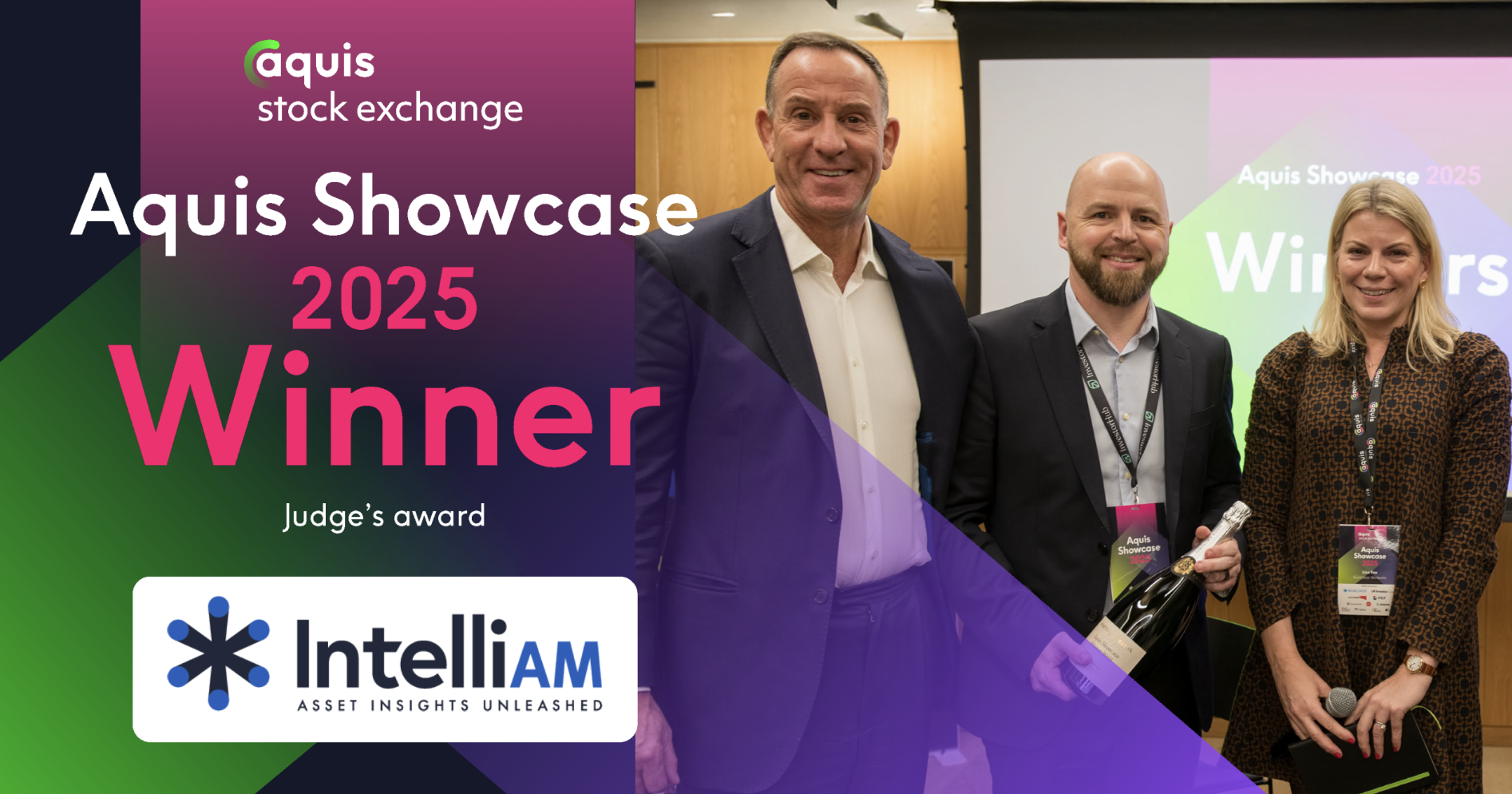
    IntelliAM AI (AQSE:INT) has released a confident first half trading update, signalling continued progress toward scale and profitability in its mission to bring AI-driven optimisation to global industrial operations. Speaking on The Watchlist, Chief Operating Officer Keith Smith walked through the company’s expanding annual recurring revenue (ARR), strengthening customer relationships, and growing roster of strategic partners, all which position IntelliAM for accelerated growth through FY27.

    ARR Growth Driven by Both New Wins and Customer Expansions

    ARR has risen to approximately £1.18 million, a milestone Smith describes as both “diverse and sustainable.” According to him, 20% of the uplift came from new customer wins, reflecting the successful conversion of proofs-of-value into long-term contracts. However, the bulk of the momentum, around 80%, has been generated from within the existing customer base through product upsells, contract transitions to more digital solutions, and usage expansion across factories and production lines.

    Smith emphasised that IntelliAM’s customers are “very sticky,” with most sitting at Stage Three of the company’s six-stage AI adoption journey. Meaningful value remains ahead as these organisations expand their use of the platform deeper into operations. As investment increases in sales and marketing, Smith expects the balance of growth to shift further toward new customer acquisition.

    Cash Position, Discipline, and the Road to Profitability

    With £778,000 in gross cash, IntelliAM continues to prioritise disciplined, responsible growth. The company expects to hit cash flow break-even during FY27, becoming cash flow positive by the end of that fiscal year. Smith added one caveat: planned international expansion, particularly into the U.S. market, will likely prompt a fundraising round. However, he stressed that IntelliAM aims to raise capital “from a position of strength,” not before achieving operational self-sufficiency.

    Strategic Partnerships Set the Stage for Scalable Revenue

    A central theme of IntelliAM’s update is the strengthening of partnerships across industrial and FMCG markets:

    SKF: Embedding AI Into Global Industrial Products

    IntelliAM’s work with SKF, a major global industrial company and one of the world’s largest bearing manufacturers, stands out as a particularly high-potential channel. By embedding IntelliAM’s AI into SKF’s products, the company gains access to 17,000 distributors worldwide, significantly expanding its reach without additional sales or marketing spend.

    CTC: A Gateway Into the U.S. Sensor Market

    The newly announced partnership with American sensor manufacturer CTC allows IntelliAM to sell American-made sensors in the U.S., unlocking what Smith identifies as a key strategic market. In addition to product alignment, CTC’s distributor network provides an immediate commercial infrastructure for growth.

    FMCG and Beyond: Repeatable Value at Scale

    IntelliAM is also deepening relationships with major food and beverage companies—an FMCG segment where repeatable production processes make ROI both measurable and scalable. The company is developing case studies and templates that can be replicated not only across FMCG players but also in adjacent sectors. Additionally, IntelliAM has begun expanding into the building supply market, opening yet another avenue for multi-sector commercial traction.

    Across all these partnership categories, Smith expects significant expansion over the next 12 to 24 months.

    A Clearer Path Toward a Global Industrial AI Platform

    IntelliAM’s latest trading update offers investors and industry observers a clearer picture of a company moving steadily toward scale. With a growing ARR base, sticky customer relationships, a disciplined financial approach, and powerful distribution partnerships, IntelliAM appears well positioned to accelerate its trajectory through FY27.

    As Smith closed the interview: “We’re investing in the right areas, and we’re doing it from a strong base. The foundations are in place for real, scalable growth.”

  • B Hodl CEO Freddie New on Building a Bitcoin Treasury and Generating Secure Yield Through the Lightning Network

    B Hodl CEO Freddie New on Building a Bitcoin Treasury and Generating Secure Yield Through the Lightning Network

    In a rapidly evolving digital-asset landscape, institutional Bitcoin strategies are increasingly under the spotlight. One company gaining attention is (AQSE:HODL) B Hodl, which recently expanded its holdings to 155 Bitcoin as it pushes toward becoming one of the largest Bitcoin treasuries on the Aquis exchange. But as the company grows its position, investors are asking an important question: How does B Hodl generate yield while managing risk in such a volatile market?

    On The Watch List, CEO Freddie New sat down with host Ricky Lee to unpack the company’s approach to yield generation, treasury security, and long-term sustainability.


    A Self-Custodial Approach to Bitcoin Yield

    With yield strategies across the crypto industry often tied to lending, leverage, or third-party platforms, each carrying its own risks, Freddie New was quick to emphasize that B Hodl chooses a different path.

    “The way that we generate revenue from our Bitcoin is via the Lightning Network, and we do it in an entirely self-custodial and secure way,” he explained.

    The Lightning Network, Bitcoin’s second-layer payment system, facilitates fast, low-cost transactions by routing payments through liquidity channels. To keep those channels functioning efficiently, liquidity must be locked into them, this is where B Hodl steps in.

    Their business model is straightforward:

    1. Raise equity
    2. Buy Bitcoin
    3. Deploy that Bitcoin into Lightning Network channels
    4. Earn routing fees, similar to how Visa and Mastercard earn interchange fees

    Crucially, this setup avoids the typical counterparty risks associated with lending or staking.

    “If anything goes wrong and the channel is closed, the Bitcoin comes directly back to us,” New emphasized. “We’re not lending it to anyone.”


    Best-in-Class Safeguards and Risk Management

    Risk management is a major focus for B Hodl, and according to New, the team was intentionally built around deep experience surviving crypto bear markets.

    The company’s core safeguards include:

    Ultra-lean operations

    B Hodl maintains very low operating expenses. Following its IPO, the company reports four years of cash runway, giving the team breathing room to continue building during market downturns.

    Multi-signature, multi-jurisdiction cold storage

    All Bitcoin held by the company is protected through a multi-sig, multi-device, multi-jurisdiction security protocol, the same one used by well-established UK exchange CoinCorner.

    No counterparty exposure in yield generation

    Because Lightning Network channels are non-custodial, capital always returns to B Hodl’s wallet when channels close.


    Targeting Consistent, Predictable Bitcoin Yield

    When asked about the future contribution of Lightning yield to operating cash flow, New revealed early results that exceeded expectations.

    “Our initial results have been throwing off about 6% annualized yield,” he said. “We were initially modeling slightly lower than that.”

    Maintaining a consistent yield through different market environments is a priority, and B Hodl is already preparing multiple complementary strategies on the Lightning Network. Only the first of these strategies has been publicly announced so far, with additional details coming soon.


    Looking Ahead

    As institutional interest in Bitcoin infrastructure deepens, B Hodl is positioning itself as a disciplined treasury manager focused on security, sustainability, and real utility on the Lightning Network.

    The combination of self-custody, low operating risk, and Lightning-based revenue could set a new benchmark for publicly listed Bitcoin treasury businesses.

    For updates and deeper insights into the company’s growth, visit https://bhodl.com/.

  • Yellow Cake PLC Strengthens Uranium Position with $175 Million Raise Amid Surging Investor Demand

    Yellow Cake PLC Strengthens Uranium Position with $175 Million Raise Amid Surging Investor Demand

    Yellow Cake PLC (LSE:YCA), a leading uranium investment company, has announced the successful completion of a $175 million capital raise, surpassing its initial target of $125 million. The move reinforces the company’s strategic foothold in the uranium market as global investor interest in nuclear energy continues to rise.

    In an interview with Ricky Lee on The Watchlist, CEO Andre Liebenberg discussed the company’s recent fundraising success, future uranium purchases, and the evolving dynamics of the uranium spot market.

    Strong Demand Drives Oversubscribed Raise

    Liebenberg explained that the original goal was to raise $125 million, enough to fund Yellow Cake’s 2025 purchase option with Kazatomprom, Kazakhstan’s state-owned uranium producer, along with additional working capital.
    However, strong investor appetite prompted the company to increase the offering to $175 million, reflecting growing confidence in uranium as a long-term energy commodity.

    “The deal we have with Kazatomprom allows us to buy up to $100 million worth of uranium per year,” Liebenberg said. “Because we had very strong demand, we upsized the issue to $175 million.”

    While the excess funds cannot be directly applied to the existing 2025 option, Liebenberg noted that the company could deploy capital opportunistically in the spot market or allocate funds toward its 2026 option, which opens on January 1, 2026.

    Exposure Without Leverage

    Discussing risk management, Liebenberg emphasized that Yellow Cake provides investors with pure exposure to uranium prices, without the complexity or leverage associated with mining operations.

    “We don’t trade the market,” he explained. “If the commodity goes up, we go up. If it goes down, we go down. We offer one-to-one exposure to the uranium price.”

    Unlike uranium producers, which face operational and permitting risks, Yellow Cake’s model is physically backed by uranium holdings, providing intrinsic value tied directly to the commodity itself.

    “We can’t go to zero because the uranium price can’t go to zero,” Liebenberg added.

    Liquidity and Investor Flexibility

    Addressing investor liquidity, Liebenberg highlighted that Yellow Cake shares are actively traded, offering a straightforward exit mechanism.

    “We trade over a million shares a day.about $7 million in daily liquidity,” he said. “So investors have an easy means of entering or exiting.”

    While the company has conducted share buybacks in the past, Liebenberg indicated that current market conditions make such actions unnecessary.

    “At the moment, we’re trading at a pretty tight discount, so it wouldn’t make sense to pursue buybacks right now,” he said.

    Looking Ahead

    With the uranium market experiencing heightened volatility and renewed attention from clean-energy investors, Yellow Cake PLC is strategically positioned to capitalize on future opportunities.

    For more information on the company’s capital deployment strategy and uranium investment outlook, visit yellowcakeplc.com.

    Disclaimer:

    This content is for informational purposes only and does not constitute financial, investment, or other professional advice. It should not be considered a recommendation to buy or sell any securities or financial instruments. All investments involve risk, including the potential loss of principal. Past performance is not indicative of future results. You should conduct your own research and consult with a qualified financial advisor before making any investment decisions. Some portions of this content may have been generated or assisted by artificial intelligence (AI) tools and been reviewed for accuracy and quality by our editorial team.


    About The Watchlist

    The Watchlist features in-depth interviews with leaders across global markets, exploring key investment themes, emerging trends, and corporate strategies shaping the financial landscape.

    To book a Watchlist interview on ADVFN contact – [email protected]