Author: The Market Link

  • From Strategy to Scale: AEG Signals Accelerated Growth Through Proposed Bitdeer Partnership

    From Strategy to Scale: AEG Signals Accelerated Growth Through Proposed Bitdeer Partnership

    In the rapidly evolving digital infrastructure sector, scale has long been a defining factor, but speed is increasingly critical. The ability to translate strategic agreements into operational capacity and revenue streams may ultimately separate industry leaders from the rest. AEG Plc’s (LSE:AEG) recently announced Letter of Intent with Bitdeer represents an important step in that direction, offering insight into the company’s intended growth trajectory.

    At the center of this development is AEG’s proposed partnership with Bitdeer, a recognized participant in the global digital infrastructure and mining ecosystem. While still subject to final agreements and customary conditions, the intent of the collaboration is to enhance AEG’s execution capabilities, with a focus on accelerating deployment timelines while progressing toward revenue generation.

    A key anticipated benefit of the arrangement is improved operational efficiency. By aligning with an established, large-scale partner, AEG expects to reduce the need to source multiple individual clients and instead focus on delivering infrastructure at scale. Bitdeer is expected to contribute hardware and operational expertise, which could streamline deployment and improve speed to market, an important factor in a sector where timing can materially influence returns.

    Commenting on the proposed partnership, Paul Elliott, CEO of Active Energy Group plc, said: “This is a defining step forward for Active Energy. Partnering with a Nasdaq-listed global leader such as Bitdeer materially accelerates our strategy and validates the strength of our infrastructure platform.

    Crucially, this partnership provides us with access to large-scale mining equipment and operational capability without the need for significant upfront capital investment. This allows us to scale quickly, efficiently and in line with our infrastructure-first model.

    Our focus now is on disciplined execution and scaling this platform towards our 100MW target and beyond.”

    The prospective partnership also reflects a strategic alignment in terms of capability and scale. Access to advanced hardware, if realized, may support improved efficiency and stronger returns per megawatt. This would allow AEG to concentrate on its core focus of infrastructure development while benefiting from the technological capabilities of its partner.

    From a financial standpoint, AEG anticipates a dual-layer revenue model, subject to final structuring. This would potentially include stable income derived from hosting services, complemented by revenue-sharing mechanisms linked to high-performance computing activities such as Bitcoin mining. Together, these components are expected to provide a combination of baseline cash flow and performance-driven upside.

    As the platform develops, AEG expects this balance to evolve, with infrastructure-led revenues providing stability and performance-linked revenues offering scalability. Improvements in hardware efficiency and operational performance could further enhance long-term potential.

    Looking ahead, AEG is also exploring opportunities beyond its current focus, particularly in areas aligned with growing demand for artificial intelligence (AI) workloads. The proposed partnership reflects a shared strategic direction, which may support expansion into broader compute and data infrastructure applications over time.

    While the agreement remains at a preliminary stage, it signals AEG’s intention to move from strategic planning toward execution. If formalized, the partnership could support faster deployment, stronger operational alignment, and a scalable revenue framework.

    As the industry continues to evolve, the ability to execute efficiently will remain a key differentiator. AEG’s latest move indicates its ambition to position itself among those shaping the next phase of digital infrastructure growth.

    For more information, visit https://aegplc.com/
  • The Quiet Revolution Powering the Creator Economy

    The Quiet Revolution Powering the Creator Economy

    In today’s digital landscape, it’s easy to assume the biggest competition is happening on-screen, viral videos, trending reels, and endless streams of content. But the real battle is unfolding behind the scenes, where platforms are racing to build smarter, faster, and more seamless tools for creators.

    At the heart of this shift is a simple but powerful idea: success in content creation is no longer just about what you produce, it’s about the ecosystem that helps you produce it.

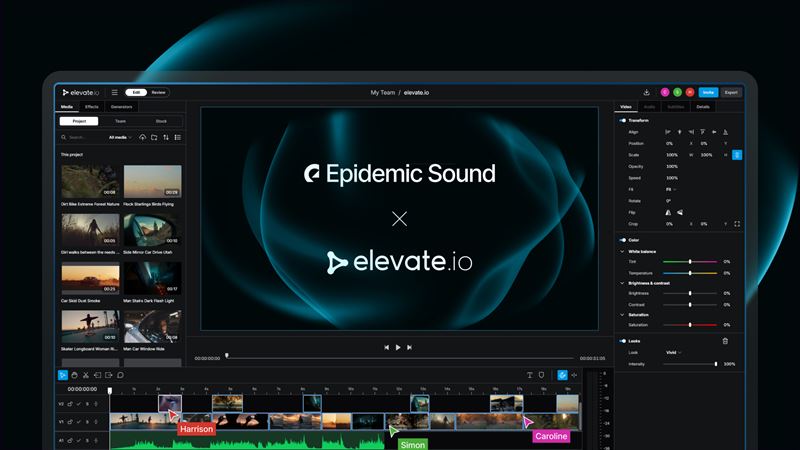
    A recent conversation with Ian McDonough, co-founder and executive chairman of Blackbird PLC (LSE:BIRD), highlights how this evolution is reshaping the industry. Through its browser-based editing platform, elevate.io , the company is leaning into partnerships as a key driver of growth and innovation.

    Turning Friction into Opportunity

    For many creators and marketing teams, one of the biggest challenges isn’t editing, it’s everything around it. Music licensing, for example, has long been a source of uncertainty and risk. Using the wrong track can mean demonetization or even legal trouble.

    That’s where integrations like the one with Epidemic Sound come in. By embedding a fully licensed, high-quality music catalogue directly into the editing workflow, elevate.io  removes a major point of friction. Creators no longer have to leave the platform or second-guess their choices; they can focus purely on storytelling.

    This kind of seamless experience does more than save time. It builds trust. And in a crowded market, trust is what keeps users coming back.

    Building More Than a Product

    What sets emerging platforms apart today isn’t just features, it’s how those features connect. elevate.io  is expanding beyond standalone tools by integrating services like OpenAI for voice and AI capabilities, alongside stock media libraries and audio solutions.

    The goal is clear: reduce the need for creators to jump between multiple apps. Instead, everything they need, from editing and captioning to asset sourcing, lives in one place.

    Even more exciting is the role of AI in this ecosystem. Features like auto-captioning are just the beginning. Future developments aim to index and understand video content itself, making it searchable, reusable, and easier to repurpose across formats. For creators managing large libraries, this could be transformative.

    Partnerships as a Growth Engine

    For newer entrants, competing with established giants isn’t about outspending them, it’s about outmanoeuvring them. Partnerships offer a powerful shortcut.

    By collaborating with companies that already have large user bases, platforms like elevate.io  gain access to built-in distribution channels. At the same time, partners benefit from new ways to reach creators through integrated workflows.

    It’s a mutually reinforcing model: better tools attract more users, and more users attract stronger partners. Over time, the ecosystem itself becomes the product.

    The Bigger Picture

    What’s emerging is a shift from isolated tools to interconnected platforms. Creators aren’t just choosing software; they’re choosing environments where everything works together effortlessly.

    And as this ecosystem-driven approach continues to evolve, one thing is becoming clear: the future of content creation won’t be defined by who makes the best tool, but by who builds the most powerful network around it.

    Behind every polished video is an invisible infrastructure. And that’s where the real innovation, and competition, is happening.

    For more information visit – https://www.blackbirdplc.com/

  • TheraCryf Strengthens Ox-1’s Path to Market with Patent Expansion and Scalable Manufacturing Breakthroughs

    TheraCryf Strengthens Ox-1’s Path to Market with Patent Expansion and Scalable Manufacturing Breakthroughs

    In biotechnology, success is not defined by science alone. True progress happens when innovation is supported by strong intellectual property, dependable manufacturing, and a clear path to scale. That alignment is now coming into focus at TheraCryf plc (LSE:TCF) as the company advances toward clinical readiness.

    At the heart of this progress is its lead orexin-1 (Ox-1) receptor antagonist, the company’s lead asset targeting substance use disorders, an area with significant unmet need. This is already a multibillion-dollar market and continues to grow, highlighting both the scale of the opportunity and the potential to make a meaningful difference in patients’ lives.

    One of the most important recent developments is the submission of a new process patent for Ox-1. This builds on existing protection that already extends into the late 2030s and could now push exclusivity even further into the future. For potential partners and investors, this extended protection increases the long-term value of the asset and strengthens confidence as the company approaches the next stage of development.

    Manufacturing progress has been equally encouraging. Moving from laboratory production to human grade material is a critical and often difficult step in drug development. TheraCryf has successfully achieved this on its first attempt, producing more than the targeted amount and doing so ahead of schedule. This result points to a process that is not only effective but also reliable and well controlled.

    The company has also demonstrated that its manufacturing approach can scale. Having previously produced larger quantities at lower standards, it has now shown that the same can be achieved under stricter conditions required for clinical use. The ability to increase output while maintaining quality is essential as development progresses and demand grows.

    These achievements support TheraCryf’s broader strategy of advancing its assets through early development before partnering with larger pharmaceutical companies. Strong intellectual property combined with efficient and scalable manufacturing makes Ox-1 a more attractive opportunity for future licensing discussions.

    Taken together, the progress across patent protection, production quality, and scalability signals a company moving forward with clarity and discipline. As TheraCryf continues toward clinical trials, it is building a solid foundation not only for commercial success but also for delivering real impact in the treatment of substance use disorders.

    For more information visit – https://theracryf.com/

  • Critical Mineral-Rich Bolivia Is At A Turning Point As It Courts Western Investments And Friendlier U.S. Ties, Opening Doors For Miners

    Critical Mineral-Rich Bolivia Is At A Turning Point As It Courts Western Investments And Friendlier U.S. Ties, Opening Doors For Miners

    By Meg Flippin, Benzinga

    Paid Advertisement for New Pacific Metals.

    After nearly two decades of socialist rule, mineral-rich Bolivia is at a turning point, following the inauguration of President Rodrigo Paz in November 2025. In an effort to shore up an economy that is suffering from soaring inflation and depleted foreign exchange reserves , the new government has introduced a “capitalism for all” platform that includes restoring full diplomatic ties with the U.S. and encouraging investments from the Western world and international financial institutions.

    The country, which for years prioritized state-led resource nationalism, is ready and willing to embrace foreign direct investment in strategic sectors, including mining. Bolivia wants to play a larger role in the global critical mineral supply chain and is betting that a shift into capitalism will help it achieve that end. That’s a far cry from a few years ago, when Bolivia nationalized its hydrocarbon sector, expelled the U.S. ambassador and restricted private participation in its vast natural resource reserves.

    Western-Friendly Moves

    One of the steps Bolivia is taking under its new government is an attempt to end twenty years of fuel subsidies in favor of market-based pricing. While this move faced significant domestic pushback from citizens accustomed to low gas prices, forcing a partial rollback of the efforts in early 2026, it remains a clear signal to international lenders that the Paz administration is serious about getting its finances in order.

    Along with this shift is Paz’s move to restore full diplomatic ties with the U.S. after a 17-year pause. By doing so, the country hopes to lure Western investment and technical expertise to its mining sector, specifically targeting its vast resources of lithium, silver and tin. As part of this effort, Bolivia has introduced a three-year profit tax holiday for new projects and vowed fast-track regulatory approvals to bypass the bureaucratic red tape that was a staple of the former government. By inviting independent third-party certification of its resources and promising transparent, bankable contracts, the Paz administration aims to position Bolivia as a reliable alternative in the global critical minerals supply chain.

    Helping The World Move Away From Socialist Infrastructure

    The efforts on the part of Bolivia come at a time when the Western world is looking to reduce its reliance on China and Russia for critical minerals, particularly those deemed vital for its economic and national security. After all, Bolivia holds the world’s largest lithium resources, but they have largely been trapped in the ground.

    It also holds the world’s 9th-largest silver reserves but has been unable to extract the metal at scale. By modernizing its mining laws, the new government hopes to turn these resources into a main driver of its economic recovery. It also aligns Bolivia closer to the U.S.’s Inflation Reduction Act (IRA), which aims to unlock billions of dollars in consumer tax credits for electric vehicles (EVs) that use minerals from countries with which the U.S. has a free trade agreement. While Bolivia can’t claim that status, it is seeking a Critical Minerals Agreement (CMA) similar to the one theU.S. signed with Japan. This would allow Bolivian lithium, silver and tin to be treated as FTA-compliant under the IRA.

    Lithium is necessary for the batteries that go into EVs, and silver, which is the most conductive metal on earth, is used in everything from the photovoltaic cells in solar panels to the complex electrical systems in EVs. It is also a key component for military applications, including missile guidance systems, satellite communications and radar. As it stands, the U.S. imports the majority of its silver, and with China controlling a large part of the supply, it is actively looking for stable partners, which the government of Bolivia is trying to become.

    Investment Opportunities Abound

    If Bolivia is successful with its efforts, it could open up an entirely new avenue of investment for investors. After all, Bolivia has large underdeveloped mineral resources that are in the early stages of exploration. Plus, with regulatory reforms and the interest on the part of Western economies to find new suppliers, money could pour into the country.

    None of this is lost on New Pacific Metals Corp. (TSX:NUAG) (NYSE:NEWP), the Vancouver, British Columbia, mining exploration and development company with two permitting-stage precious metal projects in Bolivia. The company has been investing in those projects and is confident it will pay off in the coming years. After all, the company owns two of the world’s largest undeveloped open-pit silver projects, which have the potential to produce nearly 19 million ounces of silver annually.

    Building on that, New Pacific said it reached a milestone in February by signing a framework agreement with the Carangas community, which clears a key hurdle for the development of its silver-gold project. This agreement, which includes commitments to local infrastructure and environmental protections, enables the company to move ahead with a 30,000-meter drilling campaign and a formal feasibility study this year, reported New Pacific. With the new Bolivian government promising to fast-track the conversion of exploration licenses into full mining permits, New Pacific says it is positioned to transition from an explorer to a silver producer just as demand for green energy technologies takes off.

    Bolivia is at a crossroads as it shifts from socialist rule toward capitalism. With the Western world looking for friendly countries to get its critical minerals from, Bolivia is raising its hand and saying it wants to be a major supplier. If the country is successful with its efforts, it could spell more opportunities for shareholders of companies like New Pacific. To learn more about New Pacific Metals and its silver mines in Bolivia, click here.

    Featured image from Shutterstock.

    This content was originally published on Benzinga. Read further disclosures here.

    This post contains sponsored content and was created in collaboration with a third-party partner. Benzinga is a publisher and does not provide personalized investment advice or act as a broker or dealer. This content is for informational purposes only and is not intended to be investing advice or an offer or solicitation to buy or sell any security.

  • Zinc Media’s Formula for Consistent Growth in a Changing Industry

    Zinc Media’s Formula for Consistent Growth in a Changing Industry

    In an industry often defined by volatility, delivering consistent growth year after year is no small feat. Yet Zinc Media Group Plc (LSE:ZIN) has managed to do exactly that, posting five consecutive years of profit growth in a highly competitive and rapidly evolving media landscape. Their success offers a compelling example of how strategic clarity, diversification, and forward-looking investment can turn uncertainty into opportunity.

    At the heart of Zinc’s performance is a deliberate and well-executed diversification strategy. Rather than relying on a single revenue stream or format, the company has built a multi-dimensional production portfolio. From television commercials and factual programming to branded content, corporate films, and live events, Zinc operates across a broad creative spectrum, all unified by a central mission: telling meaningful stories about life on screen.

    This diversification extends beyond content types. Zinc has also expanded geographically, establishing a presence in key markets such as the United States, the Middle East, and the United Kingdom. Combined with a flexible pricing model, ranging from high-budget productions to more modest projects, this approach has created a resilient business model capable of adapting to shifting market conditions. The result is a company that can pursue opportunities wherever they emerge, rather than being constrained by a narrow focus.

    Looking ahead, Zinc is doubling down on three major growth drivers that are poised to shape its next phase. First is the expansion of its intellectual property (IP) business. By not only selling existing content but also developing and distributing new IP directly to audiences, the company is unlocking additional value and building longer-term revenue streams. This segment has already shown impressive momentum, with significant year-on-year growth.

    Second, international expansion, particularly in the Middle East and the U.S., offers substantial upside. These markets are growing faster than more mature regions, providing Zinc with the chance to scale its full suite of production capabilities. With decades of experience already established in some of these regions, the company is well-positioned to accelerate its footprint and capitalize on increasing demand.

    The third pillar is perhaps the most transformative: AI-related content. In just a year, Zinc has gone from zero to several million pounds in revenue tied to AI-driven projects. Whether producing content for AI-focused events, advertising, or educational media, the company is quickly establishing itself in what is widely seen as a booming sector. With ambitious yet measured targets, this area could become a significant contributor to future growth.

    Crucially, Zinc’s confidence is not based on vision alone, it is supported by strong operational performance. The company has built a robust pipeline of secured and potential revenue, and recent improvements in conversion rates signal increasing efficiency in turning opportunities into tangible results. Even in the face of broader economic uncertainty, these metrics provide a solid foundation for optimism.

    As Zinc moves into 2026, the focus will be on scaling high-margin areas and continuing to convert its growing pipeline into sustained profitability. While external conditions remain unpredictable, the company’s disciplined strategy and diversified model position it well to navigate whatever lies ahead.

    In a sector where inconsistency is often the norm, Zinc Media stands out as a case study in how thoughtful execution and strategic agility can deliver not just growth, but enduring momentum.

    For more information please visit – https://zincmedia.com/

  • Bluebird Mining Ventures (BMV) Enters a New Growth Phase as Sath Ganesarajah Drives Strategic Capital Deployment

    Bluebird Mining Ventures (BMV) Enters a New Growth Phase as Sath Ganesarajah Drives Strategic Capital Deployment

    The transition from building infrastructure to deploying capital is often where investment platforms prove their true potential, and Sath Ganesarajah is positioning Bluebird Mining Ventures (LSE:BMV) right at that pivotal moment.

    In a recent discussion, Ganesarajah outlined how BMV is evolving beyond its foundational phase into an active investment vehicle, marking a significant inflection point for the company. While he emphasizes that the business is still in transition, the direction is clear: disciplined capital deployment, strong partnerships, and a differentiated treasury strategy are set to drive the next phase of growth.

    Since stepping into his role, Ganesarajah has focused heavily on strengthening the company’s regulatory framework, an essential step in enabling more sophisticated investment strategies. That groundwork is now beginning to pay off. With a recent £750,000 raise, BMV has entered active deployment mode, putting capital to work in carefully selected opportunities.

    What makes this moment particularly noteworthy is the speed at which results are expected to follow. The company anticipates becoming revenue-generating for the first time in its history within weeks, a milestone that signals both operational readiness and strategic momentum.

    At the heart of BMV’s model is a focus on underserved segments of the market. By targeting micro and small-scale deals, often overlooked by larger players due to high transaction costs, BMV is carving out a niche where competition is limited but potential returns remain compelling. This approach is further strengthened through strategic partnerships, which enhance deal sourcing and reduce execution risk. Collaborations with experienced industry players provide access to high-quality opportunities that align with the company’s scale and ambitions.

    Beyond deal flow, BMV’s treasury strategy sets it apart. By blending exposure to gold, Bitcoin, tokenized assets, and physical holdings, the company is aligning itself with broader macroeconomic trends. As concerns around currency debasement and inflation persist, hard assets are increasingly seen as essential components of a resilient balance sheet.

    Ganesarajah highlights the complementary nature of gold and Bitcoin, one a time-tested store of value held by central banks, the other a digital asset enabling new forms of financial interaction. Together, they offer both stability and innovation, allowing BMV to pursue returns that extend beyond traditional models.

    Ultimately, BMV’s strategy is built on a simple but powerful principle: success lies not just in building a platform, but in deploying capital effectively. With strong early momentum, a clear focus on underserved opportunities, and a forward-looking treasury approach, the company is positioning itself to scale returns in a rapidly evolving investment landscape.

    As this transition unfolds over the coming months, BMV’s progress will be closely watched, particularly as it moves from promise to performance.

    For more information visit – https://bmvbtc.com/

  • Lab Grown T Rex Leather: A Breakthrough in Luxury Materials Innovation

    Lab Grown T Rex Leather: A Breakthrough in Luxury Materials Innovation

    A handbag made from lab grown T Rex leather may sound like science fiction, but it is now a reality. This groundbreaking development could signal a major shift in the future of materials, particularly within the luxury fashion industry.

    At the centre of this innovation is BSF Enterprise plc (LSE:BSFA) led by CEO Che Connon and Chairman Geoff Baker. The company has unveiled what is being described as the world’s first handbag made from lab grown T Rex leather, marking a significant milestone in biotech materials.

    Redefining Luxury Through Biotechnology

    According to Che Connon, this development goes far beyond creating an alternative to traditional leather. While leather remains a multi billion pound global market, it is increasingly under pressure due to environmental concerns, ethical scrutiny, and supply chain instability.

    Rather than simply offering a more sustainable version of cowhide, BSF Enterprise plc is aiming to redefine the very foundation of luxury materials. The concept of T Rex leather represents a unique intersection between deep heritage and cutting edge science, placing the company in a distinctive and highly innovative position.

    The Technology Behind T Rex Leather

    The breakthrough is powered by the company’s Advanced Tissue Engineering Platform, known as ATIP. This technology enables scientists to precisely control the biological environment of cells within sterile bioreactors.

    By doing so, the cells are directed to produce their own structure, forming a collagen rich material that is indistinguishable from traditional leather at a cellular level. Remarkably, the process can begin from a single cell, over which the company has full genomic control.

    This means the material can be programmed to replicate characteristics of different species, including extinct ones like the T Rex. The resulting collagen may even reflect biological traits associated with prehistoric environments, such as enhanced strength and durability.

    Beyond the Headline: Commercial Potential

    While the concept of T Rex leather has captured attention, investors are particularly interested in the broader implications of the technology.

    The ATIP platform is not limited to one application. It has the potential to produce materials from a wide range of sources, including exotic, endangered, and even extinct species. This opens up new possibilities across multiple industries, with luxury fashion being the most immediate focus.

    The company is now working to move beyond proof of concept and into commercialisation, positioning itself at the forefront of a new category of biotech driven luxury.

    Entering the Luxury Market

    BSF Enterprise plc is strengthening its market strategy with the involvement of UK entrepreneur John Story, a strategic investor with extensive experience in luxury goods, including watches, jewellery, and accessories.

    His expertise is expected to play a key role in shaping the company’s go to market approach. Potential applications extend beyond handbags to include watch straps, accessories, and other high end products, where the uniqueness of T Rex leather could command significant premium value.

    A Glimpse Into the Future

    While the idea of T Rex leather may invite comparisons to science fiction, its real significance lies in what it represents: a shift from natural resource dependence to engineered materials.

    Rather than recreating Jurassic Park, this innovation points towards a future where materials are designed at a cellular level, offering greater sustainability, control, and creative freedom.

    As BSF Enterprise plc continues to develop its platform, the question is no longer whether lab grown materials will play a role in luxury markets, but how far their impact will reach.

    For more information visit – https://bsfenterprise.com/

  • Space Tech Comes of Age as a Serious Investment Opportunity

    Space Tech Comes of Age as a Serious Investment Opportunity

    Space is no longer confined to the pages of science fiction, it has rapidly emerged as one of the most compelling and dynamic investment frontiers of our time. At the heart of this transformation is Seraphim Space Investment Trust Plc (LSE:SSIT), a pioneering force helping investors access the vast opportunities unfolding beyond Earth.

    In a recent discussion, Chief Investment Officer James Bruegger highlighted how the space economy has evolved into a powerful convergence of innovation, geopolitics, and commercial growth. Over the past decade, Seraphim has positioned itself as a global leader in space tech investment, backing nearly 150 companies across more than 30 countries. This extensive reach reflects not only ambition, but also the accelerating maturity of the sector itself.

    The Rise of Space as an Investment Theme

    What makes space technology particularly attractive today is the emergence of strong, multi-layered growth drivers. One of the most significant is the concept of “dual-use” technology innovations that serve both government and commercial purposes. Historically, many space technologies began with military applications before becoming integral to everyday life. GPS is a classic example, evolving from a defence tool into a cornerstone of modern society.

    Today, that same pattern is unfolding again, but at a much faster pace. Governments, particularly defence departments, act as early and reliable customers, providing stability and funding. From there, technologies expand into commercial markets, unlocking broader economic value.

    Powerful Tailwinds Driving Growth

    Several key forces are accelerating the growth of space tech:

    • Geopolitical demand and global security: As nations prioritise intelligence and surveillance capabilities, space-based infrastructure has become essential.
    • Climate change and sustainability: Satellites are delivering critical data that helps monitor environmental changes and supports the transition to net zero.
    • Next-generation infrastructure in orbit: What once sounded futuristic is quickly becoming reality, data centres, energy generation systems, and even pharmaceutical manufacturing may soon operate in space.

    These trends are not speculative, they are already reshaping industries and creating entirely new markets.

    Turning Innovation into Value

    For investors, the real question is how these trends translate into tangible returns. According to Bruegger, the answer lies in identifying companies that sit at the intersection of technological innovation and real-world demand.

    One standout example within the Seraphim portfolio is a Finnish space tech company, Iceye, that specialises in radar-based Earth observation. Its constellation of satellites can capture images day and night, regardless of weather conditions, an invaluable capability for both defence and civilian applications. From supporting geopolitical operations to enabling disaster response and insurance analytics, this technology exemplifies the power of dual-use innovation.

    Importantly, this is not just a promising concept, it is a rapidly scaling business, with strong revenue growth and profitability already in place.

    A Defining Opportunity of the Decade

    Perhaps the most striking takeaway is the scale of the opportunity ahead. Space is no longer a niche sector, it is becoming foundational to how economies operate and evolve. In many ways, its trajectory mirrors that of artificial intelligence: once experimental, now indispensable.

    As James Bruegger emphasised, space technology has the potential to transform industries, redefine infrastructure, and unlock entirely new forms of value creation. For forward-looking investors, it represents not just growth, but a chance to be part of a profound global shift.

    With institutions like Seraphim Space Investment Trust Plc leading the way, the space economy is no longer a distant vision. It is here, it is expanding rapidly, and it is shaping the future in ways that are only just beginning to unfold.

    For more information visit – https://seraphim.vc/

  • Personal Group Holdings Plc Delivers Double-Digit Growth Backed by Recurring Revenue Strength

    Personal Group Holdings Plc Delivers Double-Digit Growth Backed by Recurring Revenue Strength

    Double-digit growth often turns heads, but when it comes alongside earnings and rising recurring income, investors take a closer look. That’s exactly the position Personal Group Holdings Plc (LSE:PGH) finds itself in, following a strong set of results that highlight both operational discipline and strategic clarity.

    At the centre of this performance is CEO Paula Constant, who attributes the company’s success to a focused business model, consistent execution, and a clear long-term plan.

    A Two-Pronged Strategy Driving Growth

    Personal Group’s growth is underpinned by two core business areas: insurance and employee benefits.

    Insurance remains the company’s “heartland” and primary profit driver. Its differentiated, face-to-face distribution model targets employees, particularly blue-collar workers in sectors such as transport and logistics, who are often underserved by traditional financial products. The company offers simple, accessible solutions such as hospital recovery and death plans, products that are typically unavailable in the open market.

    These offerings are designed to address real financial vulnerabilities. Many UK workers lack sufficient sick pay beyond statutory minimums, leaving millions exposed to income disruption during illness or recovery. Personal Group’s products aim to fill that gap while also delivering attractive claims dynamics that support profitability.

    Alongside insurance, the company’s benefits division has emerged as a powerful growth engine. Delivered largely through a white-label partnership model, this segment allows Personal Group to scale efficiently. A key partner, Sage, accounts for a significant portion of annual recurring revenue, and a recently extended multi-year agreement provides visibility through the company’s current strategic plan.

    Recurring Revenue and Retention at the Core

    A defining feature of Personal Group’s performance is its high level of recurring income. Retention rates exceed 80% in insurance and surpass 95% in employee benefits, reflecting strong customer engagement and product relevance.

    Demand remains robust across both divisions. On the insurance side, the lack of comprehensive sick pay provision in the UK continues to create a substantial addressable market. Meanwhile, in employee benefits, the company is capitalizing on a large and underpenetrated SME segment, many of which still lack a comprehensive digital benefits platform.

    Economic conditions are also playing a role. As businesses become more cost-conscious, higher-end offerings such as private medical insurance are often deprioritized. Personal Group’s lower-cost, flexible solutions are well positioned to meet this shift in demand.

    A Clear Path to Sustainable Growth

    With growth increasingly tied to recurring revenue, the focus naturally shifts to sustainability. According to Constant, the company’s five-year plan is deliberately straightforward in structure, even if execution requires discipline.

    A significant portion, over 50%, of future growth is expected to come from deeper penetration within the existing client base. Currently, the company has access to a large pool of employees but is only partially penetrated both at the employer and employee levels. Expanding within this base represents a major opportunity without the need for entirely new market entry.

    This approach reduces reliance on constant new customer acquisition and instead leverages established relationships, enhancing efficiency and predictability.

    Building a Scalable Earnings Profile

    Personal Group’s combination of recurring revenue, strong retention, and operational leverage is creating a more stable and scalable earnings model. The company’s ability to align its offerings with current economic realities, while maintaining disciplined execution, positions it favourably for continued growth.

    As investors look for businesses that can deliver both resilience and expansion, Personal Group Holdings Plc is increasingly making a compelling case.

    For more information on Personal Group Holdings Plc visit – https://www.personalgroup.com/investors

  • Unlocking Dual Value: How One Asset Could Deliver Two Critical Mineral Projects

    Unlocking Dual Value: How One Asset Could Deliver Two Critical Mineral Projects

    What if a single mining project could effectively become two, targeting different critical minerals, operating on different timelines, and potentially doubling the value extracted from the same asset? This is precisely the strategy being pursued at the Monte Muambe project by Cedric Simonet, CEO of Altona Rare Earths Plc (LSE:REE).

    At the heart of this approach is a geological advantage. Monte Muambe is structured in a way that naturally separates its mineral potential: rare earth elements are concentrated in the central carbonatite intrusion, while fluorspar and gallium are located around the periphery. Rather than treating this as a single, unified development, Altona is advancing it as two distinct projects within the same 25-year mining concession.

    Two Projects, One License

    The rare earths project is already well-defined, with a resource estimate of 13.6 million tonnes at 2.42% total rare earth oxides. Meanwhile, a mineral resource estimate for fluorspar and gallium is currently in preparation following an extensive drilling campaign.

    Each project comes with its own development dynamics. By separating them, Altona gains flexibility, allowing for different timelines, funding strategies, and routes to market. This dual-pathway model creates multiple opportunities to unlock value from the same underlying asset.

    Fast-Tracking Fluorspar

    The fluorspar component stands out for its near-term production potential. High-grade material identified at surface significantly reduces the complexity typically associated with mine development. In late 2025, the company completed 74 drill holes totalling approximately 3,400 metres to support the upcoming resource estimate.

    Metallurgical testing is already underway to refine processing parameters, and the company is targeting a production capacity of 50,000 tonnes per year of acid-grade fluorspar, a critical mineral used in a range of industrial applications.

    Altona’s timeline is ambitious but clear:

    • Complete a Definitive Feasibility Study (DFS) by the end of the year
    • Reach a Final Investment Decision shortly thereafter
    • Begin construction in 2027

    In parallel, gallium, an increasingly strategic metal used in electronics and semiconductors, is showing promising assay results. The company is now evaluating its recovery as a byproduct of fluorspar production, which could further enhance project economics.

    Long-Term Upside in Rare Earths

    While fluorspar offers near-term cash flow potential, the rare earths project represents longer-term strategic value. This side of the development recently received a significant boost through a $1.875 million grant from the United States Trade and Development Agency (USTDA).

    Importantly, this funding is non-dilutive, meaning it does not require issuing additional shares. It will be used to advance metallurgical and process engineering work as part of a pre-feasibility study.

    This support plays a crucial role in de-risking the project. It enables:

    • More advanced technical studies
    • Improved process design
    • Updated economic modelling
    • A clearer pathway toward production

    Fieldwork is expected to begin in the second quarter, with outcomes feeding into a revised techno-economic model and asset valuation. The involvement of the U.S. government also signals growing strategic interest, particularly in securing supply chains for critical minerals.

    A Compelling Investment Narrative

    What makes Monte Muambe particularly compelling is its layered value proposition. Investors are not relying on a single commodity or timeline. Instead, they are exposed to:

    • Near-term development potential through fluorspar
    • Additional upside from gallium recovery
    • Long-term strategic value in rare earth elements
    • Non-dilutive funding support reducing financial risk

    This multi-stream approach not only diversifies risk but also creates multiple catalysts for value creation over time.

    Conclusion

    Altona Rare Earths Plc is demonstrating how thoughtful project structuring can transform a single asset into a dual-engine growth strategy. By separating and sequencing development across different minerals, the company is positioning itself to deliver both short-term returns and long-term strategic value.

    In an environment where demand for critical minerals continues to rise, this kind of flexible, multi-commodity approach could prove to be a powerful model for future resource development.

    For more information on Altona Rare Earths Plc visit https://altonare.com/