
Category: Market News

  • Shuka Minerals Identifies New Multi-Metal Orebody at Kabwe Zinc Mine

    Shuka Minerals Identifies New Multi-Metal Orebody at Kabwe Zinc Mine

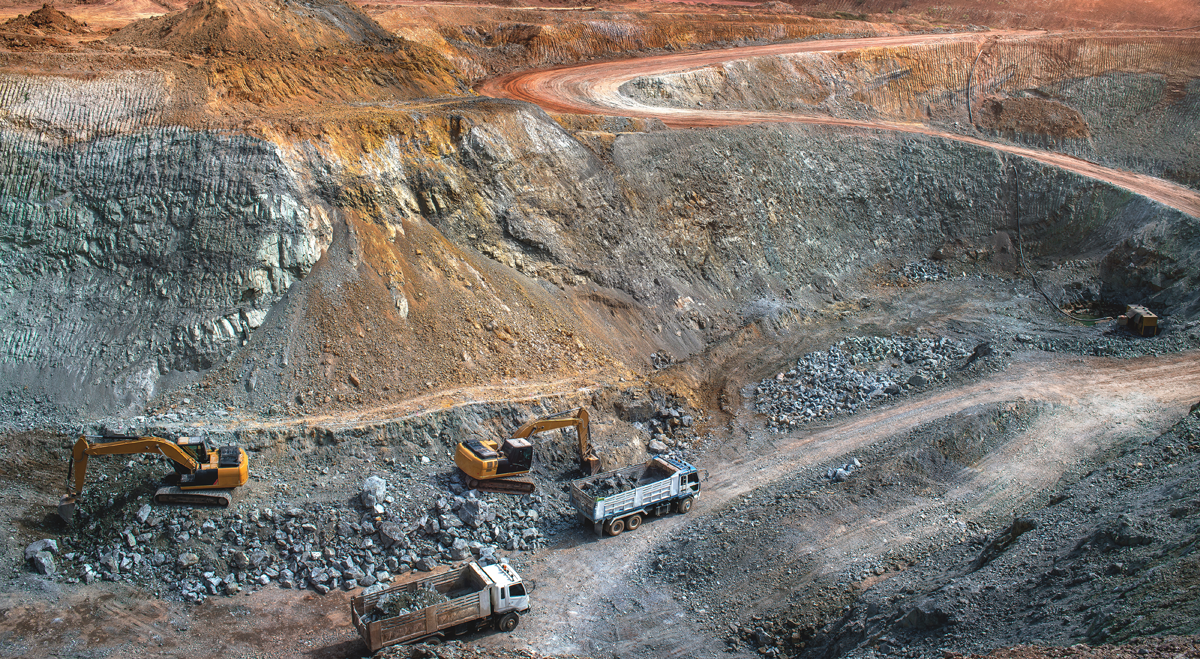
    Shuka Minerals (LSE:SKA) has identified a new near-surface mineralised orebody containing zinc, lead, copper and vanadium at its Kabwe Zinc Mine in Zambia, potentially expanding the project’s known resource footprint.

    The discovery lies south of the historic Speaks and Mine Club zones and was identified through drill hole KBDD09, the first of three holes targeting the newly recognised mineralisation. Initial results revealed several thick, high-grade zinc intersections accompanied by lead and vanadium, with reported zinc grades reaching approximately 65% alongside notable copper and vanadium values.

    Drilling Points to Larger Kabwe Mineralised System

    The results indicate that mineralisation at Kabwe could be more extensive and geologically zoned than previously recognised. If confirmed, the newly discovered orebody could supplement the resources already reported across the Speaks and Mine Club areas.

    Shuka said the preliminary findings will be subject to independent laboratory analysis in accordance with JORC and NI 43-101 standards, providing further confirmation of the grades and mineral composition identified during drilling.

    The presence of multiple metals is particularly significant for the company’s understanding of the broader Kabwe mineralised system, potentially strengthening the project’s multi-commodity characteristics beyond its principal zinc and lead exposure.

    Shuka Expands Initial Drilling Programme

    Encouraged by the early results, Shuka and its technical consultants have extended the first phase of drilling to 2,500 metres. A second drilling phase is also planned for later in the year as the company works to establish the scale and continuity of the newly identified mineralisation.

    Further drilling and independent assay results will be important in determining whether the discovery can ultimately contribute to an expanded mineral resource estimate at Kabwe.

    The decision to increase drilling activity reflects growing confidence in the project’s exploration potential and could strengthen Shuka’s position within Zambia’s base and critical metals sector if subsequent results confirm the initial findings.

    Financial Performance Remains a Headwind

    Shuka’s broader investment outlook continues to be constrained by weak financial fundamentals, including persistent losses, negative gross profit and continuing cash consumption alongside volatile revenue.

    Technical indicators provide only limited support. Although the shares have demonstrated some shorter-term strength, negative MACD readings and a share price below the 200-day moving average point to a more cautious longer-term technical picture.

    Traditional valuation measures also offer little support while the company remains loss-making, resulting in a negative price-to-earnings ratio, while no dividend yield is available. Continued exploration progress at Kabwe therefore remains an important potential catalyst for the company.

    More About Shuka Minerals Plc

    Shuka Minerals Plc is an Africa-focused mining operator and developer with a primary listing on London’s AIM market and a secondary listing on the JSE’s AltX.

    The company is advancing the Kabwe Zinc Mine in Zambia, where its exploration and development strategy is focused primarily on zinc- and lead-rich mineralisation. The project also contains copper, silver and vanadium, giving Shuka the potential to develop a broader multi-commodity resource base as exploration progresses.

  • CRISM Therapeutics Advances Towards Patient Recruitment for Phase II Glioblastoma Trial

    CRISM Therapeutics Advances Towards Patient Recruitment for Phase II Glioblastoma Trial

    CRISM Therapeutics (LSE:CRTX) has completed the Site Initiation Visit at its lead NHS clinical trial centre in the UK, removing an important operational hurdle ahead of patient recruitment for its Phase II glioblastoma study. Recruitment is expected to begin in the coming weeks.

    The study will evaluate irinotecan ChemoSeed, CRISM’s proprietary implantable drug-delivery technology. The device is designed to release chemotherapy directly into the tumour margin following surgery for glioblastoma, potentially allowing higher concentrations of the treatment to reach residual cancer cells while reducing reliance on systemic delivery.

    Phase II Study Moves Into Clinical Execution

    Completion of the Site Initiation Visit represents an important transition for CRISM’s lead development programme, moving the study from preparatory work towards active clinical execution.

    The Phase II trial will provide further evidence on the potential of the company’s localised chemotherapy delivery platform in glioblastoma, an aggressive form of brain cancer with significant unmet treatment needs.

    Positive recruitment progress and encouraging clinical results could provide further validation for the ChemoSeed platform. Successful development could also support future regulatory discussions and potentially increase interest from pharmaceutical partners and investors seeking new approaches to oncology drug delivery.

    Financial Position Remains Challenging

    CRISM’s investment outlook remains constrained by its early-stage financial profile. The company generates minimal revenue, continues to report losses and is consuming cash as it funds clinical development activities.

    Technical indicators also remain weak, with the shares trading below important moving averages alongside negative MACD readings and subdued momentum. One supportive factor is the absence of debt, although conventional valuation measures remain difficult to apply while earnings are negative and no dividend yield is available.

    Progress with the Phase II programme is therefore likely to remain an important factor in determining investor sentiment and the longer-term prospects for the company’s technology.

    More About CRISM Therapeutics Corporation

    CRISM Therapeutics Corporation is a UK-based clinical-stage drug-delivery company listed on AIM. It is developing technologies intended to improve the treatment of solid tumours through sustained and localised delivery of chemotherapy.

    Its lead technology, ChemoSeed, is an implantable platform designed to release chemotherapy directly into tumours or surgical resection margins. In glioblastoma, the approach is intended to address challenges including the blood-brain barrier, which can limit the ability of systemically administered treatments to reach cancer cells effectively.

    By positioning ChemoSeed implants during or following tumour-removal surgery, CRISM aims to deliver therapeutic concentrations of medicines such as irinotecan directly to areas where residual cancer cells may remain. The strategy is designed to complement surgery and existing cancer treatments while potentially improving drug exposure in difficult-to-treat tumours.

  • Rio Tinto Welcomes Long-Term Renewable Power Agreement for Tomago Aluminium

    Rio Tinto Welcomes Long-Term Renewable Power Agreement for Tomago Aluminium

    Rio Tinto (LSE:RIO) has backed a new agreement involving Tomago Aluminium, the Australian Government and the New South Wales Government that will provide Australia’s largest aluminium smelter with long-term, internationally competitive electricity through 2038.

    The arrangement provides greater certainty for the Tomago operation, which plays an important role in regional employment and Australia’s manufacturing sector. It also supports Rio Tinto’s integrated aluminium operations in eastern Australia and provides a clearer pathway towards lower-carbon production.

    Tomago to Invest A$1.1 Billion in Smelter

    As part of the agreement, Tomago Aluminium will enter into a 10-year power purchase agreement that will take effect after its existing electricity contract expires in 2028. From 2033, the electricity supplied under the arrangement is expected to come entirely from renewable energy sources.

    Tomago also plans to invest A$1.1 billion in the smelter, including A$100 million specifically allocated to decarbonisation initiatives. The investment is intended to strengthen the facility’s competitiveness while positioning it as an important supplier of lower-carbon aluminium for industries supporting the global energy transition.

    The long-term power arrangement also allows Tomago to continue providing demand-response services to the New South Wales electricity system, helping support grid stability as renewable generation becomes a larger part of the state’s energy mix.

    Australian Aluminium Operations Gain Greater Power Certainty

    The Tomago agreement follows a similar electricity arrangement secured in 2026 for Rio Tinto’s Boyne aluminium smelter in Queensland. As a result, Australia’s two largest aluminium smelters now have clearer routes towards long-term, competitive and increasingly low-carbon electricity supplies.

    Together, the agreements reinforce one of the world’s largest integrated aluminium supply chains and support Rio Tinto’s wider strategy to reduce Scope 1 and Scope 2 emissions while maintaining significant domestic manufacturing capacity.

    Cash Generation Supports Rio Tinto Outlook

    Rio Tinto’s broader outlook continues to benefit from solid profitability and operating cash generation. Recent company commentary has also highlighted improved cash generation, productivity gains and visible progress across major development projects.

    These strengths are partially offset by weaker conversion of operating cash into free cash flow and higher debt compared with the previous year. Technical indicators are also mixed, with Rio Tinto shares remaining below important intermediate-term moving averages.

    More About Rio Tinto

    Rio Tinto is a global mining and metals group with operations spanning commodities including iron ore, aluminium, copper and other industrial materials. Its Australian aluminium business includes bauxite mining, alumina refining and aluminium smelting operations across an integrated supply chain.

    The group owns a 51.55% interest in Tomago Aluminium, giving it significant exposure to Australia’s largest aluminium smelter. Its wider presence in eastern Australia makes Rio Tinto an important participant in domestic aluminium production, industrial employment and the country’s transition towards lower-carbon manufacturing.

  • Xeros Introduces Growth LTIP to Link Executive Rewards With Shareholder Returns

    Xeros Introduces Growth LTIP to Link Executive Rewards With Shareholder Returns

    Xeros Technology Group (LSE:XSG) has launched a new Growth Long Term Incentive Plan as part of its 2020 share option scheme, aimed at strengthening the connection between executive remuneration, company growth and shareholder returns.

    The incentive programme was developed following feedback from investors and is intended to help Xeros retain and motivate senior management while ensuring that potential rewards depend on delivering meaningful improvements in the company’s share price.

    Share Price Targets Determine Vesting

    Under the Growth LTIP, options have been awarded to senior executives and directors, including the chief executive officer, finance director and non-executive board members. Vesting will depend on the company’s shares reaching specified price thresholds for at least 10 consecutive trading days during a three-year performance period.

    The awards are structured around three share price milestones of 3.5p, 10p and 17.5p, with the options carrying an exercise price of 1.75p. The staged approach is designed to reward progressively stronger share price performance as Xeros works to expand the commercial reach of its environmental technologies.

    Once vested, the options will become exercisable in three equal tranches. The first tranche can be exercised at the end of the performance period, followed by additional tranches on the first and second anniversaries of that date.

    By connecting management incentives directly to defined share price milestones, the board is seeking to create closer alignment between executive rewards and shareholder value while supporting the company’s longer-term commercialisation strategy.

    Financial Performance Remains a Key Challenge

    Despite the incentive programme’s focus on future growth, Xeros continues to face significant financial headwinds. Revenue has been volatile, margins remain deeply negative and ongoing cash consumption continues to weigh on the company’s financial profile, although leverage is relatively modest.

    Technical indicators also remain challenging, with the shares trading below key moving averages and momentum measures pointing to continued weakness. Valuation provides limited support while Xeros remains loss-making, resulting in a negative price-to-earnings ratio, while the absence of a dividend means there is no yield support for investors.

    More About Xeros Technology

    Xeros Technology Group is a UK-based clean technology business developing solutions intended to reduce the environmental impact associated with clothing production and care. Its patented technologies cover microplastic filtration, laundry applications and garment finishing, targeting markets including industrial laundries, clothing manufacturers and domestic washing machine producers.

    The company operates primarily through a licensing model, generating royalties and consumables-related revenue from partners using its technologies. Xeros currently has eight commercial agreements and estimates its annual addressable markets at approximately £350 million for microplastic filtration, £3 billion for laundry care and £132 million for garment finishing.

  • Antofagasta Posts Stronger First-Half Earnings as Copper Prices Boost Cash Generation

    Antofagasta Posts Stronger First-Half Earnings as Copper Prices Boost Cash Generation

    Antofagasta (LSE:ANTO) delivered a strong financial performance in the first half of 2026, benefiting from higher commodity prices, disciplined cost management and favourable working capital movements. Revenue increased 18% to $4.48 billion, while EBITDA climbed 27% to $2.84 billion, taking the EBITDA margin to 63.4%.

    Higher realised prices for copper, gold and molybdenum supported the improvement, alongside tighter control of costs across the business. Operating cash flow rose 53%, while profit before tax advanced 72%. The miner also increased its interim dividend by 81%, with its balance sheet remaining in a solid position and net leverage staying relatively low.

    Copper Guidance Maintained Despite Severe Weather

    Operationally, Antofagasta maintained a fatality-free safety performance during the period. Severe weather affected production at Los Pelambres, but the disruption was contained sufficiently for the group to leave its full-year 2026 copper production guidance unchanged at between 625,000 and 655,000 tonnes.

    The company is also continuing to advance its major expansion programmes. Growth projects at Centinela and Los Pelambres remain scheduled for commissioning in 2027, providing additional capacity as Antofagasta positions itself to benefit from longer-term growth in global copper consumption.

    At Zaldívar, the group is progressing a $0.9 billion water pipeline investment designed to eliminate the operation’s reliance on continental water. The project could also help support a potential extension of the mine’s operating life to 2051.

    Growth Pipeline Supports Longer-Term Outlook

    Antofagasta’s outlook is underpinned by strong technical momentum and an encouraging earnings picture, including record profitability, substantial cash generation and a fully funded pipeline of growth investments. Rising demand for copper associated with electrification, renewable energy infrastructure and expanding digital networks provides an additional long-term tailwind.

    However, valuation and financial considerations provide some counterbalance. The company’s relatively high price-to-earnings multiple and modest dividend yield offer less valuation support, while increased leverage and uneven recent free cash flow remain factors for investors to monitor.

    More About Antofagasta

    Antofagasta plc is a Chile-focused copper mining group whose principal operations include Los Pelambres, Centinela and Zaldívar. The company is predominantly exposed to copper while also generating meaningful by-product revenue from gold and molybdenum.

    Its asset portfolio and cost position place Antofagasta among the higher-margin participants in the global copper industry, leaving the business closely exposed to structural demand trends including electrification, renewable power development and investment in digital infrastructure.

    Average Trading Vol

  • U.S. stock futures rise as softer annual inflation supports sentiment: Dow Jones, S&P, Nasdaq, Wall Street

    U.S. stock futures rise as softer annual inflation supports sentiment: Dow Jones, S&P, Nasdaq, Wall Street

    U.S. stock futures moved higher on Wednesday, pointing to a rebound at the opening bell after the major indices declined in the previous session, as July inflation figures broadly matched economists’ expectations.

    Futures strengthened following the Labor Department’s latest consumer price report, which showed prices rising 0.1% in July after declining 0.4% in June. The monthly increase was in line with forecasts.

    Core consumer prices, excluding food and energy, advanced 0.2% during July after showing no change in June. That reading also matched market expectations.

    Headline and core inflation rates ease

    Annual headline inflation slowed slightly to 3.4% in July from 3.5% in June, while the annual core rate moderated to 2.5% from 2.6%.

    Both readings were consistent with economists’ forecasts, potentially easing some concerns about persistent inflation and the implications for the Federal Reserve’s interest-rate policy.

    Technology shares linked to artificial intelligence could provide additional momentum after investors responded positively to quarterly results and guidance from CoreWeave (NASDAQ:CRWV) and Super Micro Computer (NASDAQ:SMCI).

    However, further gains in crude oil could temper risk appetite following deadly attacks involving vessels in the Red Sea and Gulf of Oman.

    Major Wall Street indices declined on Tuesday

    U.S. equities finished mostly lower on Tuesday after an uncertain start gave way to selling pressure later in the session, extending the modest declines recorded on Monday.

    The Nasdaq fell 159.91 points, or 0.6%, to 26,445.45. The S&P 500 lost 24.91 points, or 0.3%, to close at 7,728.20, while the Dow Jones Industrial Average declined 184.13 points, or 0.3%, to 53,791.85.

    Although all three benchmarks recovered from their intraday lows, they remained in negative territory at the closing bell.

    Hormuz uncertainty keeps crude prices elevated

    Oil prices contributed to Tuesday’s weaker market sentiment, with U.S. crude futures climbing more than 1% after surging by over 5% during Monday’s session.

    The continued advance reflected uncertainty over whether the Strait of Hormuz could be reopened.

    According to Reuters, Mohsen Rezaei, Secretary of Iran’s Supreme National Security Council, said the strategic waterway would remain closed until Tehran’s conditions were met.

    The approaching release of Wednesday’s CPI figures also encouraged investors to remain cautious during the previous session.

    Hardware and energy stocks buck broader decline

    Computer hardware shares were among Tuesday’s strongest performers despite weakness across the wider equity market. The NYSE Arca Computer Hardware Index jumped 4.6%, reaching its highest closing level in two months.

    Higher crude prices also lifted oil producers, pushing the NYSE Arca Oil Index up 2%.

    Housing stocks recorded notable gains, while steel and retail shares were among the weaker areas of the market.

  • European stocks muted as Middle East attacks weigh on sentiment: DAX, CAC, FTSE100

    European stocks muted as Middle East attacks weigh on sentiment: DAX, CAC, FTSE100

    European equities traded with little overall direction on Wednesday as fresh attacks on shipping involving the U.S. and Yemen’s Iran-aligned Houthis renewed concerns about potential supply disruptions and reduced hopes of bringing the months-long Iran conflict to an end.

    Major regional indices were mixed. France’s CAC 40 Index slipped 0.2%, while the U.K.’s FTSE 100 Index edged 0.1% higher and Germany’s DAX Index advanced 0.5% following confirmation that German inflation accelerated in July.

    German inflation rises to 2.8%

    Final figures from Destatis showed German consumer prices increased 2.8% year on year in July, accelerating from 2.3% in June and matching previous estimates.

    The rise was partly driven by higher energy prices following the end of the government’s fuel tax measures. The July reading was the highest since April, when inflation reached 2.9%.

    EU-harmonised inflation also increased as expected, reaching a three-month high of 2.8% in July compared with 2.4% in June.

    Balfour Beatty and ABN AMRO shares climb

    In corporate trading, Balfour Beatty (LSE:BBY) shares surged after the British construction group raised its annual operating profit forecast following a sharp increase in first-half earnings.

    Dutch lender ABN AMRO (EU:ABN) also advanced strongly after delivering solid second-quarter results and upgrading its full-year income guidance.

    Germany’s Indus Holding (TG:INH) rallied after reporting a substantial improvement in first-half earnings and raising its outlook for the full 2026 financial year.

    Bechtle and Bilfinger move lower

    Elsewhere, IT services provider Bechtle (TG:BC8) declined despite reporting higher second-quarter bottom-line earnings and increasing its guidance for the full financial year.

    Industrial services group Bilfinger (TG:GBF) also fell after indicating that its full-year EBITA margin is now expected to finish at the lower end of its guidance range.

  • Crude oil rises as Hormuz deadlock and Red Sea attacks fuel supply fears

    Crude oil rises as Hormuz deadlock and Red Sea attacks fuel supply fears

    Crude prices moved higher on Wednesday and neared their strongest levels in two weeks as the deadlock between the U.S. and Iran over the Strait of Hormuz showed little sign of ending.

    Ongoing attacks on commercial shipping by Yemen’s Iran-backed Houthis also reinforced fears that disruption to oil flows across West Asia could remain prolonged.

    Brent oil futures advanced 0.6% to $89.45 a barrel at 00:55 ET (04:55 GMT), while West Texas Intermediate crude futures rose 0.7% to $83.77 a barrel.

    Hormuz impasse keeps supply risks elevated

    Traffic through the Strait of Hormuz remained subdued as negotiations between Washington and Tehran failed to produce meaningful progress. The situation became more tense after the U.S. said it had struck a ship in the Gulf of Oman that it alleged was travelling towards Iran.

    Iran has said the strait will remain shut unless the U.S. agrees to its demands for reparations, which President Donald Trump has strongly opposed.

    Hormuz remains critical to the oil market because roughly one-fifth of global oil supplies moved through the waterway before the war began.

    Concerns over supply were compounded by further Houthi attacks on ships in the Red Sea and Bab el-Mandeb Strait. The Iran-backed group had previously announced a naval blockade against Saudi Arabia.

    The latest developments suggested that tensions in West Asia remain elevated, leaving oil traders focused on the possibility of additional disruptions and helping keep crude prices supported.

    U.S. emergency oil stocks drop to fresh low

    The U.S. Strategic Petroleum Reserve fell below 300 million barrels last week, according to figures from the Department of Energy.

    The reserve declined by 6.1 million barrels to 298.7 million barrels.

    The SPR was established to protect the U.S. against major supply emergencies, but inventories have been steadily reduced this year as authorities responded to disruption caused by the Iran conflict.

    President Donald Trump authorised the release of 172 million barrels in March following the outbreak of the conflict.

  • Gold nears $4,400 as traders look to U.S. CPI for Fed direction

    Gold nears $4,400 as traders look to U.S. CPI for Fed direction

    Gold moved higher on Wednesday and remained close to the $4,400-an-ounce mark as investors prepared for U.S. inflation data that could shape expectations for Federal Reserve policy. Uncertainty surrounding the possible reopening of the Strait of Hormuz also continued to influence sentiment across commodity markets.

    At 03:22 ET (07:22 GMT), XAU/USD advanced 0.7% to $4,400.02 an ounce. Gold Futures rose 0.4% to $4,459.30, while XAG/USD gained 1.8% to $65.88 an ounce and XPT/USD increased 0.7% to $1,755.16.

    Middle East tensions keep gold supported

    Bullion remained near its highest levels in two months as traders weighed conflicting signals over negotiations aimed at restoring shipping through the Strait of Hormuz.

    Pakistan’s defense minister suggested that the U.S. and Iran were approaching an agreement, while separate reports pointed to progress in discussions between Oman and Tehran.

    Iran, however, has continued to insist that Hormuz will remain shut until Washington satisfies its conditions, which include lifting restrictions on Iranian ports and compensating Tehran for damage from U.S. military action.

    The uncertainty has kept oil and other energy markets volatile. Both the U.S. and the Iran-backed Houthis in Yemen reported attacks involving shipping around Hormuz and Bab el-Mandeb, while a U.S. Navy helicopter fired missiles at a Panama-flagged cargo ship attempting to move through the Gulf of Oman.

    Separately, a refinery in Libya was hit by a drone attack.

    The potential inflationary consequences of elevated energy prices remain particularly important for gold. If higher fuel costs keep inflation under pressure, the Fed could maintain restrictive interest rates for longer, reducing the relative appeal of assets such as bullion that do not generate income.

    CPI and Chinese gold purchases could drive the next move

    Markets are now waiting for Wednesday’s U.S. CPI report, with producer price data due a day later. Softer inflation could weaken the case for additional Fed tightening, while an upside surprise could put further rate increases back on the agenda.

    Positioning has remained cautious ahead of the release, with swaps pricing roughly a 50% probability of a quarter-point rate increase in September.

    Chinese demand is also providing support. The People’s Bank of China increased its gold reserves for the 21st straight month in July, purchasing roughly 640,000 troy ounces and lifting holdings to 76.08 million ounces. Continued buying of Chinese gold-backed ETFs has added to evidence of stronger institutional interest.

    IG senior market analyst Tony Sycamore said the latest decline from $4,435 was linked to profit-taking before the CPI figures, more hawkish Fed rhetoric and renewed strength in energy prices.

    According to Sycamore, gold faces downtrend resistance around $4,460, based on the late-January record high near $5,602. The 200-day moving average around $4,495 represents an additional hurdle.

    A sustained move above both levels would be needed to strengthen the case for a recovery towards $5,000, he said.

  • Market Open: Balfour Beatty Guidance, Evoke Gaming Duties

    Market Open: Balfour Beatty Guidance, Evoke Gaming Duties

    UK markets open mixed as Balfour Beatty raises guidance, Evoke faces higher gaming duties and Brent crude rises on Hormuz risks.


    Market Overview

    The FTSE 100 opened unchanged at 10,844.19, while the Euronext 100 edged 0.01 per cent lower to 1,976.84 and Germany’s DAX gained 0.19 per cent to 26,442.42. European markets remained cautious as investors monitored the escalating US-Iran standoff over the Strait of Hormuz and awaited US inflation data. Overnight on Wall Street, the Nasdaq closed lower at 26,445.45, while the S&P 500 declined to 7,728.20.

    Commodity markets were mixed, with copper and natural gas higher, gold slightly lower and Brent crude rising as the closure of the Strait of Hormuz and continuing Houthi strikes kept supply risks in focus. Against sterling, the US dollar, Japanese yen and Australian dollar strengthened marginally, the Swiss franc weakened slightly and the euro was unchanged, while Bitcoin rose slightly.


    Market Numbers

    FTSE 100: Unchanged (0.00%), 10,844.19
    Euronext 100: Down (-0.01%), 1,976.84
    DAX: Up (+0.19%), 26,442.42
    NASDAQ: Down, 26,445.45
    S&P 500: Down, 7,728.20


    In the Headlines

    Guidance raised – Balfour Beatty (LSE:BBY)
    Infrastructure group Balfour Beatty raised its 2026 guidance after first-half underlying profit from its earnings-based businesses increased 42 per cent, supported by stronger UK and US operations. Higher expectations for profit growth and cash generation, alongside increased shareholder returns, strengthen visibility for the year ahead.

    Gaming duties weigh – Evoke (LSE:EVOK)
    Betting and gaming group Evoke reported broadly stable first-half revenue, with online growth helping offset retail closures, but higher UK gaming duties weighed on profitability. The company is pursuing efficiency measures while progressing towards the proposed Bally’s Intralot transaction.


    Currencies (vs GBP)

    USD: Up (+0.01%), $1.3508
    CHF: Down (-0.00%), Fr.1.0957
    EUR: Unchanged (0.00%), €1.1703
    JPY: Up (+0.00%), ¥215.154
    AUD: Up (+0.00%), $1.9125
    Bitcoin (BTC/GBP): Up, £47,118.43


    Commodities

    Copper: Up
    Gold: Down
    Brent Crude: Up
    Natural Gas: Up