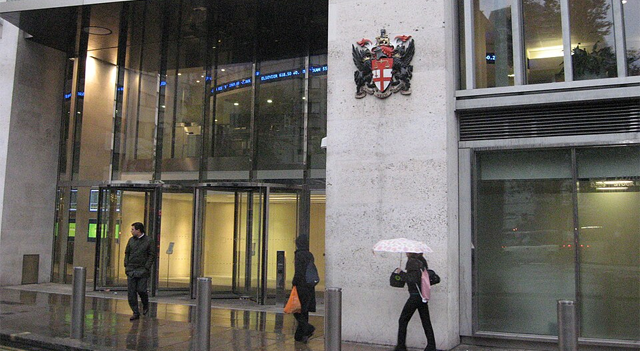
Capita plc (LSE:CPI) said the UK energy regulator Ofgem has decided to disallow £11.425m of costs incurred by its wholly owned subsidiary Smart DCC for the 2024/25 regulatory year. The final figure is significantly lower than the £30.841m originally proposed and compares with a £20m disallowance recorded in the 2023/24 period.
Capita noted that such price disallowances form a routine part of the regulatory framework governing the Smart DCC contract. The group said the final determination reflects progress made on process improvements and cost efficiencies and is broadly consistent with the assumptions already incorporated into its 2025 financial results.
The company is also preparing for the transition of the smart metering network contract to a not-for-profit provider during the coming year. This change forms part of the evolving regulatory framework around the UK’s national smart meter infrastructure.
Capita’s overall outlook remains mixed. While technical indicators suggest positive market momentum and recent corporate developments offer some support, the company continues to face challenges including elevated leverage and pressure on cash flow. Regulatory considerations surrounding major contracts also remain a factor influencing investor sentiment.
More about Capita
Capita plc is a UK-based outsourcing and professional services group that supports public and private sector organisations in managing complex operational processes. The company focuses on improving customer and citizen experiences through people-led services supported by technology. Operating across eight countries and serving primarily UK and European clients, Capita plays a role in delivering essential services and infrastructure across multiple sectors.
Forterra plc (LSE:FORT) delivered a solid set of results for 2025 despite ongoing challenges in the UK construction sector. Revenue increased by 12.1% during the year, while adjusted EBITDA rose 18.5% and adjusted earnings per share surged 65.8%. The performance was supported by stable pricing across its product range and a recovery in the company’s share of the UK brick market.
Strong cash generation also strengthened the balance sheet, with net debt reduced to £55.7m. This financial improvement enabled the company to significantly increase shareholder returns, with the total dividend rising 106.7% to 6.2p per share.
Operationally, Forterra continued to advance several key capacity expansion projects. The new brick factory at Wilnecote is approaching completion, while both kilns at the Desford facility operated simultaneously for the first time during the year. The company also introduced its Omnia extruded brick slip range, expanding its product offering in the construction materials market.
With leverage returning to more typical levels and capital expenditure expected to ease, the board has revised its capital allocation priorities. As part of this approach, the company plans to return surplus cash to shareholders through a £20m share buyback programme scheduled to begin in 2026. Management expects demand conditions in 2026 to remain broadly similar to those seen in 2025, with EBITDA forecast to increase slightly. The group believes it is well positioned to benefit from any structural recovery in UK housing activity and brick demand.
Overall, the company’s outlook is supported by positive corporate developments and a relatively stable technical backdrop. However, ongoing pressure on profitability and a comparatively high valuation may temper investor expectations. Continued focus on margin management and balance sheet discipline will remain important as the business pursues further growth.
More about Forterra
Forterra plc is one of the UK’s leading manufacturers of essential building materials, with strong positions in clay bricks, concrete blocks and precast concrete flooring. Its product portfolio includes extruded and soft-mud bricks used in residential construction, the well-known London Brick widely found across England’s housing stock, Thermalite aircrete blocks and Bison precast flooring systems. The company serves both the new-build housing market and the repair, maintenance and improvement sector.
Mindflair plc (LSE:MFAI) has highlighted progress within its investment portfolio after Captur, an artificial intelligence infrastructure company backed through Sure Valley Ventures’ second fund, secured $6m in seed funding. The round was led by Rally Ventures and reflects Mindflair’s strategy of supporting enterprise AI technologies capable of scaling across sectors such as logistics, mobility and retail.
Captur specialises in on-device computer vision software designed for enterprise mobile applications. Its technology verifies user-submitted photos in roughly 30 milliseconds without relying on cloud connectivity and is already processing tens of millions of images each month. The newly raised capital will be used to expand the company’s team, accelerate product development and extend deployment of its edge AI platform into additional industry verticals. According to Mindflair’s directors, the company’s capabilities create a strong technical moat and underline the long-term growth potential within its AI investment portfolio.
The platform addresses the “last-mile” challenge in image capture by ensuring high-quality photographic verification for tasks such as deliveries, inspections and parking validation. By operating directly on mobile devices across more than 6,000 device types, Captur can achieve human-level or higher accuracy while keeping processing local to the device. This approach reduces latency and scaling costs, enabling businesses to verify real-world activity in real time and improve operational workflows.
The funding round will also bring additional industry expertise to the company’s leadership. Ben Fried is set to join Captur’s board, adding senior technology experience. For Mindflair, both the calibre of the lead investor and the board appointment point to increasing institutional confidence in the portfolio company, potentially creating longer-term value if Captur’s technology gains wider adoption in data-intensive mobile sectors.
More about Mindflair
Mindflair plc is an AIM-listed investment company focused on building a portfolio of next-generation technology businesses centred on artificial intelligence. Its strategy targets high-growth segments including the Internet of Things, cyber security, machine learning, immersive technologies and big data, where demand for advanced digital infrastructure continues to expand.
The company invests in early and growth-stage technology firms that have already demonstrated commercial traction and significant scaling potential. By concentrating on AI-driven innovation and supporting infrastructure, Mindflair offers investors diversified exposure to emerging enterprise technologies rather than direct investment in individual start-ups.
Through its portfolio strategy, Mindflair aims to capture the upside from accelerating adoption of automation, advanced analytics and intelligent software across industries, while spreading risk across multiple AI subsectors and business models.
Robert Walters (LSE:RWA) reported a challenging 2025, with net fee income falling 14% on a constant-currency basis to £274.2m as cautious hiring activity weighed on demand. The company posted an operating loss of £14.9m for the year, compared with a profit previously, after weaker recruitment volumes and restructuring charges. In response to the tougher environment, the board opted to suspend the dividend in order to protect the strength of the balance sheet.
The group’s core specialist recruitment division, which generates the majority of fee income, declined across most regions, although the UK market proved more resilient. Recruitment outsourcing revenue also decreased after several contracts were not renewed, though income from retained clients showed greater stability during the downturn.
Management has responded by accelerating cost reductions and implementing structural adjustments across the business. Monthly operating costs have been reduced to below £24m, and the company has increased its structural savings target for 2027 to at least £12m. Alongside these measures, the group is expanding its geographic reach and diversifying service lines, particularly through rapidly growing consultancy and talent advisory offerings.
Looking ahead, the company expects net fee income in 2026 to be slightly below 2025 levels as hiring markets remain uncertain. However, improving trends in several regions — including the UK, Spain and New Zealand — provide some encouragement. Management is also focusing on portfolio optimisation and greater cross-selling between services to strengthen its position as a broad talent solutions provider.
Overall, the outlook remains shaped by recent financial pressures, including lower revenue and profitability. Technical indicators currently point to bearish market momentum, and valuation metrics are mixed, with a high dividend yield but a negative price-to-earnings ratio. Limited earnings call or corporate event disclosures also restrict deeper insight into near-term expectations.
More about Robert Walters
Robert Walters PLC is a global recruitment and talent solutions company specialising in professional hiring and recruitment outsourcing. The business operates across Asia-Pacific, Europe, the UK and other international markets. In recent years, the group has been expanding its consultancy and talent advisory services, aiming to position itself as a comprehensive provider of workforce solutions for corporate clients.
Hill & Smith (LSE:HILS) reported steady results for 2025, with revenue rising slightly by 2% to £868.8m while underlying operating profit increased 5%. The improvement was largely driven by strong demand across its U.S. infrastructure operations, which helped offset softer trading conditions in the UK.
Group profitability also improved during the year, with underlying operating margins reaching 17.4%. Earnings per share advanced 8%, reflecting both operational progress and disciplined cost management. The company’s U.S. businesses now account for nearly four-fifths of total operating profit, highlighting the growing importance of the region within the group’s earnings mix.
Hill & Smith generated strong cash flow in 2025, supporting a return on invested capital of 26.7% while maintaining very low leverage. The financial strength allowed the company to increase its dividend by 8%, initiate a £100m share buyback programme and allocate £35m toward expanding production capacity in its higher-growth U.S. platforms.
The group also continued to pursue targeted acquisitions to enhance its infrastructure portfolio. It has agreed two bolt-on deals during the year — Freeberg in the United States and Hentech in Ireland — reinforcing its strategy of selective M&A to broaden its engineered solutions offering. Despite the strong U.S. momentum, management remains cautious about the timing of any meaningful recovery in the UK market during 2026.
Overall, the company’s outlook remains constructive thanks to solid financial performance and shareholder-friendly capital allocation initiatives such as the buyback programme. Technical indicators currently suggest bullish momentum, although a relatively high price-to-earnings valuation could temper upside expectations.
More about Hill & Smith Holdings
Hill & Smith PLC is a UK-listed provider of engineered products and services designed to strengthen critical infrastructure and the built environment. The group operates through U.S. and UK & India Engineered Solutions as well as Galvanizing Services divisions, supplying composite and steel systems, seismic protection technologies, safety solutions and galvanizing services. Its products support sectors including energy, transportation, data centres and industrial markets, and the company employs around 4,500 people with an increasing focus on growth in the United States.
The Gym Group (LSE:GYM) posted a strong financial performance in 2025, reporting an 8% increase in revenue while adjusted EBITDA less normalised rent climbed 19% to £56.7m. Adjusted profit before tax almost tripled year on year, supported by growing membership numbers, stronger yield and disciplined cost management.
Free cash flow reached £38.3m during the year, enabling the company to fund 16 new gym openings alongside upgrades to its existing estate and further technology investment. Despite this expansion, non-property net debt declined slightly and leverage improved to 1.0 times, helped by the extension and expansion of its bank financing facilities.
Operational momentum has been driven by the company’s “Next Chapter” strategy, which is delivering stronger returns across the portfolio. Mature-site return on invested capital reached 27%, increasing to 30% when excluding workforce-dependent gyms. Customer satisfaction remains high and member visit frequency continues to rise, reinforcing operational performance.
Management plans to accelerate expansion, targeting roughly 75 new gyms over the next three years, all expected to be funded through free cash flow. The company also anticipates that EBITDA less normalised rent in 2026 will land at the upper end of market expectations. In addition, a £10m share buyback programme has been launched, signalling confidence in the group’s long-term growth prospects and strengthening its position in the expanding low-cost fitness segment.
The company’s outlook reflects its improving financial profile and positive sentiment from recent earnings commentary. Nonetheless, investors should note potential risks including leverage levels and a comparatively elevated price-to-earnings valuation. Technical signals currently point to moderate bullish momentum, while initiatives such as an employee share scheme are intended to further align staff incentives with future growth.
More about The Gym
The Gym Group is a UK-based operator of affordable, round-the-clock fitness facilities designed for cost-conscious consumers seeking flexible memberships without long-term contracts. As of 31 December 2025, the company ran 260 gyms nationwide, serving more than 900,000 members and hosting around 70 million visits annually. The business has established itself as a leader in the value-focused fitness segment and has set validated science-based targets to achieve net-zero emissions.
U.S. stock index futures signaled a weaker open on Tuesday, indicating that markets may pull back after rebounding from an early decline to finish the previous session largely in positive territory.
Ongoing uncertainty surrounding the conflict in the Middle East may continue to weigh on investor sentiment, particularly as crude oil prices recover some of their losses following a sharp overnight drop.
April crude oil futures had plunged nearly 11% to a low of $84.43 per barrel before rebounding to trade back above $90.
The sharp swings in energy markets reflect lingering uncertainty over the U.S. military campaign against Iran following recent remarks from President Donald Trump.
Speaking at a press conference on Monday, Trump said the war with Iran could be resolved “very soon,” although he did not outline specific details about how the conflict might conclude.
In a later message posted on Truth Social, Trump warned that Iran would be struck “twenty times harder” if it takes any action to disrupt oil shipments through the Strait of Hormuz.
“We will take out easily destroyable targets that will make it virtually impossible for Iran to ever be built back, as a Nation, again — Death, Fire, and Fury will reign upon them — But I hope, and pray, that it does not happen!” Trump said.
Echoing the president’s message, U.S. Defense Secretary Pete Hegseth said at a press briefing Tuesday morning that Iran is “badly losing,” but confirmed that the United States still plans to carry out its “most intense day of strikes” in Iran later today.
U.S. equities had fallen sharply early Monday but later staged a strong recovery. The major indices rebounded from their lows and ended the session higher, led by gains in technology stocks.
In late trading, the rally strengthened, with the Nasdaq climbing 308.27 points, or 1.4%, to 22,695.95. The S&P 500 rose 55.96 points, or 0.8%, to 6,795.99, while the Dow Jones Industrial Average gained 239.25 points, or 0.5%, to 47,740.80.
Earlier in the session, the Dow had dropped as much as 1.9%, while both the Nasdaq and the S&P 500 slid up to 1.5%, marking their lowest intraday levels in more than three months.
The late-session rebound followed reports that Trump told a CBS News reporter the U.S. conflict with Iran could be nearing its conclusion.
CBS News Senior White House Correspondent Weijia Jiang posted on X that Trump told her, “I think the war is very complete, pretty much. They have no navy, no communications, they’ve got no Air Force.”
According to Jiang, Trump also said the United States is “very far” ahead of his original estimate that the conflict might last four to five weeks.
In a separate message, Jiang reported that Trump said he was considering taking control of the Strait of Hormuz, which contributed to a sharp drop in oil prices.
Earlier in the day, the surge in crude oil prices had weighed on stocks. Oil briefly climbed above $100 per barrel for the first time since 2022 and approached $120 at its peak.
The rally had been fueled by reports that major oil producers including Iraq, Kuwait and the United Arab Emirates were reducing output.
With the Strait of Hormuz effectively closed amid Iranian threats against oil tankers, those countries are reportedly facing growing constraints on storage capacity.
Technology shares helped drive the market’s recovery. Semiconductor stocks led the advance, with the Philadelphia Semiconductor Index jumping 3.9% after earlier falling as much as 2% to a two-month intraday low.
Shares of computer hardware, networking and biotechnology companies also rallied during the session, helping push the tech-heavy Nasdaq higher.
Airline stocks also rebounded strongly, lifting the NYSE Arca Airline Index by 1.8%. Earlier in the day, the index had dropped as much as 6.2% to its lowest intraday level in more than three months.
Oil services and healthcare stocks also finished the session higher, although telecom stocks remained among the weaker performers.
European equity markets moved higher on Tuesday after closing lower for three consecutive sessions, as investors had been unsettled by fears that escalating tensions in the Middle East could drive inflation higher and slow economic growth.
Market sentiment improved after U.S. President Donald Trump said the conflict in the Middle East could end quickly, triggering a drop in bond yields and a sharp decline in oil prices.
At the same time, Iran’s Revolutionary Guards issued a warning that they would not allow “one liter of oil” to leave the region if U.S. and Israeli military strikes continue.
Trump also warned in a social media post that, “If Iran does anything that stops the flow of Oil within the Strait of Hormuz, they will be hit by the United States of America TWENTY TIMES HARDER than they have been hit thus far.”
Among major European indices, Germany’s DAX was up 1.8%, the U.K.’s FTSE 100 gained 1.3%, and France’s CAC 40 advanced 1.2%.
Shares of French carmaker Renault (EU:RNO) climbed sharply after the company announced plans to significantly expand its international presence by 2030.
German rival Volkswagen (TG:VOW3) also posted strong gains after stating it aims to achieve an operating margin of 8–10% by 2030.
Fashion group Hugo Boss (TG:BOSS) surged as well after reporting annual operating profit for 2025 that exceeded expectations.
Wind turbine maker Nordex Group (TG:NDX1) also rallied following the announcement of new orders from Wpd totaling nearly 280 megawatts.
Interview with Karl Smithson, CEO of Hamak Strategy
Hamak Strategy (LSE:HAMA) (USOTC:HASTF) is positioning itself for significant growth following encouraging due diligence results at its Akoko Gold Project in Ghana, located on the world-renowned Ashanti Gold Belt—one of the most prolific gold-producing regions globally.
In a recent interview with The Watchlist, Karl Smithson, CEO of Hamak Strategy, discussed the company’s strategy, the importance of the Akoko project, and the steps the company plans to take to unlock value for shareholders.
A Focused Gold Exploration Strategy
Hamak Strategy is a London-listed gold exploration and development company with a strong focus on West Africa, particularly Liberia and Ghana.
“Our focus is on gold exploration and development across West Africa,” Smithson explained. “We have traditionally been active in Liberia, but we expanded into Ghana late last year. Ghana is one of the most significant gold-producing countries in Africa.”
In addition to its mining activities, the company also pursues a Bitcoin accumulation strategy, holding the digital asset on its balance sheet as part of its broader financial strategy.
Strategic Entry into Ghana’s Ashanti Gold Belt
The company’s Akoko Gold Project sits on the southern end of the Ashanti Gold Belt, a geological formation famous for hosting multiple multi-million-ounce gold deposits.
“Ghana produced around five million ounces of gold last year,” said Smithson. “Being located on the Ashanti Belt puts us in an exceptional address, surrounded by major gold discoveries and producing mines.”
For Hamak Strategy, the move into Ghana represents both geographic diversification and an opportunity to build on its experience in West African geology.
Advancing Towards a JORC-Compliant Resource
A key next step for the company is a reverse circulation (RC) drilling programme designed to confirm and expand the project’s existing resource base.
Previous work at Akoko has already identified a non-compliant resource of approximately 250,000 ounces of gold, with mineralisation located at shallow depths.
“Our plan is to carry out confirmatory drilling, infill drilling, and potentially some expansion drilling,” Smithson explained. “The current resource sits within the top 50 metres, which suggests a strong potential for open-pit mining.”
The company also believes the deposit could extend both at depth and along strike, creating potential for further resource growth.
Economic Assessment to Define Project Value
Alongside the drilling programme, Hamak Strategy plans to conduct a Preliminary Economic Assessment (PEA).
This study will examine key factors such as:
Capital expenditure requirements
Operating costs
Potential production profiles
Future cash flows
Mine life
“The PEA will help us understand exactly how this project can be mined and what the economics will look like,” Smithson said. “Once we have that information, we can build a robust financial model to estimate the asset’s value.”
The company will then compare that valuation against its market capitalisation to assess potential upside for investors.
Low-Cost Acquisition Strengthens Growth Potential
One of the most striking aspects of the Akoko opportunity is the low acquisition cost.
Hamak Strategy has the option to acquire the project for approximately $10 per ounce, equating to around $2.5 million for the existing resource.
“At today’s gold prices, that 250,000 ounces represents over a billion dollars’ worth of gold sitting within the top 50 metres of the ground,” Smithson noted. “It represents a very compelling value opportunity for Hamak Strategy.”
The acquisition fits squarely within the company’s strategy of targeting high-potential assets in well-understood geological regions.
“I’ve worked in this part of West Africa for 20–30 years,” Smithson said. “There are still tremendous opportunities here, particularly with the current strength in the gold price.”
Positioning for Long-Term Value Creation
With drilling planned and economic studies underway, Hamak Strategy aims to transform exploration potential into measurable value.
By combining low-cost project acquisition, strategic positioning on a world-class gold belt, and focused exploration, the company believes it can unlock significant long-term value for shareholders.
As Smithson concluded, the opportunity lies in the disconnect between asset value and current market valuation.
“Our goal is to demonstrate the true value of this asset and highlight the opportunity that exists within Hamak Strategy.”
Oil prices slid sharply on Tuesday, falling about 7% after hitting a more than three-year high in the previous session, as U.S. President Donald Trump suggested the conflict in the Middle East may soon wind down, easing fears of extended disruptions to global oil supply.
Brent crude futures dropped $6.79, or 6.9%, to $92.17 per barrel at 08:40 GMT, while U.S. West Texas Intermediate (WTI) crude fell $6.55, also 6.9%, to $88.22 per barrel. Earlier in the session, both benchmarks had declined by as much as 11% before trimming some of their losses.
On Monday, oil prices had surged above $100 per barrel — their highest level since mid-2022 — as output cuts from Saudi Arabia and other producers, combined with the escalating U.S.–Israeli conflict with Iran, raised concerns about significant supply disruptions.
Prices later pulled back after Russian President Vladimir Putin held a phone conversation with Trump and presented proposals aimed at reaching a swift resolution to the conflict, according to a Kremlin aide, helping to ease worries about supply shortages.
Trump said in a CBS News interview on Monday that he believed the campaign against Iran was “very complete” and that Washington was “very far ahead” of his initial estimate of four to five weeks.
“Clearly Trump’s comments about a short-lived war have calmed markets. While there was an overreaction to the upside yesterday, we think there is an overreaction to the downside today,” said Suvro Sarkar, energy sector team lead at DBS Bank, adding that markets may be underestimating the risks at current Brent levels.
“Murban and Dubai grades are still well above $100 per barrel, so practically nothing much has changed in terms of ground realities,” he added, referring to benchmark Middle Eastern crude grades.
Responding to Trump’s remarks, Iran’s Islamic Revolutionary Guards Corps said they would “determine the end of the war,” and warned that Tehran would not allow “one litre of oil” to leave the region if U.S. and Israeli strikes continued, according to Iranian state media citing an IRGC spokesperson.
Meanwhile, according to several sources, Trump is considering easing oil sanctions on Russia and tapping emergency crude reserves as part of a range of measures aimed at containing the recent surge in global oil prices.
“Discussions around easing sanctions on Russian oil, comments from Donald Trump hinting that the conflict could eventually de-escalate, and the possibility of G7 countries tapping strategic oil reserves all pointed to the same message – that oil barrels will somehow continue to reach the market,” said Phillip Nova analyst Priyanka Sachdeva in a note on Tuesday.
“Once traders sensed that supply routes could still be maintained, the initial ’panic premium’ that had pushed prices above the $100 mark yesterday started to fade, and oil prices quickly pulled back.”
Goldman Sachs said it was maintaining its oil price outlook unchanged due to ongoing uncertainty, forecasting Brent at $66 per barrel in the fourth quarter of 2026 and WTI at $62 per barrel.
The Group of Seven nations said on Monday they were prepared to take “necessary measures” in response to rising global oil prices, although they stopped short of committing to release emergency reserves.