Category: Market News

  • Fever-Tree Shares Surge After Jefferies Upgrade Linked to Molson Coors Partnership

    Fever-Tree Shares Surge After Jefferies Upgrade Linked to Molson Coors Partnership

    Fevertree Drinks (LSE:FEVR) shares climbed 5.5% on Tuesday after Jefferies raised its rating on the stock to Buy from Hold, pointing to the recently announced partnership with Molson Coors Beverage Company (NYSE:TAP) as a key driver for growth acceleration in the U.S.

    Jefferies also increased its price target to £11, emphasizing that the TAP collaboration is expected to boost Fever-Tree’s U.S. distribution capabilities and operational efficiency while mitigating supply chain risks. The partnership will allow the company to redirect resources toward innovation and brand development.

    Analysts underscored that Fever-Tree’s investment story has evolved significantly since the bank began coverage in 2016. Today, the company has a stronger route-to-market in the U.S., plans to double its marketing spend, and benefits from domestic production, which helps smooth out supply chain disruptions.

    Jefferies added that Molson Coors has strong incentives to make the alliance a success. With its core beer portfolio facing headwinds in the U.S., TAP aims to premiumize its offerings and diversify beyond beer, with Fever-Tree playing a central role in this strategy.

    The bank estimated that a successful rollout of Fever-Tree could lift TAP’s U.S. growth by more than 200 basis points over the next three years. It likened the strategic fit between TAP and Fever-Tree to Heineken N.V.’s partnership with China Resources Beer in China, noting the potential for a similar growth trajectory.

    Jefferies further pointed to Fever-Tree’s increasingly asset-light business model and strong cash generation, with £70 million already returned to shareholders through buybacks and another £60 million planned by 2026 — a sign of growing confidence in margin recovery and sustained cash flow.

    This content is for informational purposes only and does not constitute financial, investment, or other professional advice. It should not be considered a recommendation to buy or sell any securities or financial instruments. All investments involve risk, including the potential loss of principal. Past performance is not indicative of future results. You should conduct your own research and consult with a qualified financial advisor before making any investment decisions.
    Some portions of this content may have been generated or assisted by artificial intelligence (AI) tools and been reviewed for accuracy and quality by our editorial team.


  • Tatton Asset Management Sees Strong Inflows as AUM Surges Nearly 37%

    Tatton Asset Management Sees Strong Inflows as AUM Surges Nearly 37%

    Tatton Asset Management (LSE:TAM) reported robust growth for the six months ending September 30, 2025, with net inflows of £1.68 billion fueling a sharp increase in assets under management and influence (AUM/I) to £25.8 billion — a 36.9% annualized rise.

    The company said monthly net inflows averaged £281 million, comfortably exceeding its £200–250 million guidance range. These inflows, combined with £2.06 billion in investment performance, pushed AUM/I up from £21.8 billion recorded at the end of March. Shares edged down 0.3% after the announcement.

    “Tatton has delivered another strong period of growth, reflecting the continued strength of our proposition and partnerships with advisers,” said Paul Hogarth, Chief Executive Officer. “We maintained the momentum of organic net inflows seen throughout last year with net inflows reaching £1.7bn, combined with our consistent investment performance.”

    The firm also expanded its adviser network, increasing the number of supporting IFA firms to 1,170, up 5.4% since year-end. Tatton reaffirmed that its partnership with Perspective Financial Group — which added £333 million in inflows during the period — will end in January 2026 as previously planned.

    Paradigm, the group’s IFA support services arm, reported mortgage completions of £8.3 billion, up from £7.5 billion in the prior six months, while mortgage member firms grew to 1,960 from 1,915 in March.

    Despite the expiration of the Perspective partnership, management expressed confidence in achieving its goal of £30 billion in AUM/I by FY 2029 and reiterated expectations for full-year results to align with market forecasts.

    The company is scheduled to publish its unaudited results on November 18, 2025.

    This content is for informational purposes only and does not constitute financial, investment, or other professional advice. It should not be considered a recommendation to buy or sell any securities or financial instruments. All investments involve risk, including the potential loss of principal. Past performance is not indicative of future results. You should conduct your own research and consult with a qualified financial advisor before making any investment decisions.
    Some portions of this content may have been generated or assisted by artificial intelligence (AI) tools and been reviewed for accuracy and quality by our editorial team.

  • Buccaneer Energy Targets Growth With New Drilling Plans and Bitcoin Mining Strategy

    Buccaneer Energy Targets Growth With New Drilling Plans and Bitcoin Mining Strategy

    Buccaneer Energy Plc (LSE:BUCE), formerly known as Nostra Terra, said it is pressing ahead with organic growth in East Texas while pursuing new strategic opportunities to boost production and value creation.

    In its update covering the six months ended June 30, the company highlighted that its recent workover program at the Pine Mills field led to higher production volumes and improved well reliability. Ongoing analysis of seismic and well data has also identified two promising drilling targets in the area.

    Chief Executive Paul Welch noted that the first of these wells, Allar-1 (previously called Fouke-3), is expected to spud by late October.

    Alongside drilling, the company is advancing plans for an on-site Bitcoin mining initiative designed to monetize surplus gas by powering crypto mining equipment — turning what Buccaneer describes as “otherwise unmonetisable” gas into a revenue stream.

    Financially, Buccaneer reported a first-half loss of $944,000 on revenues of $889,000. Total production rose to 13,930 barrels net, compared with 13,203 barrels a year earlier.

    To support further development, the company raised £600,000 through a placing and subscription, earmarked for drilling two new development wells in Fouke.

    This content is for informational purposes only and does not constitute financial, investment, or other professional advice. It should not be considered a recommendation to buy or sell any securities or financial instruments. All investments involve risk, including the potential loss of principal. Past performance is not indicative of future results. You should conduct your own research and consult with a qualified financial advisor before making any investment decisions.
    Some portions of this content may have been generated or assisted by artificial intelligence (AI) tools and been reviewed for accuracy and quality by our editorial team.

  • Smarter Web Company Expands Bitcoin Treasury With $12.1 Million Purchase

    Smarter Web Company Expands Bitcoin Treasury With $12.1 Million Purchase

    Smarter Web Company (AQSE:SWC), the UK’s largest publicly listed Bitcoin holder, has added 100 BTC to its balance sheet in a $12.1 million transaction, lifting its total Bitcoin holdings to 2,650 BTC valued at approximately $219.5 million.

    The company said it paid an average price of $120,480 per coin for the latest acquisition, reinforcing its strategy of accumulating Bitcoin as a core treasury asset.

    Based in Bristol, the firm emphasized its continued commitment to its “10 Year Plan,” which focuses on gradually converting treasury reserves into Bitcoin while accessing capital markets for additional funding when market conditions allow.

    “We believe that Bitcoin is the best asset the world has ever seen,” said Andrew Webley, CEO of Smarter Web Company. “As a public company, SWC can use capital markets to raise funds and strengthen its balance sheet by accumulating Bitcoin,” he added.

    SWC reported a year-to-date BTC yield of 57,718% and a 50% increase in net asset value, underscoring the strong performance of its Bitcoin-focused strategy.

    This content is for informational purposes only and does not constitute financial, investment, or other professional advice. It should not be considered a recommendation to buy or sell any securities or financial instruments. All investments involve risk, including the potential loss of principal. Past performance is not indicative of future results. You should conduct your own research and consult with a qualified financial advisor before making any investment decisions.
    Some portions of this content may have been generated or assisted by artificial intelligence (AI) tools and been reviewed for accuracy and quality by our editorial team.

  • BP Raises Production Forecast but Warns of Softer Trading Ahead of Q3 Results

    BP Raises Production Forecast but Warns of Softer Trading Ahead of Q3 Results

    BP (LSE:BP.) said on Tuesday it expects third-quarter upstream production to increase from the previous quarter, supported by stronger performance in both its oil production and gas and low-carbon businesses. A significant boost in gas volumes from its U.S. shale arm, bpx energy, was highlighted as a key driver.

    This marks a shift from BP’s earlier guidance, which had pointed to slightly lower output than the 2.3 million barrels of oil equivalent per day reported in Q2.

    The company also cautioned that its oil trading performance for the period has been weak. Brent crude averaged $69.13 a barrel in the third quarter, up from $67.88 in the prior three months.

    In its gas and low-carbon division, BP noted that weaker natural gas benchmarks outside Henry Hub will reduce realizations by about $100 million, while gas marketing and trading delivered what it described as an “average” result.

    BP also expects to record roughly $0.1 billion in additional exploration write-offs compared with Q2. Realizations in oil production and operations are expected to remain broadly unchanged, with the company pointing to timing effects related to barrels from the Gulf of Mexico and the UAE.

    The company flagged post-tax asset impairment charges between $200 million and $500 million across various business segments, which will be recorded as adjusting items outside underlying earnings.

    The customers and products segment is projected to benefit from stronger seasonal demand in retail, although fuels margins are expected to remain stable.

    Refining margins should contribute between $300 million and $400 million, supported by lower turnaround activity that will help offset seasonal compliance costs and weather-related disruptions at the Whiting refinery in the U.S.

    BP anticipates net debt to remain near $26 billion, reflecting the planned redemption of $1.2 billion in hybrid bonds and approximately $1 billion in higher tax payments, partly offset by a working capital release.

    This content is for informational purposes only and does not constitute financial, investment, or other professional advice. It should not be considered a recommendation to buy or sell any securities or financial instruments. All investments involve risk, including the potential loss of principal. Past performance is not indicative of future results. You should conduct your own research and consult with a qualified financial advisor before making any investment decisions.
    Some portions of this content may have been generated or assisted by artificial intelligence (AI) tools and been reviewed for accuracy and quality by our editorial team.
  • Ericsson and Vodafone Sign Five-Year Agreement to Modernize European Networks

    Ericsson and Vodafone Sign Five-Year Agreement to Modernize European Networks

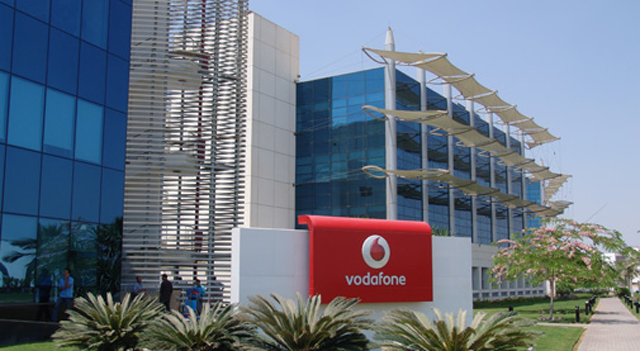
    Ericsson (NASDAQ:ERIC) and Vodafone Group Plc (LSE:VOD) have entered into a new five-year strategic agreement aimed at transforming Vodafone’s network infrastructure across several key European markets.

    As part of the deal, Ericsson will serve as Vodafone’s exclusive radio access network (RAN) supplier in Ireland, the Netherlands, and Portugal, while continuing as a major vendor in Germany, Romania, and Egypt.

    The partnership is designed to enhance Vodafone’s leadership in network quality and user experience by deploying Ericsson’s latest 5G hardware and software, enabling advanced 5G Standalone capabilities to support a wide range of connectivity requirements.

    Vodafone will integrate Ericsson’s next-generation, Open RAN-ready Massive MIMO radios and RAN Compute systems, alongside 5G Advanced RAN software features, to boost performance and flexibility across its networks.

    The agreement also covers the rollout of the Ericsson Intelligent Automation Platform and AI-driven applications to optimize RAN performance, improve energy efficiency, and support the management of multi-vendor networks.

    Germany will be the first country to implement the platform and rApps for both Ericsson and multi-vendor RAN operations, with deployment scheduled to start in the fourth quarter of 2025.

    This new collaboration builds on Vodafone’s previous SEK 12.5 billion, eight-year agreement signed in September with Ericsson to power most of its next-generation mobile network in the UK.

    This content is for informational purposes only and does not constitute financial, investment, or other professional advice. It should not be considered a recommendation to buy or sell any securities or financial instruments. All investments involve risk, including the potential loss of principal. Past performance is not indicative of future results. You should conduct your own research and consult with a qualified financial advisor before making any investment decisions.
    Some portions of this content may have been generated or assisted by artificial intelligence (AI) tools and been reviewed for accuracy and quality by our editorial team.

  • U.S. Dollar Sees Record Investor Demand in 2025 as Global Risks Mount

    U.S. Dollar Sees Record Investor Demand in 2025 as Global Risks Mount

    The U.S. dollar recorded its highest level of investor demand this year, according to new data from Bank of America released on Monday.

    The surge was fueled by hedge funds and asset managers increasing their dollar exposure, with heightened concerns surrounding Japan and France amplifying caution toward short dollar positions, the bank noted.

    Hedge funds were particularly active in buying the greenback against the Japanese yen, Australian dollar, and various emerging market currencies. Asset managers, meanwhile, concentrated their purchases on dollar positions versus the euro, the report showed.

    The strong appetite was also evident in the options market, where investors reinforced their dollar exposure primarily against the euro and emerging market currencies — highlighting the broad scope of demand.

    Analysts at Bank of America added that the dollar’s rally could have been even stronger if not for offsetting supply from corporates and official institutions, which helped temper the upward momentum during the week.

    This content is for informational purposes only and does not constitute financial, investment, or other professional advice. It should not be considered a recommendation to buy or sell any securities or financial instruments. All investments involve risk, including the potential loss of principal. Past performance is not indicative of future results. You should conduct your own research and consult with a qualified financial advisor before making any investment decisions.
    Some portions of this content may have been generated or assisted by artificial intelligence (AI) tools and been reviewed for accuracy and quality by our editorial team.

  • Gold Hits All-Time High as U.S.–China Trade Tensions Drive Safe-Haven Demand

    Gold Hits All-Time High as U.S.–China Trade Tensions Drive Safe-Haven Demand

    Gold prices steadied in Asian trading on Tuesday after briefly surging to a fresh record above $4,100 per ounce, as escalating frictions between Washington and Beijing triggered renewed demand for safe-haven assets. Silver also hit new highs before retreating.

    Spot gold was up 0.4% at $4,125.35 per ounce by 03:41 ET (07:41 GMT), while U.S. gold futures edged 0.1% higher to $4,138.40 per ounce.

    The spike came in the wake of threats from U.S. President Donald Trump to impose 100% tariffs on Chinese imports, responding to Beijing’s new export restrictions on key minerals used in electronics and defense industries.

    Trump later softened his tone, writing on social media: “Don’t worry about China” and emphasizing that the U.S. was not seeking to harm Beijing.

    U.S. Treasury Secretary Scott Bessent told Fox Business Network that a meeting between Trump and Chinese President Xi Jinping remains on the agenda for later this month in South Korea, raising hopes for some form of dialogue.

    Meanwhile, China’s Ministry of Commerce confirmed on Tuesday that working-level discussions with the U.S. were ongoing this week, while vowing to “fight till the end” against U.S. actions.

    The back-and-forth has added to market uncertainty, pushing investors toward gold. A slightly weaker U.S. dollar further supported the rally.

    Silver Retreats After Record Peak; Metals Lose Momentum

    Silver pulled back 1.7% to $49.565 per ounce after reaching a record high above $53. Platinum also dipped 1.2% to $1,658.45.

    Benchmark copper futures on the London Metal Exchange fell 2.8% to $10,519.05 per ton, while U.S. copper futures slid 3.4% to $4.96 per pound amid renewed worries over Chinese demand.

    This content is for informational purposes only and does not constitute financial, investment, or other professional advice. It should not be considered a recommendation to buy or sell any securities or financial instruments. All investments involve risk, including the potential loss of principal. Past performance is not indicative of future results. You should conduct your own research and consult with a qualified financial advisor before making any investment decisions.
    Some portions of this content may have been generated or assisted by artificial intelligence (AI) tools and been reviewed for accuracy and quality by our editorial team.
  • Oil Slips as Renewed U.S.–China Trade Tensions Cloud Outlook

    Oil Slips as Renewed U.S.–China Trade Tensions Cloud Outlook

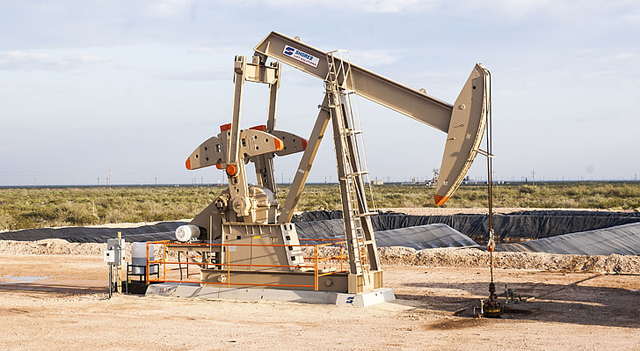
    Oil prices turned lower on Tuesday after briefly rising earlier in the session, as growing uncertainty over escalating trade frictions between the U.S. and China — the world’s two largest economies — rekindled concerns about global fuel demand.

    Brent crude futures fell 28 cents, or 0.4%, to $63.04 a barrel by 06:30 GMT, while U.S. West Texas Intermediate dropped 23 cents, or 0.4%, to $59.26. In the previous session, Brent gained 0.9% and WTI rose 1%.

    “While working-level talks between two sides continue, the Chinese side has vowed a ’fight to the end’, if there’s a fight. Oil markets will be sensitive to such rhetoric emanating from either camp, though we expect the price movements to remain rather rangebound in the near term,” said Suvro Sarkar, energy sector team lead at DBS Bank.

    U.S. Treasury Secretary Scott Bessent reiterated on Monday that President Donald Trump still intends to meet Chinese President Xi Jinping in South Korea later this month, as both sides work to ease trade tensions triggered by tariff threats and export restrictions.

    But sentiment remains fragile after Beijing expanded export controls on rare earths last week and Trump threatened 100% tariffs along with software export curbs starting November 1.

    Adding to the friction, China on Tuesday imposed sanctions on five U.S.-linked subsidiaries of South Korean shipbuilder Hanwha Ocean Co., Ltd.. At the same time, both Washington and Beijing are set to levy new port fees on shipping companies transporting a wide range of goods — from consumer products to crude oil.

    This content is for informational purposes only and does not constitute financial, investment, or other professional advice. It should not be considered a recommendation to buy or sell any securities or financial instruments. All investments involve risk, including the potential loss of principal. Past performance is not indicative of future results. You should conduct your own research and consult with a qualified financial advisor before making any investment decisions.
    Some portions of this content may have been generated or assisted by artificial intelligence (AI) tools and been reviewed for accuracy and quality by our editorial team.

  • Dow Jones, S&P, Nasdaq, Wall Street, Futures Edge Lower Ahead of Bank Earnings, Powell Speech, and Gold’s Record High

    Dow Jones, S&P, Nasdaq, Wall Street, Futures Edge Lower Ahead of Bank Earnings, Powell Speech, and Gold’s Record High

    U.S. equity futures slipped on Tuesday as investors braced for a wave of earnings reports from major Wall Street banks and awaited remarks from Federal Reserve Chair Jerome Powell. The pullback comes as renewed U.S.–China trade tensions weigh on sentiment, gold hits another record high, and oil retreats.

    Futures Decline as Markets Turn Cautious

    U.S. stock futures traded lower early Tuesday, with investors preparing for a fresh round of bank earnings and Powell’s upcoming comments. By 03:01 ET, S&P 500 futures had dropped 47 points (−0.7%), Nasdaq 100 futures were down 230 points (−0.9%), and Dow futures slipped 197 points (−0.4%).

    The move follows a rebound on Monday, when equities recovered much of their prior losses after President Donald Trump struck a more conciliatory tone on trade. His earlier threat to impose 100% tariffs on Chinese goods over rare earth export controls had triggered Friday’s sell-off, though he later moderated his stance.

    U.S. Treasury Secretary Scott Bessent also confirmed that the much-anticipated meeting between Trump and Chinese President Xi Jinping in South Korea later this month “remains on track,” fueling hopes of easing trade tensions between the world’s two largest economies.

    One of the most notable movers in early trading was Broadcom Inc. (NASDAQ:AVGO), which surged more than 9% after OpenAI announced a major commitment to purchase up to 10 gigawatts of AI processors from the chipmaker — a development that reignited enthusiasm around the AI sector.

    Bank Earnings in Focus

    Investor attention is now turning to quarterly results from some of the biggest U.S. lenders, traditionally marking the unofficial start of earnings season.

    Before the opening bell, JPMorgan Chase & Co. (NYSE:JPM) — the country’s largest bank — will report results, alongside Wells Fargo & Company (NYSE:WFC), Goldman Sachs Group, Inc. (NYSE:GS) and Citigroup Inc. (NYSE:C). Bank of America Corporation (NYSE:BAC) and Morgan Stanley (NYSE:MS) will follow on Wednesday.

    The sector is expected to post solid earnings supported by a resilient U.S. economy, which has underpinned loan demand across consumer and commercial segments. M&A activity has also gained traction after earlier tariff-related uncertainty, helped by easing regulations and expectations for lower interest rates.

    Still, markets will be listening closely to executives’ forward guidance. JPMorgan CEO Jamie Dimon has previously warned of a possible market correction “within the next six months to two years,” pointing to geopolitical instability, fiscal uncertainty, and rising defense spending as key risks.

    Powell to Address Economic Outlook

    Fed Chair Jerome Powell is set to speak Tuesday at the annual meeting of the National Association for Business Economics.

    Powell is expected to “lament” the lack of crucial economic data during the ongoing U.S. government shutdown, analysts at Vital Knowledge said. The shutdown has delayed the release of several key indicators used by the Fed to guide monetary policy. While furloughed staff have reportedly been recalled to deliver September’s CPI data, the timeline for other reports remains uncertain.

    Markets currently anticipate a 25-basis-point rate cut at the Fed’s next meeting on October 28–29, according to CME FedWatch Tool. Last month, the central bank made a similar move, restarting an easing cycle aimed partly at supporting the labor market.

    The shutdown, however, shows no sign of ending soon, even as the Senate reconvenes later on Tuesday.

    Gold Hits All-Time High

    Gold prices surged to a new record above $4,100 per ounce as investors sought safety amid rising trade risks and expectations of lower U.S. interest rates. Spot gold was up 0.4% at $4,125.35 per ounce by 03:41 ET, while U.S. gold futures rose 0.1% to $4,138.40.

    The metal has soared more than 50% so far this year, surpassing $4,100 for the first time on Monday. Strong central bank buying, ETF inflows, rate-cut bets, and geopolitical uncertainty have all contributed to the rally.

    Oil Retreats as Trade Tensions Weigh

    Oil prices fell as renewed trade concerns fueled worries about global demand. Brent crude slipped 1.8% to $62.21 a barrel by 03:47 ET, while West Texas Intermediate lost 1.8% to $58.43.

    The drop comes as China announced sanctions on five U.S.-linked subsidiaries of Hanwha Ocean Co., Ltd., and both Washington and Beijing imposed additional port fees on shipping firms — many of which are key crude transporters.

    Traders are also awaiting the latest monthly oil market report from the International Energy Agency, expected later today, which will provide fresh insights into global supply and demand dynamics.

    This content is for informational purposes only and does not constitute financial, investment, or other professional advice. It should not be considered a recommendation to buy or sell any securities or financial instruments. All investments involve risk, including the potential loss of principal. Past performance is not indicative of future results. You should conduct your own research and consult with a qualified financial advisor before making any investment decisions.
    Some portions of this content may have been generated or assisted by artificial intelligence (AI) tools and been reviewed for accuracy and quality by our editorial team.