Category: Market News

  • DAX, CAC, FTSE100, European Markets Edge Higher as Trump Adopts Softer Stance on China

    DAX, CAC, FTSE100, European Markets Edge Higher as Trump Adopts Softer Stance on China

    European equities traded mostly in positive territory on Monday after U.S. President Donald Trump struck a less confrontational tone on trade relations with Beijing, saying that everything would be “fine” and that Washington was not aiming to “hurt” China.

    Investor sentiment also centered on France, where Prime Minister Sébastien Lecornu, reappointed last Friday, unveiled his new cabinet amid growing concerns over budgetary pressures that have unsettled both businesses and investors.

    Economic news was limited, though data from Destatis indicated that wholesale inflation in Germany continued to accelerate in September. Wholesale prices rose 1.2% year-on-year, up from a 0.7% increase in August and 0.5% in July.

    Major European indexes were mixed but leaned upward: Germany’s DAX and France’s CAC 40 both climbed 0.2%, while the U.K.’s FTSE 100 dipped 0.1%, bucking the broader trend.

    In corporate news, shares of PSI Software (TG:PSAN) surged after private equity firm Warburg Pincus announced plans for a voluntary public takeover valued at more than €700 million.

    French fintech Sidetrade (EU:ALBFR) also rallied after signing binding agreements to acquire 100% of EzyCollect.

    Exosens (EU:EXENS) rose sharply following news that Theon International Plc (EU:THEON) intends to purchase a 9.8% stake in the company for €268.7 million.

    Swedish construction firm Skanska (USOTC:SKBSY) gained after securing a $175 million (approximately SEK 1.7 billion) contract with Ridgeline Development Partners to build a residential and hotel complex in downtown Nashville, Tennessee.

    Dutch neurotechnology company Onward Medical (EU:ONWD) advanced after delivering its Q3 2025 business update, while British retailer Pets at Home (LSE:PETS) moved higher after launching the second phase of its £25 million share buyback program.

    In contrast, shares of AstraZeneca (LSE:AZN) declined after the pharmaceutical group became the second company to strike a deal with the Trump administration to lower drug prices in exchange for tariff relief.

    This content is for informational purposes only and does not constitute financial, investment, or other professional advice. It should not be considered a recommendation to buy or sell any securities or financial instruments. All investments involve risk, including the potential loss of principal. Past performance is not indicative of future results. You should conduct your own research and consult with a qualified financial advisor before making any investment decisions.
    Some portions of this content may have been generated or assisted by artificial intelligence (AI) tools and been reviewed for accuracy and quality by our editorial team.


  • Gold Rally Shows Signs of Peaking, But No Sharp Selloff Expected: Deutsche Bank

    Gold Rally Shows Signs of Peaking, But No Sharp Selloff Expected: Deutsche Bank

    The recent surge in gold prices may be approaching its peak momentum, according to analysts at Deutsche Bank, who note that the September–October rally has already lasted 29 trading sessions — well above the historical median of 18 to 19 days.

    Analyst Michael Hsueh explained that this rally has combined a strong directional trend with unusually low volatility, conditions that likely favored trend-following strategies earlier in the move. But a recent uptick in realized volatility suggests that this supportive backdrop may be fading.

    Hsueh clarified that he does not see this as a sign of an imminent downturn. He cited the June–August period as a precedent, when gold consolidated without undergoing a meaningful correction. He also highlighted that fair value models have increased by $260–290 per ounce since early August, creating a buffer even as spot prices have surged by nearly $700.

    Another notable factor this time around is the strength of white metals. Silver has climbed to $51 an ounce, supported by “record lease rates on Friday at 20% for 3-month silver,” while palladium has also rallied strongly after lagging for much of 2025. Hsueh argued that this broader co-movement aligns more closely with long-term historical patterns, suggesting that the earlier gold-only rally may have been the outlier.

    While futures positioning data is currently unavailable due to the U.S. government shutdown, ETF flows point to slowing inflows rather than net outflows.

    Hsueh also mentioned a leaseback transaction by Umicore involving tied-up gold inventory but cautioned against reading too much into it. “In describing the decision, Umicore noted that historically stable lease rates mean that their annual lease costs ‘will be more than offset by reduced financing costs’,” he said.

    Hsueh added that the gold-to-WTI ratio trade remains attractive, with a target range of 72–73. This could be reached either through gold rising toward $4,450 per ounce or crude oil easing toward the bank’s $55 per barrel forecast for 2026.

    This content is for informational purposes only and does not constitute financial, investment, or other professional advice. It should not be considered a recommendation to buy or sell any securities or financial instruments. All investments involve risk, including the potential loss of principal. Past performance is not indicative of future results. You should conduct your own research and consult with a qualified financial advisor before making any investment decisions.
    Some portions of this content may have been generated or assisted by artificial intelligence (AI) tools and been reviewed for accuracy and quality by our editorial team.
  • Silver Hits All-Time High as Gold Rally and Tight Supply Drive Market Surge

    Silver Hits All-Time High as Gold Rally and Tight Supply Drive Market Surge

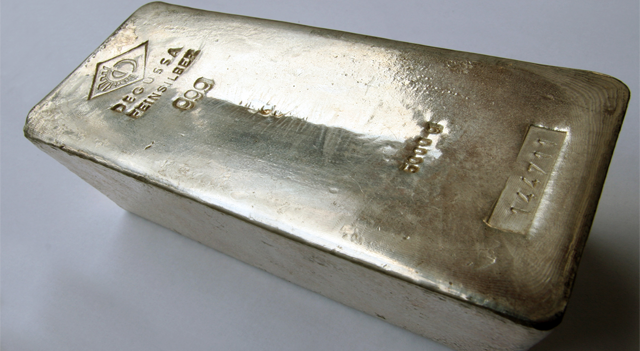
    Silver prices soared to unprecedented levels on Monday, jumping 5% in early trading as a powerful rally in gold and tightening liquidity conditions amplified bullish sentiment across precious metals markets.

    Futures for silver in New York surged to $49.63 an ounce, while spot gold advanced 2.7% to $51.66, reflecting strong investor demand for safe-haven assets.

    Analysts at Goldman Sachs said silver is poised to benefit from ongoing capital inflows into precious metals as the Federal Reserve cuts interest rates. “However, in the near term, we see greater volatility and downside risk than for gold, reflecting silver’s smaller and less liquid market,” they added.

    Lease rates for physical silver — the cost investors pay to borrow the metal — spiked more than 35%, according to market observers. Demand for immediate delivery has pushed premiums to record highs, underlining the tight availability of silver bars in London vaults as speculative interest surges.

    Elsewhere in the precious metals complex, platinum futures climbed 3.3% to $1,676.90 an ounce, extending the rally.

    This content is for informational purposes only and does not constitute financial, investment, or other professional advice. It should not be considered a recommendation to buy or sell any securities or financial instruments. All investments involve risk, including the potential loss of principal. Past performance is not indicative of future results. You should conduct your own research and consult with a qualified financial advisor before making any investment decisions.
    Some portions of this content may have been generated or assisted by artificial intelligence (AI) tools and been reviewed for accuracy and quality by our editorial team.
  • G20 Watchdog Warns Soaring Asset Prices Could Trigger Market Crash

    G20 Watchdog Warns Soaring Asset Prices Could Trigger Market Crash

    The Financial Stability Board (FSB) has cautioned that the sharp rise in global equity and asset prices has increased the risk of a sudden downturn, as fragile economic conditions and heightened geopolitical uncertainty leave markets vulnerable to a crash.

    In a letter to G20 finance ministers dated October 8, FSB Chair Andrew Bailey stressed that multilateral cooperation is essential not only to prevent future crises but also to underpin sustainable growth.

    “While most jurisdictions have seen a rebound in financial markets in recent months, valuations could now be at odds with the uncertain economic and geopolitical outlook, leaving markets susceptible to a disorderly adjustment,” the letter said.

    The warning comes shortly after U.S. President Donald Trump threatened “massive” new tariffs on China in response to Beijing’s tightening of rare earth export rules—an announcement that triggered the steepest drop on Wall Street in nearly six months.

    Bailey also flagged the continued rise in sovereign debt levels as a key concern, emphasizing that structural vulnerabilities within the global financial system remain significant.

    “The need for global standards and cooperation therefore remains abundantly clear,” the letter said.

    Bailey noted that the FSB, which brings together central banks and regulators from G20 economies, will “pivot” its approach by shifting from policy development toward monitoring and ensuring the implementation of agreed global reforms that are still incomplete.

    “The effectiveness of these measures depends on their timely, consistent and comprehensive implementation across all jurisdictions,” he said.

    This content is for informational purposes only and does not constitute financial, investment, or other professional advice. It should not be considered a recommendation to buy or sell any securities or financial instruments. All investments involve risk, including the potential loss of principal. Past performance is not indicative of future results. You should conduct your own research and consult with a qualified financial advisor before making any investment decisions.
    Some portions of this content may have been generated or assisted by artificial intelligence (AI) tools and been reviewed for accuracy and quality by our editorial team.
  • Dow Jones, S&P, Nasdaq, Wall Street, Futures Rally as Trump Softens Tone on China Trade Tensions — Key Market Drivers

    Dow Jones, S&P, Nasdaq, Wall Street, Futures Rally as Trump Softens Tone on China Trade Tensions — Key Market Drivers

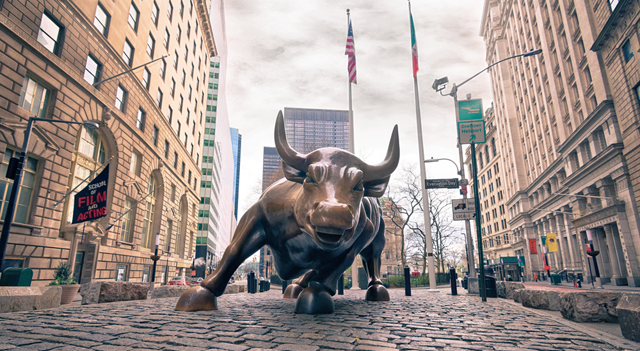
    U.S. equity futures surged on Monday after President Donald Trump signaled a less confrontational stance toward Beijing over the weekend, easing investor anxiety about a renewed escalation in trade tensions. While Trump reiterated his ability to impose steep new tariffs on China, he also stressed he was not looking to “hurt” the country. Strong Chinese export data added to the optimism, though broader concerns about the global outlook linger. Gold soared to new record highs as investors sought safety, while oil prices rebounded from recent lows.

    Futures surge

    Wall Street futures climbed sharply at the start of the week, buoyed by signs that Trump may be adopting a more conciliatory approach after rattling markets on Friday with new tariff threats against China.

    By 03:19 ET, Dow futures were up 468 points (1.0%), S&P 500 futures rose 96 points (1.5%), and Nasdaq 100 futures jumped 472 points (1.9%).

    Friday’s selloff came after Trump’s social media posts revived fears of a full-blown trade war between the world’s two largest economies. Following Beijing’s announcement of expanded export controls on rare earth materials, Trump said he would impose additional 100% tariffs on Chinese goods bound for the U.S. He also warned of new U.S. export restrictions on “any and all critical software” by November 1 and suggested that there was no longer a reason to meet with Chinese counterpart Xi Jinping at a planned summit in South Korea later this month — though the meeting was not called off entirely.

    The remarks reignited concerns over a tariff escalation that had largely subsided since the tentative truce reached earlier this year.

    Trump says U.S. not looking to “hurt” China

    Over the weekend, Trump struck a more reassuring tone, insisting that the U.S. was not aiming to “hurt” China.

    Beijing defended its export controls on rare earth elements as a response to what it described as U.S. aggression but refrained from imposing new tariffs.

    “This latest dispute could still blow over if cool heads prevail,” analysts at Capital Economics wrote, noting that the upcoming meeting between Trump and Xi could serve as “an off-ramp.” They cautioned, however, that “both sides may dig in their heels, expecting their opponent to fold first,” and pointed out that while China has weathered U.S. tariffs better than expected, further escalation could have serious economic consequences.

    On Sunday, the U.S. Trade Representative said Washington reached out to China for a phone call after the rare earth announcement, but Beijing postponed the conversation. Chinese officials also criticized Washington for “double standards,” pointing to U.S. trade blacklists and port fee measures.

    China exports surpass expectations

    Chinese export growth came in stronger than forecast in September, even as the threat of renewed trade tensions with Washington clouded the economic outlook.

    Exports from the world’s second-largest economy grew 8.3% year-on-year, beating expectations of 6% and accelerating sharply from August’s 4.4% increase.

    “This resilience shows that China has strengthened trade with the rest of the world amid U.S. protectionism,” ING analysts said.

    Beijing has diversified its export markets to reduce reliance on U.S. trade, helping it stay on track for 5% annual GDP growth. However, Trump’s threat of triple-digit tariffs could still put pressure on this strategy.

    Gold’s new record

    Gold prices hit another all-time high Monday, approaching $4,100 an ounce, as investors flocked to safe-haven assets amid ongoing geopolitical uncertainty.

    Spot gold rose 1.3% to $4,070.29 an ounce by 02:53 ET (05:53 GMT), after reaching a record $4,078.05 earlier in the session. U.S. Gold Futures climbed 1.6% to $4,089.45 per ounce.

    Silver also reached a new peak, riding the momentum in the precious metals market. Bullion prices surged after Trump’s tariff remarks rattled financial markets Friday, underscoring gold’s role as a haven during periods of political and economic volatility. While Trump’s softened stance eased some concerns, traders remained cautious about further policy swings from the White House.

    Oil bounces after touching five-month lows

    Oil prices also climbed after dropping to their lowest levels in five months during the previous session, as investors bet on a possible easing of trade tensions between Washington and Beijing.

    Brent crude futures rose 1.6% to $63.72 a barrel by 03:47 ET, while U.S. West Texas Intermediate futures gained 1.6% to $59.83.

    On Friday, both benchmarks had closed at their weakest since May 7, down 3.82% and 4.24%, respectively. WTI settlement will occur on Tuesday due to a U.S. holiday on Monday.

    Analysts noted that easing tensions in Gaza also contributed to stabilizing oil prices. Over the weekend, Hamas released the first group of Israeli hostages as part of the initial phase of a ceasefire agreement brokered by the U.S., a move that could help reduce supply concerns in the Middle East.

    This content is for informational purposes only and does not constitute financial, investment, or other professional advice. It should not be considered a recommendation to buy or sell any securities or financial instruments. All investments involve risk, including the potential loss of principal. Past performance is not indicative of future results. You should conduct your own research and consult with a qualified financial advisor before making any investment decisions.
    Some portions of this content may have been generated or assisted by artificial intelligence (AI) tools and been reviewed for accuracy and quality by our editorial team.
  • Dollar Slips as Trump Softens Rhetoric on Trade Dispute

    Dollar Slips as Trump Softens Rhetoric on Trade Dispute

    The U.S. dollar weakened on Monday as traders bet on a more measured stance from Washington following its recent tariff threat against Beijing. The move came after markets tumbled on Friday, though political shifts in France and Japan weighed on both the euro and yen.

    The dollar index — a gauge of the greenback against six major currencies — was down 0.1% at 98.908, extending losses from last week. This followed a brief recovery after U.S. President Donald Trump’s announcement of 100% tariffs on Chinese imports triggered a market selloff.

    The announcement revived memories of Trump’s sweeping tariff moves earlier in the year and sent both equities and cryptocurrencies sharply lower to end the week.

    “Certainly it’s pretty nervous out there,” said Tim Kelleher, head of institutional FX Sales at Commonwealth Bank in Auckland. “If you look at the U.S. and China stuff, it looks like Trump has done a bit of a TACO again and softened his tone,” he added, referring to a trading adage that “Trump always chickens out.”

    On Sunday, Trump sought to calm markets after his tariff announcement, posting on Truth Social: “Don’t worry about China, it will all be fine! Highly respected President Xi just had a bad moment. He doesn’t want Depression for his country, and neither do I. The U.S.A. wants to help China, not hurt it!!!”

    Holiday-related thin trading could affect liquidity later in the day, with parts of the U.S. observing Columbus Day/Indigenous Peoples’ Day, though stock exchanges will remain open. Japan’s markets were closed for Health and Sports Day.

    The euro held steady at $1.1622 in Asian trading after the French presidency unveiled Prime Minister Sebastien Lecornu’s new cabinet, retaining Roland Lescure as finance minister. Against the yen, the dollar climbed 0.5% to 151.89 yen as investors weighed the political outlook for Liberal Democratic Party leader Sanae Takaichi, following Komeito’s exit from the ruling coalition on Friday.

    In digital assets, bitcoin swung between gains and losses after Friday’s plunge, last down 0.2% at $114,849.14. Gold hit a new record of $4,068 per ounce, gaining 1.2%. Meanwhile, the offshore yuan advanced 0.2% to 7.1357 per dollar after Chinese export growth picked up in September.

    “What China does in response to Trump’s latest tariff announcement will also affect how markets will respond in the coming days,” said Vasu Menon, managing director for investment strategy at OCBC in Singapore. “Both the U.S. and China know that they cannot afford to ratchet up tensions too much, especially after having accomplished so much in trade talks in recent months,” he added. “Ultimately, confrontation between the two superpowers could give way to reason, and the two leaders could prioritise their economies over their egos.”

    Elsewhere, the Australian dollar strengthened 0.8% to $0.6525, the kiwi rose 0.3% to $0.5735, and sterling edged up 0.1% to $1.3347.

    This content is for informational purposes only and does not constitute financial, investment, or other professional advice. It should not be considered a recommendation to buy or sell any securities or financial instruments. All investments involve risk, including the potential loss of principal. Past performance is not indicative of future results. You should conduct your own research and consult with a qualified financial advisor before making any investment decisions.
    Some portions of this content may have been generated or assisted by artificial intelligence (AI) tools and been reviewed for accuracy and quality by our editorial team.

  • Oil Prices Rebound as Investors Eye US-China Trade Dialogue

    Oil Prices Rebound as Investors Eye US-China Trade Dialogue

    Oil prices recovered some ground on Monday after falling to their lowest levels in five months during the previous session, with traders pinning hopes on potential talks between the U.S. and Chinese presidents that could ease tensions between the world’s two largest economies and energy consumers.

    Brent crude futures rose 92 cents, or 1.47%, to $63.65 a barrel by 06:22 GMT, rebounding from a 3.82% drop on Friday — its lowest close since May 7. U.S. West Texas Intermediate (WTI) crude gained 89 cents, or 1.51%, to $59.79 a barrel after tumbling 4.24% on Friday, also the lowest since May 7. WTI will settle on Tuesday due to a U.S. holiday on Monday.

    “Last week’s price meltdown was largely on the back of ceasefire in Gaza and return of U.S.-China trade volatility ahead of the 10-Nov trade truce deadline,” said Suvro Sarkar, energy analyst at DBS Bank. He added that the selloff now appears to be limited by both sides showing “willingness to negotiate,” with short-term trends depending on the outcome of the discussions.

    Tensions escalated last week after China widened its rare earth export controls. In response, U.S. President Donald Trump announced plans to impose 100% tariffs on Chinese exports to the U.S. and introduce new export restrictions on “any and all critical software” by November 1.

    However, Trump sought to calm markets over the weekend, posting on Truth Social: “Don’t worry about China, it will all be fine!”

    The developments come ahead of a potential meeting between Trump and Chinese President Xi Jinping during the Asia-Pacific Economic Cooperation forum in South Korea later this month. Jamison Greer, the U.S. Trade Representative, said the encounter could still take place.

    “The most likely scenario seems to be that both sides pull back on the most aggressive policies and that talks lead to a further – and possibly indefinite – extension of the tariff escalation pause reached in May,” analysts at Goldman Sachs wrote in a note. They also warned of the possibility of a renewed flare-up in tensions, which could temporarily result in higher tariffs or tighter export restrictions.

    Oil markets have been highly sensitive to trade developments between the U.S. and China, with prices having plunged during previous bouts of tariff escalations earlier this year.

    On the demand side, Chinese customs data showed that crude oil imports rose 3.9% year-on-year in September to 11.5 million barrels per day — the highest level so far this year — as refiners increased production and stockpiling continued.

    In the Middle East, an official involved in the operation confirmed that Palestinian militant group Hamas released the first seven surviving Israeli hostages on Monday, marking the initial phase of a ceasefire agreement brokered with help from Trump to end the conflict in Gaza.

    This content is for informational purposes only and does not constitute financial, investment, or other professional advice. It should not be considered a recommendation to buy or sell any securities or financial instruments. All investments involve risk, including the potential loss of principal. Past performance is not indicative of future results. You should conduct your own research and consult with a qualified financial advisor before making any investment decisions.
    Some portions of this content may have been generated or assisted by artificial intelligence (AI) tools and been reviewed for accuracy and quality by our editorial team.
  • Gold Hits New Record High Near $4,100/oz as US-China Trade Tensions Flare

    Gold Hits New Record High Near $4,100/oz as US-China Trade Tensions Flare

    Gold soared to unprecedented levels in Asian trading on Monday, approaching the $4,100 per ounce threshold as renewed friction between the U.S. and China fueled a flight to safe-haven assets.

    Spot gold climbed 1.3% to $4,070.29 an ounce by 02:53 ET (05:53 GMT) after hitting a record intraday peak of $4,078.05 earlier in the session. U.S. Gold Futures advanced 1.6% to $4,089.45/oz. Silver followed suit, setting a new all-time high as investors piled into precious metals.

    Trump Escalates Trade Dispute with China

    The surge came after U.S. President Donald Trump intensified trade tensions on Friday, threatening to impose tariffs of up to 100% on Chinese imports and further restrict exports of sensitive technology.

    The remarks unsettled financial markets, prompting a rush toward safe-haven assets like gold. Over the weekend, however, Trump adopted a more reassuring stance, telling markets to “not worry about China” and indicating that Washington was not preparing an immediate escalation. While the softer tone eased some market anxiety, traders remained cautious given the White House’s unpredictable policy shifts.

    Beijing responded by stating it was “not afraid” of a trade war and vowed to take all necessary steps to defend its interests. The firm rhetoric amplified concerns over a renewed flare-up in U.S.-China economic tensions.

    Gold prices have surged more than 50% since the start of the year, supported by strong safe-haven demand, expectations of lower U.S. interest rates, and steady central bank buying. The metal has also benefited from increased geopolitical uncertainty and pressure on global equity markets.

    Silver Extends Rally; Industrial Metals Strengthen

    Silver Futures continued their upward momentum, hitting a record $51.7 per ounce, up about 2.4% on the day. Analysts attributed the gains to a mix of strong investment inflows, tightening supply, and a short squeeze in London markets.

    Platinum Futures rose nearly 3% to $1,669.60/oz, while benchmark Copper Futures on the London Metal Exchange climbed 1.5% to $10,572.75 a ton. U.S. Copper Futures also advanced 1.7% to $4.98 a pound.

    Industrial metals were buoyed by Chinese trade figures showing that both exports and imports in September surged well above expectations, despite U.S. tariff threats — a signal of trade resilience from the world’s second-largest economy.

    This content is for informational purposes only and does not constitute financial, investment, or other professional advice. It should not be considered a recommendation to buy or sell any securities or financial instruments. All investments involve risk, including the potential loss of principal. Past performance is not indicative of future results. You should conduct your own research and consult with a qualified financial advisor before making any investment decisions.
    Some portions of this content may have been generated or assisted by artificial intelligence (AI) tools and been reviewed for accuracy and quality by our editorial team.

  • Trump Strikes Drug Pricing Deal with AstraZeneca

    Trump Strikes Drug Pricing Deal with AstraZeneca

    The administration of U.S. President Donald Trump and AstraZeneca (LSE:AZN) announced Friday that they have reached an agreement for the U.K.-based pharmaceutical company to lower drug prices in the U.S.

    This development follows a similar arrangement between the Trump administration and Pfizer (NYSE:PFE), which was unveiled at the end of last month.

    Under the deal, AstraZeneca will sell its drugs to Medicaid patients at the lowest price offered in other developed countries — what Trump calls “most-favored nation” pricing — through a new government platform, TrumpRx.gov. According to Mehmet Oz, Administrator of the Centers for Medicare & Medicaid Services, AstraZeneca’s primary care medications will be accessible on the site from early next year, and future prescription drugs will also be priced under the same model.

    AstraZeneca CEO Pascal Soriot confirmed that the company will be exempt from pharmaceutical sector tariffs as part of the agreement. Pfizer accepted similar conditions in its deal with the administration, receiving a three-year exemption from tariffs in return for continued investment in U.S. manufacturing.

    In July, AstraZeneca announced plans to invest $50 billion in the U.S. by 2030. Additional details about this investment were shared on Friday, ahead of the official pricing announcement.

    The agreement was formally unveiled during a White House event attended by Trump, senior administration officials, and Soriot. MSNBC was the first to report on the deal.

    Trump has repeatedly pressed pharmaceutical companies to reduce prices and expand domestic production amid growing frustration among voters over high U.S. drug costs compared to other advanced economies. In recent months, his administration has threatened tariffs of up to 250% on the sector, prompting several major drugmakers to ramp up investment in the U.S.

    Trump has said he intends to secure similar agreements with additional pharmaceutical companies in the coming weeks. “Most of them are here because of tariffs,” he said.

    This content is for informational purposes only and does not constitute financial, investment, or other professional advice. It should not be considered a recommendation to buy or sell any securities or financial instruments. All investments involve risk, including the potential loss of principal. Past performance is not indicative of future results. You should conduct your own research and consult with a qualified financial advisor before making any investment decisions. Some portions of this content may have been generated or assisted by artificial intelligence (AI) tools and been reviewed for accuracy and quality by our editorial team.

  • DAX, CAC, FTSE100, European Markets Rebound Modestly After Friday’s Selloff

    DAX, CAC, FTSE100, European Markets Rebound Modestly After Friday’s Selloff

    European equities found firmer footing on Monday, supported by gains in technology and mining stocks, following a sharp market drop triggered by escalating U.S.-China trade tensions late last week.

    The pan-European STOXX 600 climbed 0.6% by 07:19 GMT, recovering part of Friday’s 1.3% loss after U.S. President Donald Trump threatened to impose 100% tariffs on Chinese goods.

    While Asian markets continued to slide, European bourses and U.S. futures showed signs of stabilization as Trump struck a more conciliatory tone over the weekend, helping improve investor sentiment.

    France’s CAC 40 gained 0.9%, leading major European indexes, following the reappointment of Sébastien Lecornu as prime minister just four days after his resignation.

    Shares of AstraZeneca (LSE:AZN) added 0.7% after Trump announced an agreement allowing the UK-based pharmaceutical group to provide certain drugs at discounted prices to Medicaid in exchange for tariff relief.

    German software maker PSI Software (TG:PSAN) surged 37% to its highest level since 2021 after Warburg Pincus confirmed plans to acquire the company in a deal worth over €700 million, as previously reported by Reuters.

    Meanwhile, Exosens (EU:EXENS) jumped nearly 13% after Theon International (EU:THEON) revealed its intention to purchase a 9.8% stake in its French peer. Theon’s shares slipped 4.6%.

    This content is for informational purposes only and does not constitute financial, investment, or other professional advice. It should not be considered a recommendation to buy or sell any securities or financial instruments. All investments involve risk, including the potential loss of principal. Past performance is not indicative of future results. You should conduct your own research and consult with a qualified financial advisor before making any investment decisions.
    Some portions of this content may have been generated or assisted by artificial intelligence (AI) tools and been reviewed for accuracy and quality by our editorial team.