Category: Market News

  • Gold Slips as Stronger Dollar and Rate Expectations Offset Geopolitical Risk

    Gold Slips as Stronger Dollar and Rate Expectations Offset Geopolitical Risk

    Gold prices traded lower on Monday as investors weighed renewed tensions in the Middle East against expectations that interest rates could remain higher for longer, reducing demand for safe-haven bullion.

    By 07:15 ET (11:15 GMT), spot gold had fallen 1.3% to US$4,035.82 an ounce, while gold futures declined 1.1% to US$4,049.92 an ounce.

    Media reports suggested that the United States and Iran had reached an agreement to suspend recent military exchanges in the Strait of Hormuz, helping ease immediate concerns over disruptions to global shipping. However, The New York Times, citing a U.S. official, reported that Iran has yet to formally endorse the arrangement.

    According to the newspaper, discussions will continue over the implementation of a memorandum of understanding between Washington and Tehran. The Wall Street Journal also reported that negotiations could resume in Doha, Qatar, as early as Tuesday, while Axios was the first outlet to report both the ceasefire agreement and the return to diplomatic talks.

    Inflation Concerns Keep Pressure on Bullion

    Oil prices remained close to pre-conflict levels, although recent volatility has kept concerns alive that higher energy costs could feed inflation and encourage central banks, including the Federal Reserve, to tighten monetary policy further.

    “[T]here’s still plenty of risk facing the oil market. Even so, participants appear to be shrugging off these developments, instead focusing on what a continued recovery in oil flows would mean for the global balance,” ING analysts said.

    “This complacency is odd and clearly leaves significant upside risk if the supply recovery proves slow[.]”

    Gold also came under pressure from continued strength in the U.S. dollar, which tends to reduce international demand for the metal. Investors have continued to favour the greenback as a defensive asset during the Iran conflict, partly because the United States is viewed as relatively insulated from higher oil prices due to its position as a major energy exporter.

    Attention now turns to a busy week of U.S. economic releases, including nonfarm payrolls, consumer confidence, job openings and private-sector employment data, all of which could shape expectations for future Federal Reserve policy.

  • Wall Street Futures Rise as Tech Shares Rebound and Geopolitical Fears Ease: Dow Jones, S&P, Nasdaq

    Wall Street Futures Rise as Tech Shares Rebound and Geopolitical Fears Ease: Dow Jones, S&P, Nasdaq

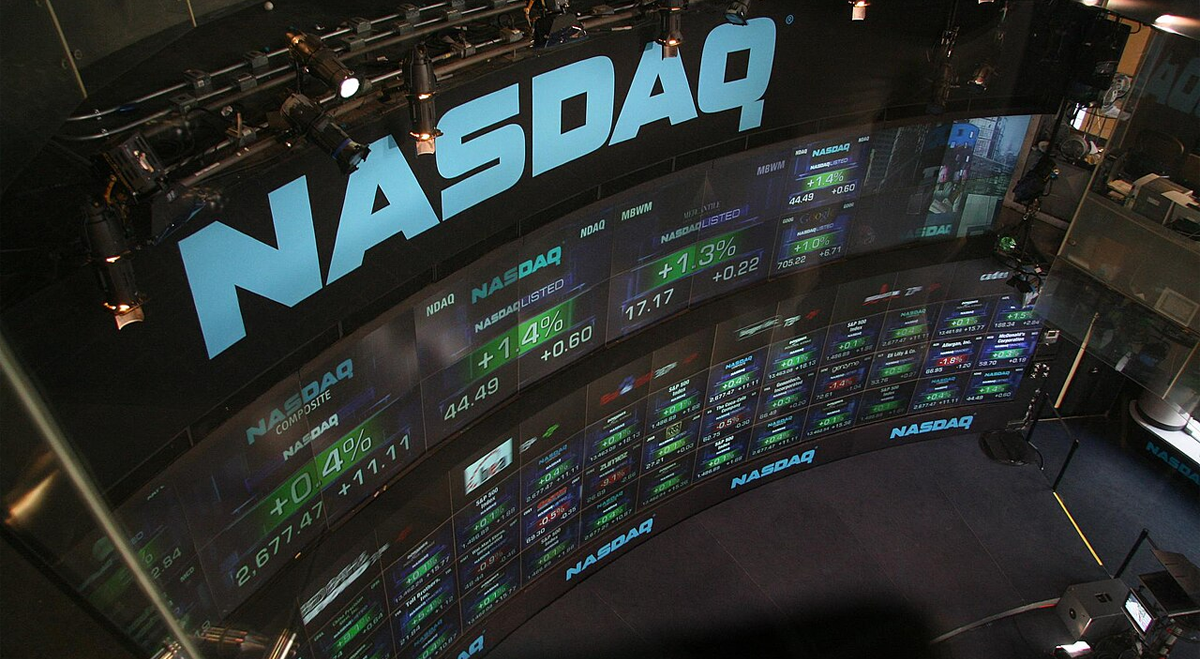
    U.S. equity futures moved higher on Monday, with technology stocks expected to lead the market after investors returned to the sector following last week’s sharp decline.

    Nasdaq 100 futures advanced 1.2% before the opening bell, suggesting traders are taking advantage of lower valuations after the technology-heavy benchmark lost more than 4% over the previous week.

    Market sentiment was further supported by South Korea’s announcement of a US$576 billion investment strategy focused on semiconductors and artificial intelligence. The programme, backed by Samsung and SK Hynix, aims to strengthen the country’s competitive position in the global chip industry.

    Investors Monitor Fresh U.S.-Iran Negotiations

    Attention also remained on developments in the Middle East after reports indicated that Washington and Tehran had agreed to suspend military action once again following weekend strikes.

    President Donald Trump said on Truth Social that Iran had requested renewed negotiations, with talks expected to take place in Doha, Qatar.

    “Once again, the familiar pattern has played out: renewed exchanges between the U.S. and Iran over the weekend briefly unsettled markets, only for reports of both sides returning to negotiations to restore confidence by Monday morning,” said Daniela Hathorn, Senior Market Analyst at Capital.com.

    “That confidence, however, may be getting ahead of the facts,” she added. “While markets appear comfortable pricing a relatively swift normalization of energy markets, there remain clear signs that negotiations are far from straightforward.”

    Investors Recover After Last Week’s Tech Sell-Off

    Wall Street ended Friday with only modest declines after recovering from early losses, as investors weighed geopolitical developments and repositioned ahead of a busy week for economic data.

    The Dow Jones Industrial Average fell 44.51 points, or 0.1%, to 51,876.11. The Nasdaq Composite declined 60.99 points, or 0.2%, to 25,297.62, while the S&P 500 slipped 3.47 points, or 0.1%, to 7,354.02.

    For the week, the Dow gained 0.6%, while the S&P 500 lost 2.0% and the Nasdaq dropped 4.6%, reflecting continued pressure on large-cap technology shares.

  • European Stocks Trade Mixed as Tech Sector Gains on South Korea AI Investment Plan: DAX, CAC, FTSE100

    European Stocks Trade Mixed as Tech Sector Gains on South Korea AI Investment Plan: DAX, CAC, FTSE100

    European equity markets were mixed on Monday, with technology stocks providing support after South Korea unveiled a US$576 billion investment programme aimed at strengthening its leadership in semiconductors and artificial intelligence, backed by Samsung and SK Hynix.

    Germany’s DAX gained 0.1%, while the UK’s FTSE 100 hovered around the flatline. France’s CAC 40 underperformed, slipping 0.6%.

    Energy markets also remained in focus, with crude oil prices edging higher following renewed tensions between the United States and Iran ahead of upcoming peace negotiations in Qatar.

    Technology Stocks Lead Market Gains

    Semiconductor-related shares outperformed across Europe, with ASML Holding (EU:ASML), Infineon (TG:IFX) and STMicroelectronics (BIT:STMMI) (EU:STMPA) advancing between 1% and 3%.

    Among individual movers, Nordex Group (TG:NDX1) climbed around 1% after the German wind turbine manufacturer secured a 325-megawatt project in the United States.

    Dutch technology investor Prosus N.V. (EU:PRX) rose 2.4% after reporting an 84% increase in full-year adjusted core profit.

    French pharmaceutical group Ipsen (EU:IPN) gained 1.7% after announcing an agreement to acquire U.S.-based Kartos Therapeutics in a transaction valued at up to US$1.75 billion.

    Meanwhile, BT Group (LSE:BT.A) added around 1% after reaching an agreement with Verizon (NYSE:VZ) to combine their international operations through a new joint venture.

  • Market Open: BT-Verizon Joint Venture, Smiths News Contract

    Market Open: BT-Verizon Joint Venture, Smiths News Contract

    FTSE 100 edges lower as BT and Verizon unveil a global venture, Smiths News secures a major contract and Brent crude remains in focus.

    Market Overview

    UK markets opened little changed, with the FTSE 100 easing marginally after the previous session, while European trading was mixed. The FTSE 100 slipped 0.00 per cent to 10,507.83, the Euronext 100 gained 0.06 per cent to 1,898.60 and Germany’s DAX advanced 0.17 per cent to 24,724.34. Overnight, the Nasdaq closed lower at 25,297.62 and the S&P 500 finished slightly down at 7,354.02. Investors continued to monitor developments in the Middle East alongside corporate news including BT’s strategic partnership with Verizon.

    Commodity markets reflected ongoing geopolitical caution. Brent crude edged higher as traders assessed renewed US-Iran tensions and developments involving Qatar, while copper softened and gold was little changed. Against sterling, the US dollar strengthened slightly, while the euro and Swiss franc were broadly steady and the Japanese yen weakened. Bitcoin traded slightly higher versus the pound.


    Market Numbers

    FTSE 100: Down, 10,507.83
    Euronext 100: Up (+0.06%), 1,898.60
    DAX: Up (+0.17%), 24,724.34
    NASDAQ: Down, 25,297.62
    S&P 500: Down, 7,354.02


    In the Headlines

    Global telecoms venture – BT Group (LSE:BT.A)
    BT and Verizon will combine their international enterprise businesses into a 50:50 joint venture with around $4 billion in annual revenue. The deal is intended to strengthen global connectivity services for multinational customers while allowing both companies to focus more closely on their domestic markets.

    Distribution contract – Smiths News (LSE:SNWS)
    Smiths News has secured a long-term agreement to continue distributing Associated Newspapers titles. The contract provides greater revenue visibility and reinforces the company’s position within the UK newspaper distribution market.


    Currencies (vs GBP)

    USD: Down (-0.01%), $1.3197
    CHF: Down (-0.01%), Fr.1.0690
    EUR: Up (+0.00%), €1.1591
    JPY: Up (+0.01%), ¥213.511
    AUD: Up (+0.01%), $1.9136
    Bitcoin (BTC/GBP): Up (-0.33%), £45,361.59


    Commodities

    Copper: Down
    Gold: Down
    Brent Crude: Down
    Natural Gas: Down

  • Oil Prices Stabilise as U.S. and Iran Pause Hostilities

    Oil Prices Stabilise as U.S. and Iran Pause Hostilities

    Oil prices traded little changed on Monday after the United States and Iran agreed to suspend recent military action, easing immediate concerns over energy supplies even as producers across the Middle East continued exporting crude and liquefied natural gas following fresh security incidents.

    The two countries also agreed to resume negotiations over the Strait of Hormuz, raising hopes that an interim peace agreement can be preserved after several days of retaliatory strikes threatened to derail diplomatic progress.

    Brent crude futures edged 4 cents higher to US$72.03 a barrel by 08:03 GMT, while U.S. West Texas Intermediate crude gained 44 cents, or 0.6%, to US$69.67 a barrel.

    “There’s still plenty of risk facing the oil market. Even so, participants appear to be … focusing on what a continued recovery in oil flows would mean for the global balance,” ING analysts said in a note on Monday.

    “This complacency is odd and clearly leaves significant upside risk if the supply recovery proves slow.”

    Brent crude declined 10.6% last week, marking its third consecutive weekly loss, after crude shipments through the Strait of Hormuz reached their highest level since the U.S.-Israeli conflict with Iran began in late February.

    Despite renewed attacks on vessels and recent military exchanges between Washington and Tehran, Middle Eastern producers have continued loading oil and LNG cargoes, according to shipping data.

    Saudi energy giant Aramco resumed crude exports from its Ras Tanura terminal on Friday after operations had been suspended for almost four months.

    Loading activity continued even after one of the company’s helicopters crashed at Ras Tanura on Sunday, killing 14 people. Authorities have not yet determined the cause of the accident.

  • U.S. Futures Advance as Markets Watch Iran Developments and Key Economic Data: Dow Jones, S&P, Nasdaq, Wall Street

    U.S. Futures Advance as Markets Watch Iran Developments and Key Economic Data: Dow Jones, S&P, Nasdaq, Wall Street

    U.S. stock index futures traded modestly higher on Monday as investors prepared for a week packed with major economic releases and speeches from leading central bankers, while monitoring reports that the United States and Iran have agreed to suspend recent military action in the Strait of Hormuz.

    Futures Edge Higher

    By 03:11 ET (07:11 GMT), Dow Jones futures had added 107 points, or 0.2%, S&P 500 futures were up 36 points, or 0.5%, and Nasdaq 100 futures had gained 223 points, or 0.8%.

    The major indices ended last week slightly lower after reports suggested that a highly anticipated initial public offering by ChatGPT developer OpenAI (NASDAQ:OAI) could be delayed. The news weighed on artificial intelligence and data centre stocks, which have been among the strongest beneficiaries of heavy investment in AI infrastructure.

    “The deterioration in sentiment around AI has certainly weighed on the Nasdaq and capitalization-weight S&P, but by diminishing the stranglehold this industry has had on markets, money is being liberated to shift into more neglected areas,” analysts at Vital Knowledge said in a note.

    Reports Point to Temporary U.S.-Iran Ceasefire

    According to media reports, Washington and Tehran have agreed to suspend several days of retaliatory strikes around the Strait of Hormuz, easing concerns over shipping through one of the world’s most strategically important energy routes.

    The Wall Street Journal, citing U.S. officials and sources involved in the negotiations, reported that both countries are preparing to resume diplomatic discussions. Officials indicated that the United States had proposed holding talks in Doha, although the timing of the meeting has not yet been finalised.

    The latest military tensions began on Thursday following attacks near the Strait of Hormuz, disrupting shipping traffic that had only recently begun recovering after an earlier ceasefire agreement linked to negotiations over Iran’s nuclear programme. As around one-fifth of global oil and liquefied natural gas flows through the waterway, any disruption continues to represent a significant risk to the global economy.

    Oil Holds Firm

    Oil prices remained relatively stable as traders continued to assess the outlook for tanker traffic in the Persian Gulf. Brent crude was up 0.5% at US$72.32 per barrel, while U.S. West Texas Intermediate crude rose 1.0% to US$69.91 per barrel.

    “The oil market has seen only modest gains this morning despite the re-escalation between the U.S. and Iran […],” analysts at ING said in a note to clients.

    “Even so, we continue to believe the market is too optimistic about the timeline for a recovery in Persian Gulf supplies[.]”

    Central Banks and Data in Focus

    Attention now turns to the European Central Bank’s annual Sintra Forum in Portugal, which opens with a keynote address from ECB President Christine Lagarde. The event will also feature a panel discussion on Wednesday involving Federal Reserve Chair Kevin Warsh.

    Investors are looking for further guidance on monetary policy after recent uncertainty over whether higher energy prices could generate renewed inflationary pressures. While the ECB and the Bank of Japan have already raised interest rates, the Federal Reserve and the Bank of England have so far kept policy unchanged.

    Markets will also receive a series of important economic indicators during the week, including Eurozone inflation figures and the U.S. employment report.

    Preliminary data are expected to show Eurozone inflation easing to 3.0% in June from 3.2% in May, while core inflation is forecast to remain at 2.6%.

    In the United States, Thursday’s non-farm payrolls report is expected to show that 114,000 jobs were created in June, down from 172,000 in May, with the unemployment rate projected to remain at 4.3%.

    Ahead of the employment figures, investors will also monitor consumer confidence, job openings, private-sector payrolls and manufacturing activity.

    “Ultimately, the key directional catalyst will be June’s payrolls,” the ING analysts said in a note.

  • European Stocks Trade Cautiously as Middle East Risks Keep Investors on Edge: DAX, CAC, FTSE100

    European Stocks Trade Cautiously as Middle East Risks Keep Investors on Edge: DAX, CAC, FTSE100

    European equity markets were broadly subdued on Monday as investors assessed the stability of the temporary ceasefire between the United States and Iran, while firmer oil prices renewed concerns about inflation.

    The pan-European STOXX 600 slipped 0.03% to 635.66 points after a volatile trading week that produced only limited gains. Germany’s DAX, France’s CAC 40 and the UK’s FTSE 100 were little changed, while Italy’s FTSE MIB eased 0.2%.

    Investor sentiment remained cautious following renewed military action between Washington and Tehran over the weekend after an attack on a commercial vessel near the Strait of Hormuz. Although both sides later agreed to suspend further retaliatory strikes ahead of technical talks scheduled for Tuesday in Doha, uncertainty surrounding the situation discouraged investors from taking significant new positions.

    Oil prices moved modestly higher as traders continued to monitor the potential impact of disruptions to shipping through the strategically important Strait of Hormuz. The renewed focus on geopolitical tensions and energy-driven inflation followed last week’s technology-led market weakness, when concerns over elevated valuations weighed on artificial intelligence-related stocks across global markets.

    Attention is now shifting towards a busy week of economic events. Investors are awaiting the latest U.S. non-farm payrolls report, which is expected to play a key role in shaping expectations for Federal Reserve policy and whether markets continue to anticipate two additional 25-basis-point interest rate increases before year-end.

    In Europe, June readings for consumer confidence and business sentiment are also due later in the day. Market participants will closely follow comments from European Central Bank President Christine Lagarde at the opening of the ECB’s Sintra Forum, looking for further guidance on the outlook for Eurozone interest rates, with markets currently expecting at least one additional ECB rate increase this year.

    Among individual stocks, Nagarro (TG:NA9) surged 90% after receiving takeover approaches, while Prosus (EU:PRX) gained 2% following the release of its full-year financial results.

  • European Natural Gas Prices Rise as Middle East Tensions Renew Supply Concerns

    European Natural Gas Prices Rise as Middle East Tensions Renew Supply Concerns

    European wholesale natural gas prices moved higher on Monday morning as renewed geopolitical tensions in the Middle East raised concerns about the security of global liquefied natural gas supply routes.

    The benchmark Dutch front-month gas contract advanced 1.6% to €41.38 per megawatt-hour, while the equivalent UK contract also gained 1.6%, reaching 99.29 pence per therm.

    The gains followed renewed military tensions between the United States and Iran around the Strait of Hormuz, one of the world’s most important energy shipping corridors. Although both countries agreed to temporarily halt retaliatory military action ahead of technical talks scheduled for Tuesday in Doha, traders remained concerned that any renewed escalation could disrupt LNG shipments and delay maritime traffic.

    Weather and Economic Outlook Support Prices

    The latest rise comes despite broader market fundamentals that had previously limited price gains. European gas storage facilities remain well supplied, helping to offset some of the risks associated with tighter global markets.

    However, updated weather forecasts pointing to above-average temperatures across southern Europe have added further support to prices. Higher summer temperatures are expected to increase demand for gas-fired electricity generation as air conditioning use rises, potentially tightening short-term supply.

    Investors are also monitoring the wider economic backdrop. Rising energy prices have revived concerns about inflation ahead of several key economic events later this week, including the release of U.S. non-farm payrolls data and a speech by European Central Bank President Christine Lagarde, both of which could influence expectations for future interest rate decisions.

  • Eurozone Bond Yields Rise as Middle East Risks Renew Inflation Concerns

    Eurozone Bond Yields Rise as Middle East Risks Renew Inflation Concerns

    Eurozone government bond yields moved higher on Monday as renewed tensions in the Middle East and higher oil prices revived inflation worries, encouraging investors to favour the U.S. dollar over European fixed-income assets.

    Germany’s benchmark 10-year Bund yield rose to 2.86%, recovering from the multi-month lows reached last week, while the policy-sensitive two-year German yield climbed to 2.53% as markets reassessed the outlook for interest rates.

    Bond markets came under pressure after renewed military activity around the Strait of Hormuz over the weekend. Although Washington and Tehran agreed to suspend retaliatory strikes ahead of technical talks scheduled for Tuesday in Doha, concerns over the security of one of the world’s most important shipping routes pushed crude oil prices higher, bringing inflation risks back into focus after equity market volatility dominated sentiment last week.

    Investors are also preparing for several major economic events later this week. Trading in sovereign debt remained cautious ahead of the latest U.S. non-farm payrolls report, which could either reinforce or challenge expectations that the Federal Reserve will deliver two further 25-basis-point interest rate increases before the end of the year.

    Within the euro area, markets are awaiting June data on consumer confidence and business activity. Investors will also closely monitor remarks from European Central Bank President Christine Lagarde as she opens the ECB’s annual Sintra Forum, where Bank of England Governor Andrew Bailey and Federal Reserve Chair Kevin Warsh are also due to participate.

    Market participants will be looking for any indication that policymakers disagree with current market expectations, which continue to price in at least one additional 25-basis-point rate increase from the ECB following its recent decision to lift the deposit rate to 2.25%.

  • Orient Express Targets AI-Era Billionaires as Accor and LVMH Expand Luxury Experiences

    Orient Express Targets AI-Era Billionaires as Accor and LVMH Expand Luxury Experiences

    Orient Express, the luxury travel venture jointly owned by Accor (EU:AC) and LVMH (EU:MC), is positioning itself to attract a new generation of ultra-wealthy travellers with the launch of its first luxury yacht, as the partners broaden their presence in the fast-growing market for premium experiences.

    The new vessel, which cruises along the French and Italian Riviera, is the first of two planned yachts and forms part of a wider expansion that also includes luxury hotels and a forthcoming revival of the iconic Art Deco Orient Express train. Accor Chief Executive Sebastien Bazin told Reuters that the rapid creation of wealth driven by artificial intelligence is expected to generate a fresh wave of high-net-worth clients seeking exclusive experiences.

    “When you are getting rich, very rich, money hasn’t got the same meaning,” Bazin said. “The only thing that has a meaning is recognition. Have you become someone?”

    According to a Bain study published this week, spending on luxury experiences is forecast to increase by between 9% and 11% this year, significantly outperforming the expected 1% to 4% growth in personal luxury goods. The trend is being fuelled by the expansion of the technology sector, particularly in the United States, creating more ultra-high-net-worth individuals who increasingly spend on private aviation, superyachts and exclusive global events such as Formula One.

    “When people are very rich and they have seven homes, and 12 cars, and 17 watches… they still have a bucket list of things they promised themselves to do before dying. It’s not to have an 18th watch,” Bazin said in an interview with Reuters this week.

    Bazin also confirmed that Accor and LVMH each hold reciprocal options to buy out the other’s stake in the Orient Express venture in the coming years. While neither company has disclosed the business’s valuation or profitability, the luxury assets are estimated to be worth around €1 billion.

    Industry observers believe LVMH would be the more likely buyer should either party exercise its option, given its significantly larger financial resources and growing focus on experiential luxury as demand for traditional luxury goods such as handbags, fashion and watches moderates.

    Luxury Experiences at the Centre of the Strategy

    Orient Express is initially targeting affluent guests attending high-profile events including the Cannes Film Festival and the Monaco Formula One Grand Prix, where exclusivity and status remain key attractions.

    “If you’ve been to a Monaco Formula One, if you want to go around, you need badges everywhere. Certain people would have certain badges,” said Estelle Dinh, a professor at Switzerland-based hospitality school Gilon and industry advisor.

    Prices for a four-day cruise start at approximately €25,000 for an entry-level suite. The yacht also showcases several LVMH brands, including a Guerlain beauty salon and Hennessy cognac featured prominently in its premium penthouse suites.