Category: Market News

  • Altona Rare Earths Boosts Balance Sheet with £600,000 Capital Raise

    Altona Rare Earths Boosts Balance Sheet with £600,000 Capital Raise

    Altona Rare Earths Plc (LSE:REE) has strengthened its financial footing by securing £600,000 through the exercise of existing warrants. The proceeds will be used to repay outstanding debt, following on from a previous successful fundraising round. In addition, the company has extended its £500,000 debt facility with Catalyse Capital Limited, further reinforcing its liquidity position and providing added flexibility to support project development.

    Altona has also appointed Zeus Capital Limited as its corporate broker — a strategic move aimed at increasing its visibility in the capital markets. Together, these financial initiatives are expected to enhance operational capacity and support long-term value creation for shareholders as the company advances its portfolio of critical mineral projects across Africa.

    About Altona Rare Earths

    Altona Rare Earths Plc is a London Main Market-listed exploration and development company dedicated to unlocking the potential of critical raw materials in Africa. Its flagship Monte Muambe Project in Mozambique contains rare earth elements, fluorspar, and gallium mineralisation. The company is progressing the rare earths initiative in collaboration with the US Government as a potential strategic partner, while also accelerating development of its fluorspar assets. In addition, Altona is advancing exploration at the Sesana Copper-Silver Project in Botswana as part of its broader growth and diversification strategy.

    This content is for informational purposes only and does not constitute financial, investment, or other professional advice. It should not be considered a recommendation to buy or sell any securities or financial instruments. All investments involve risk, including the potential loss of principal. Past performance is not indicative of future results. You should conduct your own research and consult with a qualified financial advisor before making any investment decisions.


  • Angus Energy Outlines Debt Restructuring Strategy and Eyes Potential Acquisition

    Angus Energy Outlines Debt Restructuring Strategy and Eyes Potential Acquisition

    Angus Energy (LSE:ANGS) has unveiled plans for a potential debt restructuring agreement with Trafigura, a move aimed at strengthening its financial foundation and supporting future growth initiatives. By restructuring its debt, the company expects to enhance its ability to access new capital, paving the way for expanded production, organic growth, and possible merger and acquisition opportunities.

    In parallel, Angus Energy is carrying out due diligence on a potential acquisition involving producing assets in the Gulf of America. A final decision from the board on whether to proceed with the deal is still pending, but the move reflects the company’s efforts to diversify its portfolio and boost production capacity.

    Despite these strategic initiatives, the company faces notable financial headwinds. Persistent revenue declines and weak profitability continue to weigh on its performance. Technical indicators currently signal neutral momentum, and valuation remains pressured by negative earnings. However, management’s operational plans and ongoing restructuring efforts offer some positive signals for longer-term recovery.

    About Angus Energy

    Angus Energy plc is a UK AIM-listed independent oil and gas company and one of the leading onshore gas producers in the United Kingdom. Its core operations focus on expanding domestic production and pursuing international opportunities. The company holds a 100% interest in the Saltfleetby Gas Field, majority stakes in the Brockham and Lidsey oil fields, and a 25% interest in the Balcombe Licence. Angus operates all the fields in which it maintains an ownership stake.

    This content is for informational purposes only and does not constitute financial, investment, or other professional advice. It should not be considered a recommendation to buy or sell any securities or financial instruments. All investments involve risk, including the potential loss of principal. Past performance is not indicative of future results. You should conduct your own research and consult with a qualified financial advisor before making any investment decisions.

  • Ferro-Alloy Resources Reports Strong Feasibility Study Results for Vanadium Project

    Ferro-Alloy Resources Reports Strong Feasibility Study Results for Vanadium Project

    Ferro-Alloy Resources Limited (LSE:FAR) has released encouraging findings from its feasibility study for Phase 1 of the Balasausqandiq vanadium development. The study outlines a net present value of approximately $748 million and an internal rate of return of 22%, signaling the project’s potential to become a major low-cost producer in the global vanadium market.

    The company noted that there is room to unlock additional value through process improvements and operational efficiencies. It is currently in active discussions with financial institutions to secure the necessary funding, with a focus on optimizing production economics to strengthen the project’s profitability. This positions Ferro-Alloy strategically as the vanadium market heads toward a projected supply shortfall by 2029.

    Despite the promising project metrics, the company’s financial health remains strained. Weak revenues and ongoing losses highlight elevated risks. Although technical indicators show solid momentum, the overbought status of the stock signals the need for investor caution. Its negative P/E ratio and absence of dividend yield continue to weigh on overall valuation.

    About Ferro-Alloy Resources

    Ferro-Alloy Resources operates within the mining sector, specializing in vanadium extraction and production. Its flagship asset is the Balasausqandiq deposit in southern Kazakhstan, which has the potential to rank among the world’s largest and lowest-cost sources of vanadium. Alongside this project, the company is exploring additional product streams and engineering enhancements to strengthen its competitive edge in the growing energy transition metals market.

    This content is for informational purposes only and does not constitute financial, investment, or other professional advice. It should not be considered a recommendation to buy or sell any securities or financial instruments. All investments involve risk, including the potential loss of principal. Past performance is not indicative of future results. You should conduct your own research and consult with a qualified financial advisor before making any investment decisions.

  • Ceres Power Holdings: Strategic milestones and headwinds in its latest earnings call

    Ceres Power Holdings: Strategic milestones and headwinds in its latest earnings call

    Ceres Power Holdings (LSE:CWR) recently held its earnings call, offering a balanced view of its progress and challenges. The overall tone was cautiously optimistic, with the company highlighting major achievements in production, strategic partnerships, and financial discipline, while also acknowledging persistent issues such as revenue recognition difficulties, operating losses, and a slowdown in order intake.

    Production milestone in South Korea

    A key development was the official start of production in partnership with Doosan Corporation in South Korea. This marks a crucial shift for Ceres from a research and development focus to scaled commercial manufacturing.

    Major investments and partnerships

    Ceres secured significant backing, including a £170 million investment from Delta Electronics to support new manufacturing facilities in Taiwan. The company is also expanding its footprint in India through its partnerships with Shell plc and Thermax Limited, supported by the launch of the HydroGenx Hub.

    Strong balance sheet and cost reductions

    The company reported a solid financial position, with more than £100 million in cash and positive cash flow. Ceres also exceeded its cost-reduction goal, cutting operating expenses by 17% versus its original 15% target, as part of a broader operational efficiency plan.

    High margins and business transformation

    Ceres continues to maintain industry-leading gross margins, giving it flexibility to reinvest in growth. To address structural challenges, it has announced a business transformation program aimed at cutting costs by 20% and sharpening its commercial focus.

    Revenue recognition and forecasting challenges

    The company faces ongoing uncertainty around revenue recognition, driven by the complexity of its manufacturing license agreements (MLAs) and accounting standards such as IFRS 15. The timing of new MLA signings remains unclear, adding pressure to forecasting efforts.

    Losses and weaker order intake

    Despite generating revenue, Ceres continues to operate at a loss, primarily due to heavy investment in stack platform development. Order intake also fell sharply to £0.9 million, down from the prior year, signaling a key area for improvement.

    Looking ahead

    Ceres aims to execute its transformation plan to lower operating expenses by about 20% and position itself more competitively in the growing power and hydrogen markets, which are expected to expand significantly by 2030.

    In short, Ceres Power is navigating a mix of progress and pressure points. While revenue recognition challenges, losses, and weak order growth remain hurdles, the company’s strong financial position, strategic partnerships, and operational focus set the stage for future growth opportunities.

    This content is for informational purposes only and does not constitute financial, investment, or other professional advice. It should not be considered a recommendation to buy or sell any securities or financial instruments. All investments involve risk, including the potential loss of principal. Past performance is not indicative of future results. You should conduct your own research and consult with a qualified financial advisor before making any investment decisions.

  • Euro and yen head for weekly losses despite modest Friday rebound

    Euro and yen head for weekly losses despite modest Friday rebound

    The euro and the yen strengthened slightly against the U.S. dollar on Friday but remained on track for sharp weekly declines as political turbulence in France and shifting monetary policy expectations in Japan kept traders on edge.

    By 05:27 ET (09:27 GMT), the euro was trading at $1.1571 against the greenback, posting only a modest rise. Even so, the single currency is still set for its biggest weekly slide in nearly a year.

    In France, President Emmanuel Macron faces a self-imposed deadline today to name his sixth Prime Minister in under two years, following the collapse of the government led by short-lived premier Sébastien Lecornu.

    François Villeroy de Galhau, Governor of Banque de France, warned that the current political turmoil could shave at least 0.2 percentage points off the country’s growth and further undermine business and consumer confidence. “Markets will be keeping close tabs on the situation,” he told a French radio station.

    Yen trims losses on stronger inflation data and intervention talk

    The yen edged higher as well, with USD/JPY falling about 0.3% from its eight-month peak. Fresh producer price data for September came in stronger than expected, hinting at an acceleration in broader inflation.

    The Bank of Japan has reiterated its stance that any rate increases will depend on price growth, but the government is widely expected to push back on tightening. Expectations for resistance grew after fiscal dove Sanae Takaichi emerged as the frontrunner to become the next Prime Minister.

    Her election as leader of the ruling Liberal Democratic Party (Japan) sparked a sharp selloff in the yen earlier this week, as markets priced in the likelihood of more fiscal stimulus and loose monetary policy. The yen is still down nearly 4% for the week, its steepest drop since October 2024.

    That weakness has fueled speculation about possible intervention to stabilize the currency. Finance Minister Katsunobu Katō added to market chatter, saying the government was concerned about “one-sided, rapid moves” in currency markets.

    Dollar heads for best week in a year

    The greenback remains well-supported, helped by pressure on the euro and yen and renewed debate over how far Federal Reserve System will go in cutting rates. The U.S. Dollar Index slipped 0.2% to 99.34 but hovered near two-month highs.

    “Markets are quite clearly rethinking popular short-USD trades, but further gains may prove harder to sustain unless markets start to price out Fed easing,” analysts at ING Group said in a note.

    “The dollar can consolidate some gains today, but remains at risk of corrections in our view, and another rally would start to bring the greenback dangerously far from what short-term rate differentials justify.”

    This content is for informational purposes only and does not constitute financial, investment, or other professional advice. It should not be considered a recommendation to buy or sell any securities or financial instruments. All investments involve risk, including the potential loss of principal. Past performance is not indicative of future results. You should conduct your own research and consult with a qualified financial advisor before making any investment decisions.

  • Dow Jones, S&P, Nasdaq, Wall Street, U.S. Futures Edge Higher; Michigan Survey Looms; Applied Digital Jumps; Gold Retreats

    Dow Jones, S&P, Nasdaq, Wall Street, U.S. Futures Edge Higher; Michigan Survey Looms; Applied Digital Jumps; Gold Retreats

    U.S. stock futures pointed to modest gains early Friday as traders looked ahead to fresh data on consumer sentiment from University of Michigan, with official economic releases still on hold due to the ongoing federal government shutdown. Meanwhile, shares of Applied Digital Corporation (NASDAQ:APLD) surged in after-hours trading following better-than-expected revenue results, while Levi Strauss & Co. (NYSE:LEVI) slipped after earnings failed to fully meet investors’ high expectations. Gold also fell below $4,000 per ounce as the ceasefire between Israel and Hamas reduced its safe-haven appeal.

    U.S. Futures Inch Up

    By 02:42 ET, Dow Jones Industrial Average futures were up 68 points (0.2%), S&P 500 futures rose 11 points (0.2%), and Nasdaq 100 futures added 54 points (0.2%).

    Wall Street finished lower on Thursday as investors balanced the continued U.S. government shutdown with ongoing optimism around artificial intelligence. Market participants have started to raise concerns about the increasingly circular nature of AI-related deals, but analysts say many investors remain eager to stay in the rally.

    Shares of PepsiCo, Inc. (NASDAQ:PEP) and Delta Air Lines (NYSE:DAL) gained after strong quarterly results, setting the tone ahead of the broader earnings season.

    Michigan Consumer Sentiment Survey in Focus

    The shutdown has left the economic calendar sparse, delaying major releases such as inflation and labor market data. If Congress does not reach a deal soon, more key indicators, including inflation numbers scheduled for next week, could be delayed.

    The Federal Reserve System cut rates by 25 basis points last month and signaled the possibility of further easing this year, but without fresh economic data, the timing and scope of future decisions are uncertain. Policymakers are turning to alternative indicators, including the University of Michigan’s consumer sentiment and inflation expectations survey, due Friday.

    Applied Digital Soars on Strong Results

    Shares of Applied Digital surged after the data center operator posted an 84% jump in fiscal first-quarter revenue to $64.2 million, well above the $50 million expected, according to LSEG data. The company also reported a smaller-than-expected per-share loss of $0.03.

    Rising demand for computing power to support AI development has fueled rapid growth in the data center sector. In August, Applied Digital secured a new lease agreement with CoreWeave, and analysts anticipate additional deals later this year.

    Levi Strauss Raises Guidance But Shares Drop

    Levi Strauss reported third-quarter earnings of $0.34 per share, ahead of expectations of $0.30. Revenue came in at $1.54 billion, up from $1.50 billion a year earlier, also beating forecasts. The company raised its full-year adjusted earnings forecast to $1.27–$1.32 per share, compared with its prior range of $1.25–$1.30.

    Levi also increased its net revenue growth outlook to around 3% and organic growth to about 6%. Despite the strong performance, shares fell more than 6% in after-hours trading. Analysts at Vital Knowledge noted that while the company “continues to execute very well in a tough macro environment,” expectations were “fairly high” going into the results, “which might explain some of the knee-jerk disappointment.”

    Gold Falls Below $4,000/oz as Safe-Haven Demand Eases

    Gold prices declined after the ceasefire between Israel and Hamas, brokered by U.S. President Donald Trump, reduced geopolitical risk and encouraged profit-taking. The deal was approved by Israel’s government on Friday and is expected to help end the two-year war in Gaza, weighing on gold’s safe-haven appeal.

    Spot gold fell 0.3% to $3,965.93 per ounce by 03:44 ET, while December futures rose 0.2% to $3,978.52/oz. Earlier this week, prices crossed the $4,000 mark for the first time ever. A stronger dollar, supported by currency movements in the yen and euro and uncertainty over interest rates, also added pressure on precious metals.

    This content is for informational purposes only and does not constitute financial, investment, or other professional advice. It should not be considered a recommendation to buy or sell any securities or financial instruments. All investments involve risk, including the potential loss of principal. Past performance is not indicative of future results. You should conduct your own research and consult with a qualified financial advisor before making any investment decisions.
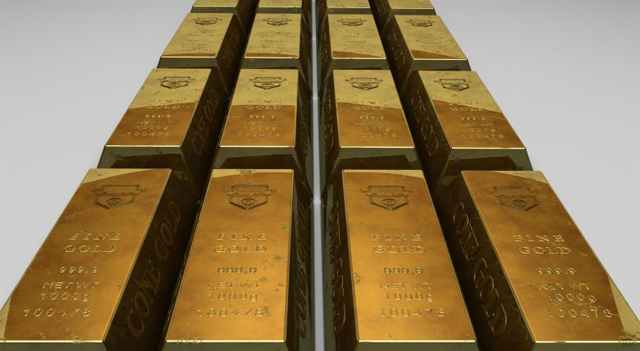
  • Gold Prices Dip Below $4,000/oz as Ceasefire Spurs Profit-Taking

    Gold Prices Dip Below $4,000/oz as Ceasefire Spurs Profit-Taking

    Gold and other precious metals pulled back on Friday as easing geopolitical tensions following the Israel-Hamas ceasefire encouraged investors to lock in profits.

    Bullion recorded sharp overnight losses and remained under pressure in Asian trading, with a stronger U.S. dollar adding further weight. Gains in the greenback were supported by lingering uncertainty over the future of U.S. interest rates, as well as declines in the Japanese yen and the euro.

    Spot gold slipped 0.2% to $3,970.88 per ounce, while December gold futures edged up 0.3% to $3,985.20/oz by 01:13 ET (05:13 GMT). Earlier this week, spot prices broke above the $4,000/oz mark for the first time, reaching a record high of $4,059.32/oz.

    Gold’s rally stalled soon after the signing of a U.S.-brokered ceasefire between Israel and Hamas. The agreement marks the first phase of a 20-point peace plan proposed by U.S. President Donald Trump and is viewed as one of the most comprehensive diplomatic efforts in the Middle East in recent years.

    But easing geopolitical tensions are expected to sap some safe-haven demand for gold. Other precious metals also declined on the back of the ceasefire, after tracking gold’s surge earlier in the week. Spot platinum dropped from near a 13-year high to trade at $1,603.92/oz on Friday, while spot silver stabilized at $49.6655/oz after briefly surpassing $51/oz and setting a record high on Thursday.

    Despite Friday’s pullback, gold remains up 2.3% for the week, marking its eighth consecutive week of gains. Silver has climbed 3.5%, while platinum is flat.

    ANZ analysts noted that recent declines were primarily driven by profit-taking after a “meteoric rise” in recent weeks. However, they expect any softness in prices to be “short-lived and shallower,” citing multiple factors that could continue to support gold.

    “We see structural drivers for gold still in place to support higher prices. The Federal Reserve is expected to remain on its easing path amid increasing downside risks to employment,” ANZ analysts wrote in a note.

    They also emphasized that ongoing political uncertainty in the U.S. could help sustain gold demand, particularly as a prolonged government shutdown keeps investors cautious.

    This content is for informational purposes only and does not constitute financial, investment, or other professional advice. It should not be considered a recommendation to buy or sell any securities or financial instruments. All investments involve risk, including the potential loss of principal. Past performance is not indicative of future results. You should conduct your own research and consult with a qualified financial advisor before making any investment decisions.

  • Oil Prices Decline as Market Risk Premium Eases Following Gaza Ceasefire Deal

    Oil Prices Decline as Market Risk Premium Eases Following Gaza Ceasefire Deal

    Oil prices extended their losses on Friday, slipping further after a 1.6% drop in the previous session as geopolitical risk premiums receded following an agreement between Israel and Hamas on the first stage of a plan to end the conflict in Gaza.

    By 06:36 GMT, Brent Crude futures were down 24 cents, or 0.4%, at $64.98 a barrel, while West Texas Intermediate (WTI) futures declined 20 cents, or 0.3%, to $61.31.

    Israel and Hamas signed a ceasefire agreement on Thursday in the first step of U.S. President Donald Trump’s initiative to end the war. Under the deal, which was ratified by the Israeli government on Friday, hostilities will end, Israel will partially withdraw from Gaza, and Hamas will release all remaining hostages in exchange for the release of hundreds of prisoners held by Israel.

    Despite the day’s decline, both crude benchmarks were up around 0.7% on the week after a steep fall last week. Prices had briefly risen about 1% on Wednesday to a one-week high, supported by stalled progress on a Ukraine peace deal, which raised the prospect of continued sanctions on Russia — the world’s second-largest oil exporter.

    “The Gaza ceasefire deal was a major step towards ending the two-year war that has raised the risk of oil supply disruptions,” Daniel Hynes, an analyst at ANZ, said in a note on Friday.

    “This (deal) saw the focus move back to the impending oil surplus, as OPEC proceeds with the unwinding of production cuts,” Hynes said.

    A smaller-than-expected November production increase agreed by OPEC and its allies (OPEC+) on Sunday helped ease oversupply fears.

    “Markets’ expectations for a sharp ramp up in crude supply have not manifested themselves in substantially lower prices,” analysts at BMI Research wrote in a note on Friday. “The most recent rise in production is lower than previously feared contributing to a slight rise in prices for the week,” they said.

    Investors are also monitoring the risk of a prolonged U.S. government shutdown, which could weaken economic activity and weigh on oil demand in the world’s largest crude consumer.

    This content is for informational purposes only and does not constitute financial, investment, or other professional advice. It should not be considered a recommendation to buy or sell any securities or financial instruments. All investments involve risk, including the potential loss of principal. Past performance is not indicative of future results. You should conduct your own research and consult with a qualified financial advisor before making any investment decisions.

  • BP Prevails in Arbitration Against Venture Global Over LNG Supply Dispute

    BP Prevails in Arbitration Against Venture Global Over LNG Supply Dispute

    BP PLC (LSE:BP.) has secured a favorable arbitration ruling in its dispute with Venture Global LNG concerning the U.S. supplier’s failure to fulfill liquefied natural gas (LNG) delivery obligations under a long-term supply agreement.

    The case revolved around Venture Global’s contractual commitment to supply LNG to BP. Although details of the arbitration award have not been disclosed, Venture Global confirmed that the panel’s decision sided with BP.

    The outcome marks a significant moment in the commercial relationship between the two energy companies and could shape the structure of their LNG supply arrangements in the future.

    This content is for informational purposes only and does not constitute financial, investment, or other professional advice. It should not be considered a recommendation to buy or sell any securities or financial instruments. All investments involve risk, including the potential loss of principal. Past performance is not indicative of future results. You should conduct your own research and consult with a qualified financial advisor before making any investment decisions.

  • DAX, CAC, FTSE100, European Stocks Flat as Autos and Banks Offset Healthcare Losses

    DAX, CAC, FTSE100, European Stocks Flat as Autos and Banks Offset Healthcare Losses

    European equities were little changed at Friday’s open, with gains in automotive and banking stocks balancing out declines in the healthcare sector. Investor attention remained on the political situation in France, where President Emmanuel Macron is expected to name a new prime minister soon.

    By 07:12 GMT, the STOXX 600 index was steady at 571.2 points, on track for a third consecutive weekly gain.

    The autos sector rose 0.9%, helped by a 1.5% jump in Milan-listed Stellantis N.V. (BIT:STLAM) shares after the company reported a 13% year-on-year increase in global vehicle shipments for the third quarter. Eurozone banks were also higher, up 0.5%, with BNP Paribas (EU:BNP) and Commerzbank AG (TG:CBK) both gaining close to 1%.

    On the downside, healthcare stocks fell 0.5%. UK-based AstraZeneca PLC (LSE:AZN) and Danish drugmaker Novo Nordisk A/S (NYSE:NVO) were each down about 1%.

    Political developments in France also drew market interest as Macron convenes meetings with mainstream political parties ahead of the deadline to name a new prime minister. French blue-chip stocks gained 0.3%.

    Meanwhile, Germany’s Energiekontor AG (TG:EKT) dropped 13.3% after the wind and solar developer cut its earnings guidance for 2025.

    This content is for informational purposes only and does not constitute financial, investment, or other professional advice. It should not be considered a recommendation to buy or sell any securities or financial instruments. All investments involve risk, including the potential loss of principal. Past performance is not indicative of future results. You should conduct your own research and consult with a qualified financial advisor before making any investment decisions.