Category: Market News

  • Director Purchase Highlights Confidence in Pets at Home

    Director Purchase Highlights Confidence in Pets at Home

    Pets at Home Group Plc (LSE:PETS) recently reported that Non-Executive Director Roger Burnley has bought 4,850 ordinary shares of the company at a price of £2.04225 each. The total value of the transaction amounts to approximately £9,906.37. The purchase, carried out on the London Stock Exchange, may be seen as a vote of confidence in the business from one of its key board members.

    The company’s fundamentals remain solid, supported by a healthy financial position and what many investors view as an appealing valuation. That said, current technical signals point to downward pressure in the near term, which could create short-term volatility. A lack of recent earnings updates or major corporate announcements leaves investors with limited additional context at this time.

    Company Overview

    Pets at Home Group Plc is a leading name in the UK pet care market. It provides a broad selection of pet products, veterinary services, and grooming solutions designed to meet the needs of pet owners nationwide.

    This content is for informational purposes only and does not constitute financial, investment, or other professional advice. It should not be considered a recommendation to buy or sell any securities or financial instruments. All investments involve risk, including the potential loss of principal. Past performance is not indicative of future results. You should conduct your own research and consult with a qualified financial advisor before making any investment decisions.


  • Gold Demand from Central Banks Doubles Long-Term Average, Driving Prices to Record Levels

    Gold Demand from Central Banks Doubles Long-Term Average, Driving Prices to Record Levels

    Gold prices have surged beyond $4,000 per ounce this week, touching their highest inflation-adjusted level since 1980. The sharp rally has been fueled primarily by an unprecedented wave of central bank purchases.

    Strategists at Deutsche Bank report that central banks are currently buying gold at twice the pace recorded between 2011 and 2021, with China leading global acquisitions. This steady accumulation has been a key force behind the metal’s rise to new nominal highs, and analysts anticipate further gains ahead.

    Gold now represents 24% of central bank reserves, according to second-quarter 2025 data—up significantly from the 9% low in late 2015. While still well below the 74.5% peak reached in the early 1980s, the latest surge marks the first time gold has regained its real, inflation-adjusted record from 45 years ago.

    The slow return to these historic levels is rooted in policy changes that began in 1979, when the International Monetary Fund banned member states from pegging their currencies to gold. That decision, which followed the collapse of the Bretton Woods system, removed the requirement for central banks to maintain large gold reserves, triggering years of net selling.

    Today, that trend has reversed. As central banks re-embrace gold as a strategic asset, comparisons are emerging between gold’s historical reserve role and the growing debate around Bitcoin. Deutsche Bank notes that discussions among policymakers increasingly include the cryptocurrency as a potential—if still contentious—reserve holding for the future.

    This content is for informational purposes only and does not constitute financial, investment, or other professional advice. It should not be considered a recommendation to buy or sell any securities or financial instruments. All investments involve risk, including the potential loss of principal. Past performance is not indicative of future results. You should conduct your own research and consult with a qualified financial advisor before making any investment decisions.
  • DAX, CAC, FTSE100, European Markets Mixed as U.K. Stocks Slip on Bank Weakness

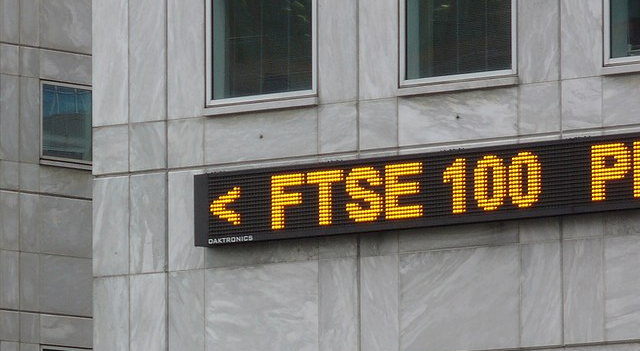
    DAX, CAC, FTSE100, European Markets Mixed as U.K. Stocks Slip on Bank Weakness

    European equities traded unevenly on Thursday, with London’s benchmark index lagging behind its continental peers as losses in major banking names dragged on sentiment.

    The session offered few economic catalysts, but fresh trade data out of Germany added to the cautious tone. Figures from Destatis showed German exports unexpectedly fell by 0.5% in August compared to July, defying expectations for a 0.3% increase. This followed a 0.2% decline the previous month.

    Imports also contracted more sharply, down 1.3% versus a 0.7% drop in July and worse than the anticipated 0.5% decline. Year over year, exports fell 3.9% after rising 1.4% previously, while imports grew just 1.0% compared with July’s 4.4% surge.

    Market reaction was split across the region. The FTSE 100 slipped 0.2%, weighed down by banking losses, while the CAC 40 and DAX climbed 0.5% each.

    Among individual movers, Südzucker AG (USOTC:SUEZF) advanced even after reporting an 82% plunge in quarterly operating profit, as investors appeared to focus on longer-term resilience despite weakness in sugar prices.

    Renewables operator Drax Group (LSE:DRX) gained ground after unveiling plans for a £450 million extension of its share buyback program aimed at reducing capital.

    Residential landlord Grainger plc (LSE:GRI) also rallied following a trading update that highlighted robust rental growth ahead of its full-year 2025 earnings release set for November 20.

    In France, IT consultancy Alten (EU:ATE) rose after revealing plans to split the chairman and CEO roles as part of a broader governance reform.

    Not all companies fared well. Gerresheimer AG (TG:GXI) slumped sharply after the packaging and medical device maker cut its 2025 outlook for the third time this year.

    Banking names were a key source of weakness in the U.K. market. HSBC Holdings (LSE:HSBA) dropped after proposing to take its struggling Hong Kong unit, Hang Seng Bank Limited, private. Lloyds Banking Group (LSE:LLOY) also fell after warning it may need to set aside more provisions tied to car finance mis-selling.

    This content is for informational purposes only and does not constitute financial, investment, or other professional advice. It should not be considered a recommendation to buy or sell any securities or financial instruments. All investments involve risk, including the potential loss of principal. Past performance is not indicative of future results. You should conduct your own research and consult with a qualified financial advisor before making any investment decisions.

  • Dow Jones, S&P, Nasdaq, Wall Street Futures, U.S. stocks set for muted open after Wednesday’s rally

    Dow Jones, S&P, Nasdaq, Wall Street Futures, U.S. stocks set for muted open after Wednesday’s rally

    U.S. equity futures signaled a quiet start to Thursday’s trading session, with major indexes hovering around the flatline after Wall Street finished mostly higher the previous day.

    The absence of key economic indicators may keep some investors on the sidelines. The ongoing federal government shutdown, now in its ninth day, continues to delay the release of critical data, including the weekly jobless claims report that was expected from the Labor Department this morning.

    While markets have largely brushed aside the immediate economic impact of the shutdown, prolonged disruptions to government services may begin to draw more attention from traders. Lawmakers in Washington remain gridlocked, with Democrats pushing to include an extension of enhanced Obamacare tax credits in a temporary funding measure.

    Remarks from Federal Reserve officials could provide some catalysts later in the day. Fed Chair Jerome Powell’s appearance at a Community Bank Conference offered no new clues on the interest rate outlook. However, speeches from Fed Governor Michael Barr and Vice Chair for Supervision Michelle Bowman are on the agenda for this afternoon.

    Wednesday’s session saw stocks reverse Tuesday’s losses, with the Nasdaq and S&P 500 notching fresh record closes. The tech-focused Nasdaq jumped 255.02 points, or 1.1%, to 23,043.38, while the S&P 500 gained 39.13 points, or 0.6%, to 6,753.72. The Dow Jones Industrial Average finished virtually unchanged, dipping 1.20 points to 46,601.78.

    Gains were driven in part by a 2.2% rally in NVIDIA Corporation (NASDAQ:NVDA), which hit a new record close after CEO Jensen Huang said on CNBC’s “Squawk Box” that demand for AI computing has increased “substantially” over the past six months.

    Investors also shrugged off the minutes from the Federal Reserve’s September meeting, which revealed a wide range of opinions on the future path of monetary policy. Most policymakers agreed that additional rate cuts would likely be appropriate this year, while others emphasized the need for caution given evolving financial conditions.

    Technology stocks led the market’s advance, with computer hardware names pushing the NYSE Arca Computer Hardware Index up 4.3% to an all-time closing high. Networking and semiconductor shares also performed strongly, further boosting the Nasdaq.

    Beyond tech, gold miners gained ground as the precious metal continued its upward momentum, lifting the NYSE Arca Gold Bugs Index 2.8%. Steel and airline stocks also moved higher, while the banking sector showed mild weakness.

    This content is for informational purposes only and does not constitute financial, investment, or other professional advice. It should not be considered a recommendation to buy or sell any securities or financial instruments. All investments involve risk, including the potential loss of principal. Past performance is not indicative of future results. You should conduct your own research and consult with a qualified financial advisor before making any investment decisions.

  • Dollar holds steady as political turmoil in Europe and Japan meets U.S. shutdown

    Dollar holds steady as political turmoil in Europe and Japan meets U.S. shutdown

    The U.S. dollar stabilized on Thursday as investors weighed the impact of political uncertainty in Europe and Japan against the backdrop of an ongoing U.S. federal government shutdown.

    In Europe, attention shifted away from discussions over proposed EU steel import tariffs and back to the deepening political crisis in France. French President Emmanuel Macron’s office confirmed on Wednesday that he will appoint a new prime minister within 48 hours following the resignation of Premier Sebastien Lecornu earlier this week. Lecornu’s abrupt departure — coming just hours after announcing his cabinet — has thrown the country into renewed political turmoil.

    Although the upheaval has prompted speculation about the possibility of a snap parliamentary election, Macron’s office has made clear that most lawmakers oppose such a move.

    “It’s a domestic political and, probably soon, an economic crisis. Direct contagion to other eurozone countries looks unlikely. Indirect contagion, however, is possible,” analysts at ING said.

    The euro came under pressure amid the uncertainty, slipping 0.1% to $1.1622. The currency has lost around 0.8% over the past week and on Wednesday touched its lowest level since late August.

    In Japan, markets continued to react to Sanae Takaichi’s victory in the leadership race for the ruling Liberal Democratic Party. Investors are increasingly expecting that she will support greater fiscal spending and looser monetary policy. This, combined with weaker expectations for further rate hikes by the Bank of Japan, has weighed on the yen.

    “The recalibration of market expectations around a slower pace of Bank of Japan rate hikes continues to exert downward pressure on the yen, with spillover effects weighing on regional currencies,” MUFG analysts said in a note.

    The yen was last trading at 152.67 per dollar, hovering near levels last seen in February. It has weakened more than 3.6% against the greenback so far this week.

    Supported by softness in both the euro and yen, the U.S. dollar index was steady at 98.94 by 05:28 ET (09:28 GMT), after hitting a two-year high earlier in the session.

    Investors were also watching the now week-long U.S. government shutdown, which has delayed the release of key economic data likely to influence the Federal Reserve’s policy path through the rest of 2025.

    Minutes from the Federal Open Market Committee’s September meeting revealed that officials were split on the appropriate pace of rate adjustments, with debate centering on how to balance slowing labor market momentum against persistent inflation. While lower interest rates can boost hiring and investment, they also risk reigniting inflationary pressures.

    Most policymakers “judged that it likely would be appropriate to ease policy further over the remainder” of this year, though the timing and scale of any cuts remain uncertain, the minutes said.

    In a note, analysts at Capital Economics said the minutes showed that most FOMC participants favored lowering rates to a more “neutral setting,” a level that neither supports nor restricts economic growth, due to persistent “downside risks” to employment.

    “Nonetheless, with ‘a majority of participants’ still emphasising the ‘upside risks to their outlooks for inflation,’ we remain comfortable with our view that the FOMC will proceed at a slower pace than market pricing suggests,” the analysts said.

    Market expectations for a 25-basis-point rate cut at the Fed’s upcoming meeting later this month remained unchanged after the release of the minutes.

    This content is for informational purposes only and does not constitute financial, investment, or other professional advice. It should not be considered a recommendation to buy or sell any securities or financial instruments. All investments involve risk, including the potential loss of principal. Past performance is not indicative of future results. You should conduct your own research and consult with a qualified financial advisor before making any investment decisions.

  • Rainbow Rare Earths Announces $611M NPV and Major Technical Advances at Phalaborwa

    Rainbow Rare Earths Announces $611M NPV and Major Technical Advances at Phalaborwa

    London, UK, Rainbow Rare Earths (LSE:RBW) has released an updated interim economic study for its flagship Phalaborwa Rare Earths Project in South Africa, revealing a base case NPV10 of USD $611 million. The study highlights significant technical progress and downstream potential, positioning the company as a leading player in the emerging circular rare earth economy.

    Optimization Unlocks Greater Value

    Speaking on The Watchlist with Ricki Lee, CEO George Bennett shared that recent technical advances have strengthened the project’s economics. “We’ve been able to produce a very high-quality mixed rare earth product that is extremely low in impurities,” Bennett explained. “This not only enhances the feed for our downstream separation circuit but also reduces overall costs.”

    The company is currently conducting optimization work on the figures released in December 2024. Bennett said the upcoming results are expected to “greatly improve both the NPV and operating costs,” further boosting project returns and investor confidence.

    A Low-Cost, Low-Impact Model

    Bennett emphasized that Phalaborwa is not a traditional mining operation, but a chemical processing project that extracts rare earth elements from phosphogypsum waste.
    “These gypsum stacks are already chemically cracked,” he noted. “That means 60% of our process has effectively occurred at zero cost. We avoid the usual mining, crushing, and cracking expenses, giving us one of the lowest-cost flow sheets in the industry.”

    This innovative approach allows Rainbow to minimize environmental impact while maximizing resource recovery, an increasingly important advantage as global industries transition to sustainable supply chains.

    Targeting the Growing Demand for Critical Minerals

    Rainbow Rare Earths’ output will include neodymium-praseodymium (NdPr) and SEG+, which contains key heavy rare earths such as dysprosium and terbium. These elements are essential for electric vehicles (EVs), wind turbines, and defence technologies, as well as emerging markets in robotics and advanced air mobility.

    Bennett said global demand is rapidly expanding beyond EVs:

    “The industry is forecasting that robotics and air mobility will soon outpace even EV demand. This will put tremendous strain on supply chains seeking independent sources of these materials outside China.”

    Rainbow has already attracted attention from multiple original equipment manufacturers (OEMs) and offtake partners interested in securing long-term supplies. Production from Phalaborwa is targeted for 2028, which Bennett described as “near-term” for a project of this scale.

    Global Expansion: Brazil, Canada, and Europe

    Beyond South Africa, Rainbow is advancing international expansion. The company has signed a memorandum of understanding with Mosaic, the global fertilizer producer listed on the NYSE, to recover rare earths from phosphogypsum waste at Mosaic’s operations in Brazil.

    An initial economic assessment (IEA) for this Kuberaba project is already underway, with results expected before the end of this year. Bennett described it as “higher grade and longer life than Phalaborwa,” and expects the study to deliver “a very positive outcome.”

    Additionally, Rainbow is in active discussions for two new opportunities, one in Canada and another in Europe, aimed at replicating its low-cost, sustainable recovery model.

    Outlook

    With multiple projects advancing and optimization work underway, Rainbow Rare Earths is positioning itself at the forefront of sustainable rare earth supply outside China. The company’s model, extracting high-value materials from industrial waste, offers a blueprint for a circular, low-carbon approach to critical mineral production.

    For more information, visit rainbowrareearths.com.

    Disclaimer:

    This content is for informational purposes only and does not constitute financial, investment, or other professional advice. It should not be considered a recommendation to buy or sell any securities or financial instruments. All investments involve risk, including the potential loss of principal. Past performance is not indicative of future results. You should conduct your own research and consult with a qualified financial advisor before making any investment decisions.
  • Gold slips from record peak after Gaza ceasefire but holds above $4,000/oz

    Gold slips from record peak after Gaza ceasefire but holds above $4,000/oz

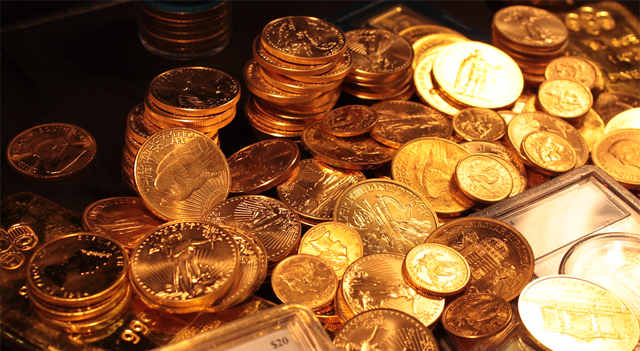
    Gold prices edged lower in Asian trading on Thursday, retreating slightly from record highs as news of a ceasefire between Hamas and Israel dampened safe-haven demand. Despite the pullback, the precious metal remained firmly above the key $4,000 per ounce level.

    Sentiment toward gold stayed supported by ongoing concerns over Japan’s fiscal position, the prolonged U.S. government shutdown, and political instability in France. A dovish tone in the minutes of the Federal Reserve’s September meeting also kept investors optimistic about more interest rate cuts, providing additional support to bullion.

    By 01:30 ET (05:30 GMT), spot gold slipped 0.1% to $4,039.34 per ounce, while December futures were down 0.3% at $4,056.67. Earlier in the session, spot prices hit a new all-time high of $4,059.34 after breaching $4,000 for the first time.

    Gaza ceasefire sparks profit-taking

    The modest decline followed reports that Israel and Hamas had agreed to the first phase of a U.S.-brokered ceasefire deal. The agreement, reached through indirect talks in Egypt, comes just days after the second anniversary of Hamas’ cross-border attack that triggered the current conflict.

    Under the 20-point framework proposed by U.S. President Donald Trump, the plan includes a full Israeli withdrawal from Gaza and a roadmap toward eventual Palestinian governance. If fully implemented, it would mark the most significant step toward peace in years.

    News of the ceasefire pressured oil prices while boosting risk-sensitive assets, reducing some of gold’s safe-haven appeal.

    Metals hold firm on Fed rate cut expectations

    Broader metals markets were mixed but continued to trade near multi-year highs, supported by expectations that the Federal Reserve will cut interest rates in October.

    Spot platinum was little changed at $1,660.98 an ounce after hitting its highest levels in over a decade earlier in the week. Silver climbed 0.5% to $49.11, nearing the $50 mark, with additional momentum coming from HSBC’s upgraded price forecast and its projection of a record high in the near term.

    According to CME FedWatch data, traders are pricing in nearly a 100% probability of a 25-basis-point cut at the Fed’s next meeting. Lower interest rates generally enhance the appeal of non-yielding assets such as precious metals.

    Attention later in the day will turn to a speech by Federal Reserve Chair Jerome Powell, which could offer more signals on the central bank’s next policy steps.

    This content is for informational purposes only and does not constitute financial, investment, or other professional advice. It should not be considered a recommendation to buy or sell any securities or financial instruments. All investments involve risk, including the potential loss of principal. Past performance is not indicative of future results. You should conduct your own research and consult with a qualified financial advisor before making any investment decisions.

  • Oil steady as markets weigh Gaza ceasefire and stalled Ukraine talks

    Oil steady as markets weigh Gaza ceasefire and stalled Ukraine talks

    Oil prices held steady on Thursday as traders balanced news of a ceasefire agreement in Gaza — which could ease Middle East tensions — against the lack of progress in peace negotiations between Ukraine and Russia, which may keep sanctions in place and limit Russian exports.

    By 06:29 GMT, Brent crude futures had inched up 2 cents to $66.27 a barrel, while U.S. West Texas Intermediate crude slipped 1 cent to $62.54.

    U.S. President Donald Trump said that a long-sought ceasefire and hostage-release agreement for Gaza had been reached as part of a broader plan to end the two-year conflict in the Palestinian enclave. Israeli Prime Minister Benjamin Netanyahu announced he would convene his cabinet to approve the deal, with the signing expected at noon Israel time (0900 GMT) on Thursday.

    “The devil is always in the details, and I would avoid speculating right now due to the many false starts that we have witnessed in the past,” said Claudio Galimberti, chief economist at Rystad Energy.

    The war in Gaza has been a key factor underpinning oil prices, as markets assess the potential threat to global supply if the conflict spreads further in the region.

    Michael McCarthy, CEO of investor platform Moomoo Australia and New Zealand, said the ceasefire is unlikely to have a major impact on Middle Eastern supply, noting that OPEC+ “has not hit its increased production targets.” The group, consisting of OPEC and its allies, agreed on Sunday to a smaller-than-expected output hike for November, easing fears of oversupply.

    Prices had risen about 1% on Wednesday to their highest in a week after investors interpreted the stalled Ukraine peace talks as a sign that sanctions on Russia, the world’s second-largest oil exporter, would likely remain in place for the foreseeable future.

    “As long as the war in Ukraine continues, the geopolitical risk premium is destined to remain elevated, as Russia’s oil production at risk remains high,” Galimberti said.

    Meanwhile, total weekly U.S. petroleum products supplied — a key gauge of domestic consumption — climbed to 21.99 million barrels per day last week, the highest since December 2022, according to the Energy Information Administration.

    Analysts at JP Morgan noted that global oil demand started October on a softer footing. Indicators including container traffic at the Port of Los Angeles, truck mileage in Germany and container throughput in China pointed to moderating activity. They estimated global oil demand at 105.9 million bpd in the first week of October, up 300,000 bpd year-on-year but 90,000 bpd below their projections.

    The pace of global crude and product inventory builds has also slowed, rising by 8 million barrels last week — the smallest increase in five weeks, they added.

    This content is for informational purposes only and does not constitute financial, investment, or other professional advice. It should not be considered a recommendation to buy or sell any securities or financial instruments. All investments involve risk, including the potential loss of principal. Past performance is not indicative of future results. You should conduct your own research and consult with a qualified financial advisor before making any investment decisions.
  • Dow Jones, S&P, Nasdaq, Wall Street Futures, FOMC Minutes, Earnings from Delta and PepsiCo, and Gold Pullback Shape Market Mood

    Dow Jones, S&P, Nasdaq, Wall Street Futures, FOMC Minutes, Earnings from Delta and PepsiCo, and Gold Pullback Shape Market Mood

    U.S. equity futures were little changed on Thursday morning as investors weighed the ongoing enthusiasm for artificial intelligence and closely examined the minutes from the latest Federal Reserve policy meeting. The central bank remained divided on the path of interest rates through the rest of 2025, balancing the cooling labor market against persistent inflationary pressures.

    Meanwhile, quarterly earnings from Delta Air Lines (NYSE:DAL) and PepsiCo (NASDAQ:PEP) are on deck, and gold is retreating slightly following a record-setting rally.

    Futures Trade Flat

    U.S. stock futures were largely directionless early Thursday as investors sifted through the Fed minutes and assessed an AI-fueled tech rally from the prior session.

    By 03:12 ET, futures on the Dow Jones Industrial Average and S&P 500 were little changed, while Nasdaq 100 futures edged up 16 points, or 0.1%. Both the S&P 500 and tech-heavy Nasdaq had set fresh closing records on Wednesday, powered by mega-cap AI leaders that have driven much of this year’s market gains.

    While some investors are wary of “the perceived circular nature of many recent AI-related deals,” the surge of interest around the technology has shown few signs of slowing. Meanwhile, a prolonged political stalemate in Washington continues to keep many federal offices shut, raising the risk of delays in key U.S. economic data releases.

    With the AI boom ongoing and little fresh macroeconomic data to guide trading, analysts noted that markets may remain subdued ahead of next week’s third-quarter earnings season kickoff.

    Fed Meeting Minutes Show Division

    The release of the minutes from the September meeting of the Federal Open Market Committee (FOMC), where the Fed delivered a 25 basis point rate cut, offered fresh insight into policymakers’ thinking. The document showed deep divisions over how aggressively to cut rates as officials weighed “a slowing labor market and sticky inflationary pressures.”

    Most officials “judged that it likely would be appropriate to ease policy further over the remainder” of 2025, although there was no consensus on when or by how much further cuts should come.

    In a client note, analysts at Capital Economics observed that the minutes reinforced the view that most policymakers want rates to return to a more “neutral setting” given persistent “downside risks” to employment.

    “Nonetheless, with ‘a majority of participants’ still emphasising the ‘upside risks to their outlooks for inflation,’ we remain comfortable with our view that the FOMC will proceed at a slower pace than market pricing suggests,” the analysts said.

    Market expectations for another 25 basis point cut at the upcoming Fed meeting remained intact after the release.

    Delta Earnings in Focus

    Although the bulk of earnings season starts next week, Delta’s report will give early insight into the travel sector’s health. The airline will publish its results before the opening bell, just weeks after reiterating its full-year and current-quarter guidance.

    Delta recently raised the lower end of its revenue forecast for Q3, now expecting a top-line increase of 2% to 4%, up from the previous range of 0% to 4%.

    The upgrade reflects an improving outlook for U.S. travel after a rough start to the year that included policy turbulence from Donald Trump’s import tariffs. Heavy discounts spurred demand for summer travel, and airline executives have expressed confidence that resilience in the sector may allow for airfare increases later in the year.

    PepsiCo Results and Elliott Pressure

    PepsiCo is also set to report earnings before the market opens. Analysts are closely watching for any developments linked to activist investor Elliott Investment Management, which disclosed a $4 billion stake in September and urged the company to streamline operations.

    Elliott has suggested that Pepsi shed brands like Quaker and consider spinning off its bottling arm to “slash costs and bolster margins.” The hedge fund argues these moves could sharpen the company’s focus on core products like chips and sodas.

    While discussions are ongoing, some investors are skeptical that spinning off the bottling business would be fast or margin-accretive. Shares of PepsiCo, the maker of Mountain Dew and Lay’s chips, have fallen more than 7% this year.

    “[S]entiment has improved somewhat with the presence of Elliott and the expectation of some type of strategic action to bolster shareholder value, but the whole staples space is facing cyclical and secular headwinds and management is likely to pushback against some of the more radical proposals, like spinning off bottling,” analysts at Vital Knowledge said in a note.

    Gold Pulls Back from Record Highs

    Gold prices eased modestly after a ceasefire between Israel and Hamas reduced safe-haven demand. The precious metal remains near its record levels after surpassing $4,000 per ounce earlier this week.

    Concerns over Japanese fiscal health, the U.S. government shutdown, and political instability in France continue to support gold’s elevated levels. Dovish tones from the Fed minutes also helped maintain optimism over future rate cuts.

    Spot gold slipped 0.2% to $4,032.10 an ounce, while December futures declined 0.5% to $4,050.50 by 03:48 ET.

    This content is for informational purposes only and does not constitute financial, investment, or other professional advice. It should not be considered a recommendation to buy or sell any securities or financial instruments. All investments involve risk, including the potential loss of principal. Past performance is not indicative of future results. You should conduct your own research and consult with a qualified financial advisor before making any investment decisions.

  • Ferrari Shares Slip as Automaker Unveils 2030 Strategic Plan

    Ferrari Shares Slip as Automaker Unveils 2030 Strategic Plan

    Ferrari NV (BIT:RACE) saw its stock edge lower on Thursday after unveiling its long-term 2030 Strategic Plan during its Capital Markets Day. Shares were down as much as 3% earlier in the session before paring losses to trade 1% lower by 08:30 GMT.

    The luxury carmaker laid out an ambitious product roadmap, announcing its intention to roll out an average of four new models each year between 2026 and 2030. A highlight of the plan is the launch of the brand’s first fully electric vehicle, the Ferrari elettrica.

    By the end of the decade, Ferrari expects its portfolio to be composed of 40% internal combustion engine vehicles, 40% hybrid models, and 20% fully electric cars — a clear signal of its “technology neutrality” approach while embracing electrification.

    The plan also highlighted strong growth in Ferrari’s customer base, which has reached 90,000 active clients — a 20% jump compared to 2022. To enhance the customer experience, the company will open new Tailor Made centers in Tokyo and Los Angeles.

    Ferrari Executive Chairman John Elkann stated, “With the new Ferrari elettrica, we once again affirm our will to progress by uniting the discipline of technology, the creativity of design and the craft of manufacturing.”

    As part of its strategy, Ferrari stressed the importance of developing electric components in-house at its Maranello site, coupled with sustained investment in performance across all powertrains.

    The company also set clear sustainability goals, pledging to cut its Scope 1 and 2 greenhouse gas emissions by at least 90% by 2030 compared with 2021 levels. Additionally, Scope 3 emissions will be reduced by at least 25% in absolute terms by 2030 versus 2024.

    This content is for informational purposes only and does not constitute financial, investment, or other professional advice. It should not be considered a recommendation to buy or sell any securities or financial instruments. All investments involve risk, including the potential loss of principal. Past performance is not indicative of future results. You should conduct your own research and consult with a qualified financial advisor before making any investment decisions.