Category: Market News

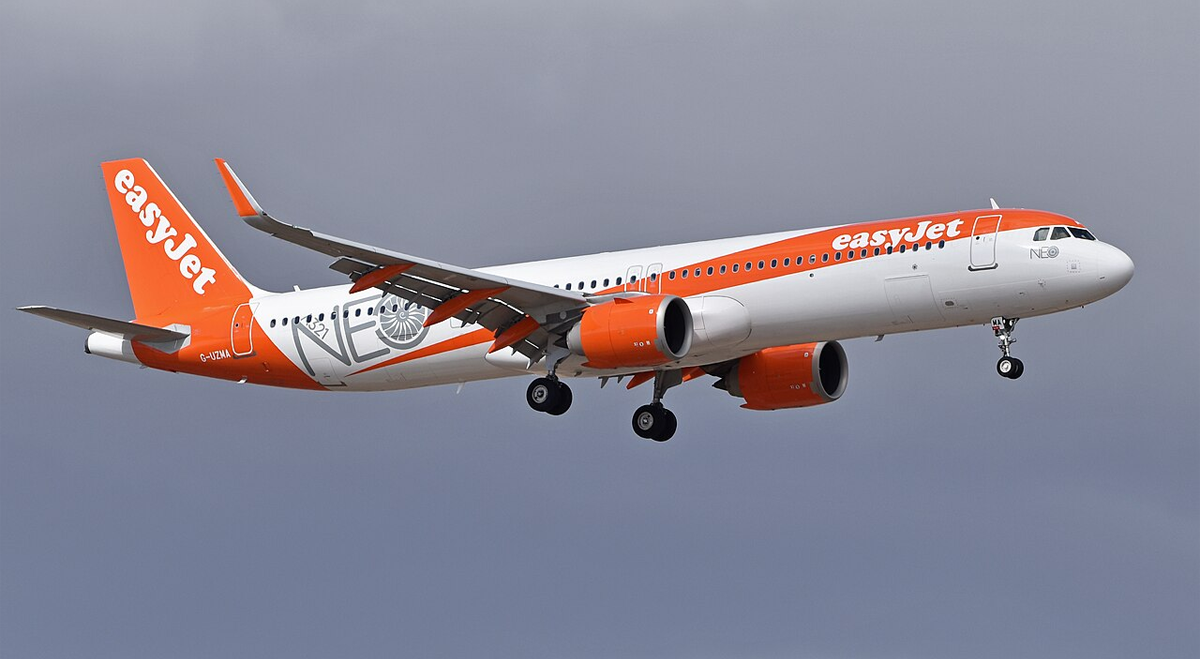
  • Wizz Air shares slide 8% after Middle East crisis prompts profit warning

    Wizz Air shares slide 8% after Middle East crisis prompts profit warning

    Shares of Wizz Air Holdings PLC (LSE:WIZZ) dropped more than 8% on Thursday after the low-cost airline released an unexpected profit warning, saying the escalating Middle East crisis is expected to reduce fiscal 2026 net profit by about €50 million and push earnings below its previously guided range of €25 million to -€25 million.

    The Budapest-based carrier said the projection assumes current spot jet fuel prices and prevailing foreign exchange rates remain broadly unchanged for the rest of the financial year.

    Analysts at RBC Capital Markets, who had already been forecasting a €27 million net loss — below the €15 million loss consensus estimate tracked by Visible Alpha — said the warning is likely to trigger further downward revisions to market expectations.

    Wizz Air’s fuel hedging strategy leaves it more exposed than many of its European competitors. Rather than locking in prices through fixed hedges, the airline uses a cap-and-collar structure that still exposes it to price volatility within certain bands, even for fuel volumes that are technically hedged. In addition, the airline’s route network is more heavily oriented toward eastern markets, increasing its direct exposure to the regional conflict.

    RBC also highlighted that both Wizz Air and Air France-KLM carry relatively high debt levels, making their shares more sensitive to geopolitical developments compared with airlines that operate with lower leverage.

    By contrast, Ryanair and Jet2 plc have minimal direct exposure to the Middle East, less near-term exposure to spot fuel prices and net cash balance sheets. RBC rates both stocks Outperform, with price targets of €32.00 and GBp2,150 respectively.

    The bank also warned of additional pressure on Wizz Air’s earnings beyond FY26, pointing to potential pricing challenges as the airline targets roughly 30% seat capacity growth in the first half of FY27. RBC also expects income from sale-and-leaseback gains, compensation payments and foreign exchange translation to decline compared with FY26 levels.

    RBC maintained its Sector Perform rating on Wizz Air with a price target of GBp1,200, stating it sees more attractive risk-reward opportunities elsewhere in the airline sector.

    The bank added that although European airline stocks in general face pressure from the ongoing conflict, any de-escalation could deliver the biggest upside to airlines with the greatest exposure to the Middle East, with Wizz Air among the most affected.

  • Oil prices climb further as Middle East war intensifies; supply worries deepen

    Oil prices climb further as Middle East war intensifies; supply worries deepen

    Oil prices surged again on Thursday, extending the recent rally as the conflict in the Middle East entered its sixth day with no clear signs of easing, raising fears of disruptions to supply from one of the world’s most important crude-producing regions.

    At 03:35 ET (08:35 GMT), Brent crude futures for May delivery rose 2.6% to $83.54 a barrel, while U.S. West Texas Intermediate (WTI) crude futures advanced 3.1% to $76.96 a barrel.

    Both benchmarks are now heading for a fifth straight day of gains, with Brent trading just below its highest level since July 2024.

    Middle East conflict, Strait of Hormuz risks remain in focus

    The Middle East conflict, which erupted over the weekend when the United States and Israel carried out coordinated strikes against Iran, continues to escalate with little indication of a near-term resolution. Tensions intensified after the U.S. sank an Iranian warship near Sri Lanka in international waters, highlighting the growing geographic reach of the confrontation.

    On Wednesday, the U.S. Senate rejected a proposal — largely divided along party lines — that aimed to halt the air campaign and require congressional approval for further military action.

    At the same time, Tehran dismissed reports claiming that Iran’s Ministry of Intelligence had contacted Washington to discuss a potential end to the conflict, describing the report as “pure falsehood” and accusing Western media of spreading misinformation. The denial dampened hopes for a diplomatic breakthrough in the near term.

    Concerns over oil supply have grown after Iran effectively shut down the Strait of Hormuz, one of the world’s most critical oil shipping routes through which roughly one-fifth of global crude flows.

    The disruption is already affecting regional output. Reports indicated that Iraq declared force majeure on certain crude exports as shipments through the Strait of Hormuz were heavily disrupted.

    Iraq, the second-largest oil producer in the Organization of the Petroleum Exporting Countries, has cut output by nearly 1.5 million barrels per day due to limited storage capacity and the lack of viable export routes, officials told Reuters.

    “Successfully blocking the Strait of Hormuz would leave significant upside to the market, potentially with Brent hitting $140/bbl, with supply losses unable to be offset,” said analysts at ING in a note. “However, a full and prolonged blockage of the strait would likely be unsuccessful, with any attempts to do so leading to a rapid response. Partial disruptions, which could include seizing or attacking tankers, would likely mean Brent spikes towards $100/bbl initially but settles in a largely $80-90/bbl range.”

    U.S. crude inventories rise more than forecast – API

    Weekly data from the American Petroleum Institute (API) showed that U.S. crude inventories increased by around 5.6 million barrels in the week ended Feb. 28, well above expectations for a build of roughly 2.2 million barrels, though still significantly lower than the previous week’s rise of 11.4 million barrels.

    Traders are now awaiting the official inventory figures from the U.S. Energy Information Administration (EIA), due later on Thursday, for confirmation of the increase.

  • Gold advances again; stronger U.S. dollar tempers rally

    Gold advances again; stronger U.S. dollar tempers rally

    Gold prices moved higher on Thursday as escalating tensions in the Middle East boosted demand for the precious metal as a safe-haven asset.

    At 06:05 ET (11:05 GMT), spot gold was up 0.5% at $5,167.00 an ounce after earlier touching levels above $5,200/oz during the session. U.S. gold futures rose 0.8% to $5,176.35/oz.

    The metal had already gained about 1% in the previous trading session. That recovery followed a sharp drop of nearly 5% on Tuesday when a stronger dollar weighed heavily on prices.

    Gold supported by heightened Middle East tensions

    Geopolitical risks remain elevated after the United States sank an Iranian warship in international waters, while Iran continued launching missiles across multiple countries in the region and reportedly targeted key energy infrastructure.

    The escalation has intensified fears of a prolonged regional conflict, prompting investors to trim exposure to riskier assets and shift funds toward gold, which is widely regarded as a hedge during periods of geopolitical uncertainty and market volatility.

    “Looking ahead, gold faces competing macro forces,” said analysts at ING in a note. “The inflationary impact of the Middle East conflict, via sharply higher energy prices, could reinforce expectations of higher interest rates for longer — a headwind for non yielding assets such as gold.”

    “However, elevated geopolitical uncertainty continues to support a risk premium, helping to underpin prices despite the challenging rates backdrop,” they added.

    Dollar strength caps gold’s upside

    Market participants are also closely watching the U.S. Dollar Index, which rebounded Thursday after slipping 0.3% overnight. Earlier in the week the index logged two consecutive sessions of strong gains.

    A firmer dollar typically pressures gold because it raises the metal’s cost for buyers using other currencies.

    “Uncertainty typically supports safe havens, implying upside for gold,” Morgan Stanley strategists led by Amy Gower wrote in a note, but added that recent price action has been “more mixed with USD strength.”

    Several forces are currently shaping gold prices simultaneously, including expectations for Federal Reserve interest-rate cuts, currency movements, geopolitical risks and overall liquidity conditions in financial markets.

    According to the strategists, the recent wave of selling in gold may reflect investors raising cash during periods of market stress rather than a shift in the longer-term outlook.

    “We think gold’s underperformance is likely to be temporary if the current situation continues, with recent selling most likely due to the need for liquidity,” the strategists said.

    Among other precious metals, silver rose 1.6% to $84.53 per ounce, while platinum gained 1% to $2,176.200/oz.

    Benchmark copper futures on the London Metal Exchange fell 1.2% to $12,904.00 a ton, while U.S. copper futures dropped 1.3% to $5.8308 a pound.

  • Bitcoin steadies above $72k, drives wider crypto gains as risk sentiment improves

    Bitcoin steadies above $72k, drives wider crypto gains as risk sentiment improves

    Bitcoin (COIN:BTCUSD) held firm on Thursday after improving market sentiment and optimism around potential regulatory progress helped fuel a strong rebound in the world’s largest cryptocurrency, although uncertainty tied to the Iran conflict continued to weigh on investor confidence.

    Bitcoin advanced more than 5% to $72,366.1 by 01:28 ET, after climbing to a one-month peak of $73,243 during Wednesday’s session.

    The cryptocurrency later trimmed part of its advance after U.S. stock index futures slipped into negative territory early Thursday, as ongoing tensions involving the United States, Israel and Iran kept markets cautious.

    A sharp jump in oil prices also heightened worries about the conflict’s potential to push inflation higher.

    Bitcoin gains with help from Wall Street, Trump remarks

    Bitcoin rallied strongly on Wednesday, extending earlier gains this week as a positive trading day on Wall Street lifted appetite for risk assets. Bargain hunting also supported the move after the cryptocurrency suffered steep declines in February.

    Crypto markets also drew support after U.S. President Donald Trump urged lawmakers to fast-track a long-delayed bill designed to establish a regulatory framework for digital assets, while criticizing major U.S. banking groups for opposing yield payments on stablecoins.

    Trump’s remarks raised expectations that the cryptocurrency industry could receive a more supportive regulatory environment in the United States. However, there was little sign of immediate progress toward passing the CLARITY Act, legislation intended to define the industry’s market structure.

    Bitcoin also benefited from overnight gains on Wall Street after reports suggested Iran had reached out to Washington seeking dialogue, which briefly boosted hopes that the conflict might ease.

    Those hopes faded after Tehran denied the reports and launched a fresh missile barrage toward Israel early Thursday, tempering the improvement in risk appetite.

    Ray Dalio says Bitcoin is no gold

    Billionaire hedge fund manager Ray Dalio reiterated his criticism of Bitcoin earlier this week, arguing that the cryptocurrency should not be compared with gold because it lacks support from central banks, provides no real privacy and remains exposed to potential breakthroughs in quantum computing.

    “A lot of attention has been given to Bitcoin, but as a money, it’s small in relationship to gold… there is only one gold,” Dalio said.

    Speaking during a podcast interview, the founder of Bridgewater Associates questioned Bitcoin’s role as a safe-haven asset and also warned about possible privacy vulnerabilities.

    Dalio has long been critical of Bitcoin. But in 2025 he said he holds roughly a 1% allocation to the cryptocurrency in his portfolio and suggested investors consider allocating around 15% to Bitcoin or gold amid rising concerns about a potential U.S. debt crisis.

    Crypto price today: altcoins follow Bitcoin higher, recover February losses

    Other cryptocurrencies also moved higher on Thursday, tracking Bitcoin’s rally as the broader digital asset market recovered part of the losses recorded in the previous month.

    The world’s second-largest cryptocurrency, Ethereum, gained 7.5% to $2,128.35, while XRP climbed 4.7% to $1.4238.

    Solana, Cardano and BNB rose between 3% and 7%.

    Among meme coins, Dogecoin jumped 8%, while Official Trump added 2.2%.

  • US stock futures turn lower as oil rally keeps Iran tensions in focus: Dow Jones, S&P, Nasdaq, Wall Street

    US stock futures turn lower as oil rally keeps Iran tensions in focus: Dow Jones, S&P, Nasdaq, Wall Street

    U.S. stock index futures moved into negative territory late Wednesday after a sharp increase in oil prices revived worries about the inflationary consequences of the ongoing Iran conflict.

    Futures reversed earlier gains and slipped lower following a positive session on Wall Street, where strong economic data and reports suggesting Iran was open to renewed dialogue had briefly improved risk sentiment.

    However, Tehran largely denied that it had sought further talks with Washington, pushing oil prices sharply higher during the Asian trading session on Thursday. Brent and WTI futures jumped between 3% and 4%.

    S&P 500 Futures dropped 0.16% to 6,869.50 points by 23:43 ET. Nasdaq 100 Futures declined 0.16% to 25,085.75 points, while Dow Jones Futures fell 0.3% to 48,649.0 points.

    Oil prices surge as Iran conflict rages on

    Oil prices rose sharply in Asian trading on Thursday after Iran launched a barrage of missiles toward Israel, marking the sixth straight day of hostilities in the Middle East.

    The strike came only hours after the U.S. Senate rejected a motion intended to limit President Donald Trump’s authority to conduct military strikes against Iran.

    Inflation driven by energy prices has been a central concern surrounding the Iran conflict, particularly after military activity in the Strait of Hormuz disrupted oil flows supplying a significant portion of the global market, pushing commodity prices higher.

    These developments have heightened fears that a prolonged conflict could keep energy prices elevated, fueling inflation and prompting a more hawkish response from major central banks around the world.

    Oil’s sharp move higher on Thursday also followed comments from Iranian officials denying they had contacted Washington to discuss de-escalation.

    Broadcom rises on strong AI-fueled outlook

    Broadcom Inc. (NASDAQ:AVGO) rose more than 5% in after-hours trading after reporting fiscal first-quarter results that topped expectations for both revenue and earnings.

    The company also projected second-quarter revenue of $22 billion, exceeding forecasts of $20.4 billion, with nearly half expected to come from sales of its advanced AI chips.

    Broadcom’s results boosted confidence that the AI investment theme remains strong, particularly for semiconductor manufacturers positioned to benefit from the sector’s rapid expansion.

    Rival NVIDIA Corporation (NASDAQ:NVDA) rose 0.3% in after-hours trading. The company’s CEO, Jensen Huang, said earlier Wednesday that AI-driven demand for chips was “higher than very high.”

    Software company CrowdStrike Holdings Inc. (NASDAQ:CRWD) climbed more than 4% on Wednesday after posting quarterly earnings that exceeded expectations, helping ease concerns about AI-related disruption within the enterprise software sector.

    Wall St aided by strong data

    Wall Street indexes closed higher on Wednesday, partly supported by stronger-than-expected private payrolls data for February, indicating continued growth in the labor market.

    Separately, the services sector purchasing managers’ index released by the Institute for Supply Management climbed to its highest level in more than three years in February, pointing to solid domestic demand. In addition, the Federal Reserve’s Beige Book report suggested the central bank remains broadly optimistic about the economic outlook.

    These releases come ahead of Challenger job cuts data scheduled for Thursday and the closely watched nonfarm payrolls report due Friday. The latter will be scrutinized for further signals on the direction of interest rates.

    The S&P 500 gained 0.8% on Wednesday, the NASDAQ Composite advanced 1.3%, while the Dow Jones Industrial Average rose 0.5%.

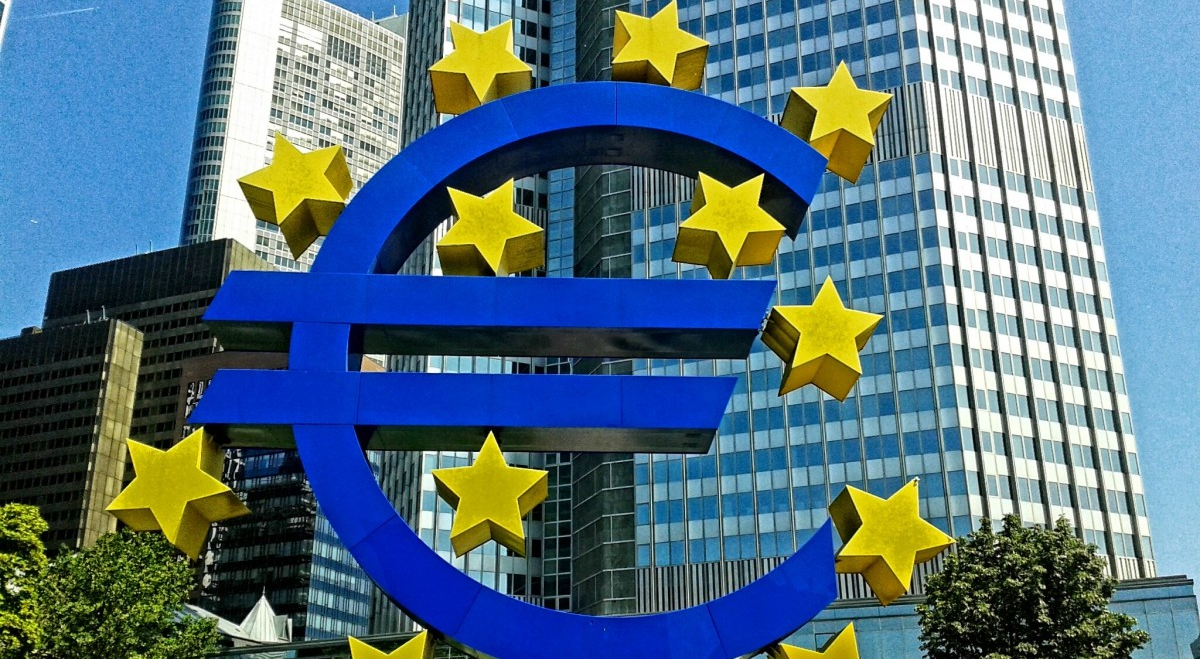
  • European stocks slip as Middle East conflict weighs on investor confidence: DAX, CAC, FTSE100

    European stocks slip as Middle East conflict weighs on investor confidence: DAX, CAC, FTSE100

    European equity markets moved lower on Thursday as investors monitored developments in the Middle East, where the conflict has now entered its sixth day and continues to unsettle global markets.

    By 08:02 GMT, the DAX was down 0.4%, while France’s CAC 40 also lost 0.4%. The UK’s FTSE 100 declined 0.1%.

    Iran war testing “global economic resilience”

    Hostilities in the Middle East escalated further after missile strikes by the United States and Israel against Iranian targets over the weekend triggered a broader confrontation. On Wednesday, a U.S. submarine sank an Iranian warship near Sri Lanka, while NATO air defence systems intercepted and destroyed an Iranian ballistic missile fired toward Turkey.

    There are few indications that the conflict will de-escalate soon. The U.S. Senate rejected, largely along party lines, a proposal intended to halt the air campaign and require congressional authorization for further military action.

    At the same time, Mojtaba Khamenei, son of Iran’s slain supreme leader, has reportedly emerged as a leading candidate to succeed him, according to the White House—an indication that Tehran is unlikely to retreat under pressure.

    Kristalina Georgieva warned that the crisis was testing “global economic resilience”.

    “This conflict, if proven to be prolonged, has obvious potential to affect global energy prices, market sentiments, growth and inflation. And it would place new demands on the shoulders of policy-makers everywhere,” she said earlier Thursday.

    Eurozone retail sales data due

    Investor sentiment has also been affected by concerns that surging energy prices could drive inflation higher across Europe, a region heavily dependent on imported energy. This has raised speculation that the European Central Bank might be forced to tighten monetary policy.

    However, François Villeroy de Galhau said Thursday he currently sees no justification for the ECB to increase interest rates.

    He added that while the conflict could push inflation upward and weigh on economic growth, the scale of the impact would largely depend on how long the crisis lasts.

    Investors will later receive the latest eurozone retail sales data. Economists expect the January reading to rise 0.3% month-on-month, equivalent to a 1.7% increase compared with the same period last year.

    Earlier Thursday, China set its 2026 economic growth target at between 4.5% and 5%, slightly below the roughly 5% pace achieved in 2025 and the lowest official target since 1991.

    Corporate earnings in focus

    The corporate earnings season also continued across Europe.

    UK consumer goods group Reckitt Benckiser Group plc (LSE:RKT) reported fourth-quarter like-for-like net sales growth above expectations, supported by strong demand in emerging markets, and said it anticipates its core businesses expanding by 4%–5% in 2026.

    German logistics company Deutsche Post AG (TG:DHL) projected higher operating profit for 2026, broadly in line with market forecasts despite mounting geopolitical uncertainty.

    Swiss insurer Zurich Insurance Group (TG:ZFIN) reported record annual profit in 2025, helped by a strong performance from a U.S. business in which it holds no ownership stake and a notably quiet catastrophe year.

    Dermatology specialist Galderma Group AG (BIT:1GALD) more than doubled its peak sales target for the skin treatment Nemluvio to above $4 billion after reporting annual net sales exceeding $5 billion for the first time.

    German residential landlord LEG Immobilien SE (TG:LEGG) also released full-year 2025 results that beat estimates on several key metrics and reaffirmed its 2026 outlook, although rising vacancy levels and a partially share-based dividend moderated the overall performance.

    Oil prices extend gains

    Oil prices continued climbing on Thursday, building on the rally seen earlier in the week as escalating tensions in the Middle East fuelled fears of supply disruptions from a key producing region.

    Brent crude futures rose 2.9% to $83.75 per barrel, while U.S. West Texas Intermediate crude gained 3.2% to $77.08.

    Both benchmarks have now posted gains for five consecutive sessions. Brent has climbed to its highest level since July 2024 as traders remain concerned about supply risks tied to the conflict, particularly around shipments passing through the strategically important Strait of Hormuz.

    Iran has targeted oil tankers in the Strait of Hormuz—through which roughly one-fifth of global oil and liquefied natural gas supplies pass—effectively halting traffic through the critical maritime chokepoint.

  • Campari beats FY25 forecasts despite spirits slowdown; shares rally

    Campari beats FY25 forecasts despite spirits slowdown; shares rally

    Davide Campari-Milano N.V. (BIT:CPR) shares climbed more than 6% on Thursday after the drinks maker reported full-year results that exceeded analyst expectations, standing out in a sector downturn that has recently pressured competitors such as Diageo plc (LSE:DGE) and Pernod Ricard S.A. (EU:RI).

    For the year ended 31 December 2025, Campari posted organic sales growth of 2.4% and organic EBIT growth of 5.4%, outperforming Visible Alpha consensus forecasts of 1.6% and 1.9% respectively. Net sales reached €3.051 billion, although a 3.0% foreign exchange headwind partly offset the underlying performance.

    The board proposed a full-year dividend of €0.100 per share, a sharp increase from €0.065 previously. At the same time, the group’s net debt to EBITDA ratio declined to 2.5 times from a peak of 3.6 times recorded in September 2024, allowing the company to reach its leverage target one year earlier than planned.

    “Strong business momentum and accelerated deleverage one year ahead of plan allowed us to step-up our dividend payout to further enhance shareholder returns,” said Simon Hunt.

    Adjusted EBIT came in at €637 million, representing a margin of 20.9% and organic improvement of 60 basis points. Recurring free cash flow reached €571 million, with a conversion rate of 73%. Adjusted diluted earnings per share were €0.32, reflecting growth of 2.7%.

    A strong final quarter contributed to the full-year outperformance, with organic sales increasing 4.7% and organic EBIT rising 24.3% in the fourth quarter.

    Analysts at Morgan Stanley raised their price target for the stock to €6.60 from €6.30, describing the results as “a very strong end to the year,” while maintaining an “equal-weight” rating. The bank also highlighted some uncertainty around the sustainability of recent growth drivers, noting that shipments in Italy increased 5% in the fourth quarter even as on-trade sell-out declined 1%.

    Looking ahead to 2026, Campari said it expects organic revenue growth to continue at a similar pace. However, the company warned of a potential €30 million impact from U.S. tariffs over the full year, as well as an estimated €70 million revenue headwind related to the disposal of non-core brands such as Cinzano and Averna.

  • STMicroelectronics rises on optimism around China’s tech investment plans

    STMicroelectronics rises on optimism around China’s tech investment plans

    STMicroelectronics N.V. (BIT:STM) was among the strongest performers on the Milan stock exchange today after signals of increased investment in the technology sector from the Chinese government boosted sentiment across Asian tech stocks.

    Shares in the chipmaker climbed about 6% within the first hour of trading, second only to Davide Campari-Milano N.V., reaching €29.52 and returning to their highest level since late February.

    The stock has now gained around 25% since the start of January 2026, bringing its performance over the past 12 months to roughly +28%.

    Speaking at the opening of the annual “Two Sessions,” Chinese Premier Li Qiang announced a GDP growth target for the current year of between 4.5% and 5%, the lowest target set since 1991.

    To support economic expansion amid weak domestic consumption and ongoing trade tensions, Beijing confirmed a budget deficit target of 4% and outlined a policy approach centred on high-technology sectors such as artificial intelligence and semiconductors, alongside strengthening defence capabilities.

    Authorities also introduced measures within the 2026 Action Plan aimed at attracting higher-quality foreign investment and stabilising the property sector, while encouraging stronger collaboration between private capital and industrial innovation.

    Although the growth target is the lowest in decades, markets appear to be responding positively to the clear policy support for the technology industry.

    China represents about 15% of STMicroelectronics’ total revenue, and Beijing’s commitment to supporting consumption and digital infrastructure provides a positive signal for a semiconductor sector that struggled with oversupply during 2025.

    The push toward electric vehicles and semiconductor development is particularly relevant for STM, which supplies components to manufacturers including Tesla Inc. and Geely Automobile Holdings. China’s accelerated adoption of new energy vehicles (NEVs) is expected to boost demand for silicon carbide (SiC), a technology segment in which the company aims to maintain global leadership.

    Local partnerships also play a key role in the group’s strategy. Through its “in China for China” approach—including a joint venture with Sanan Optoelectronics for domestic production—STM can benefit from Chinese government incentives while reducing exposure to geopolitical tensions between the United States and China.

    Separately, STMicroelectronics announced the launch of the STM32C5 family of entry-level microcontrollers, designed for billions of connected devices used in factories, homes, cities and infrastructure.

    According to the company, the new chips are built using its proprietary 40nm process and are based on the Arm Cortex-M33 architecture, delivering stronger performance than existing entry-level devices. They include up to 1MB of Flash memory, enhanced security features such as SESIP3 and PSA Level 3 certification, protection against tampering and cyber threats, and integration with the STM32Cube development ecosystem.

    The microcontrollers are suited for applications including smart thermostats, electronic locks, industrial sensors, robotic actuators and wearable devices. Production has already started, with prices beginning at $0.64 for orders of 10,000 units, and evaluation boards are currently available, the company said.

  • FTSE 100 slips as Middle East tensions weigh on markets

    FTSE 100 slips as Middle East tensions weigh on markets

    FTSE 100 and other European markets opened lower on Thursday after ending the previous session in positive territory, as investors continued to monitor escalating tensions in the Middle East and assessed the latest batch of corporate earnings.

    By 08:23 GMT, the FTSE 100 had declined 0.3%. The British pound also weakened, with GBP/USD falling 0.4% to 1.3323 against the dollar. Across Europe, Germany’s DAX dropped 0.5%, while France’s CAC 40 also slipped 0.5%.

    Analysts at Jefferies said they continue to believe the conflict could persist for two to three weeks, based on missile stockpile estimates and the strategic objectives of the United States and Israel.

    According to the firm, the immediate military priorities include disabling Iran’s missile-launch capabilities to protect U.S. bases and regional allies, as well as weakening Iranian naval assets to ensure safe passage through the Strait of Hormuz.

    Jefferies added that it expects to fade some of the recent market reactions. In interest-rate markets, the firm considers the recent repricing at the front end of yield curves in Europe and the UK to be unjustified and sees value in buying short-dated rates in both regions.

    The bank said it still believes the European Central Bank is more likely to cut interest rates than raise them this year, although its base case remains unchanged policy. Markets are currently pricing in a rate increase by the first quarter of 2027, which Jefferies argues is unlikely. In the UK, the firm disagrees with the recent sell-off at the front end of the curve and continues to project a terminal interest rate of around 3%.

    UK corporate roundup

    Reckitt Benckiser Group plc (LSE:RKT) reported fourth-quarter like-for-like sales growth ahead of expectations, supported by strong demand in emerging markets. The company said group like-for-like net revenue increased 5.4% in the quarter ended 31 December, exceeding the 4.7% growth forecast in analyst consensus. Emerging markets led performance with revenue growth of 14.6% for the year, while Europe saw a 1.4% decline. Emerging markets now represent about 42% of Reckitt’s core net revenues.

    WH Smith PLC (LSE:SMWH) said first-half trading was broadly consistent with the trends reported for the first 15 weeks of the period. Shares were down about 1.4% in early London trading. Total first-half revenue rose 5% year on year, including like-for-like growth of 2%, slightly below the 3% growth recorded earlier in the reporting period.

    PageGroup plc (LSE:PAGE) reported full-year 2025 results in line with guidance, although earnings per share missed analyst expectations due to a higher effective tax rate. The group recorded gross profit of £769.5m for the year ended 31 December 2025, down 7.6% in constant currency from £842.6m in 2024, while revenue declined 7.4% to £1,596.6m.

    Elementis plc (LSE:ELM) posted full-year results that exceeded analyst forecasts, helped by improved margins. Adjusted earnings per share reached 13.7 cents, beating the consensus estimate of 13.0 cents. The company also announced the sale of its pharmaceutical manufacturing unit to Associated British Foods plc.

    Aviva plc (LSE:AV.) reported operating profit of £2,203m for 2025, representing a 25% year-on-year increase and reaching its £2bn target a year earlier than planned. Operating earnings per share rose 17% to 56.0p, while revenue from general insurance premiums climbed 18% to £14,145m.

    Taylor Wimpey plc (LSE:TW.) reported adjusted operating profit of £420.6m for full-year 2025, in line with guidance of about £420m. The homebuilder completed 10,614 homes excluding joint ventures, a 6.4% increase from the previous year. Revenue rose 13% to £3,844.6m, supported by higher volumes and a 5% increase in the average selling price to £335,000. Adjusted operating margin declined to 10.9% from 12.2% the year before.

  • Coats raises margin targets as 2025 results meet expectations

    Coats raises margin targets as 2025 results meet expectations

    Coats Group plc (LSE:COA) increased its medium-term operating margin target to 21–23% from the previous 19–21% on Thursday and lifted its five-year free cash flow objective to around $1bn. The update followed the release of 2025 results that broadly matched market expectations, with the shares rising more than 3% in London trading.

    The company reported adjusted operating profit of $290m on revenue of $1.465bn. Organic sales were broadly flat compared with markets that Coats estimated declined by low- to mid-single digits. Operating margin improved by 80 basis points to 19.8%.

    “2025 was a transformational year for Coats. We achieved record profit and cash generation, reshaped the portfolio for accelerated growth and reorganised the Group for simplicity. As a result, we have upgraded our medium-term financial targets, including c.$1bn of free cash, and look at 2026 with confidence,” said David Paja.

    Adjusted earnings per share reached 9.3 cents, slightly ahead of the 9 cents consensus forecast. However, earnings were partly weighed down by higher interest costs following a pension settlement in 2024 and a $322m equity raise used in part to finance the October acquisition of OrthoLite for an enterprise value of $770m.

    Analysts at RBC Capital Markets, which rates the stock “outperform” with a price target of 115 pence, said they viewed Coats as “a high-quality business with structural growth potential that is not reflected in a P/E of 11.5x26E with an FCF yield of 9% and rising from 2026E also supportive.”

    The group generated record free cash flow of $160m, surpassing its own forecast of $132m. Net debt increased to $815m from $449m, while pro forma leverage stood at 2.2 times, comfortably below the covenant limit of three times. The company expects leverage to fall below two times by the end of 2026.

    Within the business segments, footwear revenue declined 2% organically, as U.S. tariff disruptions prompted customer destocking that continued through the end of the year. Apparel revenue increased 1% organically despite an estimated 3% contraction in the overall market. Coats said it captured roughly 100 basis points of market share in both divisions.

    OrthoLite contributed $42.6m in revenue and $10.5m in operating profit during its first two months under Coats ownership. The company aims to achieve $20m in annualised cost synergies from the acquisition by 2028. Meanwhile, revenue from fully recycled thread products climbed 43% to $554m.

    Looking ahead, the company expects organic growth in 2026 despite uncertain market conditions and warned that geopolitical tensions in the Middle East could pose risks to demand.

    Consensus forecasts for the full year currently point to revenue of $1.76bn and adjusted operating profit of $371m, which management said are consistent with its expectations.

    The board proposed a final dividend of 2.28 cents per share, an increase of 4%. The company maintained its medium-term targets of annual earnings per share growth above 10% and revenue growth exceeding 5%.