Category: Market News

  • PureTech Highlights Seaport Progress as GlyphAgo Advances Following Positive Phase 1 Anxiety Trial Results (PRTC)

    PureTech Highlights Seaport Progress as GlyphAgo Advances Following Positive Phase 1 Anxiety Trial Results (PRTC)

    PureTech Health (LSE:PRTC) has reported further progress from its Founded Entity, Seaport Therapeutics, which announced positive multiple-ascending dose results from a Phase 1 proof-of-concept study evaluating GlyphAgo. The oral prodrug of agomelatine has been engineered to improve lymphatic absorption while limiting liver exposure. Data from the trial showed that repeated dosing over seven days produced therapeutic agomelatine concentrations alongside favourable safety, tolerability and pharmacokinetic profiles, with no liver-related adverse events reported. The findings support dose selection for future studies and reinforce GlyphAgo’s potential as a differentiated treatment option for generalized anxiety disorder.

    The latest results build on earlier single-ascending dose and crossover studies that demonstrated substantially higher bioavailability and reduced pharmacokinetic variability compared with standard agomelatine. Together, the findings strengthen confidence in Seaport’s development strategy and provide further validation of its proprietary Glyph platform. The company intends to move GlyphAgo into two parallel Phase 2 studies in generalized anxiety disorder beginning in 2026 and 2027, with one trial focused on sleep-related pharmacology and the other potentially serving as a registration-enabling efficacy study. The programme reflects PureTech’s strategy of creating, developing and scaling platform-based neuropsychiatric therapies through its Founded Entities.

    While the clinical and portfolio developments are encouraging, PureTech’s overall outlook remains tempered by continued operating losses, negative free cash flow and a relatively modest revenue base. These challenges are partly balanced by a solid balance sheet and recent improvements in operating performance. Updates from management regarding clinical progress, portfolio advancement and funding runway have strengthened the investment case, although execution and financing risks remain significant. Technical indicators remain broadly neutral, while valuation metrics continue to be constrained by negative earnings and the absence of dividend payments.

    More about PureTech Health

    PureTech Health is a UK-listed biotherapeutics company that operates a hub-and-spoke model, creating and developing Founded Entities that combine clinically validated pharmacology with targeted innovation to address significant unmet medical needs. Through this approach, the company seeks to generate and advance new therapeutic platforms across a range of disease areas.

    One of its Founded Entities, Seaport Therapeutics, is a Nasdaq-listed clinical-stage biotechnology company focused on developing next-generation neuropsychiatric medicines. Using its proprietary Glyph platform, Seaport aims to improve the bioavailability, consistency and safety profile of established therapeutic mechanisms for conditions including anxiety, depression and related neurological disorders.

  • Alien Metals’ Elizabeth Hill Drilling Expands Silver Footprint Beyond Maiden Resource (UFO)

    Alien Metals’ Elizabeth Hill Drilling Expands Silver Footprint Beyond Maiden Resource (UFO)

    Alien Metals’ (LSE:UFO) joint venture partner West Coast Silver has released encouraging new assay results from reverse circulation drilling at the Elizabeth Hill Silver Project in Western Australia, with silver mineralisation now traced up to 70 metres beyond the maiden resource announced in April 2026. The latest drilling confirms that the mineralised system within the Munni Munni Fault Zone remains open both at depth and along strike, while several drill holes finished in mineralisation. The programme also delivered the broadest fault-zone intersection recorded so far at Elizabeth Hill North.

    Recent results highlighted extensive near-surface silver-bearing intervals alongside several higher-grade zones. Importantly, most of these intercepts sit outside the current resource boundary, underlining the project’s potential for future resource expansion. With additional assay results still pending, diamond drilling underway beneath mineralised RC intersections, and economic assessments progressing on shallow mineralisation, the current campaign has the potential to significantly increase the scale and development prospects of the project. Alien’s exposure is enhanced through both its 30% joint venture interest and its equity stake in West Coast Silver.

    Despite the operational progress, the company’s investment case continues to be weighed down by weak financial metrics, including a lack of revenue, ongoing losses and negative free cash flow. However, losses and cash burn improved during 2024, while debt levels remain low. From a technical perspective, momentum indicators remain favourable, with the share price trading above key moving averages and supported by a positive MACD signal. Valuation metrics, however, remain constrained by the absence of profitability and dividend payments.

    More about Alien Metals Ltd

    Alien Metals Ltd is an exploration and development company listed on the AIM market in London, with a primary focus on iron ore assets in Western Australia’s Pilbara region. Its flagship Hancock Iron Ore Project contains a JORC-compliant resource of 8.4 million tonnes at 60% iron content and is being advanced towards a targeted production rate of 2 million tonnes per annum. The company also holds interests in the Brockman and Vivash iron ore prospects, while maintaining exposure to precious and base metals through projects such as Munni Munni and the Elizabeth Hill Silver Project via joint ventures and strategic shareholdings.

    Alien holds a 30% interest in the Elizabeth Hill Silver Project, a former high-grade silver producer, and owns 30.5 million shares in its joint venture partner, West Coast Silver. This approach combines direct project ownership with free-carried interests and equity investments, creating a diversified portfolio strategy focused on project advancement, partnership development and selective monetisation opportunities designed to enhance shareholder value.

  • Will SpaceX’s IPO save the market?

    Will SpaceX’s IPO save the market?

    By the end of last week, the Nasdaq plunged more than 4%, the S&P 500 lost 2.6%, and the Dow Jones fell 1.4%. Ironically, it was good news or, more precisely, the fact that the U.S. economy added 172,000 jobs, while payroll figures from previous months were revised upward, that triggered the sell-off, as it gives the Fed more room, if not to tighten monetary policy, at least to keep it unchanged for a longer period.

    For instance, according to the CME FedWatch Tool, markets are now pricing in more than a 70% chance of another rate hike. No wonder gold is once again below $4,400.

    Yet investors seem to have short memories. U.S. futures opened the new week higher despite rising tensions in the Middle East. Why?

    On the geopolitical front, Trump’s Truth Social posts about progress in talks with Tehran appear to have reassured markets once again.

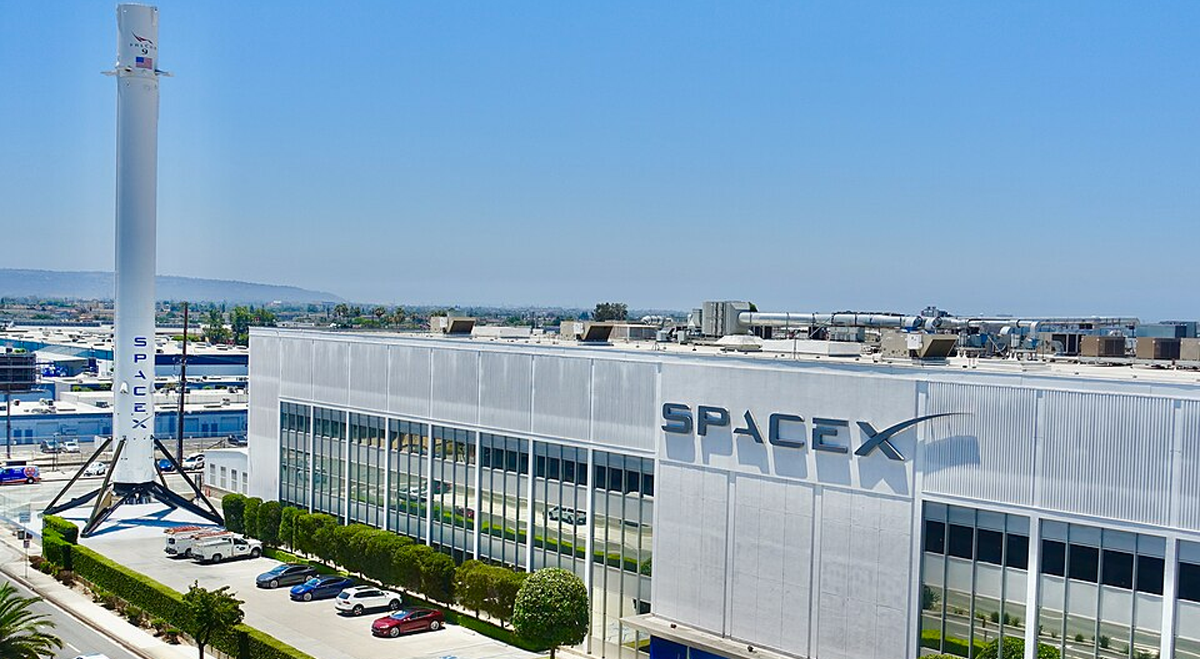
    As for monetary policy concerns, attention seems to be shifting toward the upcoming SpaceX (SPCX) IPO, reportedly targeting up to $75 billion, making it one of the largest public offerings in history. The concern is that, despite generating more than $18.5 billion in revenue in 2025, SpaceX lost nearly $5 billion and is still targeting a valuation of roughly $1.77 trillion. The bet appears to be that SpaceX could become another meme stock like Tesla, growing regardless of fundamentals.

    Now, if negotiations with Iran stall, if inflation remains stubbornly high, or if economic data continues to undermine hopes for Fed rate cuts, optimism around the SpaceX IPO could eventually turn into an “entire market trap,” as AI-linked companies already account for an outsized share of gains, leaving downside risks elevated. That risk could only increase further once OpenAI and Anthropic go public.

  • European airline stocks retreat after IATA slashes 2026 industry profit outlook

    European airline stocks retreat after IATA slashes 2026 industry profit outlook

    European airline shares came under pressure on Monday after the International Air Transport Association (IATA) sharply reduced its forecast for global airline profitability in 2026, warning that soaring fuel costs linked to disruptions in the Middle East are expected to weigh heavily on the sector.

    Shares of IAG (LSE:IAG), Air France-KLM (LSE:AF), Lufthansa (TG:LHA), Wizz Air (LSE:WIZZ) and Ryanair (LSE:0A2U) declined between 1.47% and 2.1% by 04:40 ET (08:40 GMT). easyJet (LSE:EZJ) proved more resilient, falling 0.86%.

    Fuel costs drive sharp downgrade to earnings outlook

    IATA now forecasts the global airline industry will generate net profits of $23 billion in 2026, down sharply from $45 billion in 2025 and significantly below its previous projection of $41 billion.

    The industry’s net profit margin is expected to narrow to 2.0% from 4.2% a year earlier, while profit generated per passenger is projected to fall from $9.10 to $4.50.

    “Profits will shrink from $45 billion in 2025 to $23 billion this year. And margins will shrink from 4.2% to 2.0%,” said Willie Walsh, IATA’s Director General. “It won’t even buy you a hot dog at most of the FIFA World Cup venues.”

    According to IATA, the primary challenge facing airlines is the sharp increase in fuel expenses.

    Jet fuel prices expected to surge

    The association expects jet fuel prices to average $152 per barrel in 2026, compared with $90 per barrel in 2025, based on an assumed average Brent crude price of $95 per barrel.

    As a result, total fuel expenditure is forecast to jump 40% to $350 billion from $252 billion in 2025. Fuel is expected to account for 31.4% of airline operating costs, up from 25.4% last year.

    Overall operating expenses are projected to rise to $1.117 trillion, exceeding the pace of revenue growth. Industry revenue is expected to increase 9.4% to $1.165 trillion.

    European carriers face profit squeeze

    European airlines are expected to experience a significant decline in profitability under the new forecasts.

    IATA projects net profit for the region’s carriers will fall to $9.60 billion in 2026 from $13 billion in 2025. Net margins are forecast to decline from 4.5% to 3.1%, while profit per passenger is expected to drop to $7.50 from $10.30.

    Although European airlines had hedged approximately 70% of their fuel requirements before the latest crisis, IATA warned that higher fuel prices will increasingly affect earnings as existing hedging contracts expire.

    Middle East airlines face the steepest decline

    The most severe impact is expected in the Middle East, where airlines are forecast to move from a combined net profit of $7.20 billion in 2025 to a net loss of $4.30 billion in 2026.

    Demand, measured by revenue passenger kilometres, is expected to decline by 11.4% across the region.

    Elsewhere, North American carriers are projected to generate net profits of $9.40 billion, down from $12.40 billion, while airlines in the Asia-Pacific region are expected to see profits fall to $6.60 billion from $9.80 billion.

    “Smaller carriers that started the year with weak balance sheets are certainly struggling,” Walsh said.

    Returns fall below cost of capital

    IATA also expects returns on invested capital to decline to 4.3% in 2026, compared with 6.6% in 2025. That figure remains below the estimated weighted average cost of capital of 8.5%.

    Despite the weaker profitability outlook, the industry is still expected to generate total revenues of $1.165 trillion, carry 5.10 billion passengers and achieve a record load factor of 84%.

    The figures highlight the resilience of travel demand but also underline the growing financial pressure airlines face as fuel costs continue to climb.

  • S4 Capital slides after Morgan Stanley lowers target price on softer growth outlook (SFOR)

    S4 Capital slides after Morgan Stanley lowers target price on softer growth outlook (SFOR)

    Shares of S4 Capital (LSE:SFOR) traded more than 2% lower on Monday after Morgan Stanley reduced its price target for the digital advertising specialist, pointing to a weaker revenue outlook as clients remain cautious amid ongoing macroeconomic uncertainty.

    The investment bank cut its target price to 35 pence from 38 pence while reiterating its “equal-weight” recommendation on the stock.

    Revenue expectations revised lower

    The move follows updated guidance from S4 Capital, which now expects a low single-digit percentage decline in like-for-like net revenue during 2026. Previously, the company had indicated that net revenue would be only “slightly below” 2025 levels.

    Morgan Stanley responded by reducing its net revenue forecasts by 3.3% across fiscal years 2026 to 2028. The broker now expects net revenue of £641 million in 2026, representing a 4% like-for-like decline compared with the previous year.

    The revised outlook reflects continued caution among clients and a challenging economic backdrop that has weighed on advertising and marketing spending.

    Margin outlook remains unchanged

    Despite trimming revenue projections, Morgan Stanley left its profitability assumptions intact. The broker continues to forecast adjusted EBITDA of £83 million for 2026, equivalent to a margin of 13.0%.

    That estimate aligns with management’s target of delivering a 100-basis-point year-on-year improvement in margin performance.

    The company has also continued to streamline operations, with headcount reduced by 11% compared with a year ago as part of broader efficiency initiatives.

    Earnings forecasts cut across the forecast period

    Morgan Stanley lowered its adjusted earnings-per-share estimates by 4.9% for 2026 and by 4.5% for both 2027 and 2028.

    The broker now forecasts adjusted EPS of 5.6 pence in 2026, rising to 7.0 pence in 2027 and 7.2 pence in 2028.

    Its valuation is based on a discounted cash flow methodology using a weighted average cost of capital of 12% and a terminal growth rate of 1.5%.

    According to the broker, the higher discount rate compared with peers such as WPP and Publicis reflects S4 Capital’s greater exposure to cyclical advertising spending, its concentration of technology-sector clients and the relatively lower liquidity of its shares.

    Wide valuation range reflects uncertainty

    Morgan Stanley’s bull-case scenario values S4 Capital at 88 pence per share, assuming net revenue growth accelerates to around 5.5% annually between 2026 and 2029 and adjusted EBITDA expands at approximately 13% per year.

    In contrast, its bear-case valuation stands at just 10 pence per share, based on assumptions that artificial intelligence intensifies competitive pressures and that the company loses a major client, resulting in prolonged revenue declines.

    Refinitiv data cited in the research note showed analyst price targets currently range from 30 pence to 55 pence. Around 38% of analysts rate the shares “overweight”, while 63% recommend “equal-weight”. No analysts currently have an “underweight” rating on the stock.

    Morgan Stanley estimates that organic net revenue fell 8.2% in 2025 and expects a further 4.0% decline in 2026 before growth returns at a modest 1.4% in both 2027 and 2028.

    North America remains the company’s largest market, accounting for approximately 60% to 70% of total revenue.

  • Seraphim Space set to join FTSE 250 following annual index review

    Seraphim Space set to join FTSE 250 following annual index review

    Seraphim Space Investment Trust plc (LSE:SSIT) will be promoted to the FTSE 250 Index from the start of trading on 19 June 2026, marking a major milestone for the specialist SpaceTech investor following the latest FTSE UK Indices Annual Review.

    The move comes nearly five years after the company’s IPO and reflects the continued expansion of its portfolio, growing investor appetite for the SpaceTech sector and the successful £137 million C share fundraising completed recently. Entry into the FTSE 250 is expected to raise the trust’s profile among institutional investors, while also benefiting from increased index-related demand and improved share liquidity.

    FTSE 250 inclusion highlights growth of SpaceTech platform

    The promotion underlines the progress made by Seraphim Space as it has grown into one of the leading listed investors focused exclusively on the global space technology sector. The company believes its new index status will broaden its investor base and further support long-term growth ambitions.

    Will Whitehorn OBE, Chair of Seraphim Space Investment Trust plc, commented:

    “Our inclusion in the FTSE 250 marks a significant milestone for Seraphim Space Investment Trust and is a clear reflection of the progress we have made in scaling the Company over the last five years and demonstrating the attractiveness of SpaceTech as an institutional asset class. We believe this inclusion will further enhance the Company’s visibility, improve liquidity and support continued growth in our shareholder base.”

    Space increasingly viewed as critical infrastructure

    Mark Boggett, Chief Executive Officer of Seraphim Space Manager LLP, said the promotion reflects both the company’s evolution and the growing strategic importance of the space sector.

    “SSIT joining the FTSE 250 reflects not only the Company’s progress, but the transition of space from a specialist technology theme into a core pillar of global infrastructure. Space has become foundational to how nations operate, compete and secure their future.

    The convergence of defence, sovereign capability and data infrastructure is redefining the market, with governments globally investing in resilient space architectures for security, communications and intelligence. This is driving a structural shift where demand is long-term, procurement is strategically funded and commercial innovators are now embedded at the heart of national security systems. As the only listed investment company offering diversified access to this largely privately backed ecosystem, SSIT is uniquely positioned to participate in, and help shape, this next phase of growth.”

    The FTSE 250 promotion represents another step forward for Seraphim Space as it seeks to capitalise on increasing institutional interest in a sector that is becoming ever more closely linked to defence, communications, data infrastructure and national security priorities worldwide.

  • Oil rallies as renewed Middle East conflict fuels supply disruption fears

    Oil rallies as renewed Middle East conflict fuels supply disruption fears

    Oil prices surged on Monday, climbing more than $4 a barrel as escalating military tensions involving Israel, Iran and Lebanon raised fresh concerns about global energy supplies and diminished hopes for a near-term easing of the conflict.

    Brent crude futures gained $4.42, or 4.47%, to reach $97.15 a barrel by 0609 GMT. U.S. West Texas Intermediate crude futures rose $4.07, or 4.50%, to $94.61 a barrel.

    Strike on Iranian petrochemical facility rattles energy markets

    Investor concerns intensified after Israel confirmed attacks on military targets across Iran, including a strike on a petrochemical complex in the country’s southwest. The operation came despite reports that U.S. President Donald Trump had urged Israeli Prime Minister Benjamin Netanyahu to avoid further military action.

    Israel said it had targeted facilities within the Mahshahr petrochemical complex, marking the first reported attack on Iranian energy infrastructure since the ceasefire agreed on April 8. Iranian officials later acknowledged that sections of the facility had been damaged.

    The renewed hostilities have undermined expectations that the broader conflict could soon be resolved and have reduced optimism that oil shipments through the Strait of Hormuz will resume in the near future. Prior to the war, around 20% of global oil and liquefied natural gas trade passed through the strategic waterway.

    Crude prices rebound sharply after Friday’s decline

    Monday’s advance reversed the losses seen on Friday, when oil markets weakened on expectations that tensions between Washington and Tehran could ease.

    Even after recent fluctuations, crude prices remain almost 60% higher than they were before the conflict erupted in late February. However, they are still below the peaks reached in March, when Brent crude briefly traded close to $120 a barrel.

    Iran launched a fresh barrage of missiles against Israeli targets on Sunday in response to Israeli operations in Lebanon. Nevertheless, President Trump continued to express confidence that a wider peace agreement remains achievable.

    Tehran has repeatedly maintained that any broader deal with the United States must include a lasting ceasefire in Lebanon.

    Israel began military operations in Lebanon in March following rocket and drone attacks carried out by the Iran-backed Hezbollah movement. On June 3, Israel and Lebanon announced a ceasefire agreement following negotiations held in Washington.

    Tehran signals Hormuz reopening could come with new restrictions

    Markets were also closely watching comments from Iran’s ambassador to Russia, who suggested the Strait of Hormuz could reopen but under revised terms.

    “Of course, this strait will be open, but with new conditions to be determined by the Iranian and Omani authorities,” Ambassador Kazem Jalali told Russian newspaper Izvestia in an interview published on Monday.

    Iran maintains that shipping traffic through the Strait of Hormuz remains heavily restricted, while U.S. sanctions and maritime measures against Iranian ports continue to affect regional trade flows.

    Analysts question effectiveness of latest OPEC+ production increase

    Meanwhile, OPEC+ agreed on Sunday to raise oil production for a fourth consecutive time in four months in an effort to ease supply pressures.

    Despite the announcement, analysts believe the move will do little to increase actual supply. Several member countries remain unable to meet production targets due to logistical and operational constraints. The closure of the Strait of Hormuz continues to disrupt exports, while Russia’s output capacity has been affected by attacks on key infrastructure.

    “In the current market, the physical impact of such a decision would be close to zero,” Rystad Energy’s head of geopolitical analysis, Jorge Leon, said in a note to clients.

    With geopolitical tensions showing little sign of easing and major energy supply routes still under pressure, traders are continuing to brace for heightened volatility across global oil markets.

  • Gold retreats to lowest level since March as Fed outlook and oil rally weigh on sentiment

    Gold retreats to lowest level since March as Fed outlook and oil rally weigh on sentiment

    Gold prices moved lower on Monday, falling to an 11-week low as investors responded to stronger-than-expected U.S. economic data that reinforced expectations for higher interest rates, while a sharp rise in oil prices added to concerns over inflation.

    Spot gold declined 0.8% to $4,296.08 an ounce by 02:49 ET (06:49 GMT), its weakest level since March 23. August gold futures in the United States also fell, losing 1% to trade at $4,322.60 an ounce.

    The latest decline follows a steep sell-off on Friday, when bullion dropped more than 3% after the release of robust U.S. labour market figures prompted traders to reassess the likely path of Federal Reserve policy.

    Strong employment figures reduce expectations for rate cuts

    Government data released on Friday showed the U.S. economy added 172,000 jobs in May, comfortably surpassing market forecasts. Meanwhile, the unemployment rate remained unchanged at 4.3%.

    The stronger-than-anticipated employment report led investors to scale back expectations for interest-rate reductions in 2026, helping drive Treasury yields and the U.S. dollar higher. Both developments tend to weigh on gold because the metal offers no yield.

    “Despite the lack of consistent messaging in the labour market data, we now have a rate hike fully priced at the December FOMC meeting,” ING analysts said in a recent note.

    The U.S. Dollar Index traded little changed during Asian trading hours on Monday after climbing to its highest level in two months during the previous session.

    Rising Middle East tensions push crude prices higher

    Geopolitical risks also remained a key focus for markets after Israel reported strikes on military facilities in western and central Iran, as well as a petrochemical site near Mahshahr. The attacks marked one of the most significant strikes against Iranian energy infrastructure since the ceasefire agreed in April.

    The developments followed multiple rounds of Iranian missile launches targeting Israel in response to an earlier Israeli operation near Beirut.

    Oil prices surged close to 5% as traders reacted to the renewed hostilities. The move intensified concerns that rising energy costs could reignite inflationary pressures around the world and complicate monetary policy decisions.

    While gold often benefits from safe-haven demand during periods of geopolitical uncertainty, support from risk-averse investors was outweighed by the impact of a stronger dollar and expectations of tighter U.S. monetary policy.

    Precious metals broadly weaker

    The weakness extended across the precious metals sector. Silver fell 1.2% to $677.00 per ounce, while platinum lost 0.9% to trade at $1,764.58 per ounce.

    Industrial metals were mixed. Benchmark copper futures on the London Metal Exchange gained 0.3% to $13,543.33 a tonne, while U.S. copper futures edged 0.1% lower to $6.28 a pound.

  • IXICO strengthens scientific advisory board and expands Parkinson’s research partnerships (IXI)

    IXICO strengthens scientific advisory board and expands Parkinson’s research partnerships (IXI)

    IXICO (LSE:IXI) has reinforced its scientific leadership with the appointment of three internationally recognised neuroscience experts to its Scientific Advisory Board, while also launching new research initiatives aimed at advancing imaging biomarkers for Parkinson’s disease.

    The company announced that Professor Jeffrey Cummings, a leading authority in Alzheimer’s disease from the University of Nevada Las Vegas, Professor Charles DeCarli, a distinguished neurologist and Alzheimer’s researcher at the University of California, Davis, and Professor Stéphane Lehéricy, a renowned neuroradiology specialist at the Paris Brain Institute, have joined its advisory board.

    The appointments broaden IXICO’s expertise across both Alzheimer’s and Parkinson’s disease, supporting the company’s strategy of combining advanced imaging technologies, biomarker analytics and artificial intelligence to accelerate neurological drug development.

    Alongside the advisory board expansion, IXICO unveiled two new Parkinson’s-focused scientific collaborations.

    The first is a research partnership with the Paris Brain Institute (ICM), where the organisations will undertake a prospective study evaluating novel neuromelanin-sensitive MRI techniques as potential imaging biomarkers for Parkinson’s disease. The project will focus on refining MRI acquisition methods and applying advanced AI-based analysis to improve the reliability and reproducibility of the technology, with the aim of supporting its future use in clinical trials.

    In a separate development, IXICO’s Chief Scientific and Medical Officer, Robin Wolz, and Principal Biomarker Scientist, Kirsi Kinnunen, have been invited to join the Michael J. Fox Foundation’s MRI Advisory Committee. The committee brings together leading academic, industry and non-profit organisations to support the development, standardisation and validation of quantitative MRI biomarkers for Parkinson’s research. The initiative seeks to improve the measurement of disease progression and treatment response through greater collaboration on imaging protocols, data sharing and reproducibility standards.

    Commenting on the developments, Robin Wolz, Chief Scientific and Medical Officer of IXICO, said: “IXICO’s business proposition is grounded in science, which is why working with some of the world’s most important KOLs ensures the validation and clinical relevance of the services and technology we provide to the biopharma industry. In addition, adding further expertise and collaborative R&D activity, including our research collaboration with the Paris Brain Institute and participation in MRI biomarker advisory activities, IXICO further deepens its presence in the CNS space.”

    He added, “I’m delighted to welcome Jeff, Charlie and Stéphane to the Scientific Advisory Board adding knowledge and experience to an already strong group of advisors. We will continue to explore opportunities to work with the most important individuals and organisations pioneering progress towards better understanding, diagnosis, and treatment of neurodegenerative disease.”

  • Markets focus on Middle East conflict, AI uncertainty and Apple’s WWDC event: Dow Jones, S&P, Nasdaq, Wall Street Futures

    Markets focus on Middle East conflict, AI uncertainty and Apple’s WWDC event: Dow Jones, S&P, Nasdaq, Wall Street Futures

    Investors began the week navigating a mix of geopolitical tensions, concerns over artificial intelligence valuations and anticipation ahead of Apple’s (NASDAQ:AAPL) annual developers conference, where the company is expected to outline the next phase of its AI strategy.

    U.S. futures point to a mixed open

    At 03:32 ET (07:32 GMT), futures tied to the Dow Jones Industrial Average were down 102 points, or 0.25%, while S&P 500 futures gained 0.3% and Nasdaq 100 futures advanced 0.7%.

    The mixed performance followed a sharp sell-off on Wall Street on Friday. A stronger-than-expected U.S. employment report increased expectations that the Federal Reserve may need to maintain a tighter monetary stance or even raise rates later this year if energy-driven inflation accelerates.

    The S&P 500 posted a 2.64% decline, its worst daily performance of 2026, ending a nine-week winning streak. Technology stocks were particularly weak, with the Philadelphia Semiconductor Index falling more than 10% after Broadcom’s (NASDAQ:AVGO) quarterly results failed to meet the market’s elevated expectations surrounding AI-related growth.

    Commenting on the week ahead, Deutsche Bank analysts wrote: “What a backdrop for the main economic event of the week, namely Wednesday’s May U.S. CPI report.”

    They added: “The timing is critical with the [Fed]’s next policy meeting, and Kevin Warsh’s first as Chair, a week later. For a while now the case for hiking has looked notably stronger than the case for a cut and last Friday’s payrolls has hugely reinforced that.”

    Fresh Iran-Israel clashes unsettle investors

    Geopolitical concerns intensified after Iran and Israel exchanged new strikes, casting doubt on the future of a fragile ceasefire brokered by the United States.

    The renewed hostilities mark the first direct military confrontation between the two countries since the truce reached in April.

    Reports suggest the latest escalation began with an Israeli strike on Beirut, followed by retaliatory actions from Tehran and further Israeli attacks against targets in western and central Iran.

    The Wall Street Journal reported that Israel activated air-raid warning systems and intercepted a ballistic missile launched from Yemen. Iran’s Revolutionary Guards also claimed responsibility for attacks on military airbases in southern Israel.

    While President Donald Trump maintained that diplomatic efforts remain on track, an Iranian source involved in negotiations told MS NOW that a deal is “no longer feasible at this stage.”

    Oil extends gains amid supply concerns

    Brent crude climbed 5.1% to $97.81 per barrel as traders continued to assess the risks posed by disruptions around the Strait of Hormuz.

    The strategic shipping route remains a key concern for energy markets, given that roughly 20% of global oil and LNG flows pass through the waterway.

    Rising crude prices have reignited fears that inflation could accelerate once again, potentially forcing central banks to keep borrowing costs elevated.

    RBC analysts noted that “it seems as though good news is being treated as bad news if it stokes fears of higher interest rates.”

    Gold pressured by rates outlook and stronger dollar

    Gold prices fell to their lowest level in eleven weeks as investors reassessed the outlook for interest rates.

    Higher borrowing costs tend to reduce the appeal of non-yielding assets such as gold, while continued demand for the U.S. dollar has provided an additional headwind for bullion.

    ING analysts said: “The geopolitical backdrop is also shifting dollar-positive, with most surprised that Brent is not trading even higher now that Iran and Israel are directly exchanging fire.”

    Apple’s AI strategy under the spotlight

    Attention is also turning to Apple’s Worldwide Developers Conference, which begins on Monday and is expected to feature a range of AI-related announcements.

    Investors are looking for evidence that Apple can close the perceived gap with rivals in the race to commercialise artificial intelligence technologies.

    The company has faced criticism following delays to planned Siri upgrades and a lukewarm response to some of its initial AI initiatives.

    According to BofA Global Research, “The key announcements to watch include an enhanced Siri experience, progress on Gemini-enabled Apple AI, potential Siri app, and broader app-intent and developer tools that could help define Apple’s agentic AI roadmap.”