Category: Market News

  • Gold retreats as higher yields curb demand

    Gold retreats as higher yields curb demand

    The decline followed a rise in benchmark 10-year Treasury yields, which climbed to a near two-week peak and weakened appetite for non-yielding assets like bullion. The stronger yields also dampened some optimism surrounding expectations of an imminent Fed rate cut.

    Even with Tuesday’s pullback, the broader outlook for the metal remained constructive. Futures markets still imply that the Fed is likely to lower interest rates next week, supported by easing inflation trends and signs of a cooling labor market — factors that typically enhance gold’s appeal by reducing the opportunity cost of holding it.

    However, investors were hesitant to take big positions ahead of multiple high-impact data releases.

    This week’s calendar includes the November ADP private employment report and the delayed September PCE Price Index, the Fed’s preferred gauge of inflation. Both figures could meaningfully influence expectations for monetary easing in the months ahead.

    Uncertainty over the Federal Reserve’s future leadership also kept traders on edge.

    President Donald Trump said on Sunday that he has selected a nominee to replace Fed Chair Jerome Powell, but declined to reveal the name. Reports suggest that White House economic adviser Kevin Hassett may be among the top contenders.

    Metals trade lower; silver falls after record peak

    Other precious and base metals also weakened as investors trimmed risk and positioned cautiously ahead of next week’s central bank meeting.

    • Silver futures dropped 2.1% to $57.88 per ounce after briefly touching an all-time high of $59.44 on Monday.
    • Platinum futures slipped 0.6% to $1,661.60 per ounce.
    • LME copper eased 0.3% to $11,228.20 per ton.
    • U.S. copper futures held steady at $5.27 per pound.
  • Dollar inches higher but stays pressured as Fed rate-cut bets strengthen

    Dollar inches higher but stays pressured as Fed rate-cut bets strengthen

    The U.S. dollar posted a modest uptick on Tuesday, though the broader trend remained soft as investors continued to price in a high probability of a Federal Reserve rate cut later this month.

    At 04:30 ET (09:30 GMT), the Dollar Index — which measures the greenback’s performance against six major peers — was up 0.1% at 99.422, following a seven-day slide that pushed it to a two-week low on Monday.

    Fed expectations dominate currency markets

    Fresh economic data released Monday showed that U.S. manufacturing contracted for the ninth month in a row in November, reinforcing concerns that the economy is losing steam heading into year-end.

    According to the CME FedWatch tool, traders now assign an 88% chance that the Fed will cut rates by 25 basis points at its December 10 meeting — a notable jump from 63% a month earlier.

    Analysts at ING wrote that “we expect that the remainder of the week will validate the market’s dovish pricing for next week’s Fed meeting.”

    Markets are also awaiting clarity on who will succeed Fed Chair Jerome Powell, after reports indicated White House adviser Kevin Hassett is currently the leading candidate.

    U.S. Treasury Secretary Scott Bessent has said there is a strong likelihood President Donald Trump will reveal his pick before Christmas.

    Euro holds near steady ahead of flash inflation

    In Europe, EUR/USD slipped slightly to 1.1607 as diplomatic discussions continued over the war in Ukraine, with U.S. envoy Steve Witkoff heading to Moscow for talks with Russian officials.

    Later in the day, investors will receive the eurozone’s flash inflation figures. Markets expect annual inflation to remain just above the ECB’s medium-term target, a reading unlikely to influence policy expectations as traders broadly anticipate no rate moves until 2026.

    ING commented that “the risks are slightly on the downside for the euro, but our expectation is for a neutral FX impact nonetheless and EUR/USD can eye 1.170 again soon if USD drops in line with our call.”

    The GBP/USD pair edged down to 1.3213, though the pound hovered near its highest readings in a month. The slight pullback followed the resignation of the head of the U.K.’s fiscal watchdog, who stepped down after the institution mistakenly published budget details ahead of Chancellor Rachel Reeves’ parliamentary announcement.

    Yen softens after Monday’s brief rally

    In Asian trading, USD/JPY gained 0.3% to 155.94, recovering after a 0.5% decline the previous session that was sparked by hawkish messaging from Bank of Japan Governor Kazuo Ueda.

    Ueda said over the weekend that the BOJ could consider raising interest rates as early as this month, pushing yields on Japanese government bonds to their highest levels in decades.

    The 30-year JGB yield rose above 1.9%, while the 10-year tested 1.88%.

    Across the region, USD/CNY slipped to 7.0700, while AUD/USD rose 0.1% to 0.6553.

  • Bitcoin rises modestly to $87K after heavy selloff; crypto-linked stocks continue to fall

    Bitcoin rises modestly to $87K after heavy selloff; crypto-linked stocks continue to fall

    Bitcoin (COIN:BTCUSD) posted a slight recovery on Tuesday after suffering a sharp drop in the previous session that dragged the world’s largest cryptocurrency below $84,000. The decline came as renewed risk aversion hit digital assets at the start of December, extending the volatility seen throughout late November.

    The abrupt pullback surprised many traders, arriving just after Bitcoin bounced from levels near $80,000 late last week. By 01:58 ET (06:58 GMT), Bitcoin was up 0.6% at $87,087.6, having fallen more than 7% on Monday.

    Bitcoin struggles to stabilize after December drop

    Monday’s selloff continued the broader downtrend that dominated November—a month in which Bitcoin logged its steepest decline in more than four years and spot Bitcoin ETFs saw significant outflows.

    Market sentiment remained fragile on Tuesday, with ongoing concerns about whether institutional appetite for crypto is weakening. Data pointed to a surge in whale transfers to exchanges and algorithmic-driven selling, both of which accelerated the decline.

    Even with Tuesday’s modest rebound, the move did little to calm worries about deeper losses. According to a CoinDesk report, Bitcoin could slide toward the $60,000–$65,000 range if selling pressure intensifies.

    The downturn has been fueled by a mix of profit-taking, thin liquidity and caution ahead of several key macro events this month.

    Expectations for a Federal Reserve rate cut next week have climbed to nearly 90%, lifting hopes that financial conditions may ease soon. However, uncertainty surrounding the extent and pace of future easing continues to stir volatility across the crypto market.

    Traders are also monitoring developments in Washington as President Donald Trump prepares to select a potential successor to Fed Chair Jerome Powell.

    Strategy Inc cuts outlook as Bitcoin slump deepens

    Shares of Strategy Inc (NASDAQ:MSTR) tumbled Monday after the company cut its full-year guidance, citing the worsening Bitcoin downturn and ongoing crypto market volatility as major drags on earnings.

    Other crypto-related names also moved sharply lower:

    • Coinbase (NASDAQ:COIN) dropped around 5%
    • Robinhood (NASDAQ:HOOD) fell more than 4%

    Altcoins trade mixed amid caution

    Trading in alternative cryptocurrencies remained subdued, with most major tokens stuck in narrow ranges.

    • Ethereum slipped 0.3% to $2,814.92
    • XRP declined 1.1% to $2.02
    • Solana posted a mild gain
    • Cardano rose 2%
    • Polygon slid 3.5%

    Among meme tokens, both Dogecoin and $TRUMP edged 0.6% lower.

  • JPMorgan turns bullish on European hotels for 2026; mixed outlook for gaming sector

    JPMorgan turns bullish on European hotels for 2026; mixed outlook for gaming sector

    JPMorgan has released its outlook for the European leisure space heading into 2026, projecting that hotel operators are poised for a strong year thanks to improving travel trends and a series of region-specific catalysts.

    Analysts expect the hotel industry to regain momentum after a subdued 2025, pointing to “more favorable” U.S. Revenue Per Available Room (RevPAR) comparisons from the second quarter onward, as well as the global uplift expected from the FIFA World Cup scheduled for June and July.

    A rebound in China next year could further strengthen the backdrop, particularly for InterContinental Hotels (LSE:IHG), which the bank rates Overweight with roughly 20% upside. Accor (EU:AC) is also singled out as a candidate for further re-rating, helped by execution improvements and the planned sale of Essendi.

    The tone shifts when JPMorgan assesses the gaming industry. While analysts acknowledge that the sharp second-half selloff in 2025 may have gone too far for Flutter (LSE:FLTR) and Entain (LSE:ENT)—both now upgraded to Overweight—they remain wary of broader sector risks. The two companies are described as having a “sound growth profile,” and are also seen as beneficiaries of a U.K. market that has “de-risked” following the latest budget.

    For Flutter specifically, JPMorgan highlights one of the sector’s strongest growth frameworks, citing EBITDA expansion above 20% and EPS growth above 30% over 2026–2028, driven by U.S. market opportunities and consistent buybacks. Entain is viewed more positively as well, helped by operational gains in the U.K. and U.S., and by improving profitability at BetMGM.

    However, the bank is notably more cautious on Evolution (USOTC:EVGGF) and FDJ United (EU:FDJU). Evolution has been placed on Negative catalyst watch, while FDJ received a rare double-downgrade to Underweight ahead of February results. JPMorgan’s estimates sit around 8% below consensus EBITDA for 2026–2027, citing a slower structural growth trajectory for Evolution and persistent regulatory pressures across FDJ’s core regions.

    For FDJ, analysts caution that expectations may need to reset over a longer period, as affordability checks, rising taxes and softer performance in the Netherlands and U.K. continue to drag on its online operations.

    Across the leisure sector more broadly, JPMorgan’s top picks for 2026 include InterContinental Hotels, Accor, Compass (LSE:CPG) and Flutter, while Evolution remains its primary Underweight call.

  • Dow Jones, S&P, Nasdaq, Wall Street, Futures soften; Bitcoin steadies after plunge; Marvell results ahead: what’s shaping the markets

    Dow Jones, S&P, Nasdaq, Wall Street, Futures soften; Bitcoin steadies after plunge; Marvell results ahead: what’s shaping the markets

    U.S. equity futures slipped on Tuesday as traders digested a sharp downturn in Bitcoin (COIN:BTCUSD) and continued to position for a possible interest-rate cut by the Federal Reserve next week. Bitcoin was largely unchanged after Monday’s steep drop, reflecting weaker risk appetite. Gold edged lower as Treasury yields climbed, while crude prices were mixed. Elsewhere, investors await earnings from Marvell Technology (NASDAQ:MRVL), which could shed new light on demand trends driven by the artificial intelligence boom.

    Futures ease off

    U.S. futures traded in negative territory after December’s opening session delivered a combination of falling crypto prices, rising bond yields, and soft U.S. data.

    By 03:17 ET (08:17 GMT):

    • Dow futures were down 71 points (-0.2%)
    • S&P 500 futures slipped 0.2%
    • Nasdaq 100 futures eased 0.2%

    Major indexes closed lower on Monday after the Institute for Supply Management reported that U.S. manufacturing contracted for the ninth consecutive month in November — a sign persistent tariffs continue to weigh on activity.

    Expectations remain unchanged ahead of the Federal Reserve’s December 9–10 meeting. According to CME FedWatch, markets assign an 85% probability to a quarter-point rate cut.

    Treasury yields pushed higher after Bank of Japan Governor Kazuo Ueda suggested Japan’s economy may be strong enough to withstand higher interest rates, a move that also pressured European and Japanese bonds.

    Meanwhile, Bitcoin’s sharp drop dragged down equities tied to the digital asset space. Strategy — the largest corporate holder of crypto — cut its 2025 earnings guidance due to Bitcoin weakness, sending its shares lower.

    Bitcoin stabilizes following sharp decline

    Bitcoin traded near breakeven on Tuesday after a heavy selloff the previous day that forced the coin below $84,000 amid renewed risk aversion.

    Even with a rebound from last week’s lows near $80,000, sentiment remains fragile.

    At 03:32 ET, Bitcoin was down 0.4% at $86,480.3. The cryptocurrency lost more than $18,000 in November, its steepest monthly decline since 2021, and is now about 30% below its October all-time high.

    Gold slips as yields rise

    Gold prices pulled back early Tuesday as rising Treasury yields reduced demand for the non-yielding metal, ahead of several key data releases and the Fed’s upcoming policy decision.

    • Spot gold: down 0.4% to $4,213.95
    • U.S. gold futures: down 0.7% to $4,245.25

    Benchmark 10-year U.S. yields hovered near a two-week high, weighing on gold despite continued expectations for another Fed rate cut next week as inflation cools and the labor market shows signs of easing.

    Oil prices fluctuate

    Crude prices traded without a firm direction, supported by geopolitical uncertainty but pressured by rising supply.

    • Brent: down 0.2% to $63.04
    • WTI: down 0.1% to $59.27 (03:45 ET)

    Both benchmarks rose more than 1% Monday, with WTI nearing a two-week high.

    On Ukraine, President Volodymyr Zelenskiy reiterated that Kyiv’s priorities are to protect sovereignty and “ensure strong security guarantees,” while stressing that territorial issues remain “the most complicated sticking point.”

    U.S. envoy Steve Witkoff is expected to brief Russian officials on Tuesday, though the nearly four-year conflict still appears far from resolution.

    Tensions between the U.S. and Venezuela have escalated after Washington signaled potential tightening of restrictions against Caracas, potentially including an airspace closure.

    Over the weekend, OPEC+ confirmed a modest production increase for December but paused any further hikes in early 2026 amid concerns about oversupply.

    Marvell earnings in focus

    On an otherwise light corporate calendar, Marvell Technology (NASDAQ:MRVL) is set to take the spotlight.

    The semiconductor company competes closely with Broadcom (NASDAQ:AVGO) in custom and networking chips. Media reports on Monday suggested Marvell is in advanced talks to acquire Celestial AI in a multibillion-dollar cash-and-stock deal.

    According to The Information, a transaction potentially valued at more than $5 billion could be announced as early as today. The deal would enhance Marvell’s product portfolio as AI-related demand accelerates.

    Marvell reports after the closing bell and is expected to post $0.74 in EPS, based on Bloomberg consensus. Shares are down 18% year-to-date after a disappointing data-center forecast issued in August.

  • DAX, CAC, FTSE100, European markets steady as investors await central bank signals

    DAX, CAC, FTSE100, European markets steady as investors await central bank signals

    European stocks moved cautiously on Tuesday, with major indices struggling to find clear direction as investors look ahead to a packed month of monetary policy decisions.

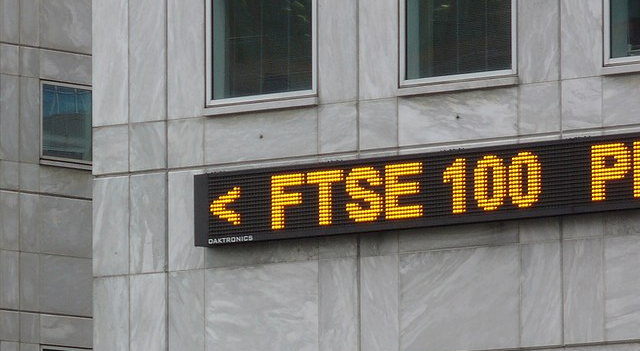
    Around 03:05 ET (08:05 GMT), the DAX in Germany and the FTSE 100 in the U.K. each rose 0.1%, while France’s CAC 40 slipped 0.1%.

    Global monetary policy in focus

    European equities started December on a soft note, closing lower on Monday. Even so, the region’s main benchmarks remain on track for solid yearly performance, helped by rising conviction that the U.S. Federal Reserve will begin cutting rates next week.

    Both the German DAX and the FTSE 100 are set to end 2025 with gains above 18%, whereas the CAC 40, weighed down by political uncertainty, is on pace for a more modest 10% advance.

    Markets are now pricing in an 87.2% probability of a quarter-point rate cut by the Fed, according to the CME FedWatch Tool. The Bank of England is also widely expected to ease policy this month amid cooling inflation and sluggish growth, especially after tax increases were announced in last week’s Autumn Budget.

    Later today, investors will also receive flash eurozone inflation numbers. Annual price growth is projected to come in slightly above the ECB’s medium-term target, but this is unlikely to alter expectations that the central bank will remain on hold through 2026.

    Corporate buybacks poised to support European stocks in 2026

    Beyond central bank dynamics, analysts at Barclays see further support coming from corporate activity next year.

    Companies in Europe bought back €19.3 billion worth of shares in November 2025 — close to the highest level since 2017 — according to a Tuesday note from the bank. Buybacks accounted for 2.3% of all European trading volume last month, with energy and financial firms generating more than 2.5% of volume through repurchases.

    Fourth-quarter execution is already running ahead of historical trends, and the pipeline for 2026 looks substantial: roughly 70% of next year’s buyback authorizations remain untapped. Barclays’ models also point to around €50 billion in fresh buyback announcements expected in the first quarter.

    The bank forecasts 8% earnings-per-share growth for European equities in 2026, with automakers, telecom companies and energy groups offering some of the highest free-cash-flow yields across sectors.

    Oil prices inch higher

    Crude benchmarks held on to Monday’s gains, supported by geopolitical tensions and cautious optimism around global supply dynamics.

    Brent edged up 0.1% to $63.20 per barrel, while WTI rose 0.2% to $59.41. Both contracts gained more than 1% on Monday, with WTI hovering near a two-week high.

    Hopes for progress in talks over Ukraine remain fragile. President Volodymyr Zelenskiy said Kyiv’s priorities include safeguarding sovereignty and securing robust security guarantees, acknowledging that territorial disagreements remain the most difficult issue. U.S. envoy Steve Witkoff is expected to brief Russian officials on Tuesday, though a near-term end to the nearly four-year conflict appears unlikely.

    Separately, tensions have risen between Washington and Caracas after U.S. officials signaled they may impose tighter restrictions on Venezuela — a country believed to hold the world’s largest oil reserves — potentially including an airspace closure.

    Over the weekend, OPEC+ confirmed a small production increase for December but opted to pause any further increases in early 2026 amid growing concern about a possible supply surplus.

  • JPMorgan sees European banks extending their lead into 2026 as valuations improve and fundamentals stay strong

    JPMorgan sees European banks extending their lead into 2026 as valuations improve and fundamentals stay strong

    European banks are set to continue outperforming in 2026, supported by resilient macro conditions, strong internal capital generation and further valuation tailwinds, according to JPMorgan’s latest outlook on the sector.

    The bank argues that lenders are operating in an unusually supportive environment, marked by firm GDP growth, subdued market volatility and a steady rate path from the European Central Bank — all of which underpin stable lending activity and healthy asset quality.

    “We enter 2026 with a continued and reconfirmed positive view on European banks operating in a ’perfect’ environment,” supported by two key drivers, JPMorgan analysts led by Kian Abouhossein said.

    Those drivers include an encouraging economic backdrop — improving GDP growth paired with stable rates, inflation and unemployment — and persistent bottom-up strength. JPMorgan expects pre-provision operating profits to rise 5.5% annually and earnings to grow 9.7% through 2027, helped by sustained share buybacks.

    Valuation remains a central pillar of the bullish thesis. The sector trades at 8.9x expected 2027 earnings, a level the analysts consider compelling relative to projected 16.2% returns on tangible equity, which imply a cost of equity around 11%. They anticipate this falling toward 10% in 2026, creating “at least 12% upside over the next year.”

    Over the medium term, JPMorgan expects the sector’s discount to the broader equity market to narrow further as fundamentals improve.

    The note also highlights that banks are delivering positive operating leverage, keeping cost growth to 1.7% per year compared with 3.6% revenue growth. Capital buffers remain robust, with capacity to absorb roughly 268 basis points of provisions before profitability turns negative. Annual shareholder payouts — combining dividends and buybacks — are projected to stay near 8%.

    In terms of stock selection, JPMorgan continues to prioritise valuation strength and capital resilience. Its Top Picks list still includes Barclays (LSE:BARC), NatWest (LSE:NWG), Deutsche Bank (TG:DBK) and Société Générale (EU:GLE), with Caixabank (TG:48CA), Standard Chartered (LSE:STAN) and Erste (TG:EBO) newly added to the preferred group.

    Analysts said they “continue with our preference for European banks over U.S. banks,” even after Europe’s Stoxx 600 Banks Index has beaten the U.S. KBW Nasdaq Bank Index by 40% so far this year.

    They argue that the current 17% two-year forward P/E discount relative to U.S. banks “is too high,” noting that such a gap is more typical of lower-quality U.S. regional lenders, while America’s largest money-center banks trade closer to 11.7x 2027 earnings.

    Key risks cited include potential downside surprises on interest rates, political uncertainty in France, and intensifying competition for deposits.

  • Louis Vuitton chief Pietro Beccari to take charge of LVMH’s fashion group

    Louis Vuitton chief Pietro Beccari to take charge of LVMH’s fashion group

    LVMH (EU:MC) announced on Tuesday that Pietro Beccari, currently CEO of Louis Vuitton, will assume leadership of the group’s fashion division. Beginning January 1, Beccari will oversee the broader fashion portfolio while continuing in his existing role at Louis Vuitton, the company said in a statement.

    The luxury conglomerate also confirmed that Sidney Toledano, chairman and CEO of LVMH Fashion Group, will step back from his operational duties.

  • European steel market expected to rebound in 2026 as prices and utilisation rise

    European steel market expected to rebound in 2026 as prices and utilisation rise

    Jefferies analysts expect Europe’s steel industry to stage a meaningful recovery in 2026 after hitting a low point in 2025, with hot-rolled coil (HRC) prices projected to reach about $750/t—more than $100/t above the third-quarter trough of $650/t.

    According to the brokerage’s latest estimates:

    • ArcelorMittal (EU:MT) is forecast to deliver €8.3 billion in EBITDA in 2026, slightly ahead of the €8.2 billion consensus.
    • SSAB (TG:SKWC) is projected to generate SEK13.2 billion, marginally above the SEK13.1 billion consensus.
    • Voestalpine (TG:VAS) is expected to post €1.7 billion, broadly in line with the €1.72 billion market expectation.

    These figures represent a recovery from estimated 2025 EBITDA lows of €6.6 billion, SEK10.2 billion, and €1.5 billion respectively.

    Drivers of the expected upturn

    A major catalyst for the improvement is the European Commission’s October 7 proposal to:

    • Cut steel import quotas by 50% to 18.3 million tonnes
    • Double tariffs on steel imported above quota levels to 50% from 25%

    The measures, due to take effect in July 2026, are forecast to reduce import market share from 25% to 15%, boost regional steel output by 10 million tonnes, and lift utilisation rates from 65–67% to a healthier 80–85%.

    ArcelorMittal anticipates flat steel imports could fall by 8 million tonnes and long-steel imports by roughly 2 million tonnes.

    Further tailwinds include:

    • The Carbon Border Adjustment Mechanism (CBAM), launching January 2026, which is expected to add €40–70/t to the cost of imported steel
    • Germany’s €500 billion infrastructure programme, forecast to generate 1–2% additional annual steel demand from 2027 onwards

    Earnings sensitivity

    Jefferies estimates that a €50/t price increase could expand 2026 EBITDA by:

    • 20% for ArcelorMittal
    • 13% for SSAB
    • 15% for Voestalpine
    • 57% for Salzgitter (TG:SZG)
    • 24% for ThyssenKrupp (BIT:1TKA)

    A 5% volume increase could add between 5% and 18%, with Salzgitter at the top end of that range.

    Market snapshot

    As of December 1:

    • US HRC: $981.1/t
    • European HRC: $712.7/t
    • Chinese export HRC: $457/t

    Iron ore traded at $90.6/t, while premium coking coal stood at $172.6/t.

    ArcelorMittal has already raised its December delivery prices to €630/t, up from July’s €560/t low.

    Valuation and sector positioning

    Steel shares have enjoyed a strong rally in 2025:

    • ArcelorMittal: +41.3% YTD
    • SSAB: +50.7% YTD
    • Salzgitter: +65.2% YTD
    • Voestalpine: +58.5% YTD
      (vs. a 14% rise in the STOXX 600)

    This re-rating has pushed sector valuation multiples from around 3.5x EV/EBITDA to roughly 5x, above the 10-year average of 4.5x. Jefferies cautions that with its 2026 estimates close to consensus, share prices already assume a mid-cycle recovery baked in by more than $100/t in price gains and 3–5% volume growth.

    To see further upside at current levels, the broker argues that tangible EBITDA upgrades will be required. For 2026 positioning, Jefferies prefers SSAB among carbon steel producers and Acerinox (BIT:1ACX) in stainless steel.

  • BP drops H2Teesside plans as land is approved for competing data centre project

    BP drops H2Teesside plans as land is approved for competing data centre project

    BP (LSE:BP.) has scrapped its proposed H2Teesside hydrogen hub in northern England after a land-use conflict emerged with a rival development. The energy major withdrew its development consent order on Monday, following local authorities’ approval of a data centre to be built on the same former steelworks site.

    In a statement, BP said: “Due to material changes in circumstances on the Teesworks site, including a planning application being granted locally for a data center on the same piece of land, we have taken the decision not to progress the development of H2Teesside and have withdrawn our development consent order application for the project.”

    The move comes after delays in obtaining government approval for the hydrogen hub, while the competing data centre initiative gained momentum with local backing.