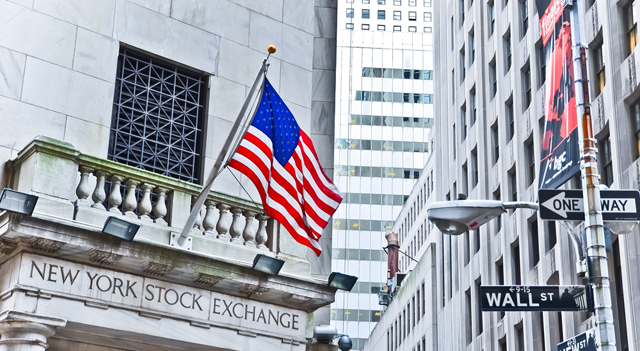
Category: Market News

  • K3 Business Technology to Return £29M to Shareholders and Exit AIM Market

    K3 Business Technology to Return £29M to Shareholders and Exit AIM Market

    K3 Business Technology Group PLC (LSE:KBT) has unveiled plans to return up to £29 million to shareholders via a tender offer, following the recent sale of its subsidiary, Nexsys Solutions Limited. As part of a broader strategic shift, the company is also seeking to delist from the AIM market, with the goal of streamlining its remaining business operations and reaching cash flow breakeven. The proposed shareholder return underscores K3’s commitment to delivering value while recalibrating its long-term operational focus.

    The financial outlook for K3 remains challenging, with the company experiencing pressure from declining revenue and narrowing profit margins. From a technical standpoint, the stock is exhibiting bearish momentum and approaching oversold territory. Its elevated price-to-earnings (P/E) ratio indicates potential overvaluation, which may deter investor interest in the short term.

    About K3 Business Technology Group

    K3 Business Technology delivers mission-critical software solutions, with a strong focus on serving clients in the fashion and apparel sectors. The company is recognized for integrating business management systems that help brands optimize their operations, improve efficiency, and respond more effectively to market demands.

  • Marks Electrical Sets Date for AGM and Final Dividend Payout

    Marks Electrical Sets Date for AGM and Final Dividend Payout

    Marks Electrical Group plc (LSE:MRK) has announced that its Annual General Meeting (AGM) will take place on 7 August 2025. The company is encouraging shareholders to cast their votes via proxy ahead of the meeting. In conjunction with the AGM, the company has proposed a final dividend, scheduled to be paid on 14 August 2025, pending shareholder approval. These developments highlight Marks Electrical’s focus on maintaining shareholder relations and ensuring timely dividend execution.

    While the company continues to demonstrate solid revenue growth and maintains a stable balance sheet, it is navigating hurdles related to profit margins and cash flow generation. Technical indicators suggest moderate momentum in its stock performance; however, investors are urged to remain cautious due to a negative price-to-earnings (P/E) ratio. Despite these concerns, Marks Electrical’s efforts to capture greater market share and implement strategic changes are seen as steps in the right direction. Further gains in operational efficiency will be key to sustaining long-term growth.

    Company Overview

    Founded in Leicester in 1987, Marks Electrical has evolved into a leading e-commerce platform for household appliances and consumer electronics across the UK. The company offers a wide range of over 4,500 products from more than 50 top brands. It differentiates itself through end-to-end service, including delivery, installation, and recycling, all managed through its dedicated logistics network.

  • AstraZeneca shares gain amid reports CEO favors switching to U.S. stock market

    AstraZeneca shares gain amid reports CEO favors switching to U.S. stock market

    Shares of AstraZeneca PLC (LSE:AZN) rose 2.2% after The Times reported that CEO Sir Pascal Soriot has privately shown interest in moving the company’s stock listing from the UK to the United States.

    According to sources familiar with Soriot’s thinking, he has repeatedly expressed a desire to relocate AstraZeneca’s listing from the FTSE 100 to a U.S. exchange, and has even considered changing the company’s legal domicile. However, such a move could face resistance from some members of the board as well as from the British government, which reportedly has not been informed of these talks.

    Soriot, who has led AstraZeneca since 2012, has publicly raised concerns about Europe falling behind the U.S. and China in the race to develop innovative medicines—two key markets that generate the bulk of the company’s revenue worldwide.

    Insiders say Soriot is “deeply frustrated” with the UK regulatory environment, especially the challenges posed by the National Institute for Health and Care Excellence (NICE) related to drug approvals and pricing caps under the NHS rebate program.

    If AstraZeneca were to relocate its listing, it would be a landmark shift for the UK’s corporate landscape, given that the company is currently the country’s most valuable publicly traded firm. Over the past decade, under Soriot’s leadership, AstraZeneca has become a cornerstone of the British pharmaceutical industry.

  • Dow Jones, S&P, Nasdaq, U.S. Stocks Pull Back from Records as Trade Talks and Labor Data Take Focus

    Dow Jones, S&P, Nasdaq, U.S. Stocks Pull Back from Records as Trade Talks and Labor Data Take Focus

    U.S. stock markets eased slightly on Tuesday, retreating from recent record highs as investors weighed developments in trade negotiations and fiscal policies while anticipating key labor market data due later this week.

    By 9:32 a.m. ET, the Dow Jones Industrial Average had dropped 33 points (0.1%), the S&P 500 slipped 16 points (0.3%), and the NASDAQ Composite fell 100 points (0.5%).

    Just the day before, both the S&P 500 and NASDAQ had closed at fresh all-time highs, boosted by optimism around easing trade tensions and mounting expectations of potential interest rate cuts from the Federal Reserve.

    Trade Negotiations Take the Spotlight

    The recent announcement of a trade agreement between the U.S. and China, along with Canada’s last-minute withdrawal of its digital services tax on tech firms, has raised hopes that several trade deals might be finalized ahead of President Trump’s July 9 deadline.

    Still, talks with Japan remain complicated. According to the Financial Times, which cited sources familiar with the discussions, U.S. trade officials are now prioritizing “agreements in principle” on more limited issues with select countries, aiming to secure quick progress before the steep tariffs slated to return on July 9.

    This approach marks a scaling back from Trump’s original goal of negotiating 90 comprehensive trade agreements within the 90-day tariff pause that started April 2. While these narrower agreements could shield some countries from the harshest tariffs, a baseline 10% tariff would remain in place as broader talks continue. The administration is also reportedly considering tariffs on key industries alongside this phased strategy.

    Trump Reignites Criticism of Fed Chair Powell

    Following last week’s softer-than-expected inflation data, expectations of a Federal Reserve rate cut this year have grown, lending support to the equity markets.

    After its recent two-day meeting, the Fed held interest rates steady between 4.25% and 4.5%. Chair Jerome Powell emphasized a cautious wait-and-see approach amid uncertainty over how Trump’s tariff policies might affect the economy.

    This caution frustrated President Trump, who ramped up his criticism of Powell on Monday. He sent the Fed chief a handwritten note accusing him of being “as usual, too late” to reduce rates.

    Trump posted the letter on social media alongside a chart comparing global central bank rates. He urged Powell to cut borrowing costs “a lot,” claiming “hundreds of billions” are being “lost.” Trump added the U.S. should be paying “1% interest or better.”

    Speculation is growing that Trump may nominate a successor to Powell later this year, potentially creating a “shadow” Fed chair and diluting Powell’s influence on policy.

    Markets now see over a 90% chance of a rate cut in September. Investors will closely watch upcoming economic data, especially Thursday’s official jobs report, along with job openings and manufacturing PMI figures.

    Senate Republicans Push Tax Bill Debate Forward

    The Senate narrowly passed a 51–49 procedural vote Saturday to begin debating President Trump’s sweeping “One Big Beautiful Bill,” which combines tax cuts, domestic spending reforms, and border security measures.

    A new Congressional Budget Office report released Sunday estimates the Senate version would add about $3.3 trillion to the federal deficit over the next decade.

    Republicans aim to complete the process before the July 4 holiday.

    The bill proposes raising the debt ceiling by $5 trillion — $1 trillion more than the House version — but failure to pass it could push the Treasury toward a possible default deadline this summer.

    Tesla Shares Slide Amid Trump-Musk Clash

    Tesla (NASDAQ:TSLA) shares took a sharp hit after President Trump escalated his feud with CEO Elon Musk. Trump accused Musk of benefiting excessively from government subsidies and called for a review of federal support for Tesla.

    On Truth Social, Trump suggested the Department of Government Efficiency (DOGE) investigate Tesla’s subsidies, warning “Elon may get more subsidy than any human being in history.”

    He added, “Without subsidies, Elon would probably have to close up shop and head back home to South Africa.”

    The conflict largely stems from Musk’s opposition to the tax and spending bill supported by Trump now under Senate consideration.

    Oil Prices Rebound from Three-Week Low

    Crude oil prices inched higher Tuesday after dipping to a three-week low earlier in the session. The rebound followed easing supply concerns and expectations that OPEC+ will increase production.

    At 9:32 a.m. ET, Brent crude futures rose 0.4% to $67.10 per barrel, recovering from their lowest point since June 11, just before the Israel-Iran conflict escalated. U.S. West Texas Intermediate futures climbed 0.7% to $65.54 per barrel.

    OPEC+ is set to meet on July 6. Reuters reported last week the group plans to raise output by 411,000 barrels per day in August, following increases in May, June, and July.

    This would bring the total supply boost for 2025 to 1.78 million barrels per day, though it still falls short of production cuts implemented over the past two years.

  • Tickmill Rebrands with Confidence: A Strategic Leap Forward

    Tickmill Rebrands with Confidence: A Strategic Leap Forward

    Global multi-asset broker Tickmill has officially launched a refreshed brand identity, signaling a confident evolution in its mission to empower traders worldwide. More than a visual update, this strategic uplift reflects Tickmill’s commitment to clarity, performance, and deeper engagement in an increasingly competitive trading landscape.

    Refining the Brand, Not Reinventing It

    Tickmill’s transformation is rooted in refinement—not reinvention. The company’s new identity builds on its strong foundation while sharpening its message and visual presence. At the heart of the redesign is a refined logotype paired with a green upward arrow, symbolizing growth, progress, and strategic direction. This bold visual cue reinforces Tickmill’s positioning as a broker built for traders seeking a dependable edge.

    “This uplift isn’t about changing who we are—it’s about elevating it,” said Kay Hook, Chief Marketing Officer at Tickmill. “We’ve created a clearer, more confident identity that reflects the value we deliver every day. It’s grounded in strategic thinking and brought to life by the creativity and commitment of our global team.”

    “In a World of Bulls and Bears – Be the Tiger”

    Tickmill’s new brand narrative introduces a powerful metaphor: the tiger. In markets dominated by bulls and bears, Tickmill encourages traders to adopt the tiger’s mindset—focused, agile, and fearless. This philosophy underscores the broker’s promise to deliver “an unfair advantage” to those bold enough to seize it.

    The tiger motif isn’t just symbolic—it’s strategic. In trading, as in nature, success often hinges on split-second decisions. Tickmill’s platform, tools, and support are designed to help traders act with precision and confidence.

    Built for Traders, Backed by Strategy

    Tickmill’s brand uplift is more than aesthetics. It’s a strategic move to better communicate its strengths:

    • Competitive trading conditions with tight spreads and fast execution.
    • Robust regulatory framework across multiple jurisdictions.
    • Advanced platforms including MetaTrader, TradingView, and Tickmill Trader.
    • Global reach with localized support and multilingual resources.

    The refreshed identity also aims to cut through the noise of a densely serviced market, offering traders a brand that performs—not just one that looks good.

    For a detailed comparison of brokers, you can check ADVFN Broker Listing.

  • Eightcap Launches CoinDesk 20 Index CFD, Bringing Institutional-Grade Crypto Access to Retail Traders

    Eightcap Launches CoinDesk 20 Index CFD, Bringing Institutional-Grade Crypto Access to Retail Traders

    In a landmark move for the digital asset industry, Australian fintech firm Eightcap has unveiled a new Contract for Difference (CFD) product based on the CoinDesk 20 Index (CD20)—a benchmark that tracks the performance of the most liquid and representative cryptocurrencies. This launch marks the first time the CD20 Index is available as a regulated CFD product to retail traders globally.

    What Is the CoinDesk 20 Index?

    The CoinDesk 20 Index is a carefully curated basket of the top 20 digital assets by liquidity and market representation. It serves as a reliable benchmark for institutional and retail investors seeking exposure to the broader crypto market. By offering a weighted performance snapshot, the index provides a diversified view of the digital asset landscape, helping traders make informed decisions.

    Eightcap’s Strategic Leap

    Eightcap’s decision to offer the CD20 as a CFD reflects its commitment to bridging the gap between traditional finance (TradFi) and the crypto ecosystem. CFDs allow traders to speculate on price movements without owning the underlying asset, making them a flexible and accessible tool for retail investors.

    The CD20 CFD is available in both fiat and USDT pairs, and is offered as an over-the-counter (OTC) derivatives product. This means traders can access the product outside of centralized exchanges, with pricing and execution handled directly by Eightcap.

    Global Reach and Regulatory Strength

    Headquartered in Melbourne, Eightcap holds regulatory licenses across Australia, the UK, the EU, and the Bahamas, positioning it as a trusted provider in the global financial landscape. Its infrastructure, known as Eightcap Embedded, enables seamless integration with fintech and crypto platforms via open APIs, allowing partners to offer regulated derivatives directly within their environments.

    The CD20 CFD is also tradable via TradingView, one of the world’s most popular charting and trading platforms. This integration ensures that millions of traders can access the product through familiar interfaces, enhancing usability and reach.

    Industry Voices

    Patrick Murphy, Chief Commercial Officer at Eightcap, emphasized the significance of the launch:

    “Partnering with CoinDesk Indices allows us to deliver a world-first regulated product that meets the evolving needs of both crypto-native and traditional trading platforms.”

    Alan Campbell, President of CoinDesk Indices, added:

    “The marketplace needs a diversified benchmark for analysis and financial products. We are excited Eightcap will unlock a new distribution path of opportunity, while bringing regulatory standards to the forefront.”

    Expanding Horizons

    Beyond the CD20 CFD, Eightcap plans to roll out USDT-denominated derivatives across traditional asset classes such as equities, indices, forex, and commodities. These products will be priced and executed using Bitfinex markets, enabling stablecoin-native users to access traditional financial instruments with familiar on-chain liquidity.

    The product was officially unveiled at Consensus 2025 in Toronto, during a session titled Unlocking Regulated Market Access at Scale – A New Standard for Crypto Derivatives. The launch was also featured on CoinDesk Live, where Eightcap’s leadership discussed the implications of regulated crypto benchmarks for global retail markets.

    For a detailed comparison of brokers, you can check ADVFN Broker Listing.

  • Saxo Australia to Rebrand as Totality: A New Chapter Begins

    Saxo Australia to Rebrand as Totality: A New Chapter Begins

    Saxo Australia, a well-established name in the online trading and investment landscape, is preparing for a significant transformation. Beginning August 11, the company will rebrand as Totality, marking a strategic shift aimed at redefining its presence in the Asia-Pacific financial ecosystem.

    The rebrand follows Saxo Bank’s decision to divest the majority of its Australian business. An 80.1% stake was sold to SCM DMA Pty Ltd (DMA South Africa), a respected provider of financial software and trading technology solutions. Saxo Bank retains a 19.9% share, ensuring continued partnership and integration of core technologies.

    Despite the change in brand identity, clients will experience continuity in their platform performance, pricing, and service quality. The transition introduces a refreshed digital interface—including a revamped website, dashboard, and mobile app—designed to enhance user experience while maintaining the trusted functionality users rely on.

    Why Totality?

    The new brand reflects DMA’s ambition to build a borderless brokerage platform tailored to modern investors who demand flexibility, speed, and global reach. Embodying this vision is the platform’s new logo, a winged goddess, symbolizing agility, empowerment, and freedom.

    Totality aims to blend Danish fintech innovation with South African software craftsmanship, offering a next-generation multi-asset trading experience. The rebrand signals a broader mission: to evolve beyond regional boundaries and become a central player in global financial markets.

    What Clients Can Expect

    • Seamless Transition: No action is required from users. Assets and funds remain securely held under existing custodial arrangements.
    • Enhanced Platform: A guide will assist clients with downloading the new apps and accessing updated features.
    • Continued Support: Personalized client services and trading conditions will remain unchanged, ensuring stability throughout the transition.

    This move positions Totality as a dynamic force in online trading, committed to serving both experienced investors and emerging market participants with sophistication and scale.

    For a detailed comparison of brokers, you can check ADVFN Broker Listing.

  • European stocks hold steady ahead of key inflation data and U.S. trade deal deadline

    European stocks hold steady ahead of key inflation data and U.S. trade deal deadline

    European equity markets showed little movement Tuesday as investors remained cautious ahead of the U.S. tariff deadline on July 9 and the release of important inflation figures.

    By 07:05 GMT, Germany’s DAX edged up 0.1%, France’s CAC 40 gained 0.1%, and the UK’s FTSE 100 rose 0.3%.

    Trade deal optimism underpins markets

    Global markets have been lifted by hopes that the Trump administration will finalize several trade agreements before next week’s deadline, following last week’s confirmation of a trade deal with China. Canada’s recent removal of its digital services tax on tech firms, aiming to revive stalled U.S. talks, has also bolstered sentiment.

    However, tensions remain as U.S. President Donald Trump criticized Japan, calling it “spoiled,” amid ongoing negotiations. Meanwhile, U.S. Treasury Secretary Scott Bessent warned that tariffs could still rise sharply even while talks continue, though he anticipates a flurry of deals before the deadline.

    European Commission President Ursula von der Leyen expressed confidence last week that a deal with the U.S. could be reached by July 9. If no agreement is made, the U.S. plans to impose a 50% tariff on nearly all EU goods, with Europe prepared to respond with its own countermeasures.

    Inflation data in focus

    Market participants are closely watching the release of preliminary eurozone inflation data expected Tuesday. Analysts forecast consumer price inflation hit 2% year-on-year in June, aligning with the European Central Bank’s target.

    Earlier this month, the ECB cut interest rates for the eighth time in a year but suggested it may pause further reductions due to uncertainties from U.S. trade tensions. Since last June, the ECB has cut rates by two percentage points to support the eurozone economy, which has been pressured by both internal challenges and external shocks from U.S. policy shifts.

    Later Tuesday, manufacturing Purchasing Managers’ Index (PMI) data for France, Germany, and the eurozone will provide insight into the sector’s health.

    Corporate updates

    Sodexo (EU:SW) lowered its outlook for fiscal 2025 revenue growth to the low end of its previously forecast range, citing mixed regional results and currency pressures in its Q3 report. The company reaffirmed its guidance of 3%-4% organic revenue growth and a 10-20 basis point rise in operating profit margin but now expects to achieve the lower end of those targets.

    French automaker Renault (EU:RNO) announced an extraordinary loss of about €9.5 billion ($11.2 billion) in the first half related to its stake in Nissan (USOTC:NSANY), due to changes in how it accounts for the investment.

    J Sainsbury (LSE:SBRY) reported a 4.9% rise in retail sales excluding fuel for the first quarter of 2025/26, reaching its highest market share in nearly ten years.

    Oil prices rebound from three-week lows

    Crude oil prices recovered slightly Tuesday after hitting three-week lows, pressured by easing supply concerns and anticipation of an OPEC+ production increase.

    Brent crude futures rose 0.3% to $66.91 a barrel, bouncing from a June 11 low just before the Israel-Iran conflict began. U.S. West Texas Intermediate crude futures increased 0.2% to $65.25 a barrel.

    OPEC+ is scheduled to meet on July 6, and reports indicate the group will boost output by 411,000 barrels per day in August, following production increases in May, June, and July. This would bring the total 2025 supply hike to 1.78 million barrels per day, although it remains below the total production cuts implemented over the past two years.

  • UK’s energy regulator gives green light to £24 billion grid upgrade to boost renewables

    UK’s energy regulator gives green light to £24 billion grid upgrade to boost renewables

    Ofgem, the UK’s energy regulator, has given provisional approval to a major £24 billion investment plan aimed at upgrading the country’s energy infrastructure and expanding renewable energy capacity, the agency announced Tuesday.

    Spanning five years, the program allocates over £15 billion to maintain the safe operation of Britain’s gas transmission and distribution systems. Meanwhile, £8.9 billion is earmarked for enhancements to the high-voltage electricity network, with an additional £1.3 billion set aside for future deployment.

    This investment marks the initial phase of a wider £80 billion initiative designed to expand the UK’s electricity network, shielding households from the volatility of global gas markets that have caused sharp energy bill fluctuations in recent years.

    The funding will support about 80 transmission projects nationwide, upgrading more than 4,400 kilometers of overhead power lines and installing 3,500 kilometers of new circuits, including offshore grid connections. These upgrades will double the amount of grid infrastructure added over the past decade.

    Jonathan Brearley, Ofgem’s CEO, stated, “This record investment will deliver a homegrown energy system that is better for Britain and better for customers. It will ensure the system has greater resilience against shocks from volatile gas prices we don’t control.”

    Ofgem estimates the investment will add approximately £104 to annual household network charges by 2031 — with £30 attributed to gas networks and £74 related to electricity grid upgrades. However, the expansion of the electricity grid is expected to generate around £80 in savings through reduced constraint costs and improved renewable energy utilization, resulting in a net cost rise of about £24 per year, or less than 40 pence weekly, by March 2031.

    The regulator has set a provisional cost of equity allowance for private investments at 6% over the five-year period, lower than the 6.5% to 6.9% range requested by companies in their proposals.

    The draft approval is now open for public consultation, with final decisions expected by the end of 2025.

  • Dollar Drops to Multi-Year Lows Amid Rate Cut Bets, Trade Optimism, and Tax Bill Concerns

    Dollar Drops to Multi-Year Lows Amid Rate Cut Bets, Trade Optimism, and Tax Bill Concerns

    The U.S. dollar continued its slide on Tuesday, hitting levels not seen since early 2022, as markets increasingly price in upcoming interest rate cuts. Meanwhile, President Donald Trump’s proposed tax and spending bill has sparked worries about the nation’s fiscal outlook.

    At 04:25 ET (08:25 GMT), the Dollar Index—which measures the greenback against a basket of six major currencies—fell 0.2% to 96.275, marking its lowest point since February 2022.

    Pressure Mounts on the Dollar

    The dollar’s decline is driven by growing expectations that the Federal Reserve will ease monetary policy soon, coupled with optimism around potential trade deals and ongoing political disputes over Trump’s sweeping tax and spending legislation.

    “The dollar continues to grind lower in a move probably now best categorised as an orderly dollar bear trend. After a structurally driven decline of the dollar in April, its losses over the last month or so have become cyclical, as earlier Fed easing becomes priced,” noted analysts at ING in their commentary.

    The anticipation of rate cuts is heightened by President Trump’s persistent pressure on the Fed. Recently, he sent Fed Chair Jerome Powell a handwritten note comparing U.S. interest rates to other countries, suggesting the U.S. rate should fall between Japan’s 0.5% and Denmark’s 1.75%.

    Trump’s ongoing criticism of Powell and the Fed has unsettled investors, raising questions about the central bank’s independence and credibility—factors weighing on the dollar.

    Investor uncertainty is further fueled by the contentious debate in the U.S. Senate over Trump’s tax and spending bill, which faces resistance due to its projected $3.3 trillion increase to the national debt.

    ING added, “Back to the short term, the dollar has come quite far already and this bear trend probably needs feeding with some macro news. That news comes today in the form of the June ISM manufacturing release and the JOLTS data.”

    Euro Nears Four-Year High

    In Europe, the euro slipped slightly by 0.1% to 1.1781 against the dollar, just shy of its recent four-year peak of 1.1808. The single currency surged 13.8% in the first half of the year, marking its best performance for a six-month period on record, according to LSEG data.

    Traders are now awaiting preliminary inflation figures from the eurozone, expected to show an annual rate of around 2% for June, aligning with the European Central Bank’s target.

    Earlier this month, the ECB cut rates for the eighth time in a year but signaled a likely pause at its next meeting due to ongoing trade uncertainties with the U.S.

    Manufacturing purchasing manager indices for France, Germany, and the eurozone will be released later Tuesday, alongside remarks from central bank leaders at the ECB forum in Sintra, Portugal.

    Pound Strengthens Despite Housing Data

    The British pound gained 0.3% to 1.3764 versus the dollar, near a three-and-a-half-year high reached last week.

    However, new data showed UK house prices fell 0.8% in June—a sharper decline than expected and the steepest monthly drop in over two years, according to mortgage lender Nationwide.

    “Sterling could also face some political risk as Prime Minister Keir Starmer faces a backbench revolt over welfare reforms. The government has already been forced to make about £4bn of concessions to get the bill through – although its passage is not guaranteed. Any failure to get the bill through could hit sterling and gilts on the view that further concessions will have to be made at a time when there is no fiscal headroom,” ING analysts noted.

    Safe-Haven Demand Supports Japanese Yen

    In Asia, the Japanese yen strengthened, with USD/JPY dropping 0.7% to 143.06. The yen benefited from safe-haven flows after President Trump criticized Tokyo over its rice import policies and hinted at ending trade negotiations.

    Japanese officials said on Tuesday they are still pursuing a tariff deal with the U.S., but remain firm on protecting the country’s agricultural sector.

    Meanwhile, USD/CNY edged slightly down to 7.1624, near its strongest level since November, supported by positive manufacturing data. Tuesday’s Caixin PMI revealed China’s manufacturing sector returned to expansion in June, buoyed by a temporary tariff truce between Washington and Beijing.