
Category: Market News

  • Advanced Medical Solutions Delivers Robust H1 2025 Performance on Strong Surgical Growth

    Advanced Medical Solutions Delivers Robust H1 2025 Performance on Strong Surgical Growth

    Advanced Medical Solutions Group plc (LSE:AMS) has reported a strong first half for 2025, supported by continued growth in its surgical products segment and the successful integration of recent acquisitions—Peters Surgical and Syntacoll. The company’s strategic restructuring of its Woundcare division has led to improved margins, helping drive expected H1 revenue to approximately £110 million, a notable increase from £68 million in the same period last year. Management remains optimistic about meeting full-year guidance, with additional synergies expected from ongoing integration efforts.

    AMS’s financial position and operational momentum point to solid long-term potential. While recent corporate developments have strengthened its growth outlook, challenges in maintaining profitability and a relatively high valuation present some risks. From a technical standpoint, indicators suggest the stock is fairly valued at present, with possible upside if margin improvements and cost efficiencies continue.

    About Advanced Medical Solutions Group plc

    Advanced Medical Solutions is a UK-based developer and manufacturer of advanced wound care and surgical products, committed to improving healing outcomes and delivering value to healthcare systems. Its product range includes tissue adhesives, sutures, haemostats, internal fixation devices, and sealants, marketed under various proprietary brands. AMS also offers wound care solutions through its ActivHeal® line. Since 2019, the company has expanded through multiple acquisitions and now distributes its products globally via a combination of direct sales and strategic partnerships, with manufacturing operations in several countries.

    This content is for informational purposes only and does not constitute financial, investment, or other professional advice. It should not be considered a recommendation to buy or sell any securities or financial instruments. All investments involve risk, including the potential loss of principal. Past performance is not indicative of future results. You should conduct your own research and consult with a qualified financial advisor before making any investment decisions.


  • Robert Walters PLC Faces Q2 Headwinds Amid Global Economic Pressure

    Robert Walters PLC Faces Q2 Headwinds Amid Global Economic Pressure

    Robert Walters PLC (LSE:RWA) reported a 13% year-over-year drop in net fee income for the second quarter of 2025, reflecting the impact of heightened global economic uncertainty and softer forward demand in the specialist recruitment sector. In response to these headwinds, the company has taken steps to streamline its operations, including exiting the Brazilian market and simplifying management structures in selected regions.

    While trading conditions remain especially tough in Europe, Robert Walters continues to advance its long-term strategic priorities, emphasizing operational efficiency and enhanced talent solutions to support clients during a slow recovery phase.

    Looking ahead, the company’s outlook remains cautious. Financial pressure from declining revenue and margin compression weighs heavily on sentiment. Technical indicators point to ongoing negative momentum, further reflecting bearish investor expectations. Despite an attractive dividend yield, concerns over earnings sustainability and valuation persist. However, governance initiatives and performance-linked incentives may help align leadership focus as the company navigates economic challenges.

    About Robert Walters PLC

    Robert Walters PLC is a global recruitment firm specializing in professional talent acquisition and outsourcing solutions. The company delivers recruitment services across a range of sectors and geographies, with operations spanning the Asia-Pacific region, Europe, the UK, and other international markets.

    This content is for informational purposes only and does not constitute financial, investment, or other professional advice. It should not be considered a recommendation to buy or sell any securities or financial instruments. All investments involve risk, including the potential loss of principal. Past performance is not indicative of future results. You should conduct your own research and consult with a qualified financial advisor before making any investment decisions.

  • Genus plc Delivers Strong FY25 Performance and Achieves Key FDA Approval

    Genus plc Delivers Strong FY25 Performance and Achieves Key FDA Approval

    Genus plc (LSE:GNS) has reported solid full-year results for FY25, with overall group performance meeting expectations. The company saw double-digit growth in adjusted operating profit for its PIC division, supported by a £3.7 million milestone payment tied to the U.S. FDA’s approval of its gene-edited PRRS Resistant Pig. Meanwhile, its ABS division outperformed expectations in the second half, benefiting from the ongoing Value Acceleration Programme, which delivered £8.5 million in efficiencies.

    Genus now anticipates its adjusted profit before tax will reach at least £72 million, reflecting improved cash flow and a reduction in leverage. The FDA’s approval represents a landmark achievement in animal biotechnology, strengthening Genus’s position as a global leader in animal genetics and opening the door to future growth opportunities.

    Despite these positive developments, the company’s financial outlook remains balanced. While strategic milestones support a favorable long-term narrative, current valuation concerns and mixed technical signals may limit near-term gains.

    About Genus plc

    Genus plc is a global pioneer in animal genetics, leveraging biotechnology to improve livestock breeding and productivity. The company supplies high-performance genetics to the dairy, beef, and pork industries, primarily through semen, embryos, and breeding stock. It operates under the brands ‘ABS’ (for cattle) and ‘PIC’ (for pigs), with a global footprint spanning more than 25 countries. Headquartered in Basingstoke, UK, Genus also runs advanced research facilities in Madison, Wisconsin, USA.

    This content is for informational purposes only and does not constitute financial, investment, or other professional advice. It should not be considered a recommendation to buy or sell any securities or financial instruments. All investments involve risk, including the potential loss of principal. Past performance is not indicative of future results. You should conduct your own research and consult with a qualified financial advisor before making any investment decisions.

  • GlobalData Posts Steady H1 2025 Results, Advances Strategic Growth Plans

    GlobalData Posts Steady H1 2025 Results, Advances Strategic Growth Plans

    GlobalData Plc (LSE:DATA) has delivered a stable performance in the first half of 2025, underpinned by its ongoing Growth Transformation Plan (2024–2026), despite a challenging macroeconomic backdrop. The company is shifting toward a solutions-led sales model and a focus on strategic account management, which has contributed to an increase in forward contracted revenue and a robust client pipeline. During the period, GlobalData completed two acquisitions aimed at strengthening its Consumer Innovation Intelligence offerings.

    As part of its capital return strategy, the company has announced a tender offer of up to £60 million. It also plans to transition to a Main Market listing by the fourth quarter of 2025, reinforcing its focus on delivering sustainable shareholder value.

    While the company’s operational progress and strategic initiatives support a positive long-term view, technical analysis indicates bearish trends in the short term. Additionally, current valuation levels may be seen as stretched, potentially limiting near-term upside.

    About GlobalData Plc

    GlobalData Plc is a prominent player in the data and analytics sector, delivering insight-driven solutions across key domains such as sales, competitive, and strategic intelligence. The firm places strong emphasis on consumer innovation intelligence and continues to evolve its technology and service portfolio to meet growing market demand.

    This content is for informational purposes only and does not constitute financial, investment, or other professional advice. It should not be considered a recommendation to buy or sell any securities or financial instruments. All investments involve risk, including the potential loss of principal. Past performance is not indicative of future results. You should conduct your own research and consult with a qualified financial advisor before making any investment decisions.

  • Trustpilot Delivers Strong H1 2025 Results and Launches Auditor Review Process

    Trustpilot Delivers Strong H1 2025 Results and Launches Auditor Review Process

    Trustpilot Group Plc (LSE:TRST) has reported impressive results for the first half of 2025, with bookings rising 19% and revenue increasing by 21% year-over-year. In light of this strong performance, the company has revised its full-year adjusted EBITDA margin forecast upward to 14%, highlighting the strength of its SaaS-driven model and solid cash flow. As part of its ongoing focus on governance, Trustpilot has also announced the initiation of a competitive selection process to appoint a new external auditor.

    The company’s positive momentum, combined with what analysts consider a favorable valuation, points to potential undervaluation of the stock. While technical charts suggest some resistance at higher price levels, Trustpilot’s strong fundamentals and low price-to-earnings ratio offer a compelling case for continued growth.

    About Trustpilot Group Plc

    Founded in 2007, Trustpilot is a global leader in the online review space, offering a platform where consumers and businesses connect through shared feedback. With a vast database of over 300 million reviews and a monthly audience of 64 million active users, the company operates out of its headquarters in Copenhagen and maintains a presence in several major global markets.

    This content is for informational purposes only and does not constitute financial, investment, or other professional advice. It should not be considered a recommendation to buy or sell any securities or financial instruments. All investments involve risk, including the potential loss of principal. Past performance is not indicative of future results. You should conduct your own research and consult with a qualified financial advisor before making any investment decisions.

  • Crypto.com Deepens Talent Grab from CFD Sector with Latest High-Profile Hire

    Crypto.com Deepens Talent Grab from CFD Sector with Latest High-Profile Hire

    In a move that underscores the shifting tides between traditional finance and digital asset platforms, Crypto.com has appointed Nicolò Pagliari as its new Global Vice President of Growth and Media. Pagliari, a seasoned executive with seven years at Saxo Bank, becomes the second major CFD industry veteran to join the Singapore-based crypto exchange in just two months.

    Pagliari’s departure from Saxo, where he most recently served as Head of Marketing for Asia-Pacific, marks a growing trend of talent migration from legacy brokers to crypto and proprietary trading firms. “It took one of those opportunities that you can’t say no to,” Pagliari shared in a LinkedIn post announcing his move.

    This latest hire follows Crypto.com’s recent onboarding of Kevin Algeo, former CEO of IG Group, as Senior Vice President of Capital Markets. The company also acquired Cyprus-based Allnew Investments Ltd to secure a MiFID license, signaling its intent to expand into regulated financial products including CFDs for forex and other markets.

    Pagliari’s transition is emblematic of a broader industry shift. As crypto platforms diversify their offerings and proprietary trading firms gain traction, traditional CFD brokers are facing mounting pressure. A recent FYI study revealed that 40% of brokers currently have vacant marketing leadership roles, highlighting the competitive squeeze for top-tier talent.

    Other notable moves include Michael Kamerman’s appointment as CEO of FTMO’s brokerage division and Riana Chaili’s new role as COO after stints at IC Markets and TechFinancials. Meanwhile, executives like Yassin Mismar, Zoltan Nemeth, and Andreas Andreou have also pivoted to prop firms and crypto ventures.

    Crypto.com’s aggressive hiring spree aligns with its push into conventional finance. The firm plans to launch CFD trading in Q3 2025, leveraging its newly acquired MiFID license. “His extensive experience in financial services and regulated markets will be instrumental in our mission to build a full-service and fully regulated suite of financial products,” said Eric Anziani, Crypto.com’s President and COO, referring to Algeo’s appointment.

    This strategy mirrors similar moves by competitors. Kraken has launched regulated derivatives trading under MiFID II, while Coinbase acquired Deribit to bolster its derivatives footprint.

    The migration of talent reflects deeper structural shifts. Crypto exchanges are acquiring regulated entities to fast-track licensing, while prop firms benefit from lighter regulatory frameworks. Traditional CFD brokers, meanwhile, grapple with tighter rules on leverage and marketing, making the crypto and prop sectors increasingly attractive for executives seeking growth and innovation.

    Pagliari will be based in Singapore, leading global user acquisition efforts for Crypto.com, which now boasts over 140 million users. His remit includes campaign development, media partnerships, and team leadership across international markets.

    As the executive exodus from traditional brokers continues, the battle for market dominance between legacy finance and digital disruptors is heating up—and Crypto.com is clearly playing to win.

  • Markets largely ignore new tariff threats, why?

    Markets largely ignore new tariff threats, why?

    Once again, Donald Trump is talking tough about tariffs, threatening to raise them in dozens of countries, but has not yet acted. Instead, he is leaving space, or rather time, for negotiations. This time, however, the deadline is not three months, but initially three weeks, until August 1.

    The markets are barely reacting. Neither the S&P 500, the Nasdaq, or the US dollar index plummeted. Investors seem convinced this is all part of Trump’s usual bluff-and-bargain routine, the now familiar “TACO trade.” It might seem that this game could go on indefinitely without causing real damage.

    The uncertainty surrounding US trade policy is one of the key reasons why the Fed has been hesitant to cut rates, despite slowing inflation and pressure from Trump. Not surprisingly, according to CME Group’s FedWatch tool, there is a 93% chance that the Fed will hold rates steady at the July meeting.

    Still, investors are betting on two cuts before the end of the year. Hope is driving this market more than logic.

    Fear of missing out (FOMO) also helps sentiment, pushing Nvidia to a market cap of $4 trillion, for the first time in history among public companies. Bitcoin also continues to rise, surpassing the $120,000 mark. Now, all eyes are on the upcoming earnings season, which will have to pay off to keep the rally alive.

    Analysts are again forecasting a slowdown in earnings growth, just as they did last quarter. But they were wrong then, as most companies beat expectations despite all the trade war noise. This pattern could easily repeat itself, which would help keep bullish sentiment in the US market alive.

    Keep in mind also that the effects of trade tensions are not being felt equally across all sectors. Fundamentals seem to remain strong in sectors such as technology, communications, and the defensive sector. Tuesday’s bank earnings reports are also expected to meet, if not exceed, expectations.

    The problem is that the U.S. market has been rising for months without a correction, which cannot last forever.

  • Dow Jones, S&P, Nasdaq, Futures Signal Continued Pullback for Wall Street

    Dow Jones, S&P, Nasdaq, Futures Signal Continued Pullback for Wall Street

    U.S. futures point to a slightly lower start on Monday, suggesting that stocks may extend the declines seen during last Friday’s trading session.

    Market concerns remain elevated over President Donald Trump’s ongoing trade disputes, particularly after he sent letters to leaders of the European Union and Mexico threatening to impose 30 percent tariffs starting August 1.

    In an early morning post on Truth Social, Trump accused the U.S. of being “ripen off” on trade for decades, resulting in trillions of dollars in losses.

    “Countries should sit back and say, ‘Thank you for the many year’s long free ride, but we know you now have to do what’s right for America,’” Trump stated. “We should respond by saying, ‘Thank you for understanding the situation we are in. Greatly appreciated!’”

    In response, the EU declared it will delay the enforcement of its retaliatory trade measures against the U.S. until early August, providing additional time to negotiate a resolution.

    European Commission President Ursula von der Leyen, addressing the situation during a Sunday press briefing, said, “We will therefore also extend the suspension of our countermeasures till early August. At the same time, we will continue to prepare further countermeasures so we are fully prepared.”

    She added, “We have always been very clear that we prefer a negotiated solution. This remains the case, and we will use the time that we have now till the 1st of August (to negotiate).”

    The EU’s retaliatory tariffs targeting $25 billion worth of American imports, imposed in response to U.S. steel and aluminum tariffs, were originally set to take effect Monday.

    Meanwhile, investors appear cautious ahead of several upcoming economic reports, including data on consumer and producer prices, retail sales, and industrial output.

    The earnings season is also gaining momentum this week, with major companies such as JPMorgan Chase (NYSE:JPM), Wells Fargo (NYSE:WFC), Bank of America (NYSE:BAC), Goldman Sachs (NYSE:GS), Johnson & Jonson (NYSE:JNJ) and Netflix (NASDAQ:NFLX) scheduled to release quarterly results.

    Last Friday, stocks recovered some losses after an early dip but still finished modestly lower. The major indices all slipped, with the Nasdaq and S&P 500 retreating from Thursday’s record closing highs.

    The Dow dropped 279.13 points (0.6%) to 44,371.51, the Nasdaq declined 45.14 points (0.2%) to 20,585.53, and the S&P 500 lost 20.71 points (0.3%) to close at 6,259.75.

    The market weakness was driven by renewed worries over Trump’s escalating trade conflicts.

    In a letter posted on Truth Social to Canadian Prime Minister Mark Carney, Trump announced a 35 percent tariff on Canadian imports, effective August 1.

    He attributed the tariffs partly to Canada’s failure to stop fentanyl from “pouring” into the U.S. and warned that tariffs could increase if Canada retaliates.

    “If Canada works with me to stop the flow of Fentanyl, we will, perhaps, consider an adjustment to this letter,” Trump said.

    During an interview on NBC News’ “Meet the Press,” Trump indicated plans to impose broad tariffs of 15 to 20 percent on most U.S. trading partners and mentioned he would soon send letters to EU members informing them of new tariff levels.

    Trading activity remained somewhat muted overall, possibly due to the absence of significant U.S. economic data keeping some investors cautious.

    Airline stocks retreated sharply after a strong rally in the previous session, causing the NYSE Arca Airline Index to fall 2.7 percent from Thursday’s four-month closing high.

    Biotech stocks also showed notable weakness, with the NYSE Arca Biotechnology Index dropping 1.5 percent.

    Other sectors experiencing pressure included networking, housing, and pharmaceuticals, while gold stocks advanced in line with rising gold prices.

    This content is for informational purposes only and does not constitute financial, investment, or other professional advice. It should not be considered a recommendation to buy or sell any securities or financial instruments. All investments involve risk, including the potential loss of principal. Past performance is not indicative of future results. You should conduct your own research and consult with a qualified financial advisor before making any investment decisions.
  • European Markets Slip Amid Trump’s Threat of EU Tariffs

    European Markets Slip Amid Trump’s Threat of EU Tariffs

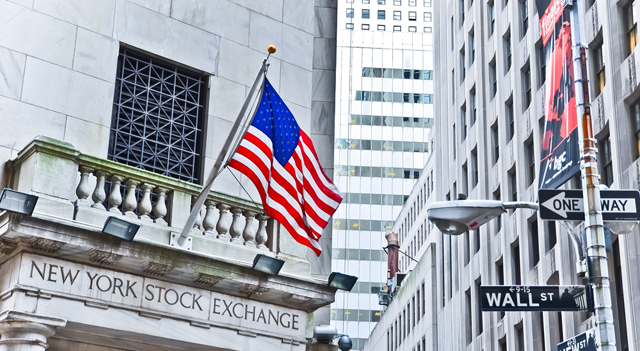
    European equities edged lower on Monday following U.S. President Donald Trump’s warning of a 30% tariff on imports from the European Union, sparking fears of a prolonged and deeper economic slowdown.

    Reports indicate that the EU has prepared a retaliatory tariff package worth €21 billion ($24.52 billion) aimed at U.S. products should trade negotiations fail.

    The STOXX 600, a broad index covering European stocks, declined by 0.3%, following a 1% drop on Friday.

    Germany’s DAX Index lost 0.8%, while France’s CAC 40 fell 0.4%. In contrast, the U.K.’s FTSE 100 defied the downward trend, climbing 0.4%.

    Automobile manufacturers took a hit, with Volkswagen (TG:VOW3), BMW (TG:BMW), Mercedes-Benz (TG:MBG) and Porsche  (BIT:1PORS) each dropping close to 2%.

    On a brighter note, mining giant BHP (LSE:BHP) rose approximately 1% after signing preliminary agreements with Chinese battery makers CATL and BYD to explore opportunities in battery technology and electrification.

    AstraZeneca (LSE:AZN) shares jumped 2% in London after positive late-stage trial results showed that its experimental drug baxdrostat effectively lowered high blood pressure.

    French defense stocks were on the rise after President Emmanuel Macron called on Sunday for a substantial increase in France’s defense budget, citing escalating risks from Russia.

    This content is for informational purposes only and does not constitute financial, investment, or other professional advice. It should not be considered a recommendation to buy or sell any securities or financial instruments. All investments involve risk, including the potential loss of principal. Past performance is not indicative of future results. You should conduct your own research and consult with a qualified financial advisor before making any investment decisions.
  • Dollar Rises Slightly, Euro Dips After Trump’s EU Tariff Threat

    Dollar Rises Slightly, Euro Dips After Trump’s EU Tariff Threat

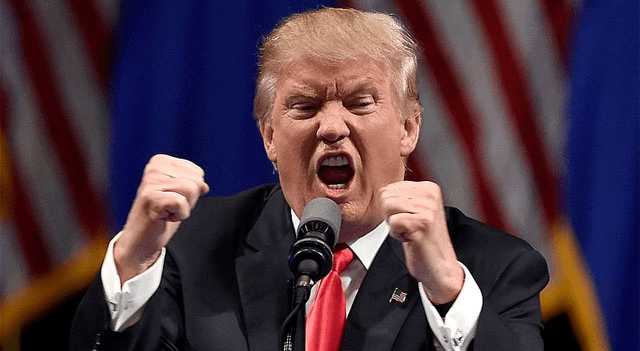
    The U.S. dollar gained modest ground on Monday, while the euro slipped, following U.S. President Donald Trump’s announcement of a 30% tariff on European Union imports. Despite the geopolitical weight of the move, currency market reactions remained relatively subdued.

    At 05:30 ET (09:30 GMT), the Dollar Index—which measures the dollar against six major global currencies—was up 0.1% at 97.577. The greenback added nearly 2% last week, marking its strongest weekly performance since early December.

    Dollar Finds Support from Tariff Headlines

    Trump’s weekend declaration of new 30% tariffs on imports from both Mexico and the EU has intensified global trade anxieties. The duties, set to begin August 1, leave little time for negotiating a resolution, especially after the original July 9 deadline was delayed.

    Even with the tariffs looming, market reaction was relatively restrained—especially compared to the volatility that followed Trump’s “Liberation Day” tariffs in April.

    “The moves have not been larger since investors see these threats as a Washington negotiating tactic to push the other side over the line into a deal,” said analysts at ING, in a note.

    “Our baseline assumes that better deals than this get agreed by the 1 August deadline and that we are not going to see a repeat of the early April market shock in response to Liberation Day tariffs.”

    Aside from trade news, currency traders are also looking ahead to Tuesday’s U.S. CPI report and any developments on potential sanctions against Russia.

    “Look out for the announcement of any secondary sanctions on those countries buying Russian oil,” ING added. “A jump in energy is good news for the energy-independent U.S. (and the dollar) and negative for the big energy importers in Europe and Asia.”

    Euro Slides to Lowest in Three Weeks

    EUR/USD was down 0.1% to 1.1683, touching a three-week low earlier in the session following Trump’s EU tariff warning. European Commission President Ursula von der Leyen criticized the tariffs as “unfair and disruptive” but confirmed that the EU would maintain its suspension of countermeasures until early August as negotiations continue.

    “Those waiting for better levels to buy EUR/USD could be rewarded for their patience,” said ING. “U.S.-EU trade negotiations look set to get noisier over the coming weeks, and baseline expectations that the EU secures a 10% tariff rate on most goods could be challenged.”

    Sterling Slides on U.K. Economic Weakness

    The pound fell as well, with GBP/USD down 0.2% to 1.3476, marking a two-week low. The move extended recent losses following disappointing U.K. economic data last week, showing that the economy shrank for the second consecutive month in May.

    “Investors seem to be taking a dimmer view of sterling, presumably on the back of the fiscal straitjacket currently trapping U.K. Chancellor Rachel Reeves,” said ING.

    Asian Markets Stay Quiet Amid Trade Tensions

    In Asia, USD/JPY edged up 0.1% to 147.21, while USD/CNY was nearly unchanged at 7.1682. Traders remained cautious as they balanced Washington’s tariff announcements against encouraging Chinese trade figures.

    China’s trade surplus for June exceeded expectations, driven by better-than-expected export growth. Mutual tariff reductions under the U.S.-China trade agreement helped boost outbound shipments, including rare earth metals.

    This content is for informational purposes only and does not constitute financial, investment, or other professional advice. It should not be considered a recommendation to buy or sell any securities or financial instruments. All investments involve risk, including the potential loss of principal. Past performance is not indicative of future results. You should conduct your own research and consult with a qualified financial advisor before making any investment decisions.