Category: Market News

  • Ajax Kicks Off First-Ever Drilling at Historic Eureka Gold and Copper Project in Argentina

    Ajax Kicks Off First-Ever Drilling at Historic Eureka Gold and Copper Project in Argentina

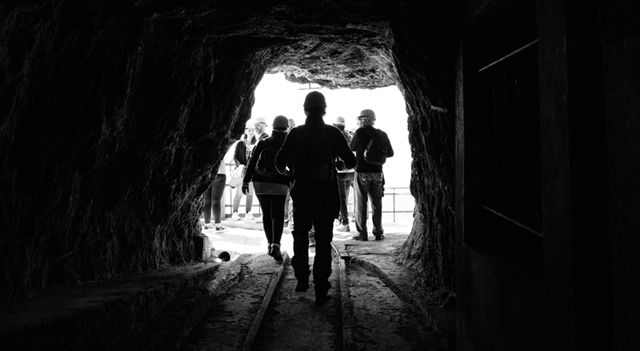
    Ajax (AQSE: AJAX) has begun drilling at its Eureka Gold and Copper Project in Jujuy Province, Argentina, marking the first time the historic mining area has ever been drill tested despite nearly 400 years of documented production.

    The natural resources investment company said the fully funded and permitted initial programme will consist of around 10 diamond drill holes, totaling approximately 1,500 metres. The campaign is designed to test a combination of shallow geochemical and induced polarisation (IP) anomalies, alongside a deeper IP chargeability target highlighted in a 2014 SRK Consulting report. That deeper anomaly is interpreted as a possible transition into a sulphide-rich zone within the broader mineralised system.

    Drilling is taking place close to Mina Eureka, a historic copper and gold mine within the project area. Although the mine has a production history stretching back roughly four centuries, it has never been subjected to modern drilling, leaving much of its subsurface potential unexplored.

    Previous work at Eureka has identified multiple high-priority targets. Surface sampling has confirmed high-grade copper oxides, including historical results of up to 6.1% Cu, with numerous samples exceeding 0.5% Cu across several earlier exploration campaigns.

    Ajax said all work is being carried out in line with stringent environmental, health, safety and community engagement standards. The start of drilling represents a major milestone for the project and a key step in Ajax’s strategy of unlocking value from historically productive but underexplored assets.

    Initial assay results from the programme are expected by the end of the first quarter of 2026.

    Commenting on the development, Chief Executive Officer Ippolito Ingo Cattaneo said:

    “The commencement of drilling at Eureka represents an important milestone for Ajax. Opportunities to drill test a project with a 400-year history of copper and gold production that has never previously been drilled are uncommon. The presence of strong surface geochemistry, multiple IP anomalies, and the proximity to historic workings provides a compelling technical rationale for this initial programme, while recognising that drilling is required to validate the geological model.

    A number of historical third-party studies provide additional context regarding the potential scale of the mineralised system. Minera Peñoles estimated an exploration potential of 61.6 Mt at 1.0% Cu, containing approximately 616,000 tonnes of copper, while work undertaken by Codelco also pointed to the presence of a significant copper system. In addition, Mantos Blancos, now part of Anglo American, carried out underground mapping and bulk sampling and declared a historical, non-NI 43-101 compliant gold resource of approximately 52,000 ounces, based on 600,000 tonnes at 2.7 g/t Au.

    This fully funded programme is a key step in systematically assessing the potential of the Eureka Project, and we look forward to keeping shareholders informed as results are received, analysed, and interpreted over the coming months.”

    Note on historical estimates

    Ajax cautioned that the historical estimates referenced were prepared by previous operators and do not comply with current reporting standards. The figures have not been verified by the company and should not be treated as Mineral Resources or Mineral Reserves. They are included solely to provide geological context and to explain the rationale behind the current drilling programme.
  • Great Western Mining Appoints Ed Loye as CEO to Advance Nevada Strategy

    Great Western Mining Appoints Ed Loye as CEO to Advance Nevada Strategy

    Great Western Mining Corporation (LSE:GWMO) has named seasoned geologist Edward (Ed) Loye as Chief Executive Officer, with effect from 1 February 2026, as the company sharpens its focus on advancing exploration and development activities in Nevada. Loye, who has already been advising the group as a geological consultant and is expected to join the board in due course, brings over 20 years of international experience spanning rare earths, critical minerals, and precious and base metals.

    His background includes founding and leading multiple exploration ventures, as well as contributing to UK government-supported critical minerals initiatives. The board believes Loye’s combination of technical depth and commercial leadership will help accelerate progress across Great Western’s Nevada portfolio and support the transition of key assets toward development, with a clear emphasis on long-term value creation for shareholders.

    More about Great Western Mining

    Great Western Mining Corporation is a diversified exploration and development company focused on strategic and precious metals in Nevada, operating across several wholly owned claim groups in Mineral County — a well-established and mining-friendly jurisdiction. The company follows a multi-commodity approach, balancing near-term development with longer-term exploration. Its portfolio includes the flagship Huntoon Copper Project, which hosts a JORC-compliant copper resource, alongside gold, silver and early-stage tungsten assets aligned with U.S. critical minerals priorities. Great Western is also evaluating farm-out and joint venture options to unlock additional value from its asset base.

  • Goldman Sees Oil Prices Under Pressure in 2026 as Supply Surplus Widens

    Goldman Sees Oil Prices Under Pressure in 2026 as Supply Surplus Widens

    Oil markets are likely to face renewed downside in 2026 as accelerating production growth deepens an already sizable surplus, according to analysts at Goldman Sachs. The bank expects the forces that weighed on prices in 2025 to remain in place, with abundant supply continuing to outweigh geopolitical risks and limiting any durable price recovery.

    Brent crude fell 14% in 2025 despite frequent spikes linked to geopolitical flashpoints — a pattern Goldman strategists believe will persist.

    Goldman’s team, led by Daan Struyven, forecasts average 2026 prices of $56 a barrel for Brent and $52 for WTI, well below current forward prices of roughly $62 and $58. The projections reflect what the bank describes as a sustained wave of new supply, leaving the market with an estimated surplus of around 2.3 million barrels per day.

    Growing global inventories underline the imbalance, with strategists arguing that “rebalancing the market likely requires lower oil prices in 2026” unless there are significant supply disruptions or fresh output cuts from OPEC.

    In its base-case outlook, Goldman assumes OPEC will not introduce additional cuts next year, noting that the supply increases seen in 2025 were intentional and that recent price weakness is driven by temporary supply strength rather than softening demand.

    The bank expects prices to drift lower through the year, with Brent and WTI bottoming near $54 and $50 a barrel, respectively, in the fourth quarter of 2026 as stock builds accelerate at OECD commercial storage sites. Analysts added that onshore inventories are becoming increasingly important for price formation, as floating storage is already elevated and beginning to level off.

    Supply-side strength remains the dominant theme. Goldman points to continued production outperformance in the United States and Russia, along with “slightly higher Venezuela production,” as factors pressuring longer-dated prices and reinforcing a downward bias across the futures curve.

    Reflecting this view, Goldman has lowered its three-year forward fair value estimate for Brent by $5 to $64 and cut its 2027 average price forecasts by the same amount. The bank now expects Brent and WTI to average $58 and $54, respectively, in 2027, as excess supply continues to delay market rebalancing.

    While geopolitical risks remain elevated, strategists see them as a source of volatility rather than a driver of sustained gains. “While threats to sanctioned supply could create price spikes,” they said, policymakers’ preference for plentiful energy supply and relatively low oil prices is likely to cap any upside, particularly ahead of U.S. midterm elections.

    Overall, risks to the outlook are viewed as broadly balanced but skewed modestly to the downside.

    Looking further ahead, Goldman expects oil prices to begin recovering from 2027 as non-OPEC supply growth slows and demand remains resilient. Even so, the bank has trimmed its long-term assumptions, lowering its Brent and WTI forecasts for 2030–2035 to $75 and $71 a barrel, while maintaining that a longer-term price recovery will still be needed to support investment after years of subdued long-cycle spending.

  • Gold Breaks New Ground as Analysts Say It Is “No Longer Just a Portfolio Hedge”

    Gold Breaks New Ground as Analysts Say It Is “No Longer Just a Portfolio Hedge”

    Gold surged to unprecedented levels as political risk and macroeconomic uncertainty intensified, with the investigation involving Jerome Powell adding to market anxiety. Prices pushed beyond the $4,600-an-ounce threshold for the first time, with spot gold reaching $4,601.17 and futures climbing to $4,612.40 an ounce.

    Silver has continued its own remarkable rally, also setting fresh records at $84.653 an ounce in spot trading. The metal advanced by almost 150% during 2025. “We expect the deficit in the silver market to continue throughout 2026, mainly due to increasing investment demand,” said BMI, part of Fitch Solutions, noting that strong industrial demand has further constrained physical supply to historic lows.

    “The performance of precious metals is a reminder of how much uncertainty markets are facing—geopolitics, the debate over growth and rates, and now a new institutional risk driven by headlines,” said Charu Chanana, chief investment strategist at Saxo Markets in Singapore.

    These comments come against the backdrop of Powell’s disclosure of a criminal investigation tied to his role in the $2.5 billion renovation of the Federal Reserve’s Washington headquarters and the testimony he provided to Congress.

    Powell responded sharply, arguing that the potential indictment “should be seen in the broader context of ongoing threats and pressure from the administration” aimed at shaping central bank interest-rate decisions. Repeated attacks on the Federal Reserve by the Trump administration last year weighed on the dollar and helped fuel gold’s ascent.

    Safe-haven demand has also been boosted by escalating unrest in Iran. U.S. President Donald Trump said on Sunday that he was weighing multiple options in response to developments in Iran, while again raising the prospect of seizing Greenland and questioning the value of NATO, just over a week after detaining Venezuelan leader Nicolás Maduro.

    At the same time, the U.S. Supreme Court is set to rule on Trump’s tariff policy on Wednesday. A decision against the measures would strike at the core of the president’s economic agenda and represent his most significant legal setback since returning to office.

    Against this backdrop, precious metals are increasingly seen as being in the midst of a structural bull market, supported by several powerful tailwinds. Falling U.S. interest rates, rising geopolitical tensions, eroding confidence in the dollar and growing challenges to the Federal Reserve’s independence have all combined to drive sustained demand. More than a dozen fund managers have indicated they have no plans to materially reduce gold exposure, underlining strong long-term conviction.

    Thibaut Dorlet and Johann Mauchand, CFA Senior Multi-Asset Fund Managers, argue that gold’s expanding role within portfolios “is no longer just a hedge.” While it continues to act as an “insurance” against weakening stock-bond correlations and a more fragile geopolitical environment, they say gold is increasingly being treated as a “ real asset allocation choice .”

    One of the most important structural forces behind this shift, they note, is “ central bank reallocations from the dollar to gold, ” which “are providing presumably long-lasting support, a development that is only weakly price-sensitive.” The People’s Bank of China, for example, officially holds just 7.7% of its reserves in gold. A move toward the roughly 20% average among G10 central banks would imply close to 3,300 tonnes of additional purchases — equivalent to several years of accumulation, according to Bloomberg.

    The broader macroeconomic landscape “has changed profoundly,” they add. “Persistently low real rates, expansionary fiscal policies and growing questions around public debt sustainability reinforce the need to hold an asset independent of any sovereign entity. Gold is becoming a high-conviction asset and a natural balancer in portfolios.”

    They also point to “the expanding access channels to gold investments,” which have “amplified these dynamics.” In particular, the rise of ETFs has made it easier for a broad range of investors — retail, private and institutional — to gain exposure to gold.

    Dorlet and Mauchand conclude that “recent moves highlight a structural reallocation, rather than mere speculation, toward an asset that has become a strategic pillar. Today, gold combines two essential roles: acting as a buffer in times of stress and serving as a driver of diversification in volatile markets.” In an increasingly fragmented global environment, gold stands out as “ one of the few assets capable of offering independence from sovereign risk , resilience in times of recession , and a potentially attractive risk/return profile .”

  • Dollar Weakens as Powell Investigation Rekindles Fed Independence Fears

    Dollar Weakens as Powell Investigation Rekindles Fed Independence Fears

    The U.S. dollar came under renewed selling pressure during European trading on Monday after prosecutors opened a criminal investigation into Federal Reserve Chair Jerome Powell, reviving concerns that political forces may be encroaching on the central bank’s independence.

    By 04:25 ET (09:25 GMT), the Dollar Index, which measures the greenback against six major currencies, was down 0.4% at 98.460, putting it on track to end a five-session run of gains.

    Powell at the centre of legal and political tension

    The greenback moved lower after Fed Chair Jerome Powell said the Trump administration had threatened him with criminal charges related to testimony he delivered to Congress last summer on cost overruns linked to a Federal Reserve building renovation.

    “This is about whether the Fed will be able to continue to set interest rates based on evidence and economic conditions — or whether instead monetary policy will be directed by political pressure or intimidation,” Powell said.

    The comments mark a fresh escalation in the long-running clash between President Donald Trump and the Federal Reserve, heightening investor unease over the institution’s autonomy.

    Strategists at ING warned that further signs of interference could weigh heavily on the dollar. “The downside risks for the dollar from any indications of further determination to interfere with the Fed’s independence are substantial,” the bank said.

    “Once again, the bond market will be the key gauge, both at the front end of the curve if investors price in additional rate cuts, and at the long end if concerns about independence trigger stress. A sharp steepening of the curve could drive the dollar lower.”

    Markets are now looking ahead to Tuesday’s release of the U.S. consumer price index for December, one of the final major data points before the Federal Reserve’s policy meeting later this month.

    “We would have held a moderately bullish stance on the dollar this week, as we expect U.S. core CPI to exceed consensus at 0.4% month-on-month,” ING added. However, the bank noted that “markets need greater clarity on this explosive Fed development before rebuilding long dollar positions.”

    Euro, sterling and franc advance

    European currencies gained ground as the dollar retreated. The euro rose 0.5% to 1.1690, rebounding from a one-month low amid broad-based greenback weakness.

    With few major eurozone data releases scheduled and little sign of dissent among European Central Bank policymakers, currency moves were largely driven by developments in the United States.

    “We still think EUR/USD could test 1.1600 in the near term if Fed risks fade,” ING said. “But for now, markets may need significant reassurance, and we prefer a bullish bias toward 1.1700–1.1750 today.”

    Sterling also strengthened, with GBP/USD up 0.5% at 1.3464, while the Swiss franc outperformed. USD/CHF slid 0.7% to 0.7959.

    “The Swiss franc is the strongest-performing G10 currency this morning, reinforcing its status as a preferred hedge against Fed independence risk,” ING added.

    Asian currencies follow suit

    In Asia, USD/JPY dipped 0.1% to 157.81, with the yen supported by the softer dollar, although trading volumes were muted due to a public holiday in Japan.

    The pair also retreated from a one-year high after the leader of a coalition partner of Japanese Prime Minister Sanae Takaichi said a snap election could be held on February 8 or 15.

    Elsewhere, USD/CNY edged slightly lower to 6.9746, while AUD/USD rose 0.3% to 0.6703, as even risk-sensitive currencies found support against a broadly weaker U.S. dollar.

  • sundae_bar Begins Training Phase for Its Commercial Generalist AI Agent

    sundae_bar Begins Training Phase for Its Commercial Generalist AI Agent

    sundae_bar Plc (LSE:SBAR) announced that it has started the training and evaluation stage of its Generalist Commercial AI Agent, marking a significant milestone in the group’s product roadmap.

    The Generalist Agent is being built as a unified AI system capable of operating across a broad range of enterprise workflows, without the need for bespoke development for individual use cases. Rather than creating new foundation models, the current training phase is focused on strengthening the agent’s reasoning, judgement and decision-making performance.

    Training is being carried out within sundae_bar’s decentralised environment, Subnet 121 (SN121), which runs on the Bittensor network. The setup enables developers worldwide to compete to improve the agent’s performance, measured against structured benchmarks that reflect real-world commercial scenarios.

    Once the validation process is complete, the top-performing version of the Generalist Agent is expected to be offered to customers via sundaebar.ai. Businesses would then be able to integrate the agent into their existing operations using subscription-based and usage-driven pricing models.

    “This marks an important step in our strategy to build a single generalist commercial agent that can be deployed across a wide range of enterprise workflows,” said Jill Kenney.

    The company said its decentralised training model is designed to deliver greater capital efficiency than traditional closed development approaches, as contributors are rewarded based on measurable performance improvements against objective benchmarks.

    sundae_bar added that its enterprise platform, which already includes integrated payment functionality, is live and intended to underpin the future commercial rollout of the Generalist Agent. The initiative was described as a key step in the company’s transition toward a product-led enterprise automation platform centred on the development and deployment of a core generalist commercial AI solution.

  • Dow Jones, S&P, Nasdaq, Wall Street Futures, Markets Turn Defensive as Powell Faces Fresh Scrutiny and Iran Unrest Looms

    Dow Jones, S&P, Nasdaq, Wall Street Futures, Markets Turn Defensive as Powell Faces Fresh Scrutiny and Iran Unrest Looms

    U.S. equity futures pointed lower at the start of a pivotal trading week, with investors digesting renewed political pressure on Federal Reserve Chair Jerome Powell alongside escalating unrest in Iran. Powell drew market attention late Sunday after claiming that a Justice Department investigation into a Federal Reserve renovation project was politically driven. His remarks sparked a rally in gold and weighed on the U.S. dollar, while oil prices paused after recent gains as traders assessed supply risks tied to Iran. Separately, industry research indicated that Apple (NASDAQ:AAPL) captured the largest share of the global smartphone market in 2025.

    U.S. futures slip

    Wall Street futures declined on Monday as markets reopened amid growing questions about the Fed’s independence.

    At 02:58 ET, Dow Jones futures were down 244 points, or 0.5%, S&P 500 futures fell 39 points, or 0.6%, and Nasdaq 100 futures dropped 212 points, or 0.8%.

    The S&P 500 ended last week at a record high, buoyed by strong gains in semiconductor stocks. Investors largely brushed aside a softer-than-expected monthly jobs report, which failed to materially shift expectations for additional Fed rate cuts later in the year.

    Attention now turns to a packed week featuring key economic indicators and earnings from major banks that typically signal the start of reporting season. Markets are also watching the U.S. Supreme Court, which may soon rule on the legality of sweeping tariffs — a cornerstone of President Donald Trump’s economic platform.

    Powell highlights political pressure

    The Federal Reserve took centre stage after Chair Jerome Powell said on Sunday evening that the Justice Department had issued subpoenas related to comments he made last summer about a renovation project at the Fed.

    Powell said prosecutors had threatened a potential criminal indictment tied to his testimony regarding cost overruns at a $2.5 billion overhaul of the Fed’s Washington headquarters.

    “This new threat is not about my testimony last June or about the renovation of the Federal Reserve buildings. It is not about Congress’s oversight role; the Fed through testimony and other public disclosures made every effort to keep Congress informed about the renovation project,” Powell said in a statement published on the Fed’s website, adding “[t]hose are pretexts.”

    He went on to argue that “[t]his is about whether the Fed will be able to continue to set interest rates based on evidence and economic conditions — or whether instead monetary policy will be directed by political pressure or intimidation.”

    Shortly after Powell’s statement, Trump told NBC that he was unaware of the Justice Department’s investigation.

    Gold rallies as dollar weakens

    The developments reignited concerns over whether the Fed — one of the world’s most influential central banks — can operate free from political interference.

    Trump has repeatedly criticised Powell and other Fed officials for not cutting rates more aggressively to stimulate the economy. The dispute has also involved an earlier attempt by the White House to remove another Fed official, Governor Lisa Cook, a matter the Supreme Court is set to consider in two weeks.

    Powell’s term as Fed chair ends in May, and Trump is reportedly already considering loyalists as potential successors. Powell, however, is not required to step down, leaving open the possibility that he could remain in office despite political pressure.

    Against this backdrop, investors sought safety in gold, traditionally viewed as a haven asset. The U.S. dollar weakened at the same time, further boosting gold’s appeal by making it cheaper for non-dollar buyers.

    Oil steadies after recent gains

    Oil prices stabilised following last week’s rally, as ongoing civil unrest in Iran — a major Middle Eastern oil producer — continued to raise the risk of supply disruptions.

    Brent crude futures slipped 0.3% to $63.22 a barrel, while U.S. West Texas Intermediate crude edged 0.1% higher to $58.98 a barrel.

    Both benchmarks gained more than 3% last week as large-scale anti-government protests intensified, marking the most significant demonstrations against Iran’s clerical leadership since 2022. The situation has heightened fears of a broader regional conflict in a critical energy-producing area.

    Apple tops smartphone market

    Apple led the global smartphone market in 2025, supported by strong demand for its iPhone 17 and solid sales in emerging and mid-sized markets, according to analysts at Counterpoint Research.

    Counterpoint said Apple secured a 20% share of the global smartphone market and recorded roughly 10% growth year on year, the strongest performance among the top five brands.

    Samsung followed closely with a 19% market share, driven by steady sales of its Galaxy A lineup and “continued traction” in its premium Galaxy S and Z models.

    Overall, global smartphone shipments rose 2% from a year earlier, helped by increasing demand for high-end devices. However, Counterpoint cautioned that sharply rising memory chip shortages and prices mean the outlook for the global smartphone market in 2026 remains “conservative.”

  • DAX, CAC, FTSE100, European Shares Mostly Lower as Iran Unrest and Powell Pressure Weigh on Sentiment

    DAX, CAC, FTSE100, European Shares Mostly Lower as Iran Unrest and Powell Pressure Weigh on Sentiment

    European equity markets opened the week on a cautious footing on Monday, with investors monitoring escalating unrest in Iran alongside renewed political scrutiny of U.S. Federal Reserve chair Jerome Powell.

    At around 08:05 GMT, Germany’s DAX was broadly flat, while France’s CAC 40 edged 0.2% lower and the UK’s FTSE 100 slipped 0.2%.

    Rising Civil Unrest in Iran

    Investor focus this week is firmly on Iran, where civil unrest has intensified. According to a human rights organisation, more than 500 people have been killed after widespread protests were met with a violent response from Iranian authorities.

    U.S. President Donald Trump said on Sunday that he was considering a range of strong responses, including military options, warning Iran’s leadership that the United States would strike if security forces opened fire on demonstrators. Trump also said Iran had reached out to discuss its nuclear programme, which was targeted by Israeli and U.S. strikes in June, and noted that talks with Iranian officials could take place.

    Powell Investigation Adds to Market Unease

    Risk sentiment was further dampened by news that the U.S. Department of Justice has opened a criminal investigation into Jerome Powell, relating to congressional testimony he gave last summer about a Federal Reserve building renovation project.

    Responding to the development, Powell said: “This is about whether the Fed will be able to continue to set interest rates based on evidence and economic conditions – or whether instead monetary policy will be directed by political pressure or intimidation.”

    The investigation raises questions about the long-term independence of the Federal Reserve, although it could also increase the likelihood of lower interest rates later this year, particularly once a new Fed chair takes office after Powell’s term ends in May.

    Capgemini Cut by Morgan Stanley

    With little major economic data or earnings due in Europe on Monday, attention is likely to fall on Capgemini (EU:CAP) after Morgan Stanley downgraded the French IT services group.

    The U.S. investment bank cut its rating on Capgemini to “underweight” from “equal-weight,” citing limited upside to valuation and a lack of visibility on a sustained acceleration in growth, according to a note published on Monday.

    Oil Prices Steady After Recent Gains

    Oil prices consolidated following last week’s rally, as ongoing unrest in Iran — a major Middle Eastern oil producer — continued to raise concerns over potential supply disruptions.

    Brent crude futures eased 0.3% to $63.22 a barrel, while U.S. West Texas Intermediate crude edged 0.1% higher to $58.98 a barrel. Both benchmarks gained more than 3% last week as protests intensified, marking the largest demonstrations against Iran’s clerical establishment since 2022.

    The situation has heightened fears of a wider regional conflict in one of the world’s most critical energy-producing regions.

  • JD Sports Teams Up With commercetools to Enable AI-Powered Shopping

    JD Sports Teams Up With commercetools to Enable AI-Powered Shopping

    JD Sports Fashion PLC (LSE:JD.) said on Monday that it has entered into a global partnership with commercetools to support one-click purchasing through artificial intelligence–driven platforms.

    Under the agreement, JD Sports customers in the United States will be able to buy products directly via leading AI services, including Microsoft’s Copilot, Google’s Gemini and OpenAI’s ChatGPT.

    The sportswear group said it intends to extend the rollout of comparable AI-enabled shopping capabilities across its UK and European operations later in 2026.

    The move marks a notable shift in retail technology, enabling consumers to complete purchases through conversational AI interfaces rather than relying solely on traditional e-commerce websites or mobile applications.

  • Helix Exploration Approaches First Helium Output at Rudyard Project

    Helix Exploration Approaches First Helium Output at Rudyard Project

    Helix Exploration PLC (LSE:HEX) said it is close to starting helium production at its flagship Rudyard Project in Montana, as installation of critical processing equipment moves into its final phase.

    The company said on Monday that the pressure swing adsorption compressor — described as “the final long lead item required for helium production” — has been delivered to the Rudyard processing facility and is now being installed. The unit was fully manufactured and factory-prepared prior to shipment.

    Once mechanical installation is complete, the system will be connected via permanent process piping and instrumentation, followed by electrical completion. Commissioning and start-up activities are expected to begin once these steps are finalised.

    In parallel, Helix confirmed that re-entry operations have started at the Inez No. 1 well. The well is being deepened to allow coring of the ultramafic Precambrian interval, which displays geological features commonly associated with natural hydrogen generation.

    After coring is completed, the company plans to perforate the full Souris River zone, with these operations expected to conclude by January 19. The recovered core material will be sent for detailed laboratory analysis, and the interval will also undergo a basic formation test.

    Helix said it remains in discussions with several potential helium offtake partners and expects to finalise commercial agreements following the start of production. The company added that it will provide a market update once any agreements are signed.

    Separately, Helix continues talks with a number of so-called Tier 1 counterparties regarding the hydrogen potential of the Rudyard Field. Management believes the project demonstrates key indicators for natural hydrogen prospectivity, including the presence of ultramafic lithologies and an elevated helium-3 to helium-4 isotope ratio.