Category: Market News

  • Greggs grows sales and share as store rollout continues and investment cycle peaks

    Greggs grows sales and share as store rollout continues and investment cycle peaks

    Greggs (LSE:GRG) reported full-year 2025 sales growth of 6.8% to £2.15bn, with like-for-like sales in company-operated shops rising 2.4%. The performance outpaced a challenging UK food-to-go market, with the group gaining visit share across key dayparts, particularly breakfast and evening. Trading was delivered against a backdrop of subdued consumer confidence and some weather-related disruption.

    Cost control remained a key focus, with operational discipline and structural efficiencies delivering around £13m in savings during the year. Greggs continued to expand its footprint at pace, opening 207 shops and adding 121 net new locations, taking the estate to 2,739 sites. Growth was supported by ongoing product innovation, targeted promotions and a strong value proposition.

    The group is also making significant investments in supply chain infrastructure to support future growth. A new frozen product manufacturing facility in Derby is scheduled to begin phased operations from mid-2026, while a national chilled and ambient distribution centre in Kettering remains on track for completion in 2027. Management said capital expenditure has now passed its peak and is expected to fall sharply from 2026 onwards, supporting improved cash generation from a year-end net cash position of £47m.

    Looking ahead, Greggs expects profit before tax for 2025 to be in line with previous guidance, excluding a one-off sales tax item. For 2026, profits are expected to be broadly similar to 2025, as lower cost inflation, continued market share gains and estate growth are balanced against ongoing consumer pressure and temporary margin dilution associated with bringing new supply chain capacity on stream.

    From a market perspective, Greggs’ outlook is underpinned by strong financial performance and a series of positive corporate developments. Technical indicators support a bullish view, while valuation appears fair, offering a balanced mix of growth and income potential.

    More about Greggs plc

    Greggs plc is a UK-based food-to-go retailer operating a large estate of company-managed and franchised outlets nationwide. The group specialises in affordable, bakery-led food such as breakfast items, sandwiches, pizzas and seasonal products, targeting value-conscious consumers and high-footfall locations. Greggs continues to expand into new formats and under-served catchments as it seeks to grow its market presence across the UK.
  • M&S posts strong Christmas food performance as fashion stabilises and Ocado partnership gains pace

    M&S posts strong Christmas food performance as fashion stabilises and Ocado partnership gains pace

    Marks and Spencer (LSE:MKS) reported a solid Christmas trading period for the 13 weeks ended 27 December 2025, generating group sales of £4.99bn and maintaining momentum in its ongoing transformation strategy. Food was the clear standout, with underlying sales up 6.6%, like-for-like growth of 5.6% and UK volumes rising 2.3%. This performance lifted M&S to a record 4.0% share of the UK grocery market, reinforcing its status as the country’s fastest-growing family grocer.

    Growth in Food was driven by strength across core grocery categories, continued focus on quality and innovation—particularly in ranges such as Italian ready meals and in-store bakery—and rapid uptake of value propositions including ‘Remarksable Value’ and ‘Bigger Pack, Better Value’. Newly opened and refurbished stores continued to outperform the broader estate, supporting market share gains.

    In Fashion, Home & Beauty, sales declined 2.5% overall, as weaker in-store trading and earlier stock data issues outweighed improved online performance. Despite this, M&S regained fashion market share leadership and now ranks first for customer perceptions of style, quality and value, signalling progress in its brand repositioning. International sales rose modestly by 0.9%, with growth in wholesale, online and food franchises offsetting softer shipments and weaker performance in India. Ocado Retail delivered particularly strong growth, with sales up 13.7%, M&S-branded products increasing 16.3% and accounting for around 30% of Ocado Retail revenue, underlining the strategic importance of the joint venture.

    Management reiterated unchanged full-year guidance and highlighted plans to accelerate the transformation agenda, focusing on value investment, product innovation, store and digital upgrades, supply chain efficiencies and structural cost reductions, despite ongoing pressures from fragile consumer confidence and milder seasonal weather.

    From a market perspective, Marks and Spencer’s outlook is supported by strong financial performance and positive corporate developments. However, valuation remains demanding, with a high price-to-earnings ratio, while bearish technical indicators weigh on near-term sentiment. Management commentary reflected a mixed picture, with clear progress in several areas balanced against ongoing challenges, leaving valuation and technical risks as key considerations.

    More about Marks and Spencer

    Marks and Spencer Group PLC is a UK-based retailer focused on food, fashion, homewares and beauty, serving family-oriented consumers through a combination of physical stores, online channels and its Ocado Retail joint venture. The group is repositioning itself as a value-led, ‘shopping list’ grocer while pursuing store rotation and digital enhancement to strengthen market share and brand perception across clothing, home and beauty categories.

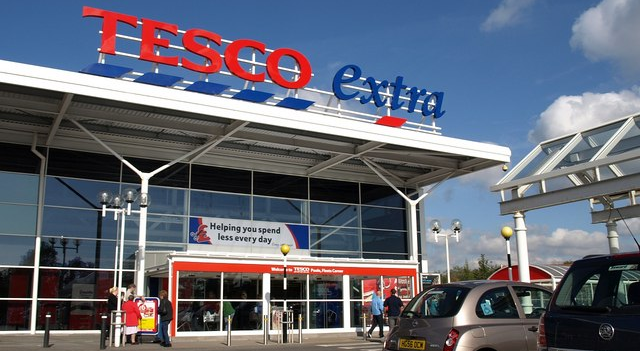
  • Tesco raises earnings expectations following strong Christmas trading and market share gains

    Tesco raises earnings expectations following strong Christmas trading and market share gains

    Tesco (LSE:TSCO) reported a solid trading performance for the 19 weeks ended 3 January 2026, with group like-for-like sales rising 2.9%. Momentum was particularly strong in the UK and Republic of Ireland, where the retailer achieved its highest UK market share in more than ten years. Investment in price, product quality and service levels—especially across fresh food and the premium Finest range—supported a strong Christmas period, double-digit growth in online sales and continued expansion of rapid-delivery through Whoosh.

    These gains were partly offset by softer performance in Booker’s tobacco category and the impact of exiting a supply contract. Tesco continued to reinforce its value proposition by extending its Everyday Low Prices initiative to more than 3,000 branded products, alongside Aldi Price Match and Clubcard-led promotions. Fresh-food-focused growth, product innovation and new store openings also contributed to market share improvements in Ireland and Central Europe.

    Reflecting this trading momentum, Tesco now expects adjusted operating profit for the 2025/26 financial year to land at the upper end of its £2.9bn–£3.1bn guidance range, pointing to an improved earnings outlook and a strengthened competitive position within a highly competitive grocery landscape.

    From a market perspective, Tesco’s outlook is supported by a stable financial base, although some challenges remain around revenue growth and cash flow. Technical indicators point to positive share price momentum, while valuation appears reasonable. Commentary from the latest earnings update was broadly constructive, with upgraded profit guidance and a sizeable share buyback programme further enhancing shareholder value.

    More about Tesco plc

    Tesco plc is a leading multinational grocery and general merchandise retailer headquartered in the UK. The group operates supermarkets, convenience stores and wholesale businesses across the UK, Ireland and Central Europe. Its core activities include food retail, fresh produce, home and clothing ranges, online grocery and rapid-delivery services, complemented by wholesale and foodservice operations through Booker, with a strong focus on value-led consumers and private-label brands such as its premium Finest range.

  • Central Asia Metals meets 2025 targets, sharpens Sasa performance and expands exploration plans

    Central Asia Metals meets 2025 targets, sharpens Sasa performance and expands exploration plans

    Central Asia Metals (LSE:CAML) reported that both of its producing assets delivered output in line with 2025 guidance, with the Kounrad operation producing 13,311 tonnes of copper and the Sasa mine generating 17,881 tonnes of zinc-in-concentrate alongside 25,156 tonnes of lead-in-concentrate. Safety performance remained strong across the group, with one lost time injury recorded at Kounrad and none at Sasa during the year. The company ended 2025 with a robust cash position of $80.1m.

    During the year, the group initiated a wide-ranging efficiency programme at Sasa aimed at improving operational performance. Measures include targeted headcount reductions, deeper geological understanding of the orebody and enhanced mine planning. Central Asia Metals also achieved its 2026 target for environmentally preferable tailings storage ahead of schedule, reflecting progress on its sustainability objectives.

    Looking ahead, 2026 production guidance reflects a gradual decline at Kounrad, consistent with its mature profile, offset by higher expected output at Sasa as improvement initiatives take effect. The company is also stepping up its exploration efforts in Kazakhstan and increasing investment in Aberdeen Minerals’ Arthrath project, reinforcing its strategy of optimising existing operations while building future growth options in base and battery metals.

    From a market perspective, Central Asia Metals continues to demonstrate financial strength and balance sheet stability, supported by ongoing share buybacks that enhance shareholder returns. While technical indicators suggest the shares may be overbought in the near term, valuation remains reasonable and supported by an attractive dividend yield. Operational challenges at Sasa remain a key focus but are being actively addressed through targeted strategic actions.

    More about Central Asia Metals

    Central Asia Metals plc is an AIM-listed base metals producer operating the Kounrad dump-leach SX-EW copper facility in Kazakhstan and the Sasa zinc-lead mine in North Macedonia. The group also maintains an exploration and project appraisal focus in Kazakhstan and holds a strategic minority interest in Aberdeen Minerals’ nickel-copper-cobalt Arthrath project in Scotland. Central Asia Metals targets long-life, low-cost copper, zinc and lead assets, while using subsidiaries such as CAML X and CAML XD to expand its pipeline of battery and base metals opportunities.

  • ECR Minerals raises £1.5m to advance Australian gold portfolio and names joint broker

    ECR Minerals raises £1.5m to advance Australian gold portfolio and names joint broker

    ECR Minerals (LSE:ECR) announced a conditional £1.5m fundraising through a discounted placing of approximately 576.9 million new shares at 0.26 pence per share, strengthening the company’s balance sheet as it steps up development and production activity in Australia. Proceeds will be primarily allocated to bringing the Blue Mountain gold project in Queensland into production, supporting near-term output alongside the Raglan alluvial gold operation, and advancing exploration work at the Lolworth and Bailieston projects, with a portion reserved for corporate and working capital requirements.

    Management said the new funding, together with anticipated cash flow from Raglan and Blue Mountain, is expected to finance planned operations well beyond 2026. The company reiterated its goal of evolving into a multi-site gold producer, underpinned by a growing portfolio of assets across Queensland and Victoria.

    As part of the transaction, OAK Securities has been appointed as joint broker. Its first-year fees will be satisfied through the issue of new shares, with additional broker warrants granted, aligning the broker more closely with ECR’s long-term growth strategy. Subject to shareholder approval, admission of the new shares to AIM is expected around 15 January 2026, increasing the company’s issued share capital to approximately 3.29 billion shares. The board said the combination of fresh capital, a broader project pipeline and substantial tax losses positions ECR to scale its exploration and mining footprint and, over time, potentially cover corporate overheads from Raglan-generated cash flow.

    More about ECR Minerals

    ECR Minerals plc is a London-listed gold exploration and development company with a portfolio of projects in Australia, spanning Queensland and Victoria. The group is progressing early-stage production at the Raglan alluvial gold project and the Blue Mountain gold project in Queensland, while advancing exploration at the large-scale Lolworth multi-metal project in North Queensland and at Victorian assets including the Bailieston gold and antimony project area. ECR’s strategy is to transition into a multi-project gold producer supported by a pipeline of exploration assets and significant tax losses available to offset future profits.

  • Shell warns of softer Chemicals & Products earnings and working-capital drag in Q4 update

    Shell warns of softer Chemicals & Products earnings and working-capital drag in Q4 update

    Shell (LSE:SHEL) issued a fourth-quarter 2025 trading update pointing to broadly stable production across its Integrated Gas and Upstream divisions, alongside seasonally weaker volumes in Marketing. Refining margins were slightly higher during the period, but this was offset by continued pressure on chemicals margins, leading the group to caution on overall segment performance.

    The company expects its Chemicals & Products division to report adjusted earnings below break-even. Within this, the Chemicals sub-segment is forecast to record a sizeable loss, largely reflecting non-cash deferred tax adjustments linked to a joint venture, while Trading & Optimisation earnings are set to fall sharply compared with the previous quarter. Group cash flow from operations will also be negatively affected by around $1.5bn of working-capital outflows, primarily related to the timing of payments for German emissions certificates and routine German mineral oil tax settlements. In addition, group tax charges and segment results will be influenced by annual non-cash reassessments of deferred tax assets, including approximately $0.3bn of deferred tax impacts within Marketing and Chemicals joint ventures.

    The update also outlined several structural changes with implications for future reporting. These include the consolidation of the Adura UK upstream joint venture, which will alter the timing of cash flows through dividend distributions, and the completion of a Canadian oil sands asset swap. The latter reduces oil sands production and lowers adjusted earnings in Chemicals & Products, while also decreasing non-controlling interests at the group level.

    From a market perspective, Shell continues to be supported by a robust balance sheet and strong operational foundations, with valuation remaining attractive and recent earnings commentary broadly constructive. However, technical indicators suggest potential near-term weakness, while pressures on revenue growth and cash flow generation present ongoing risks to the outlook.

    More about Shell (UK)

    Shell plc is a global integrated energy company headquartered in the UK, operating across the oil and gas value chain. Its activities span integrated gas, upstream exploration and production, refining and petrochemicals, fuels and lubricants marketing, and a growing renewables and energy solutions business. Shell serves industrial, commercial and retail customers worldwide, with a strategic focus on liquefied natural gas, large-scale refining and chemicals, and the expansion of its lower-carbon energy portfolio.

  • Supermarket Income REIT announces second quarterly cash dividend

    Supermarket Income REIT announces second quarterly cash dividend

    Supermarket Income REIT plc (LSE:SUPR) declared an interim dividend of 1.545 pence per ordinary share for the quarter covering 1 October to 31 December 2025. The dividend will be paid entirely in cash on or around 27 February 2026 and will be treated as a Property Income Distribution to shareholders on the register as of 30 January 2026.

    The decision to deliver the second quarterly payment wholly in cash, without offering a scrip alternative for the period, reflects the company’s emphasis on providing reliable and predictable income from its portfolio of grocery-backed assets. Management noted that a scrip option may be reconsidered for future distributions, as the group continues to position itself as a stable income vehicle within the essential food infrastructure sector.

    From a market perspective, Supermarket Income REIT plc continues to benefit from steady financial performance and supportive corporate actions. Technical indicators point to positive momentum, while valuation remains attractive, underpinned by a high dividend yield. Recent strategic acquisitions and visible management confidence further strengthen the investment case.

    More about Supermarket Income REIT Plc

    Supermarket Income REIT plc is a FTSE 250-listed real estate investment trust with listings in London and Johannesburg. It is the only London-listed REIT dedicated exclusively to grocery properties that form part of national food infrastructure. The company focuses on omnichannel grocery stores serving both online and in-person shoppers, leased to leading supermarket operators across the UK and Europe. As at 30 June 2025, the group managed a portfolio valued at approximately £1.6 billion, generating long-dated, secure, inflation-linked rental income while targeting progressive dividends and long-term capital growth.

  • Dialight upgrades profit expectations as turnaround delivers margin and cash improvements

    Dialight upgrades profit expectations as turnaround delivers margin and cash improvements

    Dialight (LSE:DIA) reported continued momentum in its transformation programme, delivering a strong third-quarter performance driven by improved margins, reduced overheads and higher cash generation, despite ongoing softness in demand across several end markets. As a result, the company said it now expects adjusted operating profit for the year ending 31 March 2026 to come in ahead of market expectations.

    The group has also fully repaid its $5.65m obligation to Sanmina ahead of schedule and is targeting further reductions in debt, supported by improving profitability and a significant reduction in inventory levels. Non-underlying costs have declined materially as the transformation plan progresses, helping to strengthen the financial profile and support further operational efficiencies.

    From a market perspective, Dialight’s outlook reflects a combination of positive corporate developments and supportive technical momentum, tempered by lingering challenges in overall financial performance. Management’s strategic actions and internal improvements point to improving fundamentals, while technical indicators suggest bullish momentum. However, sustained profitability and cash flow generation remain key areas to watch as the turnaround continues.

    More about Dialight

    Dialight plc is a UK-headquartered global provider of sustainable LED lighting solutions for industrial and heavy industrial environments. Its products are designed to enhance safety and operational efficiency while reducing energy consumption and maintenance costs, serving customers across markets including Australia, Dubai, Germany, Malaysia, Mexico, Singapore, the UK and the United States.

  • Associated British Foods lowers profit expectations as Primark and US operations face headwinds

    Associated British Foods lowers profit expectations as Primark and US operations face headwinds

    Associated British Foods (LSE:ABF) reported a softer-than-anticipated start to the 2026 financial year, with pressure on both Primark and parts of its US food portfolio expected to result in adjusted operating profit and earnings per share falling below last year’s levels. At Primark, modest like-for-like sales growth and market share gains were achieved in the UK despite a challenging apparel environment, supported by continued investment in product quality, pricing and digital engagement.

    However, trading conditions proved more difficult in continental Europe, where like-for-like sales declined sharply and higher markdown activity was required to clear inventory. As a result, overall sales growth at Primark undershot prior expectations, leading management to caution that the retailer’s full-year operating margin could trend towards around 10% if current conditions persist.

    In the US, volatile consumer demand weighed on Primark footfall as well as on ABF’s cooking oils and bakery ingredients businesses. The group now expects its Grocery and Ingredients divisions to deliver moderately lower adjusted operating profit in 2026, while its Sugar and Agriculture segments remain broadly in line with previous guidance. Taken together, these trends point to broadly flat group revenue for the year and a more cautious near-term outlook, despite management reiterating confidence in the group’s longer-term strategy and growth initiatives.

    From a market perspective, Associated British Foods retains a solid financial base and strong operational discipline, but faces ongoing challenges around revenue momentum and cash generation. Technical indicators present a mixed picture, while valuation appears reasonable and supported by a moderate dividend yield. Commentary from the latest earnings update highlighted progress on strategic priorities alongside continued pressures, particularly within the sugar division and European retail markets, resulting in an overall balanced but cautious outlook.

    More about Associated British Foods

    Associated British Foods plc is a diversified international group with operations spanning grocery products, sugar, agriculture and speciality ingredients, alongside its value fashion retail business, Primark. The group serves mass-market consumers across the UK, Europe, the United States and other regions, with Primark acting as a key apparel growth engine and its food businesses focused on staple categories such as cooking oils, bakery ingredients and related products.

  • Amaroq exceeds 2025 gold guidance at Nalunaq and secures key Greenland sustainability agreement

    Amaroq exceeds 2025 gold guidance at Nalunaq and secures key Greenland sustainability agreement

    Amaroq Ltd. (LSE:AMRQ) reported that gold output from its Nalunaq mine reached approximately 6,600 ounces in 2025, exceeding the midpoint of the company’s initial guidance range of 6,000–7,000 ounces for the first year following the mine’s restart. After a temporary production pause during the fourth quarter, mining and processing activities have now resumed broadly in line with expectations. The company said it intends to publish its 2026 production guidance and updated financial outlook towards the end of February.

    Alongside the operational update, Amaroq confirmed that an Impact Benefit Agreement covering social, environmental and sustainability commitments at Nalunaq has received approval from Greenlandic authorities. The agreement represents an important regulatory and community milestone, strengthening the project’s social licence to operate and highlighting the growing maturity of Greenland’s mining framework as Nalunaq moves into its next phase of development.

    More about Amaroq Ltd.

    Amaroq Ltd. is a mineral exploration and development company focused on Greenland, with activities spanning gold and strategic metals. Its flagship asset is the wholly owned Nalunaq Gold Mine, which is currently in production and ramp-up, supported by a pipeline of high-grade satellite gold targets across southern and western Greenland. Beyond Nalunaq, the company owns the Black Angel zinc-lead-silver project in West Greenland—historically one of the country’s highest-grade base metal operations—and controls a broad portfolio of strategic metal licences in South Greenland, including advanced copper, nickel, rare earth and other critical mineral projects such as Stendalen and the Sava Belt.