Category: Market News

  • SolGold Moves Forward with Cascabel Development Following Plan Approval

    SolGold Moves Forward with Cascabel Development Following Plan Approval

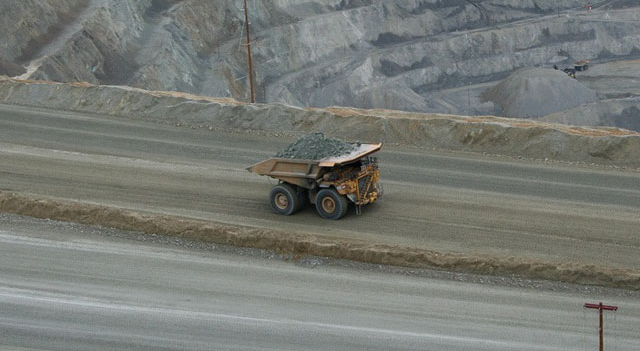
    SolGold (LSE:SOLG) has finalized and secured approval for the Project Execution Plan related to its flagship Cascabel Copper-Gold Project in northern Ecuador. The company is targeting initial production by 2028. Key components of the plan include the launch of early-stage site preparations, an accelerated drilling program, and the formation of distinct corporate entities to manage its northern and southern concessions. This streamlined approach is designed to fast-track production, improve project preparedness, and bolster the company’s ability to secure funding—ultimately aiming to create long-term value for stakeholders and contribute meaningfully to the global copper market.

    Despite these strategic developments, SolGold continues to grapple with financial difficulties, including ongoing losses and negative cash flows. While recent corporate actions—such as targeted investments and steps toward better governance—offer some hope, the company’s overall valuation remains under pressure.

    About SolGold

    SolGold PLC is an exploration and development company specializing in copper and gold assets, with its primary focus on the Cascabel Project in Ecuador. The company is dedicated to incorporating environmental, social, and governance (ESG) principles into its operations, prioritizing sustainability, safety, and community engagement.

    This content is for informational purposes only and does not constitute financial, investment, or other professional advice. It should not be considered a recommendation to buy or sell any securities or financial instruments. All investments involve risk, including the potential loss of principal. Past performance is not indicative of future results. You should conduct your own research and consult with a qualified financial advisor before making any investment decisions.

  • eToro Secures MAS Licence, Launches Singapore Expansion

    eToro Secures MAS Licence, Launches Singapore Expansion

    Global trading platform eToro has officially entered the Singapore market following the approval and activation of its Capital Markets Services (CMS) licence by the Monetary Authority of Singapore (MAS). The move marks a significant milestone in the company’s Asia-Pacific growth strategy.

    The licence enables eligible retail investors in Singapore to access a wide array of financial instruments via eToro’s social investing platform, including stocks from over 20 global exchanges, ETFs, and derivatives.

    Yoni Assia, Co-Founder and CEO of eToro, hailed the development as a strategic leap: “Singapore is one of the most dynamic financial markets in Asia-Pacific and a gateway to global capital flows. By activating our CMS licence, we are advancing our mission to open the world’s markets and empower investors with the tools to grow their knowledge and wealth”.

    The expansion follows the appointment of Yaki Razmovich as Managing Director for Singapore and Asia. Razmovich will oversee regional operations and spearhead eToro’s efforts to build local partnerships and invest in talent.

    With over 40 million registered users globally, eToro continues to position itself as a leader in collaborative investing. The company’s platform allows users to interact, view portfolios, and access educational resources through features like the Virtual Portfolio and eToro Academy.

    This latest move underscores Singapore’s growing appeal as a fintech hub, even as regulators maintain strict oversight of financial services providers operating in the region.

  • FTSE 100 Update: UK Inflation Surges Past Forecast, Pound Holds Near $1.34; AstraZeneca Shares Dip

    FTSE 100 Update: UK Inflation Surges Past Forecast, Pound Holds Near $1.34; AstraZeneca Shares Dip

    British equities edged higher on Wednesday, while the pound eased slightly below the $1.34 mark, following the release of key inflation data indicating that UK consumer prices rose more than anticipated in June.

    UK inflation accelerated to 3.6% year-over-year in June, up from 3.4% in May, according to Wednesday’s figures. The monthly inflation rate increased by 0.3%, both surpassing economists’ forecasts of 3.4% and 0.2%, respectively. Core inflation, which excludes food and energy, climbed 0.4% month-on-month and 3.7% annually, compared to May’s 0.2% and 3.5%.

    By 11:51 GMT, the FTSE 100 index was up 0.2%, while the British pound rose 0.1% against the US dollar, trading near 1.34. Across Europe, Germany’s DAX gained 0.3%, and France’s CAC 40 was marginally higher by 0.04%.

    AstraZeneca’s Alexion Reports Trial Setback in Rare Heart Disease Drug

    AstraZeneca’s (LSE:AZN) rare disease division, Alexion, revealed that its investigational drug anselamimab did not achieve its primary endpoint in a pivotal late-stage trial for a rare and serious cardiac condition. The announcement led to a decline in AstraZeneca’s stock during trading.

    The Phase III CARES study showed that anselamimab failed to deliver a statistically significant reduction in deaths and hospitalizations related to heart complications, compared to placebo, among patients with advanced light chain (AL) amyloidosis.

    Rio Tinto Posts Strong Q2 Iron Ore Shipments

    Mining giant Rio Tinto (LSE:RIO) reported a 13% increase in iron ore shipments in the second quarter, reaching 79.9 million tonnes as it bounced back from weather-related disruptions earlier in the year. However, shipments were down 1% year-on-year due to ongoing port maintenance.

    The company reaffirmed its 2025 shipment target of 323 to 338 million tonnes but expects volumes to skew toward the lower end after cyclones affected first-quarter production.

    Antofagasta Reports Robust Copper Output for Q2

    Chile-based miner Antofagasta (LSE:ANTO) posted solid second-quarter results, with copper production rising 3% quarter-on-quarter to 160,100 tonnes, driven by higher output at its Los Pelambres and Centinela sites.

    For the first half of the year, copper output totaled 314,900 tonnes, marking an 11% increase from the previous year. Gold production also rose by 13% quarter-on-quarter to 48,300 ounces, while molybdenum output surged 42% to 4,400 tonnes.

    The company maintained its full-year copper production forecast of 660,000 to 700,000 tonnes, expecting net cash costs to settle near the lower range of $1.45 to $1.65 per pound.

    Workspace Group Sees Slight Dip in Rent Roll for Q1

    London-based flexible workspace provider Workspace Group (LSE:WKP) reported steady like-for-like rent per square foot at £47.42 for the first quarter ending June 30, 2025. However, like-for-like occupancy declined modestly by 0.3% to 82.2%.

    The company completed 278 new lettings totaling £7.1 million in annual rent value, but its like-for-like rent roll dropped 0.3% to £111.6 million. Shares in Workspace slipped 1.3% following the update.

    ICG Reports $123 Billion in Assets Under Management for Q1

    Intermediate Capital Group (LSE:ICG) announced assets under management of $123 billion for the quarter ending June 30, 2025. Fee-earning assets reached $82 billion, up 4% from the previous quarter and 11% year-on-year, while non-fee-generating assets stood at $19 billion.

    This content is for informational purposes only and does not constitute financial, investment, or other professional advice. It should not be considered a recommendation to buy or sell any securities or financial instruments. All investments involve risk, including the potential loss of principal. Past performance is not indicative of future results. You should conduct your own research and consult with a qualified financial advisor before making any investment decisions.

  • Dollar Pulls Back Slightly Ahead of Key U.S. Inflation Data

    Dollar Pulls Back Slightly Ahead of Key U.S. Inflation Data

    The U.S. dollar retreated modestly on Wednesday, easing off recent highs as traders awaited fresh inflation data to gauge the broader impact of tariffs on consumer prices and potential implications for Federal Reserve policy.

    As of 04:55 ET (08:55 GMT), the Dollar Index — which measures the greenback’s performance against six major currencies — dipped by 0.1% to 98.205, following a one-month peak in the previous session.

    Focus Shifts to Producer Price Index

    Tuesday’s CPI data showed U.S. consumer prices climbing 0.3% in June, marking the sharpest monthly gain since January. Economists largely attributed the uptick to rising costs from import tariffs imposed by the Trump administration.

    With inflation showing signs of persistence, expectations for an imminent rate cut by the Federal Reserve have dimmed. While the central bank has maintained steady interest rates, Fed Chair Jerome Powell had earlier indicated he anticipated a summertime inflation pickup tied to trade policy shifts.

    “Yesterday’s reality check on Fed cuts speculation could have a lasting effect by raising the bar for dovish repricing, and we therefore feel the risks remain skewed to a stronger dollar from here,” noted analysts at ING.

    Investors now turn their attention to the upcoming producer price index (PPI) release, hoping for further insight into whether underlying inflationary pressures are continuing to build.

    “Expect markets to move on any surprise, although consensus is already positioned for a relatively benign 0.2% MoM print on headline and core PPI.”

    Euro and Pound Rebound After Slump

    In Europe, EUR/USD bounced 0.2% to 1.1621 after dipping to a three-week low in the prior session. The euro got a slight lift after ECB policymaker Joachim Nagel emphasized the need for cautious policy amid global trade tensions.

    A “steady hand” is required in navigating the uncertainty stemming from President Trump’s latest tariff escalation, Nagel told Handelsblatt, adding that the effects on pricing from geopolitical and trade conflicts remain “extremely uncertain.”

    The European Central Bank previously signaled at its June meeting that no rate changes were expected in the near term, reinforcing a wait-and-see stance.

    Meanwhile, GBP/USD edged up 0.1% to 1.3392 after touching near three-week lows. The modest rise came in response to June inflation data showing a surprising increase in annual consumer prices to 3.6%, the highest in over a year.

    “Sterling is trading modestly stronger after the release. The risks associated with tomorrow’s jobs numbers are probably preventing any larger hawkish repricing in the Sonia curve and, by extension, keeping GBP gains contained,” ING added.

    “Markets continue to price in two rate cuts by year-end, but the recent tendency has been to explore more dovish pricing.”

    Asian FX Regains Ground

    In Asia, currency markets steadied after overnight losses. USD/JPY slipped 0.1% to 148.82, paring back gains made following the latest U.S. inflation report, which had lifted the pair by nearly 1%.

    AUD/USD rose 0.1% to 0.6521, while USD/CNY moved up by 0.1% to 7.1770 as regional currencies showed signs of stabilization.

    This content is for informational purposes only and does not constitute financial, investment, or other professional advice. It should not be considered a recommendation to buy or sell any securities or financial instruments. All investments involve risk, including the potential loss of principal. Past performance is not indicative of future results. You should conduct your own research and consult with a qualified financial advisor before making any investment decisions.

  • DAX, CAC, FTSE100, European Markets Mixed Amid Earnings Disappointments, Tariff Concerns

    DAX, CAC, FTSE100, European Markets Mixed Amid Earnings Disappointments, Tariff Concerns

    European equity markets showed a lack of clear direction on Wednesday, struggling to recover from a three-day losing streak. Investor sentiment remained subdued, weighed down by fresh tariff anxieties and underwhelming corporate results from names like ASML Holding NV and Renault SA.

    Adding to the cautious tone was data showing an unexpected rise in U.K. inflation last month. Consumer prices in Britain climbed 3.6% year-on-year in June, up from 3.4% in May, marking the highest inflation reading since January 2024. The uptick was largely attributed to increased transport and food costs.

    Despite the broader uncertainty, Germany’s DAX edged up 0.5%, and London’s FTSE 100 rose by 0.3%. France’s CAC 40, however, remained mostly unchanged.

    In stock-specific action:

    • Kenmare Resources (LSE:KMR) fell sharply after the company reiterated that it remains on course to meet its full-year output and cost targets.
    • Stellantis (BIT:STLAM) shares declined after the automaker scrapped its hydrogen fuel cell project and canceled plans to launch a hydrogen-powered vehicle line this year. The decision was linked to infrastructure limitations and a lack of consumer incentives.
    • ASML Holding (EU:ASML) dropped steeply after warning that ongoing U.S. trade policy uncertainties could prevent it from achieving growth in 2026.
    • AstraZeneca (LSE:AZN) also moved lower as its experimental treatment for a rare blood plasma disorder failed in late-stage testing.
    • Renault (EU:RNO) shares slumped after the automaker cut its 2025 outlook and announced a change in leadership with the appointment of an interim CEO.

    However, there were bright spots:

    • Richemont (TG:RITN) traded higher after the luxury goods group posted stronger-than-expected revenue for its fiscal first quarter.
    • Antofagasta (LSE:ANTO) gained after the Chilean miner reported an 11% year-over-year increase in copper production for the first half of 2025.

    This content is for informational purposes only and does not constitute financial, investment, or other professional advice. It should not be considered a recommendation to buy or sell any securities or financial instruments. All investments involve risk, including the potential loss of principal. Past performance is not indicative of future results. You should conduct your own research and consult with a qualified financial advisor before making any investment decisions.

  • Dow Jones, S&P, Nasdaq, Wall Street Set for Early Gains as Inflation Eases and Earnings Impress

    Dow Jones, S&P, Nasdaq, Wall Street Set for Early Gains as Inflation Eases and Earnings Impress

    U.S. stock futures were pointing higher early Wednesday, suggesting a positive open for Wall Street after Tuesday’s uneven performance.

    The bullish sentiment was supported by fresh data from the Labor Department showing that U.S. producer prices were unexpectedly flat in June, helping ease inflation concerns. According to the report, the producer price index for final demand showed no change last month, following an upwardly revised 0.3% increase in May.

    Analysts had projected a 0.2% rise, slightly more than the previously reported 0.1% uptick. The data also revealed that the year-over-year increase in producer prices cooled to 2.3% in June, down from a revised 2.7% in May. Markets had expected a smaller decline to 2.5% from the originally reported 2.6%.

    Investors were also encouraged by a series of stronger-than-expected corporate earnings reports. Shares of Johnson & Johnson (NYSE:JNJ) climbed 2.1% in pre-market trade after the healthcare heavyweight topped second-quarter expectations and lifted its full-year outlook.

    Bank of America (NYSE:BAC) also saw pre-market momentum after reporting earnings that beat estimates. Meanwhile, Goldman Sachs (NYSE:GS) and Morgan Stanley (NYSE:MS) similarly delivered better-than-expected quarterly results, contributing to the upbeat tone.

    On Tuesday, stocks began the day on a strong note but lost steam as the session progressed. By the close, the major indexes were mixed. The Nasdaq Composite managed to notch a new record, rising 37.47 points or 0.2% to finish at 20,677.80. In contrast, the S&P 500 fell 24.80 points or 0.4% to 6,243.76, while the Dow Jones Industrial Average dropped 436.36 points or 1.0% to 44,023.29.

    Tech stocks, especially chipmakers, led the way. The Philadelphia Semiconductor Index advanced 1.3% to close at its highest level in a year. Nvidia (NASDAQ:NVDA) played a major role in the rally, jumping 4.0% to a record closing price after revealing it will “soon” resume H20 AI chip sales to China.

    “The U.S. government has assured NVIDIA that licenses will be granted, and NVIDIA hopes to start deliveries soon,” the company said in a statement.

    On the downside, homebuilding stocks sold off, pulling the Philadelphia Housing Sector Index down 3.3%. The energy sector also weakened, with falling oil prices dragging the Philadelphia Oil Service Index 3.1% lower. Losses in banking, biotech, and pharmaceutical shares added to the overall market pressure.

    Earlier in the session, a separate report from the Labor Department had lifted investor confidence. Consumer price inflation for June came in line with forecasts, rising 0.3% for the month following a 0.1% increase in May.

    Annual consumer inflation accelerated to 2.7% in June from 2.4% in July, just above the expected 2.6% gain. Core inflation, which excludes food and energy, ticked up 0.2% after a 0.1% rise the previous month. Economists had predicted a slightly higher 0.3% increase.

    Despite the encouraging inflation data and earnings results, market enthusiasm faded later in the day amid persistent unease over President Donald Trump’s ongoing trade disputes, which continue to cloud the economic outlook.

    This content is for informational purposes only and does not constitute financial, investment, or other professional advice. It should not be considered a recommendation to buy or sell any securities or financial instruments. All investments involve risk, including the potential loss of principal. Past performance is not indicative of future results. You should conduct your own research and consult with a qualified financial advisor before making any investment decisions.

  • Antofagasta Sees 11% Boost in H1 Copper Output as By-Products Help Drive Down Costs

    Antofagasta Sees 11% Boost in H1 Copper Output as By-Products Help Drive Down Costs

    Antofagasta (LSE:ANTO) posted a strong performance in the second quarter, with copper production across the group rising 3% compared to the previous quarter to reach 160,100 tonnes. The increase was largely supported by improved output from its Los Pelambres and Centinela operations.

    For the first half of the year, total copper production climbed to 314,900 tonnes—marking an 11% increase from the same period in 2024.

    The company also benefited from higher by-product volumes, which helped lift margins. Gold output rose 13% sequentially to 48,300 ounces, while molybdenum production jumped 42% to 4,400 tonnes. These gains contributed to a significant 27% drop in net cash costs for the quarter, which came in at $1.12 per pound. On a half-year basis, net cash costs declined 32% to $1.32/lb, aided by what the company described as “lower underlying costs and an increase in by-product credits.”

    CEO Ivan Arriagada commented that the company delivered “increased production at our two large operations, Los Pelambres and Centinela,” while also highlighting that “net cash costs fell by 27%, benefitting from gold and molybdenum by-products.”

    The company reaffirmed its full-year copper production guidance of 660,000 to 700,000 tonnes and expects net cash costs to end the year near the lower end of the projected $1.45 to $1.65/lb range. Arriagada added, “Production is expected to increase quarter-on-quarter for the remainder of the year, following maintenance activities completed in H1 2025.”

    Capital expenditure guidance remains steady at $3.9 billion.

    On the asset level, Los Pelambres produced 73,300 tonnes of copper in Q2, representing a 5% rise from Q1. Cost efficiencies from by-products helped drive net cash costs at the site down to $0.71/lb. Centinela, meanwhile, delivered a 9% increase in copper output to 60,600 tonnes, with net cash costs falling to $0.84/lb.

    Work continues on major development projects at both Los Pelambres and Centinela. These include the construction of a second concentrator at Centinela and the expansion of the desalination plant at Los Pelambres. Arriagada confirmed that the project pipeline is “on track and on budget.”

    He also reiterated the miner’s strong long-term view on copper: “Our conviction in copper as the metal of the future remains,” citing rising demand driven by decarbonisation efforts, artificial intelligence, and infrastructure development, alongside increasingly limited global supply.

    This content is for informational purposes only and does not constitute financial, investment, or other professional advice. It should not be considered a recommendation to buy or sell any securities or financial instruments. All investments involve risk, including the potential loss of principal. Past performance is not indicative of future results. You should conduct your own research and consult with a qualified financial advisor before making any investment decisions.

  • DAX, CAC, FTSE100, European shares dip as inflation concerns and corporate earnings weigh on investors

    DAX, CAC, FTSE100, European shares dip as inflation concerns and corporate earnings weigh on investors

    European equity markets edged lower on Wednesday, as persistent inflation worries combined with fresh corporate earnings reports tempered investor sentiment early in the new earnings season.

    By 07:05 GMT, Germany’s DAX index fell 0.4%, France’s CAC 40 declined 0.3%, and the U.K.’s FTSE 100 slipped 0.1%.

    Trade tensions dampen market mood

    Investor confidence in Europe took a hit this week following U.S. President Donald Trump’s announcement of 30% tariffs on imports from the European Union, set to begin in August.

    European officials remain hopeful that negotiations can avert the tariffs before the deadline, preserving the roughly $1.7 trillion trade relationship between the U.S. and EU. However, uncertainty continues to cloud the outlook.

    This uncertainty has impacted forecasts for European corporate earnings, with expectations now pointing to an average year-over-year decline of 0.7% in second-quarter profits—worse than the 0.2% drop anticipated just last week, according to LSEG I/B/E/S data.

    Corporate results keep coming

    ASML (EU:ASML), a leading manufacturer of semiconductor equipment, exceeded second-quarter booking estimates but cautioned that growth may stall in 2026.

    Luxury powerhouse Richemont, owner of Cartier and Van Cleef & Arpels, reported stronger-than-expected revenue gains in the first quarter, fueled by robust demand in its jewelry segment, though margin pressures remain a concern.

    Sweden’s Handelsbanken (LSE:0R7S) revealed a 12% quarter-over-quarter fall in operating profit due to decreased net interest income and trading losses.

    Across the Atlantic, U.S. banks JPMorgan Chase (NYSE:JPM) and Citigroup (NYSE:C) kicked off the American earnings season with mixed market reactions on Tuesday. More bank reports are expected later, including from Goldman Sachs (NYSE:GS), Morgan Stanley (NYSE:MS), and Bank of America (NYSE:BAC). Meanwhile, Johnson & Johnson (NYSE:JNJ) will offer further insights into consumer trends.

    Inflation remains front and center

    Investor anxiety over inflation persists following higher-than-expected U.S. consumer price data released Tuesday.

    In the U.K., consumer price inflation unexpectedly rose to 3.6% year-over-year in June—the highest in over a year—according to Wednesday’s figures.

    All eyes now turn to U.S. factory inflation data due later on Wednesday, as market participants seek clues about the timing of the Federal Reserve’s next potential interest rate cut.

    Oil rebounds on steady OPEC demand forecast

    Oil prices climbed on Wednesday after two days of decline, buoyed by OPEC’s reaffirmed outlook for robust global demand.

    At 03:05 ET, Brent crude futures were up 0.3% at $68.89 per barrel, while U.S. West Texas Intermediate futures gained 0.4% to $66.80 per barrel.

    The rebound followed a market reassessment of supply risks after President Trump’s threats to impose tariffs on Russian oil imports.

    OPEC reiterated its optimistic oil demand projections for 2025 and 2026, highlighting expectations for stronger-than-forecast economic growth in the second half of the year despite ongoing trade disputes.

    This content is for informational purposes only and does not constitute financial, investment, or other professional advice. It should not be considered a recommendation to buy or sell any securities or financial instruments. All investments involve risk, including the potential loss of principal. Past performance is not indicative of future results. You should conduct your own research and consult with a qualified financial advisor before making any investment decisions.

  • Gold Prices Inch Up as Dollar Strengthens Following U.S. Inflation Data

    Gold Prices Inch Up as Dollar Strengthens Following U.S. Inflation Data

    Gold prices nudged higher in early Asian trading on Wednesday, recovering from previous losses after stronger-than-anticipated U.S. consumer inflation figures bolstered the dollar. The data reduced expectations for near-term interest rate cuts, putting some pressure on the precious metal.

    Other metals also saw a rebound after recent declines. Platinum and silver, which had surged past gold in recent weeks, pulled back slightly as traders locked in profits following their recent rallies.

    Despite this, gold’s appeal as a safe haven remained supported by ongoing concerns over U.S. trade tariffs imposed by President Donald Trump. Uncertainty around the Federal Reserve’s autonomy also played a role, with mounting pressure from Trump and his supporters calling for Fed Chair Jerome Powell’s removal. Additionally, geopolitical tensions involving Russia and Ukraine continued to sustain demand for the metal.

    Spot gold gained 0.4% to trade at $3,339.26 per ounce, while September gold futures were up 0.3% at $3,345.40 per ounce by early Wednesday morning ET.

    Gold Holds Within Established Range, While Other Precious Metals Show Strength

    Although gold saw modest gains this week, it remained confined within a well-established range between $3,300 and $3,500 per ounce—levels consistent over the last three months. The metal faced resistance as investors weighed whether gold’s record highs from April had left it overbought, especially compared to the stronger performances of other precious metals.

    Platinum and silver had outpaced gold recently, reaching decade-high prices. Their rise was fueled by investors seeking better value alternatives to gold, alongside expectations of improved demand and tighter supply conditions.

    However, this week both platinum and silver retreated amid declining expectations of imminent Fed rate cuts. Spot platinum stabilized at $1,421.00 per ounce, while silver edged up slightly to $37.84 per ounce.

    Dollar Gains Pressure Metal Prices Amid Persistent Inflation Concerns

    Broader metal prices remained under pressure as the U.S. dollar climbed to a three-week peak on Tuesday, driven by inflation data that showed consumer prices rising more than expected in June.

    Among industrial metals, London Metal Exchange copper futures held steady at $9,639.70 per ton, while U.S. copper futures dipped 0.4% to $5.50 per pound.

    Although June’s Consumer Price Index showed only a slight increase over May, the continued rise raised concerns about persistent inflation. The data also underscored worries about the inflationary impact of the tariffs imposed by President Trump.

    The Federal Reserve has signaled it will maintain current interest rates until it better understands the effects of these tariffs, a stance reinforced by the latest inflation figures. Meanwhile, this position has drawn criticism from Trump and his allies, who are increasing calls for Powell’s exit and for interest rate cuts.

    This content is for informational purposes only and does not constitute financial, investment, or other professional advice. It should not be considered a recommendation to buy or sell any securities or financial instruments. All investments involve risk, including the potential loss of principal. Past performance is not indicative of future results. You should conduct your own research and consult with a qualified financial advisor before making any investment decisions.

  • Oil Prices Climb Amid Optimistic OPEC+ Demand Outlook and Modest U.S. Inventory Increase

    Oil Prices Climb Amid Optimistic OPEC+ Demand Outlook and Modest U.S. Inventory Increase

    Oil prices bounced back during Wednesday’s Asian trading session, recovering from losses seen earlier in the week. This uptick came as OPEC+ upheld its positive global demand projections despite boosting production levels, while traders processed a slight increase in U.S. crude stockpiles.

    By 22:17 ET (02:17 GMT), September Brent crude futures edged up 0.4% to $69.01 per barrel. Meanwhile, West Texas Intermediate (WTI) crude for September delivery rose 0.6%, settling at $66.94 per barrel.

    Earlier volatility this week was driven by U.S. President Donald Trump’s alert about a forthcoming “major statement” concerning Russia, sparking worries over possible supply interruptions. Yet, oil prices dropped nearly 3% across the first two trading days after Trump paused on immediate action, instead granting Russia a 50-day timeframe to resolve the Ukraine conflict.

    OPEC Maintains Demand Forecast, Anticipates Stronger Growth in Second Half

    OPEC released its monthly report reaffirming its demand outlook for 2025 and 2026, expressing confidence that easing trade tensions could support better-than-expected economic growth in the latter half of the year.

    The cartel highlighted that recent developments suggest potential agreements with key U.S. trading partners may be reached, which could further reduce global economic uncertainties.

    Despite the positive outlook, oil markets face downward pressure linked to concerns over President Trump’s planned tariff hikes set for August 1, which might accelerate inflation and dampen economic expansion, ultimately weakening oil demand.

    OPEC+ also pointed out that refinery activity worldwide—especially in the U.S.—is expected to remain robust to meet the seasonal rise in transportation fuel needs, including gasoline, jet fuel, and residual fuels.

    This outlook comes as the group continues to increase output, with the latest adjustment adding 548,000 barrels per day starting in August.

    U.S. Crude Inventories See Slight Uptick

    According to the American Petroleum Institute’s weekly report ending July 11, U.S. crude stockpiles rose modestly by about 839,000 barrels. Gasoline inventories climbed by 1.93 million barrels, while distillate supplies increased by 828,000 barrels.

    The prior week had witnessed a more significant crude build of 7.1 million barrels, primarily attributed to reduced refinery throughput during seasonal maintenance shutdowns.

    This content is for informational purposes only and does not constitute financial, investment, or other professional advice. It should not be considered a recommendation to buy or sell any securities or financial instruments. All investments involve risk, including the potential loss of principal. Past performance is not indicative of future results. You should conduct your own research and consult with a qualified financial advisor before making any investment decisions.