Category: Market News

  • Fusion Antibodies Discusses Potential Expansion of NCI Collaboration

    Fusion Antibodies Discusses Potential Expansion of NCI Collaboration

    Fusion Antibodies (LSE:FAB) said the US National Cancer Institute (NCI) is seeking to continue working with the company’s OptiMAL® human antibody discovery platform following the successful completion of a validation programme that began in late 2023 and ran into this year. According to the company, the NCI has submitted a proposal to broaden the existing collaboration to include screening work on a number of defined targets.

    Management noted that discussions held at a recent industry conference in San Diego went beyond near-term screening requirements, also touching on the possibility of additional projects that could deliver improved ownership or commercial benefits for Fusion Antibodies. While these talks are viewed positively, the company cautioned that negotiations around any expanded programme are likely to extend into early 2026 and will be subject to extensive formal approval processes within the US National Institutes of Health.

    As a result, there is no certainty that an extension will be finalised or what the final terms may look like. Nevertheless, Fusion Antibodies said the NCI’s interest provides external validation of the OptiMAL® platform and underlines the company’s positioning within the antibody discovery services market.

    Separately, Fusion Antibodies acknowledged that its overall outlook remains mixed. Ongoing profitability and cash flow pressures continue to weigh on the investment case, although recent technical indicators point to strong bullish momentum in the share price. The company reported no new earnings call insights or corporate events influencing its near-term outlook.

    More about Fusion Antibodies Plc

    Fusion Antibodies plc is a Belfast-based contract research organisation specialising in pre-clinical antibody discovery, engineering and supply for therapeutic and diagnostic applications. Listed on AIM since 2017, the company provides a broad range of services, including antigen expression, antibody discovery through its proprietary OptiMAL® platform, antibody production and purification, sequencing and humanisation using its CDRx™ technology, and the development of stable cell lines for clinical use.

    Founded in 2001 as a spin-out from Queen’s University Belfast, Fusion Antibodies has completed hundreds of antibody sequencing and humanisation projects for an international client base that includes major global pharmaceutical companies. The group focuses on leveraging advanced discovery platforms to help pharma and biotech customers accelerate drug development timelines.


  • Guardian Metal Advances Pilot Mountain as U.S.-Supported Tungsten Study Accelerates

    Guardian Metal Advances Pilot Mountain as U.S.-Supported Tungsten Study Accelerates

    Guardian Metal Resources (LSE:GMET) has lodged its first S-K 1300 Technical Summary Report alongside an updated, pit-constrained Mineral Resource Estimate for the Desert Scheelite deposit at its Pilot Mountain tungsten project in Nevada. The update points to a 16% lift in indicated resources compared with a 2018 scoping study and supports the potential for an open-pit mining operation.

    The project is underpinned by a US$6.2 million investment from the U.S. Department of War’s Defense Production Act, providing momentum for a full pre-feasibility study. Guardian Metal has assembled a broad group of specialist engineering and environmental consultants to progress the work and has mobilised a second drill rig to expand exploration across several target zones.

    The company is aiming to complete the pre-feasibility study by the end of the first half of 2026, followed by accelerated permitting. Subject to approvals and development timelines, first commercial production is targeted before the end of 2028, potentially marking the first new domestic tungsten mine in the United States in over ten years.

    More about Guardian Metal Resources Plc

    Guardian Metal Resources plc is a strategic minerals exploration and development company focused on tungsten assets in Nevada, USA. Its portfolio includes the 100%-owned Pilot Mountain and Tempiute projects. The company’s strategy is to help establish a secure, domestic tungsten supply for the United States, aligning with government initiatives to reshore critical mineral production for defence and industrial applications while reducing dependence on overseas supply chains.

  • Best Forex Brokers In Brazil For 2026

    Best Forex Brokers In Brazil For 2026

    Brazil’s stock exchange is the B3 (Brasil, Bolsa, Balcão). Latin America’s largest financial market infrastructure, offering trading in equities, derivatives, commodities. The market is regulated by the Comissão de Valores Mobiliários (CVM).

    However, choosing the right broker is critical for success. This comprehensive guide explores the best forex brokers in Brazil for 2026, their features, and what makes them stand out.

    Forex trading in Brazil is regulated by the National Monetary Council (CMN), ensuring a transparent and fair environment for investors.

    Key features include:

    • No Domestic Brokers: The CVM doesn’t authorize local forex brokers, so Brazilian traders access the market via international brokers.
    • Reliance on Foreign Regulation: Traders use foreign brokers, ideally regulated by strong international bodies (FCA, CySEC, ASIC) for security.
    • Strict Leverage Limits: The CVM imposes caps on leverage to protect retail traders.

    Always verify a broker’s license before opening an account.

    © Shutterstock

    Best Forex Brokers In Brazil For 2026

    VT Markets

    • Regulated by: ASIC, FSCA, FSC, SVGFSA, SCA
    • Platforms: Proprietary app, Meta Trader 4, MetaTrader 5, TradingView
    • Key Features:
      • Quick and easy account opening.
      • Minimum deposit: US$ 100.
      • Trading platforms engineered for speed and performance.
    • Why choose VT Markets? Ideal for forex traders looking for competitive spreads and sophisticated risk management tools.

    Trading Contracts for Difference (CFDs) carries a high level of risk and may not be suitable for all investors. The use of leverage can significantly magnify gains and losses and may result in losses exceeding your initial investment.

    Click here to go to VT Markets’ website


    MiTrade

    • Regulations: National Monetary Council (CMN)
    • Platforms: Browser, desktop and mobile app.
    • Key Features:
      • Intuitive and proprietary platform with simple navigation and integrated anyalysis tools.
      • Commission-free negotiation.
      • Flexible lever.
    • Why choose MiTrade? Ideal for forex traders looking for an intuitive and simple, user-friendly platform.

    Trading may result in the loss of your entire capital.

    Click here to go to MiTrade’s website


    Moneta Markets

    • Regulations: National Monetary Council (CMN)
    • Platforms: MetaTrader 4, MetaTrader 5, Pro Trader
    • Key Features:
      • Ultra-low FX trading costs.
      • Easy access to global markets.
      • Popular currency pairs.
    • Why choose Moneta Markets? Ideal for traders wanting easy access to the forex market.

    CFDs are complex instruments and come with a high risk of losing money rapidly due to leverage. You should consider whether you understand how CFDs work and whether you can afford to take the high risk of losing your money. Trading derivatives is risky. It isn’t suitable for everyone; you could lose substantially more than your initial investment.

    Click here to go to Moneta Markets’ website


    Axi

    • Regulations: National Monetary Council (CMN)
    • Platforms: PsyQuation, MT4 WebTrader
    • Key Features:
      • Ultra-competitive prices, unbeatable value.
      • Tight spreads, high liquidity, flexible leverage.
      • Excellent, award-winning service.
    • Why choose Axi? Ideal for Ideal for investors and CFD traders looking for a great trading platform and excellent customer service.

    CFDs and Margin FX are leveraged products that carry a high level of risk to your capital. Trading is not suitable for everyone and may result in you losing substantially more than your initial investment.

    Click here to go to Axi’s website


    Tips for Successful Forex Trading in Brazil

    • Start with a Demo Account: Practice before risking real money.
    • Understand Risk Management: Use stop-loss orders and proper position sizing.
    • Stay Updated: Follow economic news and central bank announcements.
    • Choose the Right Account Type: Standard, ECN, or professional accounts based on your strategy.

    Brazil offers a safe trading environments thanks to strict regulations and robust investor protections.

    © joelfotos

    Whether you’re a beginner looking for educational resources or a professional seeking advanced tools, the brokers listed above provide excellent options for 2026.


  • Dow Jones, S&P, Nasdaq, Futures,  Softer Inflation Surprise Lifts Hopes for a Wall Street Recovery

    Dow Jones, S&P, Nasdaq, Futures,  Softer Inflation Surprise Lifts Hopes for a Wall Street Recovery

    U.S. stock futures are signalling a strong start to Thursday’s session, pointing to a potential rebound after equities suffered heavy losses in the prior trading day.

    Sentiment improved after the U.S. Labor Department released consumer inflation figures showing price pressures easing more than expected. The data helped calm fears that stubborn inflation could delay further interest-rate cuts by the Federal Reserve.

    The report showed annual consumer price inflation slowed to 2.7% in November, down from 3.0% in September, defying expectations for an increase to 3.1%. Core inflation, which excludes food and energy, also eased to 2.6% from 3.0%, when it had been expected to remain unchanged. The Labor Department noted that October 2025 survey data was not collected due to the federal government shutdown.

    The cooler inflation readings are likely to bolster confidence that the Fed will continue easing monetary policy into the new year, supporting risk assets.

    Markets had a difficult session on Wednesday. After finishing Tuesday with mixed results, stocks initially moved higher early in Wednesday’s trading before sellers quickly regained control. The major indexes fell sharply from their intraday highs and ended the session near their lows.

    The technology-heavy Nasdaq Composite led the decline, falling 418 points, or 1.8%, to 22,693. The S&P 500 dropped 1.2% to 6,721, while the Dow Jones Industrial Average slipped 0.5% to 47,886.

    Technology stocks bore the brunt of the selloff. Oracle (NYSE:ORCL) tumbled 5.4% to a six-month closing low after a Financial Times report said its largest data centre partner, Blue Owl Capital, would not support a $10 billion project in Michigan, though the company later said the project remains on track.

    Other major technology names, including Nvidia (NASDAQ:NVDA), Broadcom (NASDAQ:AVGO) and Advanced Micro Devices (NASDAQ:AMD), also posted sharp losses. Semiconductor shares were among the weakest performers, with the Philadelphia Semiconductor Index sliding 3.8%.

    Selling pressure extended beyond technology, with computer hardware, networking, airline, brokerage and housing stocks also declining.

    Energy shares, however, moved higher, tracking a rebound in crude oil prices from their lowest levels since early 2021. Oil prices rose after U.S. President Donald Trump ordered a blockade of sanctioned oil tankers linked to Venezuela.

    In a Truth Social post, Trump labelled the government of President Nicolas Maduro a foreign terrorist organisation and said he was ordering a “total and complete blockade of all sanctioned oil tankers” entering and leaving Venezuela.

  • DAX, CAC, FTSE100, European Equities End the Session Mixed After Key Central Bank Moves

    DAX, CAC, FTSE100, European Equities End the Session Mixed After Key Central Bank Moves

    European stock markets delivered a mixed performance on Thursday as investors digested fresh policy decisions from the European Central Bank and the Bank of England.

    The ECB opted to keep interest rates unchanged, while the Bank of England moved to ease monetary policy, cutting its key rate by 25 basis points. The contrasting decisions helped shape divergent moves across regional markets.

    Adding to the day’s developments, sentiment among French manufacturers improved sharply in December. Data from statistics agency INSEE showed business confidence rising to its highest level in more than 18 months. The manufacturing confidence index climbed to 102.0 from 98.0 in November, exceeding expectations that it would remain unchanged.

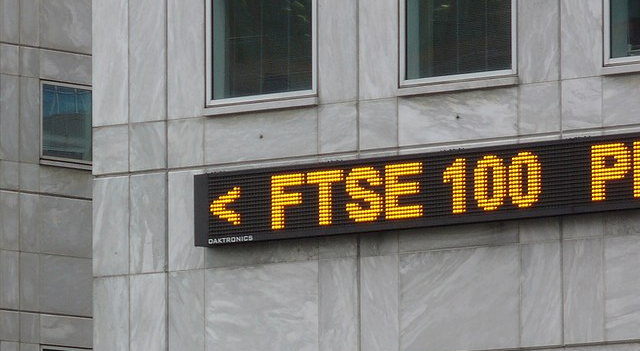
    In market trading, the UK’s FTSE100 was down around 0.2%, while France’s CAC40 advanced 0.3% and Germany’s DAX gained 0.5%.

    At the company level, shares in Swiss engineering group ABB (TG:ABB) edged slightly lower after the company agreed to acquire IPEC, a UK-based technology firm with over three decades of expertise in electrical diagnostics.

    Perfume retailer Douglas (TG:DOU) came under pressure after warning of increased price sensitivity among consumers and intensifying competition from promotional discounting during the 2024–25 financial year.

    By contrast, electronics retailer Currys (LSE:CURY) jumped sharply after reporting that its adjusted profit before tax for the first half of the year more than doubled.

  • Delta Gold Technologies Makes Market Debut with Aim to Solve Quantum’s “Scalability Crisis”

    Delta Gold Technologies Makes Market Debut with Aim to Solve Quantum’s “Scalability Crisis”

    LONDON — Delta Gold Technologies PLC (AQSE:DGQ) has officially entered the public markets, listing on the Aquis Growth Market to fund a radical new approach to quantum computing hardware. In a recent interview on The Watchlist, CEO Mike Jones detailed the company’s mission to move beyond laboratory-scale quantum demonstrations and toward a commercially viable, stable qubit.

    A New Approach to the “Qubit Elusive”

    While tech giants like Amazon, Microsoft, and Google have dominated headlines with quantum milestones, Jones argues that the fundamental “building block” of the industry—the qubit—is still far from perfect. Traditional quantum computers are notoriously fragile, requiring extreme environments to maintain stability.

    “Everybody knows about bits in your basic computer—a zero and a one,” Jones explained. “A qubit is either a zero, a one, or something in between at the same time. It’s a very hard thing to get your head around… but the basic physics of what a qubit is going to be made from is still elusive.”

    Delta Gold’s strategy hinges on nanoscale gold-based technology. By utilizing the unique physical properties of gold at the atomic scale, the company aims to host induced superconductivity, creating a more robust and scalable memory state for quantum processors.


    Strategic Roadmap: The 18-Month Plan

    Following a successful £2.5 million fundraise, the company has set clear measurable goals for its first two years as a public entity:

    • Intellectual Property Protection: Over the next 12 months, the primary focus is on securing patent filings for their nanoscale innovations.
    • Proof of Concept: By the 18-month mark, the company expects to advance its research toward a physical proof-of-concept device.
    • Academic Collaboration: Central to this roadmap is a three-year research partnership with the University of Toronto.

    “We have some of the smartest people in the world working on that very basic physics concept,” said Jones.

    The project is led by Professor Harry Ruda, Director of the Centre for Advanced Nanotechnology at the University of Toronto. Ruda, a globally recognized authority who will chair the Global Conference on Quantum Computing in Switzerland this summer, provides Delta Gold with access to high-level expertise and specialized laboratory equipment that would be prohibitively expensive to build in-house.


    Navigating the Multi-Billion Dollar Landscape

    Despite competing in a space where “Big Tech” spends billions annually, Delta Gold sees a clear path for a lean, research-driven enterprise. Rather than attempting to build a complete mainframe computer from scratch, the company is positioning itself as an IP powerhouse.

    “Creating a stable, scalable qubit could be enormously interesting to the bigger players,” Jones noted. The company’s business model focuses on licensing and partnerships, offering its core hardware breakthroughs to existing industry leaders who are already struggling with error correction and scalability.

    With its market capitalization recently exceeding £10 million following its debut, Delta Gold Technologies is betting that a small company focusing on fundamental physics can provide the missing link in the global race for quantum supremacy.

    For more information on the company’s research roadmap and intellectual property developments, visit the official website at deltagoldtech.com.

  • Best CryptoBrokers In The UK For 2026

    Best CryptoBrokers In The UK For 2026

    The UK stock market is one of the most influential in Europe. As well as equities, traders and investors are increasingly turning to cryptocurrencies. But there are risks, and the Financial Conduct Authority (FCA) has banned the ale of CFDs, futures and other derivatives involving crypto.

    Most crypto trading in the UK operates without regulatory oversight and is not protected by Financial Services Compensation Scheme (FSCS). You could lose all the money you invest. Ensure you use an FCA-registered platform, which has to comply with AML rules, but this does not provide consumer protection if the platform fails.

    With such a risky asset, choosing the right broker is critical for success. This comprehensive guide explores the best brokers in the UK for 2026, their features, and what makes them stand out.

    Always verify a broker’s FCA license before opening an account.

    © Shutterstock

    Best Crypto Brokers In The UK For 2026

    eToro

    • Regulations: Financial Conduct Authority (FCA)
    • Platforms: Proprietary platform on desktop and mobile
    • Key Features:
      • Extensive crypto selection.
      • Excellent mobile app.
      • Crypto wallets.
    • Why choose eToro? Ideal for traders interested in social trading (i.e. copying other investors’ trades) and stock trading with low fees.

    46% of retail investor accounts lose money when trading CFDs with this provider.

    Click here to go to eToro’s website


    Interactive Brokers

    • Regulations: Financial Conduct Authority (FCA)
    • Platforms: Trader Workstation (TWS), IBKR Desktop, mobile apps, web-based Client Portal.
    • Key Features:
      • Low crypto fees.
      • Unifed trading platform.
      • Access to spot cryptocurrencies.
    • Why choose Interactive Brokers? Ideal for traders looking for broad market access and a professional trading environment.

    Investing in financial products involves risk. Losses may exceed the value of your original investment.

    Click here to go to Interactive Brokers’s website


    Prime XTB

    • Regulations: Financial Conduct Authority (FCA)
    • Platforms: MetaTrader 5, proprietary desktop and mobile apps.
    • Key Features:
      • High leverage
      • Low fees
      • Intuitive platform
    • Why choose Prime XTB? Ideal for forex, commodities and cryptocurrency.

    Trading in leveraged products carries a high level of risk and may not be suitable for all investors.

    Click here to go to Prime XTB’s website


    Robinhood

    • Regulations: Financial Conduct Authority (FCA)
    • Platforms: Web platform, desktop and mobile apps.
    • Key Features:
      • Great crypto platform.
      • Crypto wallet.
      • Reasonable selection of coins.
    • Why choose Robinhood? Ideal beginners and buy-and-hold investors focusing on the US stock market.

    When investing, your capital is at risk. 96% of rewards are $7-8.

    Click here to go to Robinhood’s website


    Tastytrade

    • Regulations: Financial Conduct Authority (FCA)
    • Platforms: Web platform, desktop and mobile apps.
    • Key Features:
      • Low crypto fees
      • Crypto wallet
      • Limited crypto selection.
    • Why choose Tastytrade? Ideal options and futures traders focusing on US markets.

    All trading, especially in options and futures, is speculative and involves a high risk of loss.

    Click here to go to Tastytrade’s website


    Tips for Successful Crypto Trading in the UK

    • Start with a Demo Account: Practice before risking real money.
    • Understand Risk Management: Use stop-loss orders and proper position sizing.
    • Stay Updated: Follow economic news and central bank announcements.
    • Choose the Right Account Type: Standard, ECN, or professional accounts based on your strategy.
    © Shutterstock

    Whether you’re a beginner looking for educational resources or a professional seeking advanced tools, the brokers listed above provide excellent options for 2026.

  • Dow Jones, S&P, Nasdaq, Wall Street Futures, Markets in Focus: U.S. Inflation Data, Micron Boost and Bank of England Rate Call

    Dow Jones, S&P, Nasdaq, Wall Street Futures, Markets in Focus: U.S. Inflation Data, Micron Boost and Bank of England Rate Call

    U.S. equity futures were trading mostly higher on Thursday, supported by a strong outlook from memory chipmaker Micron (NASDAQ:MU), although investors remain cautious ahead of the release of key U.S. inflation figures. In Europe, attention is split across several central bank policy decisions, with the Bank of England widely expected to be the only authority to ease monetary conditions.

    Micron lifts tech sentiment as CPI looms

    Wall Street futures showed modest gains in early trading, driven by strength in technology stocks after Micron delivered an upbeat earnings outlook. Even so, markets are bracing for the latest U.S. consumer price data, which could quickly shift sentiment.

    By early morning in New York, S&P 500 futures were higher by around 18 points, while Nasdaq 100 futures climbed roughly 0.6%. Dow Jones futures edged lower, slipping about 0.1%.

    Micron’s update helped offset recent disappointment from other major technology names, including Broadcom (NASDAQ:AVGO) and Oracle (NYSE:ORCL). Still, the broader market remains under pressure after another weak session, with the S&P 500 and Dow both extending their losing streaks to four days. The Nasdaq Composite lagged after a sharp drop in Oracle shares, following reports that a key backer had withdrawn from a $10 billion data centre project in Michigan.

    With risk appetite fragile, investors are now focused on U.S. inflation data for clearer guidance on the Federal Reserve’s policy path in the year ahead.

    Inflation report takes centre stage

    Recent U.S. economic data point to a cooling labour market, with unemployment rising to a more than four-year high of 4.6%. That has increased scrutiny of Thursday’s consumer price index release, which brings inflation back into the spotlight.

    While Fed officials have shown greater concern about employment trends than stubborn price pressures, the CPI figures remain critical. Both headline and core inflation are expected to come in at 3.0% year on year, matching the pace seen in September. Overall, progress toward the Fed’s 2% inflation target has stalled for over a year, with readings stuck in a relatively narrow range.

    Micron signals sustained demand for chips

    Market confidence had been shaken last week by lacklustre results from several companies exposed to artificial intelligence spending. Micron Technology has helped restore some optimism by forecasting a strong second quarter.

    The company continues to see solid demand from data centres, driven by heavy investment from large cloud service providers. This trend is expected to persist, with Micron chief executive Sanjay Mehrotra telling investors that supply constraints mean the company is likely to meet only half to two-thirds of demand from certain major customers through 2026.

    Micron’s products are used across a wide range of applications, from servers and personal computers to vehicles and smartphones. The group is also a key supplier of high-bandwidth memory, a crucial component in training and deploying generative AI models.

    Bank of England in the spotlight

    Several European central banks announce policy decisions on Thursday, but the Bank of England is expected to attract the most attention.

    The European Central Bank is widely seen holding rates steady at 2%, potentially alongside slightly improved growth forecasts. Sweden’s Riksbank and Norway’s Norges Bank are also expected to keep policy unchanged.

    In contrast, the BoE is expected to cut interest rates by 25 basis points to 3.75%, down from 4.0%, following a sharp slowdown in inflation and softer economic momentum. UK inflation data released on Wednesday reinforced expectations of an imminent rate cut, even though at 3.2% inflation remains the highest among G7 economies.

    Markets are currently pricing in just one additional BoE rate cut in 2026, most likely by the end of April, although expectations for a second cut increased after the November inflation data.

    Oil prices rebound on Venezuela developments

    Oil prices moved higher after U.S. President Donald Trump ordered a blockade of sanctioned oil tankers entering and leaving Venezuela, raising concerns over possible supply disruptions.

    Brent crude futures rose 0.7% to $60.08 a barrel, while U.S. West Texas Intermediate gained 0.8% to $56.24.

    The move followed Tuesday’s announcement that tankers carrying Venezuelan oil already under U.S. sanctions would be targeted, intensifying pressure on President Nicolás Maduro’s government.

    “The key questions are, first, how effective this blockade will be, and second, how long it will last. This will be important in determining the impact on the oil market,” ING analysts said in a note.

    Despite the bounce, oil prices remain on track for weekly declines of close to 2%, weighed down by expectations of oversupply and the possibility of a peace agreement in Ukraine.

  • DAX, CAC, FTSE100, European Shares Drift as Investors Await Key Central Bank Decisions

    DAX, CAC, FTSE100, European Shares Drift as Investors Await Key Central Bank Decisions

    European equity markets showed little clear direction on Thursday, with investors adopting a cautious stance ahead of several closely followed central bank policy announcements across the region.

    By 08:35 GMT, Germany’s DAX was trading around flat levels, while the UK’s FTSE100 was also largely unchanged. France’s CAC40 edged slightly higher, gaining around 0.2% in early dealings.

    Focus on central bank policy

    Market participants appeared reluctant to take strong positions as they waited for guidance from multiple central banks that could influence sentiment heading into the new year. The European Central Bank is widely expected to leave interest rates unchanged at 2% later in the day, with inflation close to its medium-term target and the eurozone economy showing relative resilience despite ongoing trade tensions driven by US President Donald Trump’s policies.

    Sweden’s Riksbank and Norway’s Norges Bank are also expected to maintain current policy settings at their final meetings of 2025. In contrast, the Bank of England is broadly anticipated to lower interest rates by 25 basis points to 3.75%, down from 4.0%, which would mark the lowest borrowing costs since January 2023.

    The case for easing has been reinforced by UK inflation data, with annual consumer price growth slowing to 3.2% in November from 3.6% the previous month, the weakest reading in eight months.

    BP shares rise on leadership change

    In company news, BP (LSE:BP.) shares moved higher after the energy group announced the appointment of Woodside Energy chief executive Meg O’Neill as its next CEO. She will succeed Murray Auchincloss, who steps down after less than two years in the role.

    O’Neill is due to take up the position in April, becoming BP’s first externally appointed chief executive and the first woman to lead any of the world’s five largest oil majors.

    Oil prices rebound on Venezuela developments

    Oil prices advanced after US President Donald Trump ordered a blockade targeting sanctioned oil tankers entering and leaving Venezuela, raising concerns over potential supply disruptions.

    Brent crude futures climbed 0.7% to $60.11 a barrel, while US West Texas Intermediate crude rose 0.8% to $56.27. The move followed Tuesday’s announcement that the blockade would apply to tankers already subject to US sanctions, increasing pressure on Venezuelan President Nicolás Maduro’s government.

    Despite the rebound, oil prices remain on track for weekly declines of nearly 2%, weighed down by expectations of oversupply and speculation around a possible peace agreement in Ukraine.

  • Campari Agrees €100m Sale of Averna and Zedda Piras to Streamline Brand Portfolio

    Campari Agrees €100m Sale of Averna and Zedda Piras to Streamline Brand Portfolio

    Campari (BIT:CPR) has entered into an agreement to divest its Averna and Zedda Piras brands to Illva Saronno Holding for €100 million, continuing its efforts to simplify its brand portfolio and reduce financial leverage.

    The deal covers the Sicilian bitters brand Averna and the Sardinian myrtle liqueur Zedda Piras, while explicitly excluding Braulio, which will remain Campari’s sole bitters brand. The transaction is expected to complete in the first half of 2026, subject to customary closing conditions.

    Campari said the disposal is consistent with its broader strategic priorities. Commenting on the announcement, chief executive Simon Hunt said: “The sale of Averna and Zedda Piras marks a further key step in our portfolio rationalization strategy, with the aim of focusing on fewer but more strategically impactful initiatives, while continuing to drive deleveraging, as highlighted at our Capital Markets Day.”

    The agreement includes transitional arrangements covering both production and distribution. Campari will continue to handle certain blending and bottling activities for Averna at its Canale facility for a limited period. In addition, the group will temporarily manage distribution of Averna and Zedda Piras in selected markets, including Germany, Austria, and Switzerland, until Illva Saronno has established its own distribution network.

    Illva Saronno owns a portfolio of well-known brands, including Disaronno amaro and the Sicilian wine labels Florio and Duca di Salaparuta, and is expected to integrate the newly acquired brands into its existing global operations.