
Category: Market News

  • ADVFN’s DealRoom Expands to the UK: A New Global Gateway for Investors

    ADVFN’s DealRoom Expands to the UK: A New Global Gateway for Investors

    What is DealRoom — and why should investors be paying attention?

    DealRoom is ADVFN’s new dedicated capital-raising platform designed to connect investors directly with pre-IPO opportunities and high-demand private placements across global markets. It gives investors early visibility into capital raises that are often difficult to access, allowing them to evaluate opportunities before they reach the broader market.

    What sets DealRoom apart is its scale and reach. Through ADVFN’s global network, investors gain access to opportunities spanning the UK, Australia, and North America, all within a single platform. For investors looking to diversify geographically, access earlier-stage deals, or stay closer to the source of capital formation, DealRoom offers a streamlined and transparent entry point — with no obligation, just opportunity.

    With the official launch of DealRoom in the UK, a new and highly engaged investor base can now participate in this growing cross-border investment ecosystem.

    A new chapter in global deal flow

    The UK expansion marks a significant milestone in DealRoom’s evolution, extending its reach to another major financial market and strengthening cross-border capital connectivity. DealRoom now provides a direct channel between public companies seeking capital and investors searching for early-stage and private market opportunities — regardless of geographic location.

    This expansion follows the acquisition of The Market Link by ADVFN, bringing together leading retail investor platforms under one global umbrella, including HotCopper, Stockhouse, ADVFN.com, and InvestorsHub in the United States.

    By unifying these platforms, DealRoom can now reach more than 30 million investors annually, creating one of the largest global investor communities focused on small-cap, growth, and emerging opportunities.

    “We can match the right investors with the right transactions,” said Tim Sylvester, Director of Capital Markets at HotCopper. “Opening DealRoom to UK investors gives them access to transactions originating in Australia, Canada, and of course the UK itself.”

    Borders matter less than investment preferences

    As capital markets become increasingly global, DealRoom reflects a broader shift in how companies raise funds and how investors deploy capital. Companies are acquiring assets internationally, pursuing dual listings, and sourcing investors well beyond their home markets.

    DealRoom removes geographic barriers by allowing investors to focus on what matters most: sector exposure, deal structure, and risk profile.

    “Investor pools are no longer concentrated in one place,” Mr Sylvester said. “DealRoom helps align capital with opportunity, wherever it originates.”
    Why now?

    Private placements are regaining momentum across major markets, and investor appetite is rising alongside improving capital-raising conditions. Over the next 12 months, DealRoom expects increased activity as public and private companies look to fund growth, acquisitions, and market expansion.

    “We’ve seen participation increase dramatically, even in the last few months,” Mr Sylvester noted. “And we expect that momentum to continue.”

    For investors, this creates a timely opportunity to gain early insight into upcoming transactions, assess opportunities efficiently, and stay ahead of market developments — without pressure to participate.

    Accessing DealRoom

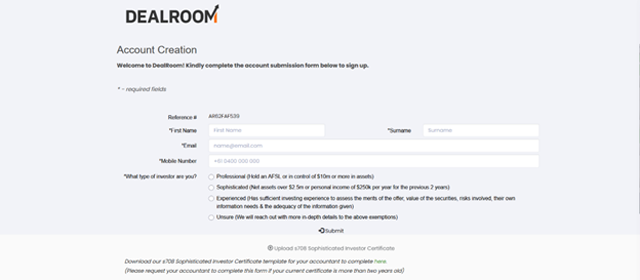
    Opportunity is knocking. Investors and companies across the UK, Australia, and North America, can register for DealRoom and begin exploring available opportunities from anywhere in the world.

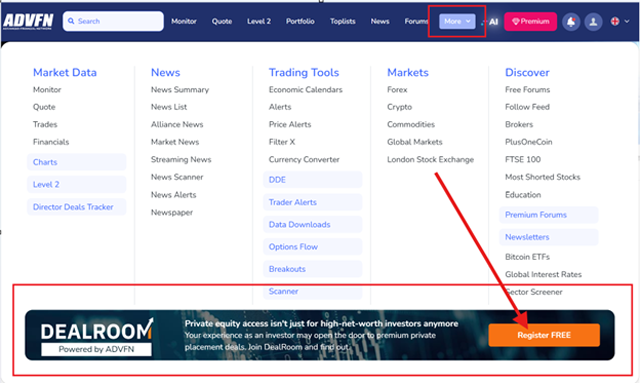
    Accessing DealRoom via ADVFN is simple: you can do so by clicking HERE or by selecting it in the ADVFN navigation from the “More” menu.

  • Best Brokers For Shares In The UK For 2026

    Best Brokers For Shares In The UK For 2026

    The UK stock market is one of the most influential in Europe. Centred on the London Stock Exchange (LSE), it is a global marketplace for buying/selling shares, featuring the large-cap FTSE 100 (100 biggest firms) and the growth-focused AIM (Alternative Investment Market) for smaller companies.

    Traders in the UK enjoy a secure and transparent environment because of strict regulations under the Financial Conduct Authority (FCA).

    However, choosing the right broker is critical for success. This comprehensive guide explores the best  brokers in the UK for 2026, their features, and what makes them stand out.

    Trading in the UK is regulated by the FCA, ensuring brokers comply with stringent standards. Key protections include:

    • Leverage Cap: Retail traders are limited to 1:30 leverage under FCA rules.
    • Negative Balance Protection: You cannot lose more than your deposit.
    • Segregated Accounts: Client funds are kept separate from broker funds.
    • Transparency: Brokers must provide clear pricing and risk disclosures.

    Always verify a broker’s FCA license before opening an account.

    © Shutterstock

    Best Brokers For Shares In The UK For 2026

    Capital.com

    • Regulation: Financial Conduct Authority (FCA)
    • Platforms: Web Platform, MetaTrader 4, TradingView, Mobile Apps
    • Key Features:
      • Low fees.
      • Great account opening experience.
      • Excellent email and chat support.
    • Why choose Capital.com? Ideal for investors and CFD traders looking for a great trading platform and excellent customer service.

    60% of retail investor accounts lose money when trading spread bets and CFDs with this provider.

    Click here to go to Capital.com’s website


    eToro

    • Regulations: Financial Conduct Authority (FCA)
    • Platforms: Proprietary platform on desktop and mobile
    • Key Features:
      • Low stock and ETF fees.
      • Seamless account opening.
      • Social trading.
    • Why choose eToro? Ideal for Low stock and ETF fees.

    46% of retail investor accounts lose money when trading CFDs with this provider.

    Click here to go to eToro’s website


    Interactive Brokers

    • Regulations: Financial Conduct Authority (FCA)
    • Platforms: Low stock and ETF fees.
    • Key Features:
      • Low stock and ETF fees.
      • Wide range of products.
      • Many great research tools
    • Why choose Interactive Brokers? Ideal for traders looking for broad market access and a professional trading environment.

    Investing in financial products involves risk. Losses may exceed the value of your original investment.

    Click here to go to Interactive Brokers’s website


    Trading212

    • Regulations: Financial Conduct Authority (FCA)
    • Platforms: Mobile app
    • Key Features:
      • Real stocks and ETFs are commission-free (other fees may apply).
      • Quick and easy account opening.
      • Great trading platforms.
    • Why choose Trading212? Ideal for equity investors looking for easy-to-use trading platforms.

    Investing for 5+ years increases your chances of positive returns compared to cash savings. But investments rise and fall in value, so you could get back less than you put in. You’re responsible for your investment decisions.

    Click here to go to Trading212’s website


    XTB

    • Regulation: Financial Conduct Authority (FCA)
    • Platforms: xStation 5 and Mobile.
    • Key Features:
      • Great selection of CFDs on stocks, ETFs, forex, commodities and indexes.
      • Free and fast account opening.
      • Wide range of funding methods..
    • Why choose XTB? Ideal for forex traders looking for great account opening and customer service.

    70% of retail investor accounts lose money when trading CFDs with this provider.

    Click here to go to XTB’s website


    Tips for Successfully Trading in Shares in the UK

    • Start with a Demo Account: Practice before risking real money.
    • Understand Risk Management: Use stop-loss orders and proper position sizing.
    • Stay Updated: Follow economic news and central bank announcements.
    • Choose the Right Account Type: Standard, ECN, or professional accounts based on your strategy.
    © Shutterstock

    The UK offers one of the safest environments for trading thanks to strict regulations and robust investor protections.

    Whether you’re a beginner looking for educational resources or a professional seeking advanced tools, the brokers listed above provide excellent options for 2026.

  • Best CFD Brokers In The UK For 2026

    Best CFD Brokers In The UK For 2026

    The UK stock market is one of the most influential in Europe. One of the ways investors and traders can speculate is with a Contract for Difference, a financial derivative in which the difference between the opening and closing prices of the market is settled in cash. They are popular among traders in foreign exchange and commodities because they are tax-efficient.

    Traders in the UK enjoy a secure and transparent environment because of strict regulations under the Financial Conduct Authority (FCA).

    However, choosing the right broker is critical for success. This comprehensive guide explores the best CFD brokers in the UK for 2026, their features, and what makes them stand out.

    CFD trading in the UK is regulated by the FCA, ensuring brokers comply with stringent standards. Key protections include:

    • Leverage Cap: Retail traders are limited to 1:30 leverage under FCA rules.
    • Negative Balance Protection: You cannot lose more than your deposit.
    • Segregated Accounts: Client funds are kept separate from broker funds.
    • Transparency: Brokers must provide clear pricing and risk disclosures.

    Always verify a broker’s FCA license before opening an account.

    © Nicky Pe

    Best CFD Brokers In The UK For 2026

    Capital.com

    • Regulation: Financial Conduct Authority (FCA)
    • Platforms: Web Platform, MetaTrader 4, TradingView, Mobile Apps
    • Key Features:
      • Low CFD fees.
      • Great account opening experience.
      • Excellent email and chat support.
    • Why choose Capital.com? Ideal for investors and CFD traders looking for a great trading platform and excellent customer service

    60% of retail investor accounts lose money when trading spread bets and CFDs with this provider.

    Click here to go to Capital.com’s website


    FXPro

    • Regulation: Financial Conduct Authority (FCA)
    • Platforms: MetaTrader 4, MetaTrader 5, cTrader, FXProEdge and TradingView
    • Key Features:
      • Low forex fees.
      • Superb account opening process.
      • Free deposit and withdrawal.
    • Why choose FXPro? Ideal for forex and CFD traders looking for a broker with great account opening and who are familiar with the MetaTrader platform.

    74% of retail investor accounts lose money when trading CFDs and Spread Betting with this provider.

    Click here to go to FXPro’s website


    IC Markets

    • Regulation: Financial Conduct Authority (FCA)
    • Platforms: MT4, MT5, cTrader
    • Key Features:
      • Low forex CFD fees.
      • Easy and fast account opening.
      • Free deposit and withdrawal.
    • Why choose IC Markets? Ideal for forex and CFD traders who value easy account opening and free deposit/withdrawal options.

    Trading Derivatives carries a high level of risk to your capital and you should only trade with money you can afford to lose. Trading Derivatives may not be suitable for all investors.

    Click here to go to IC Markets’ website


    Pepperstone

    • Regulation: Financial Conduct Authority (FCA)
    • Platforms: TradingView, MetaTrader 4, MetaTrader 5, cTrader
    • Key Features:
      • Low FX commission and tight spreads.
      • Low withdrawal fee.
      • Excellent account opening.
    • Why choose Pepperstone? Ideal for traders looking for great account opening and customer service

    72% of retail investor accounts lose money when trading spread bets and CFDs with this provider.

    Click here to go to Pepperstone’s website


    Saxo

    • Regulation: Financial Conduct Authority (FCA)
    • Platforms: Sax Investor, SaxoTrader, Open API for Excel, Trading View, Multicharts
    • Key Features:
      • 190 currency pairs.
      • Low withdrawal fee.
      • High-quality charting.
    • Why choose Saxo? Ideal for investors and traders looking for a great trading platform and solid research.

    Saxo is a multi-asset investment platform. The value of your investments may go up or down. Your capital is at risk.

    Click here to go to Saxo’s website


    XTB

    • Regulation: Financial Conduct Authority (FCA)
    • Platforms: xStation 5 and Mobile.
    • Key Features:
      • Great selection of CFDs on stocks, ETFs, forex, commodities and indexes.
      • Free and fast account opening.
      • Wide range of funding methods..
    • Why choose XTB? Ideal for forex traders looking for great account opening and customer service

    70% of retail investor accounts lose money when trading CFDs with this provider.

    Click here to go to XTB’s website


    Tips for Successful CFD Trading in the UK

    • Start with a Demo Account: Practice before risking real money.
    • Understand Risk Management: Use stop-loss orders and proper position sizing.
    • Stay Updated: Follow economic news and central bank announcements.
    • Choose the Right Account Type: Standard, ECN, or professional accounts based on your strategy.
    © Shutterstock

    The UK offers one of the safest environments for CFD trading thanks to strict regulations and robust investor protections.

    Whether you’re a beginner looking for educational resources or a professional seeking advanced tools, the brokers listed above provide excellent options for 2026.

  • Dow Jones, S&P, Nasdaq, Wall Street, U.S. Futures Hint at Early Recovery Following Friday’s Market Rout

    Dow Jones, S&P, Nasdaq, Wall Street, U.S. Futures Hint at Early Recovery Following Friday’s Market Rout

    U.S. stock index futures were trading higher ahead of Monday’s open, signaling a possible attempt by Wall Street to claw back some of the losses suffered during last week’s sharp sell-off.

    Investors appear to be selectively buying after Friday’s pullback, which was driven primarily by heavy declines across the technology sector. That said, trading volumes could remain light as markets await several high-profile U.S. economic releases scheduled for the days ahead.

    Attention will turn to Tuesday’s release of the November employment report and October retail sales figures, followed by November consumer inflation data due on Thursday. These reports could influence expectations around the Federal Reserve’s next policy steps after last week’s rate decision.

    The Fed cut interest rates by 25 basis points as expected, but its latest projections highlighted growing divisions among policymakers over whether additional easing will be needed.

    Stocks ended last week on a weak note after a mixed performance on Thursday gave way to broad selling pressure on Friday. All major indices finished lower, with the technology-heavy Nasdaq leading the declines.

    By the closing bell, the Nasdaq had fallen 398.69 points, or 1.7%, to 23,195.17. The S&P 500 dropped 73.59 points, or 1.1%, to 6,827.41, while the Dow Jones Industrial Average slipped 245.96 points, or 0.5%, to 48,458.05, despite briefly touching a new intraday high earlier in the session.

    Weekly results were mixed, with the Dow gaining 1.1% over the period, while the S&P 500 fell 0.6% and the Nasdaq declined 1.6%.

    Technology stocks were at the center of Friday’s sell-off. Broadcom (AVGO) was among the hardest hit, plunging more than 11% despite posting stronger-than-expected quarterly earnings and issuing upbeat guidance.

    Losses also extended to other major chip and software names, including Micron Technology (NASDAQ:MU), Oracle (NYSE:ORCL), Advanced Micro Devices (NASDAQ:AMD) and Nvidia (NASDAQ:NVDA), underscoring an ongoing rotation away from tech.

    Market sentiment was further weighed down by comments from Chicago Fed President Austan Goolsbee, who explained his opposition to last week’s rate cut. In remarks published on the Chicago Fed’s website, Goolsbee said he was concerned about “moving too quickly on rate cuts and assuming inflation pressures will fade on their own.”

    “I supported rate reductions at the September and October meetings, but I think we should have waited for more evidence — particularly on inflation — before cutting further,” he said.

    Computer hardware stocks were among the weakest performers on Friday, dragging the NYSE Arca Computer Hardware Index down more than 5%. Semiconductor and networking shares also came under heavy pressure, contributing to the Nasdaq’s sharp decline.

    Outside of technology, stocks in oil services, brokerage firms and steelmakers also fell, while pharmaceutical names showed relative resilience.

  • DAX, CAC, FTSE100, European Markets Advance Ahead of Key U.S. Data and Central Bank Meetings

    DAX, CAC, FTSE100, European Markets Advance Ahead of Key U.S. Data and Central Bank Meetings

    European equities traded mostly higher on Monday as investors positioned themselves for a packed week featuring important U.S. economic releases and a series of monetary policy decisions from major central banks.

    Markets largely brushed aside fresh data from Germany showing an acceleration in wholesale price inflation in November to its fastest pace in nine months. Wholesale prices increased 1.5% year over year, up from a 1.1% rise in October and the strongest reading since February.

    By late morning, Germany’s DAX was up around 0.3%, while gains were stronger elsewhere, with the UK’s FTSE 100 and France’s CAC 40 both advancing about 1.0%.

    On the corporate front, shares in health technology group Royal Philips slipped after the company announced an agreement to acquire SpectraWAVE.

    Sanofi (EU:SAN) also came under pressure after the French drugmaker said its experimental therapy tolebrutinib failed to achieve its primary endpoint in a Phase 3 study. The company added that a U.S. regulatory decision on the treatment for a form of multiple sclerosis is now likely to be delayed again.

    Hikma Pharmaceuticals (LSE:HIK) shares declined as well, following news that Chief Executive Officer Riad Mishlawi has stepped down by mutual agreement.

    Defense stocks were broadly weaker after Ukrainian President Volodymyr Zelenskyy indicated a willingness to abandon Ukraine’s bid to join NATO following discussions with the United States.

    In contrast, Sika (TG:SIKA) shares moved higher after the specialty chemicals group said it plans to acquire Finja for an undisclosed sum.

  • In the chair with bp’s Craig Marshall: From bp’s biggest find in 25 years to value creation

    In the chair with bp’s Craig Marshall: From bp’s biggest find in 25 years to value creation

    In this interview, Craig Marshall, head of investor relations at bp (LSE:BP.), provides investors with a comprehensive update on the company’s strategic transformation and operational momentum. Following bp’s February 2025 strategy update, Craig addresses the disciplined capital reallocation, with oil and gas investment up 20% and transition spending down 70%. He also outlines management’s ambitious targets including $4–5bn in structural cost reductions and 20% CAGR in free cash flow through 2027.

    Craig highlights exceptional upstream performance, with plant reliability exceeding 96%, six major project start-ups (four ahead of schedule) and an unprecedented 12 exploration discoveries this year. The standout is Bumerangue in Brazil, which is bp’s most significant discovery in 25 years, a 100%-owned pre-salt find spanning over 300km2 with a kilometre-high hydrocarbon column. Craig also discusses downstream improvements, including 97% refining availability (the best in 20 years), the strategic review of Castrol and how bp is leveraging AI and partnerships with Palantir, NVIDIA and Anthropic to drive efficiency across operations.

    With new chairman Albert Manifold driving a portfolio review and clear targets for returns above 16% and at least 4% annual dividend growth, Craig makes the case for why bp is positioned to deliver sustained value for shareholders.

  • Best Forex Brokers In Australia For 2026

    Best Forex Brokers In Australia For 2026

    The Australian stock market, often referred to as the Australian Securities Exchange (ASX), plays a pivotal role in the country’s economy and offers a wealth of opportunities for investors. The ASX is the primary stock exchange in Australia, headquartered in Sydney. It offers trading in equities, derivatives, fixed-income securities, and other financial instruments. The ASX is regulated by the Australian Securities and Investments Commission (ASIC).

    However, choosing the right broker is critical for success. This comprehensive guide explores the best forex brokers in Australia for 2026, their features, and what makes them stand out.

    Forex trading in Australia is regulated by the Australian Securities and Investments Commission (ASIC), ensuring a transparent and fair environment for investors.

    Key protections include:

    • Negative Balance Protection: You cannot lose more than your deposit.
    • Segregated Accounts: Client funds are kept separate from broker funds.
    • Transparency: Brokers must provide clear pricing and risk disclosures.

    Always verify a broker’s ASIC license before opening an account.

    © Shutterstock

    Best Forex Brokers In Australia For 2026

    Capital.com

    • Regulations: National Banking and Securities Commission (Comisión Nacional Bancaria y de Valores – CNBV)
    • Platforms: Web Platform, MetaTrader 4, TradingView, Mobile Apps
    • Key Features:
      • Low forex CFD fees.
      • Great account opening experience.
      • Excellent email and chat support.
    • Why choose Capital.com? Ideal for investors and CFD traders looking for a great trading platform and excellent customer service.

    60% of retail investor accounts lose money when trading spread bets and CFDs with this provider.

    Click here to go to Capital.com’s website


    eToro

    • Regulations: ASIC
    • Platforms: Proprietary platform on desktop and mobile
    • Key Features:
      • Low stock and ETF fees.
      • Seamless account opening.
      • Social trading.
    • Why choose eToro? Ideal for traders interested in social trading (i.e. copying other investors’ trades) and stock trading with low fees.

    46% of retail investor accounts lose money when trading CFDs with this provider.

    Click here to go to eToro’s website


    IC Markets

    • Regulations: ASIC
    • Platforms: MT4, MT5, cTrader
    • Key Features:
      • Low forex CFD fees.
      • Easy and fast account opening.
      • Free deposit and withdrawal.
    • Why choose IC Markets? Ideal for forex and CFD traders who value easy account opening and free deposit/withdrawal options.

    Trading Derivatives carries a high level of risk to your capital and you should only trade with money you can afford to lose. Trading Derivatives may not be suitable for all investors.

    Click here to go to IC Markets’ website


    Interactive Brokers

    • Regulations: National Banking and Securities Commission (Comisión Nacional Bancaria y de Valores – CNBV)
    • Platforms: Web portal, IBKR desktop and mobile, Trader Workstation, APIs
    • Key Features:
      • Extremely low fees.
      • Wide range of products.
      • Many great research tools.
    • Why choose Interactive Brokers? Ideal for traders looking for broad market access and a professional trading environment.

    Investing in financial products involves risk. Losses may exceed the value of your original investment.

    Click here to go to Interactive Brokers’ website


    Pepperstone

    • Regulation: Financial Conduct Authority (FCA)
    • Platforms: TradingView, MetaTrader 4, MetaTrader 5, cTrader
    • Key Features:
      • Low FX commission and tight spreads.
      • Low withdrawal fee.
      • Excellent account opening.
    • Why choose Pepperstone? Ideal for traders looking for great account opening and customer service

    72% of retail investor accounts lose money when trading spread bets and CFDs with this provider.

    Click here to go to Pepperstone’s website


    Plus500 CFD

    • Regulations: National Banking and Securities Commission (Comisión Nacional Bancaria y de Valores – CNBV)
    • Platforms: Proprietary, user-friendly
    • Key Features:
      • Well-designed platform.
      • Great account opening.
      • Quick and helpful customer support.
    • Why choose Plus500 CFD? Ideal for experienced traders looking for an innovative platform and a great user experience

    79% of retail investor accounts lose money when trading CFDs with this provider.

    Click here to go to Plus500 CFD’s website


    Tips for Successful Forex Trading in Australia

    • Start with a Demo Account: Practice before risking real money.
    • Understand Risk Management: Use stop-loss orders and proper position sizing.
    • Stay Updated: Follow economic news and central bank announcements.
    • Choose the Right Account Type: Standard, ECN, or professional accounts based on your strategy.
    © ADVFN

    Australia offers a safe trading environments thanks to strict regulations and robust investor protections.

    Whether you’re a beginner looking for educational resources or a professional seeking advanced tools, the brokers listed above provide excellent options for 2026.


  • Dow Jones, S&P, Nasdaq, Wall Street, U.S. Futures Rise Modestly as Investors Weigh Key Data and Global Policy Decisions

    Dow Jones, S&P, Nasdaq, Wall Street, U.S. Futures Rise Modestly as Investors Weigh Key Data and Global Policy Decisions

    Futures tied to major U.S. stock indices traded slightly higher, with markets preparing for a busy week featuring central bank interest rate decisions worldwide and the release of delayed U.S. economic data following an extended federal government shutdown. Renewed stress in China’s property sector also weighed on sentiment after China Vanke failed to secure sufficient bondholder approval to defer debt repayments. Meanwhile, SpaceX is reported to be laying the groundwork for a potential stock market debut, while oil prices moved marginally higher.

    Futures point upward

    U.S. equity futures posted modest gains on Monday as investors moved into one of the final full trading weeks of the year ahead of typical year-end portfolio adjustments.

    By 02:48 ET, Dow Jones futures were higher by 126 points, or 0.3%, S&P 500 futures gained 14 points, or 0.2%, and Nasdaq 100 futures added 28 points, or 0.1%.

    Wall Street ended the previous week lower, with the S&P 500 pulling back from a record closing high reached on Thursday. Sentiment was dampened by underwhelming quarterly results from AI-focused heavyweights Oracle (NYSE:ORCL) and Broadcom (NASDAQ:AVGO), which renewed concerns about the longevity of elevated spending on artificial intelligence.

    Investors are also reassessing the broader economic outlook as they attempt to gauge the future direction of Federal Reserve policy following last week’s 25-basis-point interest rate cut.

    Delayed U.S. data back in focus

    Markets are expected to gain additional clarity this week as several U.S. economic indicators delayed by the record-long government shutdown are finally released.

    The November employment report is due on Tuesday, with economists polled by Reuters forecasting a relatively soft increase of 35,000 jobs. October nonfarm payroll figures, which were not released due to the shutdown-related data blackout, will be included in the November report.

    An updated unemployment rate is also set to be published after the 43-day shutdown prevented October data collection.

    “Any softer-than-expected data here could bring forward pricing of the next Fed rate cut,” analysts at ING noted.

    Investors will also monitor a key monthly inflation reading that is widely used to track consumer price trends in the U.S.

    For the Federal Reserve, labour market conditions have increasingly taken priority over still-elevated inflation. While several indicators suggest cooling employment, the absence of comprehensive official data in recent months has forced policymakers and markets to rely more heavily on alternative measures.

    China Vanke pressures property stocks

    Shares of China Vanke declined after the developer failed to gain sufficient bondholder support to extend repayment of a major bond, reviving fears of a worsening debt crisis in China’s property sector.

    Vanke shares fell 2.8% in Shenzhen trading after disclosures showed that creditors largely rejected a proposal to delay repayment of a bond due Monday by one year.

    The company now faces a five-business-day grace period to repay 2 billion yuan ($280 million) or risk default.

    As a state-backed developer, a potential default by Vanke would mark the most significant failure yet in China’s struggling real estate industry, potentially eclipsing earlier collapses by privately owned firms such as Evergrande and Country Garden.

    Other property stocks also came under pressure, with New World Development Co Ltd dropping 3.0% in Hong Kong and China CITIC Construction sliding 1.0%.

    SpaceX said to be preparing IPO groundwork

    According to a report from the Wall Street Journal, SpaceX executives have begun engaging with Wall Street banks to seek advisory support for a potential initial public offering.

    Investment banks are expected to present preliminary IPO proposals in the coming weeks, and recent estimates suggest a listing could value SpaceX at more than $1 trillion.

    Founder and Chief Executive Elon Musk confirmed last week that an IPO remains under consideration, with the WSJ also reporting that employees have been informed of possible preparations.

    SpaceX is a major supplier of space technology to the U.S. government and has expanded rapidly through its Starlink satellite internet business.

    Oil prices edge higher

    Oil prices recorded modest gains, rebounding slightly after steep declines last week. Traders weighed the possibility of supply disruptions linked to rising tensions between the U.S. and Venezuela, alongside speculation around a potential peace agreement between Russia and Ukraine.

    Brent crude futures were last up 0.2% at $61.24 a barrel, while U.S. West Texas Intermediate crude rose 0.3% to $57.39 a barrel.

    Both benchmarks dropped more than 4% last week, largely driven by concerns that global crude supply growth is outpacing demand.

  • DAX, CAC, FTSE100, European markets open slightly higher as investors brace for central bank calls and key data

    DAX, CAC, FTSE100, European markets open slightly higher as investors brace for central bank calls and key data

    European equities moved modestly higher on Monday as trading began for the final full week of the year, a period set to feature several major central bank decisions alongside a backlog of important U.S. economic data releases.

    By 08:05 GMT, Germany’s DAX was up 0.4%, France’s CAC 40 had added 0.4%, and the UK’s FTSE 100 was trading 0.5% higher.

    Central banks take centre stage

    Sentiment has been supported by last week’s decision from the U.S. Federal Reserve to cut interest rates by 25 basis points, helping lift global markets as the year draws to a close.

    However, gains were restrained at the start of the week, with investors facing a dense calendar of potential risk events. These include policy meetings at the European Central Bank and the Bank of England, alongside ongoing concerns about stress in China’s property sector.

    The ECB is due to announce its decision on Thursday and is widely expected to keep its main interest rate unchanged at 2% for a fourth consecutive meeting. Markets will be watching closely for any indication that policymakers could lean towards a rate hike in 2026, particularly after data showed eurozone growth of 0.3% in the third quarter, well above the ECB’s September projections.

    The outlook is less clear at the Bank of England, where Governor Andrew Bailey is expected to shift his stance, potentially tipping the vote in favour of a rate cut. Markets are pricing in a narrow 5–4 decision to lower the benchmark rate to 3.75% from 4.0%.

    Other central banks, including Sweden’s Riksbank and Norway’s Norges Bank, are also scheduled to deliver their final policy decisions of 2025 this week.

    Focus on delayed U.S. data

    Attention will also turn to the release of several postponed U.S. economic indicators, notably October retail sales figures and the closely watched November nonfarm payrolls report.

    Federal Reserve Chair Jerome Powell reiterated at the most recent FOMC press conference that future policy moves will depend heavily on incoming data, making this week’s releases particularly important for rate expectations.

    In Europe, investors will also assess December PMI surveys, along with updated inflation readings for both the euro area and the UK.

    Earlier in the session, data from China showed that industrial production and retail sales rose less than expected in October, while fixed asset investment — a key measure of business spending — contracted more sharply than forecast. The figures reinforced concerns about slowing momentum in the world’s second-largest economy and increased expectations of further stimulus from Beijing.

    Worries around China’s property sector also persisted after state-backed developer China Vanke failed to secure creditor approval to extend repayments on a domestic bond due on December 15.

    Corporate updates in focus

    On the corporate front, with most of the European earnings season now behind markets, Sanofi (EU:SAN) drew attention after the French drugmaker reported that its experimental treatment tolebrutinib failed to meet its primary endpoint in a Phase 3 trial for primary progressive multiple sclerosis.

    Separately, Hikma Pharmaceuticals (LSE:HIK) said that Riad Mishlawi has stepped down as chief executive and resigned from the board by mutual agreement.

    Oil prices recover slightly

    Oil prices edged higher on Monday, recovering modestly after steep declines last week. Traders weighed the risk of potential supply disruptions stemming from rising tensions between the U.S. and Venezuela, alongside speculation around a possible Russia-Ukraine peace agreement.

    Brent crude futures rose 0.4% to $61.34 a barrel, while U.S. West Texas Intermediate gained 0.4% to $57.46. Both benchmarks fell by more than 4% last week, largely driven by concerns that global oil supply is growing faster than demand.

  • Juventus Shares Surge After Board Rejects Tether Takeover Approach

    Juventus Shares Surge After Board Rejects Tether Takeover Approach

    Juventus’ (BIT:JUVE) share price staged a sharp rebound after the club’s board formally dismissed a takeover proposal from Tether Investments, triggering a strong positive reaction in the market.

    “There is no intention of selling any share of Juventus to third parties, including, but not limited to, the Salvadoran company Tether.” With this statement, Juventus’ board of directors made clear its position on the unsolicited bid from the company behind the USDT stablecoin, sending the club’s shares sharply higher at the open.

    The board underlined that Exor and the Agnelli family remain “stable and proud shareholders for over a century, who remain fully committed to the Club, supporting the new management team in implementing a clear strategy aimed at achieving important results both on and off the pitch.”

    In early trading, Juventus stock jumped as much as 11%, reaching €2.42 within minutes of the session opening, its highest level since 24 November. Prior to Monday’s rally, the shares had fallen around 27% over the course of 2025, and the club has not reported an annual net profit for almost ten years.

    The move followed an announcement from Tether on Friday that it had submitted an unsolicited, binding all-cash offer to Exor to acquire the Agnelli family holding company’s entire stake in Juventus. Tether, which already owns 11.527% of the club, said it would subsequently launch a tender offer for the remaining shares at the same price, fully funded with equity and backed by a long-term commitment to the club.

    According to Tether, Exor’s holding represents 65.4% of Juventus’ share capital. The proposed offer price was €2.66 per share, implying an equity valuation of roughly €1.1 billion for 100% of the company, a premium of about 20.74% compared with Juventus’ official share price on 11 December.

    The bid was made “for the purpose of demonstrating Tether’s strong belief in the possibility of concluding a mutually satisfactory transaction in a spirit of collaboration, which would be in the best interests of the company and its stakeholders,” the company said.

    Tether CEO Paolo Ardoino also shared his views publicly. “From the very beginning, our goal has always been to support the team and bring it back to the glory it deserves,” he wrote on X. He later added: “For me, Juventus has always been a part of my life. I grew up with this team. As a boy, I learned the meaning of commitment, resilience, and responsibility, watching Juventus face success and adversity with dignity. These lessons stayed with me long after the final whistle. Our interest in Juventus is born of deep admiration and respect. Juventus is a symbol of Italian excellence with a truly global presence , built over generations through hard work, ambition, and the unwavering loyalty of its fans.”

    Despite these declarations, Juventus’ response was unequivocal. The board unanimously rejected the proposal, reiterating that the club “is a historic and successful club, of which Exor and the Agnelli family have been stable and proud shareholders for over a century, and they remain fully committed to the Club, supporting its new management team in executing a clear strategy to achieve excellent results both on and off the pitch.”

    Exor CEO John Elkann reinforced that stance in a video message. “Juve has been part of my family for 102 years. It’s part in the truest sense of the word, because over the course of a century, four generations have expanded it, made it strong, cared for it in difficult times, celebrated it in happy times,” he said.

    He concluded by broadening the message beyond shareholders: “But not only that: Juve is part of a much larger family, the Bianconeri family, made up of millions of fans who love Juve as they love their loved ones. Precisely because of this passion, this love story that has united us for over a century, as a family we continue to support the team and look to the future, to build a winning Juve. Juventus, our history, our values are not for sale ,” Elkann concluded.