Category: Market News

  • European stocks head for worst week since July as oil and bond pressures weigh: DAX, CAC, FTSE100

    European stocks head for worst week since July as oil and bond pressures weigh: DAX, CAC, FTSE100

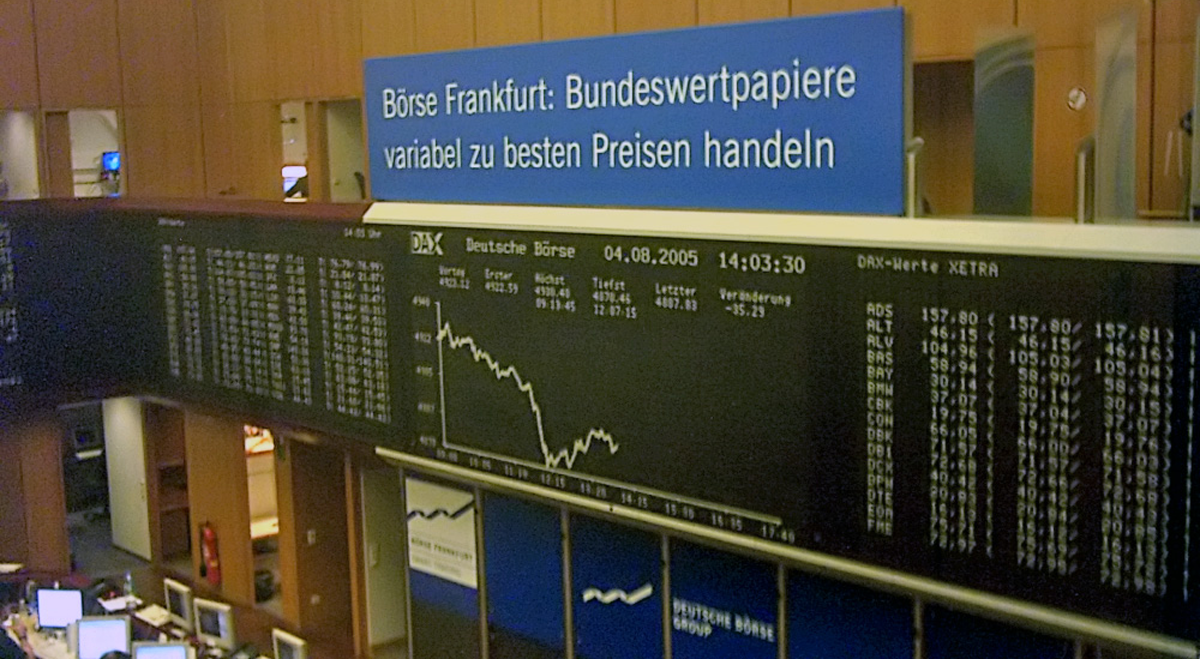
    European equities were on track to end a volatile week under pressure, with escalating tensions in the Middle East, higher crude prices and elevated bond yields putting the region’s benchmarks on course for their weakest weekly performance in almost two months.

    The pan-European Stoxx Europe 600 Index was down 1.14% for the week, its steepest five-day decline since July 6. Friday’s session was considerably calmer, with the index broadly unchanged alongside Germany’s DAX and France’s CAC 40, while the FTSE 100 edged 0.1% higher.

    The weekly decline represents a reversal from the strong momentum seen entering August, when European markets benefited from an upbeat second-quarter earnings season. Strong banking profits, resilient luxury-sector margins and better-than-expected energy results had helped push several benchmarks to record levels.

    Trump sanctions threat sends Brent to one-month high

    A renewed escalation in rhetoric from Washington provided the main geopolitical headwind on Friday.

    U.S. President Donald Trump pledged to unleash “economic warfare” against Tehran and warned that Washington would impose the toughest sanctions in history on Iran, including measures targeting countries that provide economic support to the regime.

    The prospect of aggressive secondary sanctions further reduced investor expectations of a rapid diplomatic agreement capable of restoring normal commercial shipping through the Strait of Hormuz.

    Brent crude futures consequently climbed to a one-month high of $93.12 a barrel, putting the international benchmark on course for a weekly increase of more than 5%.

    Commercial tanker traffic through the Persian Gulf remains severely restricted, prompting energy markets to increasingly factor in the possibility of an extended disruption to global seaborne crude oil and liquefied natural gas supplies.

    Bond market turmoil adds to equity pressure

    Geopolitical concerns were only one source of volatility during the week, with a sharp global bond selloff also weighing heavily on European equities.

    Germany’s 10-year Bund yield climbed to 3.22%, its highest level since 2011, while the US 30-year Treasury yield moved above 5.33%.

    The rapid increase in sovereign borrowing costs compressed the relative attractiveness of European equities and raised fresh concerns about the implications of higher interest rates for economic growth and corporate valuations.

    A surprise move by the US Treasury to double purchases of longer-dated bonds through its buyback programme temporarily eased the pressure in fixed-income markets, but the relief proved short-lived as central banks delivered more hawkish signals.

    Rate hike expectations return to focus

    Minutes from the Federal Reserve’s July meeting indicated that US policymakers were prepared to raise interest rates again if inflation remained elevated.

    In Europe, European Central Bank Chief Economist Philip Lane warned that eurozone inflation running close to 3% remained unacceptable.

    The combination of persistent inflation and hawkish central-bank commentary has prompted money markets to assign a high probability to an ECB interest rate increase in September.

    That shift has renewed concerns that restrictive monetary policy could persist even as economic growth remains under pressure.

    European markets face tougher autumn backdrop

    With the positive momentum from second-quarter earnings now fading, investors are increasingly focused on the combination of elevated energy costs, stubborn inflation, higher bond yields and geopolitical uncertainty.

    Brent crude holding above $93 a barrel adds another source of inflationary pressure at a time when markets are already reconsidering the outlook for European interest rates.

    The resulting environment presents an increasingly difficult backdrop for continental equities, with concerns over stagflation and developments in the Middle East likely to remain key drivers of market sentiment heading into the autumn.

  • Eurozone business activity strengthens in August as manufacturing accelerates

    Eurozone business activity strengthens in August as manufacturing accelerates

    Business activity across the eurozone expanded at a slightly faster pace in August, supported by a strengthening manufacturing sector, according to preliminary PMI data released by S&P Global.

    The S&P Global Flash Eurozone Composite PMI Output Index increased to 52.1 from 52.0 in July, reaching its highest level in nine months. The reading remained above the 50 threshold separating expansion from contraction and marked a second consecutive month of growth in private sector activity.

    Manufacturing growth reaches multi-year high

    Manufacturing provided the strongest contribution to the improvement, with the Flash Eurozone Manufacturing Output Index rising to 53.4 from 52.9 in July. This was the highest reading in 54 months.

    The headline manufacturing PMI also strengthened, climbing to 52.8 from 51.9 and reaching its highest level since May 2022.

    Germany was among the strongest contributors to the industrial recovery, with manufacturing production increasing at its fastest rate since January 2022.

    Services continued to expand but showed less momentum. The Flash Eurozone Services PMI Business Activity Index remained unchanged at 51.7, indicating another month of modest growth.

    New export orders return to growth

    Demand conditions improved further during August, with new orders increasing for a second consecutive month.

    The pace of growth accelerated to its strongest level in 40 months, providing further evidence of improving demand across the eurozone economy.

    International business also showed a notable turnaround. New export orders increased for the first time in four-and-a-half years, ending an extended period of declining overseas demand.

    Eurozone employment rises for first time in 2026

    Companies increased their workforce during August, marking the first overall rise in employment recorded so far in 2026.

    Service providers led the improvement by adding staff, while manufacturers reported a fractional increase in employment.

    The manufacturing increase was particularly significant as it brought an end to 38 consecutive months of job reductions across the sector.

    Inflationary pressures continue to ease

    Cost pressures moderated during the month, with input price inflation slowing to its weakest rate since February.

    Businesses also increased their selling prices at a slower pace. Output price inflation eased for a third successive month and reached its lowest level since March.

    The moderation was broad-based, with slower selling price increases reported across both manufacturing and services.

    Business confidence slips despite stronger activity

    Although current business conditions improved, companies became slightly less optimistic about future activity.

    Business confidence declined to a three-month low in August, suggesting that uncertainty continues to influence expectations despite the stronger economic data.

    Chris Williamson, Chief Business Economist at S&P Global Market Intelligence, said the latest PMI readings were consistent with eurozone GDP expanding by approximately 0.3% during the third quarter.

    He identified precautionary inventory building in response to Middle East supply-chain disruptions, stronger demand for AI-related technology products and increased equipment requirements linked to defence spending as factors supporting the manufacturing recovery.

  • FTSE 100 rises as metals rally offsets weaker UK retail sales

    FTSE 100 rises as metals rally offsets weaker UK retail sales

    The FTSE 100 edged higher on Friday as a rally in gold, silver and copper prices boosted London-listed mining shares, helping the UK benchmark outperform broadly flat European markets despite weaker domestic retail sales and continued uncertainty surrounding sanctions on Iran.

    The FTSE 100 was up 0.16% at 03:20 ET (07:20 GMT), while Germany’s DAX declined 0.11% and France’s CAC 40 slipped 0.09%. Sterling strengthened against the dollar, with GBP/USD rising 0.15% to 1.3649.

    Mining stocks rally as precious and industrial metals climb

    Commodity producers dominated the FTSE 100’s strongest performers as metals prices advanced against a weaker US dollar and heightened demand for safe-haven assets following the US Treasury’s buyback announcement.

    Gold futures gained 1.1% to $4,623, while spot gold advanced 1% to $4,566.32. Silver climbed 1.5% and copper increased 1.4%.

    Antofagasta (LSE:ANTO) led the FTSE 100 with a 4.3% gain as the copper producer benefited from the rise in the industrial metal.

    Glencore (LSE:GLEN) advanced 2.2%, while gold producer Endeavour Mining (LSE:EDV) gained 2.7%. Anglo American (LSE:AAL) was also 2.7% higher and precious metals producer Fresnillo (LSE:FRES) climbed 3.7%.

    Iran sanctions keep geopolitical risks in focus

    Geopolitical developments remained a major consideration for markets as Washington intensified its pressure on Tehran.

    Treasury Secretary Scott Bessent warned of the “toughest sanctions in history” following what U.S. President Donald Trump called on social media platform Truth Social the “most crushing economic operation ever taken” against Tehran.

    Trump told 77 WABC that the U.S. was “essentially controlling the straits” and that Iran’s navy, air force and leadership were “gone.”

    The US president also announced what he described as an “Economic D-Day,” introducing measures targeting oil-smuggling networks, financial transfers, exchange houses, ship registries and front companies. Countries continuing to maintain economic ties with Iran were warned of “tremendous economic consequences.”

    Bessent urged China to “get with the programme” regarding the reopening of the Strait of Hormuz, with China sourcing around half of its energy requirements from the Gulf.

    US Central Command said American forces had redirected 67 vessels, disabled three and boarded two as of 20 August as part of enforcement operations connected with the Iran blockade.

    Iranian Foreign Minister Abbas Araghchi rejected Trump’s “Economic D-Day” measures as an attempt to divert attention from US debt and rising interest costs. Iranian Parliament Speaker Mohammad Bagher Ghalibaf said the Strait would remain closed until Washington met the conditions of a 14-point Memorandum of Understanding, including ending the blockade and releasing frozen assets.

    Jefferies warns sanctions could widen trade tensions

    Jefferies strategist Mohit Kumar questioned how effective Washington’s measures would be without broader international participation.

    Kumar said the Iran sanctions would prove “ineffective without the support of China, Russia and a number of Asian countries who are active trading partners of Iran,” while warning that sanctions against those countries could risk “creating a wider trading conflict.”

    He expects oil prices to remain elevated, potentially maintaining upward pressure on longer-dated bond yields. Jefferies is therefore “staying away from duration sensitive sectors” while favouring technology and financial stocks.

    Kumar also noted reports indicating that traffic through the Strait of Hormuz may be greater than official estimates suggest, partly because of ship-to-ship transfers and vessels “going dark” while travelling through the Oman side.

    Oil prices retreat from Thursday’s highs

    Crude prices moved lower during Friday’s session despite the continuing geopolitical tensions.

    Brent crude declined 0.32% to $93.48 a barrel, while WTI fell 0.51% to $86.39, retreating from the highs reached on Thursday.

    The pullback meant energy companies did not participate significantly in the FTSE 100’s gains, with mining shares instead providing the main support to the London index.

    UK retail sales decline in July

    Domestic economic data provided a less encouraging backdrop, with UK retail sales volumes falling 0.5% month on month in July 2026.

    The result matched market forecasts but represented the first monthly decline since April, as earlier promotional activity brought some consumer spending forward into June.

    Non-food sales volumes dropped 1.3%, reflecting weakness in clothing and household goods. Food store sales increased 0.5%, helped by unusually warm weather and spending linked to the World Cup.

    Annual retail sales growth slowed to 1.6% from 3.8% in June, marking the weakest year-on-year increase in three months, according to the Office for National Statistics.

    UK round-up

    Hunting (LSE:HTG) lowered its 2026 EBITDA guidance following weaker activity across its OCTG and Advanced Manufacturing businesses.

    First-half revenue declined 6%, while adjusted profit fell 21%. The company attributed the weaker comparison partly to the absence of Kuwait Oil Company orders and delays to Middle East tendering activity.

    These pressures were partially offset by stronger performances from Hunting’s Perforating Systems and Subsea Technologies divisions.

  • UK retail sales fall in July as June promotional boost fades

    UK retail sales fall in July as June promotional boost fades

    UK retail sales volumes declined in July 2026 as weaker demand across non-food stores and online retailers reversed some of the gains recorded during the previous month, raising concerns that pressure on household finances could weigh on consumer spending in the months ahead.

    Overall retail sales volumes fell 0.5% month on month, matching market expectations and marking the first monthly decline since April.

    Core retail sales, which exclude automotive fuel, performed more poorly, dropping 0.9% compared with forecasts for a 0.5% decline.

    Clothing sales hit by promotions and hot weather

    Non-food sales volumes fell 1.3% during July, with clothing retailers among the weakest performers.

    Clothing sales dropped 2.7% month on month as promotions encouraged consumers to bring purchases forward into June. Ashley Webb, senior UK economist at Capital Economics, also pointed to unusually hot weather as a factor reducing footfall during July.

    Department stores were affected by problems with stock availability, while household goods retailers experienced a slowdown following strong sales during May and June. Furniture demand also weakened after the previous period had benefited from heatwave-related spending.

    Food stores performed better, with sales volumes increasing 0.5% during the month as the World Cup and unusually warm weather supported demand. However, this was insufficient to offset the broader weakness in non-food categories.

    “Britain’s summer spending spree cooled in July, but the past quarter offered some welcome respite to battered retailers,” said James Bentley, director at Financial Markets Online. “Over the three months to July, sales rose in all retail sectors except fuel. With fuel prices still elevated by the conflict in the Gulf, drivers are cutting back on journeys and deliberately filling up less.”

    Three-month retail performance remains stronger

    Despite July’s monthly decline, the broader three-month trend remained relatively resilient.

    Total retail sales volumes increased 1.1% during the three months to July compared with the three months ending in April. Sales were also 1.6% above their July 2025 level and reached their second-highest point since April 2022.

    Bentley said overall sales volumes during the three-month period were 3% higher than a year earlier, describing the performance as “robust.”

    Consumer confidence reaches two-year high

    Separate consumer confidence figures offered a more encouraging signal, with the GfK index rising to a two-year high of -14 in August from -17 in July.

    Capital Economics believes the improvement could contribute to annual retail spending growth accelerating from 1.6% in July to approximately 3% in August.

    Webb cautioned, however, that with CPI inflation and unemployment still expected to rise further, any improvement in consumer spending could prove temporary.

    Capital Economics continues to forecast growth in overall consumer spending of just 0.7% during 2026.

    “The question now is whether the summer surge will fade as quickly as Britons’ suntans,” Bentley said. “Inflation ticked up in July and last month’s dip in spending could presage a wider loss of momentum.”

    Online sales retreat after June increase

    Online retail sales values fell 3.9% in July compared with June, reversing the previous month’s 2.5% increase.

    Despite the monthly decline, online sales remained 6.5% higher than in July 2025.

    The proportion of total retail spending conducted online also decreased, falling to 28.3% in July from 29.2% in June.

    The figures leave the UK retail sector with a mixed outlook: spending remains stronger over the broader three-month period, but July’s decline and continued inflationary pressure suggest household demand could lose momentum as the year progresses.

  • Metals Exploration advances La India construction as Runruno output tracks upper guidance

    Metals Exploration advances La India construction as Runruno output tracks upper guidance

    Metals Exploration (LSE:MTL) has reported further progress at its La India gold project in Nicaragua, with development remaining on track to deliver first gold production in December 2026.

    The company has also secured a US$27 million equipment financing facility from a local bank, with more than US$20 million already drawn. The funding reimburses capital expenditure previously incurred by Metals Exploration and provides a significant boost to the group’s available cash resources as construction advances.

    Process plant construction reaches key milestones

    Installation of the La India processing plant is approximately halfway complete, with the ball mill now fully installed and the SAG mill prepared for positioning.

    Civil engineering works are also well advanced, alongside construction of the project’s tailings storage facilities.

    Much of the supporting site infrastructure is approaching completion. Offices, accommodation facilities, water treatment systems and a grid connection are already in place, providing the foundations required for commissioning and eventual production.

    Mining activities are progressing alongside construction, supported by an expanding owner-operated fleet of Caterpillar haul trucks and excavators.

    Pre-stripping has allowed Metals Exploration to build an ore stockpile of approximately 244,000 tonnes, providing material for the processing plant as commissioning gets under way.

    Safety record remains strong during construction

    The La India development has accumulated approximately two million working hours without a lost-time injury, maintaining a strong safety performance during a period of intensive construction activity.

    Metals Exploration has also energised a 2 MW grid connection and installed backup generation capacity. Completion of the project’s main electrical substation remains targeted for the end of 2026.

    Some imported equipment has experienced delays because of international shipping disruption linked to the conflict in Iran. The company is exploring alternative logistics arrangements to reduce the potential impact and preserve the timetable for first production.

    Runruno production expected at upper end of guidance

    At the group’s producing Runruno gold mine in the Philippines, Metals Exploration expects 2026 output to reach the upper end of its guidance range of 40,000 to 48,000 ounces.

    The stronger production outlook is being supported by access to higher-grade ore from the Stage 5 open pit.

    Runruno’s near-term cash generation, combined with progress at La India and the additional project financing, supports Metals Exploration’s strategy of expanding gold production across its two operating jurisdictions.

    Financial position supports growth strategy

    Metals Exploration’s broader outlook benefits from strong financial performance, including revenue growth, healthy margins and a balance sheet that has been substantially de-risked.

    A relatively low price-to-earnings multiple also provides valuation support.

    Technical indicators are less favourable, however, with a negative MACD and the shares trading below important longer-term moving averages. This creates a more neutral technical backdrop despite the improving operational and financial outlook.

    More about Metals Exploration

    Metals Exploration Plc is an AIM-listed gold production, development and exploration company with principal assets in the Philippines and Nicaragua.

    Its portfolio comprises the producing Runruno gold mine in the Philippines and the La India development project in Nicaragua. Runruno currently provides the group’s production base, while La India is being developed as its next source of gold output.

    The company’s dual-asset strategy is designed to increase attributable gold production while diversifying operational exposure across two jurisdictions.

    Metals Exploration’s activities span open-pit mining, mineral processing, project development and infrastructure construction, supported by owner-operated mining fleets and local financing arrangements.

  • Spire Healthcare secures further extension to Toscafund takeover deadline

    Spire Healthcare secures further extension to Toscafund takeover deadline

    Spire Healthcare (LSE:SPI) has secured another extension to the deadline for Toscafund Asset Management to decide whether to make a firm takeover offer, as the investment manager continues work on a potential 250 pence-per-share cash bid for the UK healthcare group.

    Toscafund, Spire’s second-largest shareholder, is considering an offer for the entire issued and to-be-issued share capital of the company. The proposal would also include an optional unlisted rollover equity alternative for eligible shareholders wishing to retain an interest following a potential transaction.

    New takeover deadline set for 3 September

    Toscafund has completed its due diligence on Spire but requires additional time to finalise financing arrangements, which the parties said are close to completion.

    Following a request from Spire’s board, the UK Takeover Panel has agreed to extend the deadline until 5pm on 3 September 2026.

    By that point, Toscafund must either announce a firm intention to make an offer under the UK Takeover Code or confirm that it does not intend to proceed. The deadline could be extended again with the consent of the Takeover Panel.

    No certainty firm offer will be made

    Despite the advanced stage of discussions, Spire stressed that there remains no certainty that Toscafund will ultimately make a binding offer.

    Toscafund has also retained the ability to alter the proposed value, terms or structure of any transaction in circumstances permitted under the Takeover Code.

    This includes the right to reduce the proposed offer price if Spire announces, declares or pays a dividend or another distribution to shareholders before completion of a potential transaction.

    The latest extension therefore keeps Spire in an offer period while giving Toscafund additional time to complete its financing and transaction documentation.

    Operational performance supports outlook

    Spire’s underlying outlook benefits from solid operational performance and healthy cash generation, although leverage remains relatively high and the conversion of operating performance into net income continues to be weaker.

    Technical indicators provide additional support, with the shares displaying a clear upward trend as investors assess the possibility of a takeover.

    Valuation remains a more significant constraint, with Spire trading on a relatively high price-to-earnings multiple while offering a comparatively low dividend yield.

    More about Spire Healthcare Group

    Spire Healthcare Group is one of the UK’s leading independent healthcare providers, operating 38 hospitals and more than 60 clinics across England, Wales and Scotland.

    The group works with more than 8,800 consultants and provides healthcare services to private patients, NHS patients and customers funded through employers and insurers. It is also a significant provider of orthopaedic procedures and NHS talking therapies.

    Spire served more than 1.36 million patients during 2025 and is a constituent of the FTSE 250.

  • BTG data points to rising UK business distress as creditor pressure builds

    BTG data points to rising UK business distress as creditor pressure builds

    BTG Consulting (LSE:BTG) has reported a further increase in financial pressure across UK businesses, with its latest Red Flag Alert research showing that 53,756 companies were experiencing critical financial distress during the second quarter of 2026.

    The figure represents a 9% increase from the same period last year, while the number of businesses classified as being in significant financial distress rose 1.1% year on year to 674,030.

    Consumer-facing sectors see mounting pressure

    Critical distress increased across almost all of the 22 sectors monitored by BTG, indicating that financial difficulties are becoming increasingly widespread across the UK corporate landscape.

    Some of the sharpest pressures were recorded among consumer-facing industries, including leisure businesses, hotels, sports clubs and food and drug retailers.

    The deterioration highlights the impact of weak discretionary consumer spending on businesses already dealing with elevated operating expenses, financing costs and broader economic uncertainty.

    Creditor enforcement poses growing insolvency risk

    BTG’s research also points to increased pressure from creditors. Winding-up petitions rose 15.7% during 2025, suggesting that creditors are becoming more willing to pursue formal action against companies struggling to meet their obligations.

    HMRC is also estimated to be owed approximately £27 billion in overdue taxes, raising the possibility of tougher collection activity against businesses with outstanding liabilities.

    Greater enforcement could place additional strain on companies already experiencing liquidity problems and potentially contribute to a further increase in corporate insolvencies.

    Economic pressures could extend into 2027

    BTG’s leadership has warned that a combination of higher energy costs, persistent inflation, elevated borrowing costs and geopolitical uncertainty could push insolvency levels higher into 2027.

    The outlook could become particularly challenging if businesses receive limited government support or lack sufficient clarity on future economic and regulatory policies.

    For consumer-facing companies in particular, continued pressure on household spending alongside higher operating costs could leave financially vulnerable businesses with little room to absorb further shocks.

    Financial strength balances technical concerns

    BTG’s own outlook is supported by a solid financial position and positive recent corporate developments, including strategic acquisitions that have strengthened its broader advisory offering.

    However, technical indicators remain bearish and suggest some caution around the shares. Valuation measures also point to the possibility that the stock is relatively expensive at current levels.

    These factors are partly balanced by BTG’s dividend yield and continued strategic expansion, providing a more mixed overall investment picture.

    More about BTG Consulting

    BTG Consulting PLC, formerly Begbies Traynor Group, is a UK financial and real estate advisory business focused on protecting, enhancing and realising value across companies, assets and investments.

    The group operates through the BTG, BTG Begbies Traynor and BTG Eddisons brands, providing services spanning corporate advisory, restructuring, insolvency, property and risk analytics.

    Its Red Flag Alert platform monitors financial distress among UK companies, providing data and analysis covering corporate risk trends across industries and regions.

  • eEnergy secures additional funding as Mace project payments face delays

    eEnergy secures additional funding as Mace project payments face delays

    eEnergy Group (LSE:EAAS) has strengthened its short-term liquidity position after administrative delays held up approximately £3.2 million of payments relating to its Mace projects, despite all 65 sites now being fully energised.

    The company has deployed a combination of Solar PV, LED lighting, battery storage and electric vehicle charging infrastructure across the sites. However, completion documentation, primarily associated with solar installations, has delayed the receipt of amounts due to eEnergy.

    Management expects the outstanding administrative work to be resolved over the coming months and has arranged additional financing to bridge the resulting working capital gap.

    Harwood loan extended into 2027

    eEnergy has agreed to extend the repayment date for the remaining £0.5 million balance of its secured loan from Harwood.

    The facility had been due for repayment in late November 2026 but will now mature on 28 February 2027. All other terms of the loan remain unchanged.

    The extension provides the group with additional financial flexibility while it waits for the outstanding Mace project payments to be released.

    Nigel Burton provides new £0.5 million loan

    The company has also secured a new £0.5 million loan from Nigel Burton, a former eEnergy director and current shareholder.

    The financing carries interest terms broadly similar to the Harwood facility and provides a further source of working capital during the payment delay.

    As Burton is a former director and existing shareholder, the arrangement constitutes a related-party transaction. The board has determined that the terms are fair and reasonable for shareholders.

    Together, the two financing arrangements give eEnergy additional time to manage its cash requirements without disrupting the operational progress of the Mace programme.

    Payment delays put temporary pressure on working capital

    The funding measures highlight the timing challenges associated with eEnergy’s project-based cash flows. While the energy infrastructure has already been installed and commissioned, the company cannot collect all amounts due until the necessary completion paperwork has been finalised.

    Management’s actions are therefore aimed at addressing a near-term administrative cash-flow issue rather than delays in delivering or energising the underlying projects.

    The additional financing also extends eEnergy’s liquidity flexibility into 2027 while it works to collect the approximately £3.2 million currently outstanding.

    Financial risk remains elevated

    eEnergy’s wider outlook remains constrained by a sharp contraction in revenue, a reduced equity cushion and elevated debt relative to shareholders’ equity.

    Technical indicators are also weak, with the shares trading below major moving averages and the RSI at particularly low levels.

    There have been signs of improvement, including stronger operating cash flow and a return to positive EBIT and EBITDA. However, continuing net losses and limited valuation support mean financial risk remains an important consideration.

    More about eEnergy Group

    eEnergy Group plc is a UK-based provider of energy efficiency and energy generation solutions, including Solar PV, LED lighting, battery storage and electric vehicle charging infrastructure.

    The company provides both directly funded and third-party financed solutions designed to reduce customers’ energy costs and exposure to volatile electricity prices.

    eEnergy has a significant presence in the education sector and is expanding its activities across healthcare, including the NHS, as well as commercial and industrial customers. Its portfolio is focused on helping organisations reduce energy consumption, generate more of their own electricity and transition towards lower-carbon operations.

  • Genedrive strengthens board with two appointments as pharmacogenetic growth strategy advances

    Genedrive strengthens board with two appointments as pharmacogenetic growth strategy advances

    Genedrive (LSE:GDR) has appointed Mark Winkler and Mike Fairbourn as independent non-executive directors as the diagnostics company prepares to accelerate the adoption of its pharmacogenetic testing technology in the UK and international markets.

    Both appointments will take effect on 1 September 2026 and are intended to add further financial, strategic and healthcare industry expertise to the board as Genedrive moves into its next stage of commercial development.

    Winkler brings corporate finance expertise

    Mark Winkler is a corporate finance specialist and the founder of Red Earth Advisors. His experience is expected to strengthen Genedrive’s financial oversight and governance as the company pursues its growth strategy.

    Following his appointment, Winkler is expected to become chair of both the audit and remuneration committees.

    Mike Fairbourn brings more than three decades of commercial and leadership experience across the pharmaceutical and medical technology industries. His career includes senior positions at Becton Dickinson, providing the board with additional expertise in healthcare commercialisation and scaling medical technologies.

    Genedrive targets wider clinical adoption

    The appointments come as Genedrive focuses on expanding its presence in the UK while developing opportunities for international growth.

    Chairman Graham Cole highlighted the importance of strengthening the company’s commercial execution as it seeks to increase adoption of its pharmacogenetic tests and generate sustainable value for shareholders.

    The incoming directors have indicated that their priorities will include supporting disciplined expansion, increasing clinical uptake and helping integrate Genedrive’s pharmacogenetic technology more widely into established healthcare pathways.

    Long-serving non-executive director Chris Yates has stepped down from the board to pursue other professional commitments.

    Financial performance remains a key challenge

    Genedrive’s outlook continues to be constrained by its financial position, including substantial ongoing losses, persistent cash consumption and a declining equity base. Relatively low debt provides some balance-sheet support but does not offset the pressures associated with continued negative earnings.

    Technical indicators present a somewhat more favourable picture, with the shares trading above major moving averages and momentum measures broadly neutral.

    Valuation remains difficult to assess using conventional earnings measures because the company remains loss-making, resulting in a negative price-to-earnings ratio, while there is no dividend yield to provide additional support.

    More about Genedrive

    Genedrive plc is a UK-based commercial-stage pharmacogenetic diagnostics company developing rapid point-of-care tests designed to help clinicians select safer and more effective drug treatments based on a patient’s genetic profile.

    Its portfolio includes the Genedrive CYP2C19 ID Kit, which identifies stroke patients who may be unlikely to respond effectively to standard Clopidogrel treatment, and the Genedrive MT-RNR1 ID Kit, designed to identify newborns at risk of antibiotic-induced hearing loss and support rapid treatment decisions.

    Headquartered in Manchester, Genedrive has CE-IVD approved and NICE-recommended technologies deployed within NHS clinical practice. The company is seeking to embed its precision diagnostic tools more widely into routine healthcare pathways while using clinical and real-world evidence to support expansion into international markets.

  • Knights agrees £27 million Moore Barlow acquisition to expand South East presence

    Knights agrees £27 million Moore Barlow acquisition to expand South East presence

    Knights Group Holdings plc (LSE:KGH) has agreed to acquire the commercial and private wealth operations of Moore Barlow LLP for £27 million, significantly expanding the legal services group’s footprint across the South East and South Central regions of England.

    The transaction will bring approximately 160 additional fee earners into Knights and strengthen its expertise across areas including real estate, private wealth, landed estates, schools and charities. The integration will also involve some consolidation of Moore Barlow’s existing office network.

    Acquired operations generated around £30 million of revenue

    The £27 million consideration values the acquired business on a cash- and debt-free basis and will be financed using Knights’ existing banking facilities.

    The operations being acquired represent approximately 70% of Moore Barlow’s overall revenue and generated around £30 million during the 2026 financial year.

    Knights expects the acquisition to increase its scale in some of the UK’s more affluent regional markets, while providing opportunities to use its centralised operating platform to improve the profitability of the acquired business.

    Knights targets 18% profit margin after synergies

    Through a combination of operational synergies and cost efficiencies, Knights intends to improve the acquired operations’ EBITDA performance and ultimately deliver a profit-before-tax margin of approximately 18%.

    Management expects the transaction to be earnings enhancing during its first full financial year following completion.

    The acquisition forms part of Knights’ wider strategy of building greater scale in attractive regional legal markets while broadening its commercial and private client capabilities.

    Despite funding the deal through existing borrowing facilities, Knights expects leverage to remain at approximately 1.5 times net debt to EBITDA.

    Cash generation and share price momentum support outlook

    Knights’ broader outlook benefits from solid cash-flow generation and positive technical momentum, with the shares trading above major moving averages and the MACD remaining positive.

    These strengths are balanced by elevated balance-sheet leverage and a high price-to-earnings valuation. Both factors increase the importance of successfully integrating the Moore Barlow operations and delivering the anticipated improvements in profitability.

    More about Knights Group Holdings plc

    Knights Group Holdings plc is a UK legal and professional services company providing commercial and private client advice to businesses and individuals.

    The group has particular expertise in areas including real estate, private wealth and landed estates and has pursued expansion across regional growth markets such as the South East and South Central of England. Its operating model uses a centralised support platform to build scale, generate efficiencies and improve profitability as the business expands.