Category: Market News

  • Afarak First-Half Revenue Falls as Alloy Demand and Geopolitical Pressures Weigh

    Afarak First-Half Revenue Falls as Alloy Demand and Geopolitical Pressures Weigh

    Afarak Group (LSE:AFRK) reported a weaker financial performance for the first half of 2026 as softer demand for specialty alloys, reduced production volumes and geopolitical disruption weighed on its operations.

    Revenue declined 25.9% year on year to €57.1 million, reflecting lower sales volumes of refined specialty alloys alongside a reduction in mined tonnage. EBITDA fell to €1.6 million, while the group moved into a €0.7 million loss for the period.

    Profitability was also affected by unfavourable fair-value adjustments related to currency forward contracts. Despite the earnings decline, operating cash flow improved and Afarak maintained relatively modest net interest-bearing debt.

    European ferrochrome demand remains subdued

    Management described the 2026 trading environment as challenging, particularly for low-carbon ferrochrome in Europe. Consumption has been affected by weaker activity in important end markets including the automotive and oil and gas industries.

    Geopolitical uncertainty has added further pressure, with conflicts involving Iran and Ukraine contributing to disruption across the wider market.

    In response to softer demand, Afarak has reduced ferrochrome production to better align output with current consumption levels and limit the impact of excess supply.

    Afarak sees potential recovery after summer

    Despite difficult first-half conditions, management expects the market to begin recovering after the summer. Low inventory levels could provide support if demand strengthens, while increasing Chinese demand for chrome ore and higher prices offer another potentially positive factor.

    Afarak is also working to diversify its operations and develop additional revenue streams, reducing its reliance on individual markets as it seeks to strengthen the group’s longer-term resilience.

    More about Afarak Group SE

    Afarak Group SE is a specialty alloys producer focused primarily on low-carbon ferrochrome and other processed alloy products.

    The company operates specialty metals businesses in Southern Europe alongside ferroalloy and chrome ore operations in South Africa. Afarak’s shares are listed on Nasdaq Helsinki and the London Stock Exchange.

  • Winking Studios Revenue Climbs as North American and AI Expansion Accelerates

    Winking Studios Revenue Climbs as North American and AI Expansion Accelerates

    Winking Studios (LSE:WKS) delivered strong revenue growth during the first half of 2026 as demand for its art outsourcing services remained robust, although increased investment in North America and artificial intelligence weighed on profitability.

    Unaudited revenue reached US$23.5 million, representing a 21.1% increase from the same period a year earlier, including organic growth of 8.9%. Adjusted EBITDA, however, declined to US$1.2 million as the group absorbed seasonally weaker contributions from Mineloader and increased spending to support its next stage of expansion.

    North American and AI investment steps up

    Winking Studios strengthened its presence in the North American market through the acquisition of Canadian studio Ampera in April 2026. The deal gives the group a direct foothold in the region and is intended to deepen relationships with Western customers.

    Around US$0.4 million has been committed to expanding the Ampera team and developing its market presence. At the same time, Winking Studios invested approximately US$0.9 million in AI-enabled game development capabilities.

    The group has already secured initial customer projects involving its AI capabilities and is seeking to establish itself as an end-to-end development partner as major game publishers increasingly look to work with larger, integrated outsourcing providers.

    Art outsourcing leads first-half growth

    Art outsourcing remained a key growth driver, with revenue from the division increasing 25.4% during the period. Revenue generated in Japan more than doubled to US$3.6 million, demonstrating further progress in an important gaming market.

    Repeat projects represented more than one-third of total sales, providing additional visibility over the group’s revenue base and highlighting continued demand from existing customers.

    Winking Studios also maintained a strong financial position. Cash, cash equivalents and bond investments stood at US$24.6 million, while gearing remained low, giving the company financial flexibility to continue funding its North American expansion and AI strategy.

    Second-half revenue expected to strengthen

    Winking Studios expects revenue in the second half of 2026 to exceed the level recorded during the first six months, supported by continued strength in its core art outsourcing operations.

    The company reported indicative bookings of US$51.6 million covering the next 24 months, providing a substantial pipeline of potential future work.

    Despite the positive revenue outlook, the board expects Winking Studios to record a modest adjusted EBITDA loss for the full year. The company is prioritising investment in AI-native development capabilities and the expansion of its North American platform as it seeks to compete for larger projects and establish sustainable long-term growth.

    More about Winking Studios Limited

    Winking Studios Limited is a Singapore-headquartered provider of AAA game art outsourcing and game development services, with listings in London and Singapore. The group operates 14 studios across Asia and North America and employs more than 1,400 people.

    Its global customer base includes 22 of the world’s 25 largest game publishers, with services spanning art outsourcing, game development and publishing.

    Winking Studios operates through three principal segments: Art Outsourcing, Game Development, and Global Publishing & Other Services. Its activities are delivered through four complementary brands — Winkingworks, Mineloader, Vertic and Ampera — giving the group an integrated platform within the increasingly consolidated global video game outsourcing industry.

  • Caledonia Mining Builds on Improved Gold Production with Bilboes Set to Drive the Next Phase of Growth

    Caledonia Mining Builds on Improved Gold Production with Bilboes Set to Drive the Next Phase of Growth

    For gold producers, delivering strong production and cash flow from an established mine is one thing. Building a second major growth engine capable of transforming the scale of the business is another.

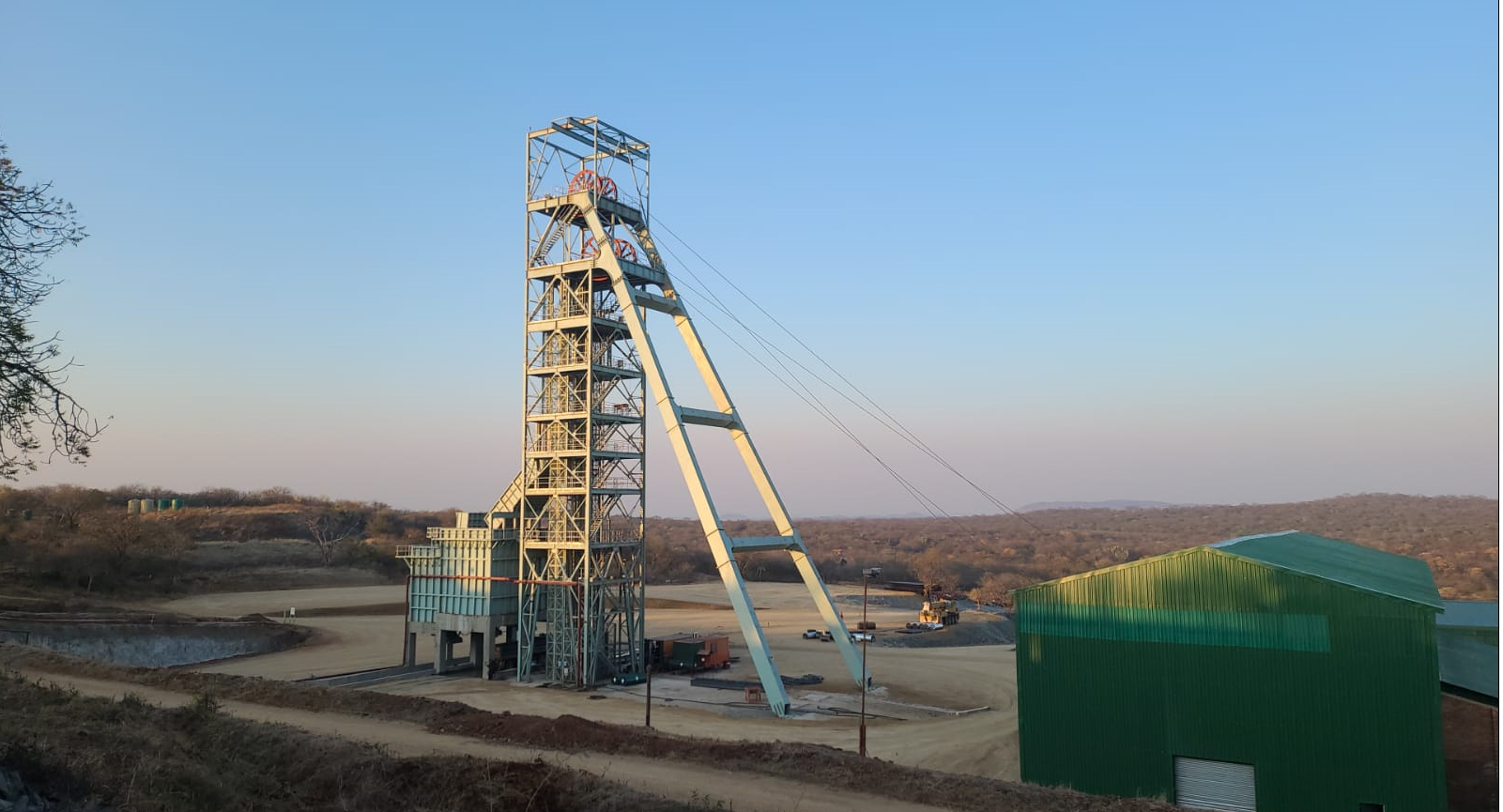
    That is the opportunity increasingly coming into focus at Caledonia Mining, where a profitable producing operation at the Blanket gold mine is providing a strong foundation while the company advances its much larger Bilboes project and a pipeline of additional exploration opportunities.

    Speaking about the company’s latest results, Mark Learmonth, CEO of Caledonia Mining( NYSE AMERICAN, AIM and VFEX: CMCL), highlighted the significant improvement achieved during the second quarter and the growing potential across the wider portfolio.

    Stronger Quarter Highlights Operational Momentum

    Caledonia’s second-quarter performance demonstrated the benefits of improved grades at Blanket, with gold production increasing substantially from the first quarter.

    Learmonth explained that the improvement was driven mostly by higher grades, an important factor in the economics of an underground mining operation.

    With the company processing ore at a relatively fixed cost per tonne, higher grades can translate directly into stronger margins and increased cash generation.

    That operational improvement, together with a substantially higher realised gold price, was reflected in the financial numbers. Caledonia generated approximately $46 million of EBITDA during the quarter, alongside around $17.4 million of free cash flow after capital expenditure.

    The result reinforces the strength of Blanket as a cash-generating asset and gives Caledonia an important platform from which to fund its next stage of growth.

    As Learmonth put it, Caledonia is now a highly profitable operation, with Blanket continuing to provide the cash generation needed to support the company’s broader strategy.

    Blanket Provides the Foundation

    The Blanket mine has a remarkable history, having been in operation for around 120 years.

    Today, the Zimbabwe-based operation produces approximately 75,000 ounces of gold per year, providing Caledonia with an established production base and a source of recurring cash flow.

    While Blanket remains central to the company, management’s focus is increasingly turning towards what the asset can help fund next.

    That brings Bilboes firmly into the spotlight.

    Bilboes Could Transform Caledonia’s Scale

    Described by Learmonth as the company’s major growth opportunity, Bilboes is a large, high-grade gold project that Caledonia is now advancing towards construction.

    The company is working on a funding package of approximately $600 million, supported by its existing cash generation and financing initiatives, including a successful convertible bond raise earlier in the year.

    With the financing process progressing and construction expected to begin later in 2026, Bilboes is moving from development concept towards becoming a significant future production asset.

    The current timeline points towards first gold towards the end of 2028, followed by the first full year of production in 2029.

    And the projected scale is significant.

    Bilboes is expected to produce approximately 200,000 ounces of gold per year in its first full year of production, more than double the current annual production level at Blanket.

    The project is also expected to benefit from a relatively low all-in sustaining cost of around $1,150 per ounce, reflecting the high-grade nature of the orebody.

    That combination of scale, grade and anticipated costs could make Bilboes a transformational asset for Caledonia.

    A Portfolio That Could Continue to Grow

    Bilboes is not the only growth opportunity within Caledonia’s portfolio.

    Immediately adjacent to Bilboes is the Motapa exploration project, where the company expects to publish an initial resource estimate in the coming weeks.

    While further exploration will be required to establish the project’s full potential, Motapa could ultimately provide additional flexibility for the Bilboes operation.

    It could potentially support higher production rates or extend the life of the mine, giving Caledonia another avenue through which to increase the value generated from its Zimbabwean portfolio.

    Meanwhile, the recently identified K-pits discovery at Blanket provides another near-term opportunity.

    Caledonia expects to publish a resource statement for K-pits in the coming weeks, with the potential for oxide mining and processing to generate relatively rapid cash flow.

    Longer term, the company is also optimistic about the possibility of identifying a deeper sulphide resource, which could build on the geological characteristics that underpin Blanket’s existing operation.

    From Producer to Growth Story

    What makes Caledonia increasingly interesting is therefore the combination of an existing cash-generating mine and a potentially transformational development project.

    Blanket provides production, cash flow and support for the company’s dividend, while the wider portfolio offers multiple opportunities for future growth.

    Bilboes represents the immediate focus, with construction potentially beginning this year and first gold targeted towards the end of 2028.

    Motapa could provide additional resources around Bilboes, while K-pits offers a potentially shorter-term opportunity at Blanket and the prospect of further sulphide discoveries adds longer-term exploration upside.

    For investors following the gold sector, that creates a compelling evolution in Caledonia’s story.

    The company is not simply looking to maintain production from an established mine. It is using the cash-generating strength of Blanket to advance a much larger, high-grade project that could dramatically increase production and cash flow over the coming years.

    With stronger second-quarter results demonstrating the underlying profitability of the business and Bilboes moving closer to construction, Caledonia Mining appears to be entering an important new chapter.

    For Mark Learmonth and his team, the objective is increasingly clear: use a profitable producing asset as the foundation for building a significantly larger gold business.

    And with Bilboes, Motapa and the K-pits all contributing to the company’s future growth pipeline, the next phase of Caledonia Mining’s story could prove considerably bigger than its current production base suggests.

    For more information visit – https://www.caledoniamining.com/

  • Morgan Stanley Upgrades Hardware View as Memory Inflation Sparks Procurement Rush

    Morgan Stanley Upgrades Hardware View as Memory Inflation Sparks Procurement Rush

    Morgan Stanley has become more optimistic about U.S. IT hardware after concluding that surging memory costs are having an unexpected effect on enterprise spending. Instead of waiting for component prices to decline, companies are accelerating purchases of servers, storage and PCs, while the rapid expansion of artificial intelligence infrastructure is adding another powerful source of demand.

    Hardware sector upgraded from Cautious to In-Line

    Analyst Erik Woodring raised Morgan Stanley’s U.S. IT hardware industry rating to In-Line from Cautious as part of a broader reassessment of the sector.

    Hewlett Packard Enterprise and Pure Storage were upgraded to Overweight, while NetApp moved to Equal-weight. Teradata was downgraded.

    The changes mark a notable shift after Morgan Stanley had previously expected elevated component costs to restrict the recovery in enterprise technology spending.

    Woodring admitted the firm “had been on the wrong side of the enterprise hardware trade,” as the expected slowdown in purchasing failed to materialise.

    Enterprises increasingly fear further price increases

    The central change in Morgan Stanley’s thesis concerns the impact of memory-chip inflation on corporate purchasing decisions.

    Companies increasingly regard higher memory prices as “a multi-year structural headwind,” rather than a temporary spike that can be avoided simply by delaying orders.

    As a result, enterprises are moving purchases forward to secure current pricing on PCs, servers and storage infrastructure.

    Woodring labelled the phenomenon “Fear of Missing Procurement.”

    The dynamic means rising component prices are effectively accelerating some hardware demand rather than destroying it, at least in the near term.

    AI capacity expansion adds another demand catalyst

    Artificial intelligence infrastructure spending is reinforcing the procurement trend.

    Morgan Stanley’s AlphaWise survey suggests that purchases being brought forward, combined with additional AI capacity requirements, could drive server and storage growth “to all-time survey highs in 2027.”

    The need to support increasingly demanding AI models is forcing enterprises and cloud providers to expand both computing and storage infrastructure.

    Against that backdrop, Morgan Stanley now ranks storage as its preferred area of hardware exposure, followed by servers and then PCs.

    Morgan Stanley lifts earnings forecasts

    The stronger demand assumptions prompted the firm to raise earnings expectations across the OEM companies it covers.

    Morgan Stanley’s EPS forecasts for 2026 and 2027 now sit approximately 9% to 12% above Wall Street consensus estimates.

    That gap reflects the firm’s belief that accelerated procurement and AI infrastructure expansion could generate stronger earnings than investors currently expect.

    Hewlett Packard Enterprise and Pure Storage are among the companies Morgan Stanley believes are particularly well positioned within the changing environment.

    Valuations create a growing risk

    The firm’s more constructive outlook comes with an important qualification.

    Morgan Stanley believes the current advantages are “primarily cyclical,” rather than evidence of a permanently stronger growth profile for hardware companies.

    The sector has already experienced a substantial rerating, with hardware stocks gaining more than 100% since the start of 2025.

    Valuations are consequently elevated by historical standards, increasing the risk of a sharper market reaction if earnings expectations stop rising.

    Procurement boom could eventually create a slowdown

    The biggest longer-term concern is that today’s accelerated purchases could borrow demand from the future.

    Companies buying hardware earlier than originally planned may require fewer systems later, potentially creating a slowdown once the procurement rush runs its course.

    Morgan Stanley therefore sees the possibility of the hardware cycle beginning to turn during 2027.

    Woodring identified a peak in earnings estimate revisions as the firm’s “call to get more cautious again.”

    Until that signal emerges, however, Morgan Stanley believes rising memory costs and the AI infrastructure buildout are creating enough near-term demand to justify a more favourable stance on U.S. hardware stocks.

  • Wall Street Futures Gain as Oil Sell-Off Eases Inflation Pressure: Dow Jones, S&P, Nasdaq

    Wall Street Futures Gain as Oil Sell-Off Eases Inflation Pressure: Dow Jones, S&P, Nasdaq

    Wall Street looked set for a slightly firmer start on Thursday as a steep decline in crude oil prices helped improve investor sentiment following Wednesday’s mixed session. U.S. crude futures dropped around 2.3%, easing some of the inflation concerns created by the recent energy rally, although a sharp premarket decline in Cisco Systems (NASDAQ:CSCO) provided a counterweight to the more positive backdrop.

    Oil sell-off offers relief to equity markets

    The sharp reversal in crude prices emerged as one of the main drivers of early market sentiment.

    Concerns about the global demand outlook pushed U.S. crude futures down approximately 2.3%, with traders focusing more heavily on potential consumption weakness than supply threats arising from the continuing Middle East conflict.

    Lower energy prices could provide some relief for investors after the recent surge in crude raised concerns that another inflationary shock could complicate the Federal Reserve’s policy outlook.

    A sustained decline in oil would potentially reduce pressure on consumer and business costs, making developments in the energy market particularly important for expectations surrounding inflation and interest rates.

    Cisco tumbles after quarterly update

    The positive influence from falling oil prices was partly offset by weakness in Cisco Systems (NASDAQ:CSCO).

    Shares of the networking company plunged more than 7% in premarket trading even though Cisco delivered better-than-expected quarterly results and issued an upbeat outlook.

    The negative reaction suggested investors had set a high bar ahead of the announcement following the strong performance of technology and artificial intelligence-related stocks.

    Cisco’s decline could limit the broader technology sector’s contribution to Thursday’s market gains despite continued optimism surrounding AI infrastructure spending.

    Technology stocks lifted Wall Street on Wednesday

    The Nasdaq and S&P 500 both finished higher during Wednesday’s session, although gains moderated after a stronger start.

    The Nasdaq advanced 143.04 points, or 0.5%, to 26,588.49, supported by strength across several technology-related industries.

    The S&P 500 gained 20.30 points, or 0.3%, to finish at 7,748.50.

    The Dow Jones Industrial Average was comparatively subdued, spending much of the session close to unchanged before ending 21.58 points lower, or less than 0.1%, at 53,770.27.

    The positive closes for the Nasdaq and S&P 500 helped offset some of the weakness recorded earlier in the week.

    CPI report calms some inflation concerns

    Wednesday’s initial advance followed the release of U.S. consumer inflation data that broadly matched economists’ expectations.

    Consumer prices increased 0.1% in July following a 0.4% decline in June, according to the Labor Department.

    Core prices, excluding food and energy, rose 0.2% after showing no change during the previous month.

    Annual headline inflation eased to 3.4% from 3.5%, while the annual core rate declined to 2.5% from 2.6%.

    The readings provided some reassurance that underlying inflation had not accelerated, helping reduce immediate concerns about the outlook for U.S. interest rates.

    However, investors remain sensitive to the possibility that another sustained rise in energy costs could reverse some of that progress.

    AI enthusiasm drives hardware stocks to new highs

    Artificial intelligence-related stocks provided another important source of support for Wall Street during Wednesday’s session.

    CoreWeave (NASDAQ:CRWV) and Super Micro Computer (NASDAQ:SMCI) attracted buying interest following positive reactions to their quarterly results and guidance.

    Computer hardware stocks were particularly strong, with Super Micro helping extend the sector’s recent rally.

    The NYSE Arca Computer Hardware Index surged 5.5% and closed at a record high.

    Networking and semiconductor shares also advanced substantially, strengthening the technology-heavy Nasdaq.

    Geopolitical risks continue to influence oil and inflation outlook

    Despite the stronger performance of technology stocks and relatively encouraging inflation figures, geopolitical uncertainty remained an important restraint on market sentiment.

    Recent tensions in the Middle East have contributed to significant volatility in crude prices and renewed concerns about potential disruptions to global energy supplies.

    International mediators continue trying to restart negotiations between the U.S. and Iran, although public comments from both sides have suggested that a near-term resolution remains uncertain.

    The sharp decline in crude prices on Thursday has temporarily shifted investor attention towards demand concerns, but any escalation in the conflict could quickly return supply risks to the forefront.

    Investors weigh lower oil against corporate earnings

    Transportation, gold and brokerage stocks were among the other areas recording gains on Wednesday, while housing and software shares moved notably lower.

    Ahead of Thursday’s opening bell, investors are balancing the potential economic benefit of cheaper oil against mixed reactions to corporate earnings.

    The 2.3% decline in U.S. crude futures could provide support if it helps ease inflation expectations, while Cisco’s sharp premarket drop highlights the risk posed by elevated expectations across the technology sector.

    Oil prices, Middle East developments and incoming economic data are therefore likely to remain important drivers of Wall Street sentiment as investors reassess the outlook for inflation, growth and Federal Reserve policy.

  • European Stocks Mostly Higher as Softer Oil Prices and US Inflation Support Sentiment: DAX, CAC, FTSE100

    European Stocks Mostly Higher as Softer Oil Prices and US Inflation Support Sentiment: DAX, CAC, FTSE100

    European equities traded mostly higher on Thursday as falling oil prices and softer U.S. inflation data supported risk appetite. Expectations of weaker global energy demand pushed crude prices lower, while the latest U.S. inflation figures reduced concerns that the Federal Reserve could raise interest rates in the near term. The U.K. market underperformed its continental peers, however, as energy stocks declined and investors assessed slower British economic growth.

    UK economy slows in the second quarter

    Sterling came under pressure following official figures showing that economic growth in the U.K. moderated during the second quarter.

    Real gross domestic product expanded 0.4% quarter on quarter, according to the Office for National Statistics, slowing from growth of 0.6% during the opening three months of the year. The quarterly figure was in line with economists’ expectations.

    On an annual basis, the economy grew 1.2%, slightly stronger than the 1.1% expansion forecast by economists.

    The slowdown nevertheless weighed on the pound as investors considered the implications for the outlook for the British economy.

    STOXX 600 advances while FTSE 100 falls

    The pan-European STOXX 600 Index gained around 0.2%, recovering after declining 0.2% on Wednesday.

    Germany’s DAX advanced approximately 0.4%, while France’s CAC 40 added 0.1%.

    The U.K.’s FTSE 100 moved in the opposite direction, falling around 0.3% as weakness among major energy companies weighed on the index.

    Lower oil prices were a particular drag on London’s heavyweight energy sector, offsetting gains elsewhere in the market.

    Costain and Rank Group rally after results

    Costain Group (LSE:COST) shares moved sharply higher after the British infrastructure company delivered strong first-half results and reaffirmed its guidance for the full year.

    Rank Group (LSE:RNK), which owns Grosvenor Casinos and Mecca Bingo, also recorded a substantial gain after reporting a 21% increase in underlying profit for the financial year ended June 30, 2026.

    The results provided further company-specific support to parts of the U.K. market despite the broader decline in the FTSE 100.

    Sixt, Thyssenkrupp and Maersk gain

    In continental Europe, Sixt (TG:A46Z70) shares climbed after the German car rental company reported record revenue for the first half.

    Thyssenkrupp (TG:TKA) also advanced after the steel and industrial technology group increased the lower end of its 2026 profit guidance.

    Maersk (TG:DP4A) was another notable riser after the Danish shipping company raised its full-year outlook following a sharp increase in second-quarter profit.

    Pandora (LSE:0FND) shares also strengthened after the jewellery group upgraded its 2026 expectations for organic growth and profit margin.

    BP and Shell retreat as oil prices weaken

    Energy stocks were among the main laggards as crude oil prices pulled back from their recent highs.

    BP Plc (LSE:BP.) and Shell (LSE:SHEL) both declined as investors reacted to expectations of weaker global oil demand during the year.

    The retreat in crude prices followed a recent rally and added pressure to the energy-heavy FTSE 100.

    Antofagasta falls after mixed first-half update

    Antofagasta (LSE:ANTO) shares also moved sharply lower following a mixed set of first-half results from the Chilean copper producer.

    The company reported a substantial increase in first-half profit, benefiting from supportive commodity-market conditions.

    However, Antofagasta reduced its copper production forecast for 2026, overshadowing the stronger earnings performance and weighing on the shares.

    Overall, European markets remained supported by easing concerns over U.S. monetary tightening and lower energy prices, although weaker oil stocks and slower U.K. economic growth left London trailing the major continental indices.

  • Gold Retreats After Two-Month Peak as Softer Inflation Reshapes Fed Expectations

    Gold Retreats After Two-Month Peak as Softer Inflation Reshapes Fed Expectations

    Gold prices edged lower on Thursday after briefly reaching their strongest level in more than two months, as traders reconsidered the outlook for Federal Reserve policy following softer U.S. inflation data. While the CPI reading reduced expectations for an imminent interest-rate increase, persistent energy-market risks linked to the Iran conflict remain a potential source of inflationary pressure. At 01:54 ET (05:54 GMT), XAU/USD was down 0.5% at $4,388.64 an ounce, while Gold Futures fell 0.5% to $4,446.12. XAG/USD declined 0.4% to $65.08 an ounce and XPT/USD dropped 0.6% to $1,746.71.

    Gold gives back part of post-CPI rally

    Bullion advanced as much as 0.9% on Wednesday, reaching approximately $4,450 an ounce and setting a fresh two-month high before losing momentum.

    The move followed U.S. inflation figures showing consumer prices increased just 0.1% in July from the previous month, matching expectations. Gold initially gained around 1% as the data suggested that the energy shock caused by the Iran conflict had yet to generate a substantial acceleration in broader inflation.

    Traders responded by scaling back expectations for another Federal Reserve rate increase. CME FedWatch indicated that the probability of a September hike had fallen to roughly 38%-40%, compared with 46% immediately before the CPI release.

    The Fed left its benchmark interest-rate range unchanged at 3.50%-3.75% in July, although three policymakers voted in favour of raising rates.

    Investors will now assess Thursday’s U.S. producer price data for further evidence on inflation before the September policy meeting.

    More employment and inflation releases are scheduled before that decision, while Fed Chair Kevin Warsh’s appearance at the Jackson Hole symposium later this month will be closely watched for indications of the central bank’s assessment of inflation and economic growth.

    Because gold does not offer a yield, expectations for higher interest rates tend to reduce its relative appeal.

    Energy prices remain a potential inflation threat

    The softer CPI reading provided an initial boost to precious metals, but some of that reaction has faded as investors continue to assess the inflationary implications of elevated energy prices.

    Efforts to resolve the U.S.-Iran conflict and restore shipping through the Strait of Hormuz remain uncertain, with the strategically important route still operating under severe restrictions.

    Oil prices are heading for a weekly advance as traders monitor diplomatic efforts between Washington and Tehran. A prolonged disruption to energy supplies could keep prices elevated and complicate the Federal Reserve’s inflation outlook.

    Meanwhile, the US Dollar Index was little changed near 99.96. Lower Treasury yields and earlier weakness in the dollar had helped fuel gold’s rally, but both supportive moves have since moderated.

    Chinese buying strengthens underlying demand

    Gold has continued to attract buyers after successfully holding above the key psychological threshold of $4,000 an ounce.

    Chinese demand remains an important source of support. The People’s Bank of China has extended its run of bullion purchases, while broader investor appetite for gold has improved following the previous correction in prices.

    Technical signals have also become more constructive. Gold moved above its 100-day moving average this week for the first time since April, strengthening the improving technical backdrop.

    Tony Sycamore, senior market analyst at IG, said gold’s overnight pullback from around $4,441 reflected profit-taking ahead of the CPI release, while hawkish Federal Reserve commentary and higher energy prices also contributed to selling pressure.

    He said the recovery has brought bullion towards downtrend resistance around $4,450, a level derived from the late-January record near $5,602. Gold’s 200-day moving average near $4,499 could provide another significant hurdle if prices attempt to extend their rebound.

  • Oil Retreats as U.S. Stockpile Surge and Softer Demand Forecasts Offset Supply Risks

    Oil Retreats as U.S. Stockpile Surge and Softer Demand Forecasts Offset Supply Risks

    Oil prices fell on Thursday as a sharp build in U.S. crude inventories and weaker global consumption forecasts outweighed continuing concerns over disrupted supply routes. Brent futures declined 91 cents, or 1%, to $88.07 a barrel at 0800 GMT, giving back part of the gains recorded over the previous six sessions. U.S. West Texas Intermediate (WTI) crude dropped 96 cents, or 1.2%, to $82.31 a barrel after climbing for five straight sessions.

    U.S. inventory surge weighs on crude

    A substantial increase in American crude stocks added fresh downward pressure to the market and helped keep benchmark prices below $90 a barrel.

    PVM analyst John Evans pointed to the combination of rising U.S. inventories and reduced demand projections from the Organization of the Petroleum Exporting Countries and the International Energy Agency as key factors limiting crude’s recent rally.

    Figures from the Energy Information Administration showed that U.S. commercial crude inventories recorded their largest weekly increase since January 2023 as exports weakened.

    Inventories rose by 17.4 million barrels to 424.4 million in the week ended August 7, their highest level since June 5. The build was far larger than expected, with a Reuters survey of analysts having predicted a 1.4 million-barrel decline.

    Demand forecasts turn less supportive

    Oil also faced pressure from deteriorating expectations for global consumption.

    OPEC lowered its estimate for world oil demand growth in 2026 to 580,000 barrels per day in its latest monthly market report.

    The IEA delivered an even more cautious assessment, forecasting that consumption will shrink by 1.6 million barrels per day this year. That compares with its previous estimate for a decline of 1 million barrels per day.

    The agency said high energy prices and supply restrictions stemming from the U.S.-Israeli war with Iran are reducing consumption.

    Hormuz blockade continues to underpin supply concerns

    Geopolitical risks nevertheless prevented a sharper decline in crude as uncertainty surrounding the Strait of Hormuz remained unresolved.

    A senior Iranian source said on Wednesday that negotiations had failed to make progress towards restoring an interim U.S.-Iranian agreement reached in June or establishing a schedule for putting it into effect.

    Shipping flows through the strait also stayed unusually low. Vessel crossings excluding container ships fell to just five on Wednesday, the lowest level in three weeks, according to Kpler data.

    With little indication of a breakthrough over the blocked waterway, traders continue to price in the risk of prolonged disruption to Middle Eastern energy exports.

    Russia-Ukraine attacks add another supply threat

    Concerns over physical supply also extended to the Black Sea region as Russia and Ukraine reported fresh attacks affecting industrial and transport areas.

    Russia targeted the Izmail port district in Ukraine’s southern Odesa region overnight, while a separate drone strike sparked a fire in an industrial zone in Salavat, in Russia’s Bashkortostan republic.

    Salavat is home to a major oil refinery, adding to concerns that escalating attacks could interfere with refining or logistics infrastructure.

    For now, weaker demand expectations and the surge in U.S. crude inventories are dominating price action, but persistent geopolitical disruptions are continuing to provide a floor under the market.

  • Wall Street Futures Rise as Cisco AI Boom Drives Earnings and U.S. PPI Looms: Dow Jones, S&P, Nasdaq

    Wall Street Futures Rise as Cisco AI Boom Drives Earnings and U.S. PPI Looms: Dow Jones, S&P, Nasdaq

    U.S. equity futures edged higher on Thursday as traders turned their attention to another key inflation release and continued to assess results from major technology companies. Cisco Systems (NASDAQ:CSCO) slipped after the closing bell despite reporting a sharp increase in profit and revenue supported by artificial intelligence-related demand, while Applied Materials (NASDAQ:AMAT) is set to deliver its latest results later in the day. Markets are also watching the escalating dispute between Washington and Tehran over the Strait of Hormuz, with both sides claiming control of the crucial oil transit route.

    U.S. futures point to a firmer open

    Futures tied to Wall Street’s major benchmarks moved modestly higher ahead of Thursday’s session as investors balanced easing consumer inflation against another busy day for corporate earnings.

    At 02:58 ET (06:58 GMT), Dow futures were higher by 26 points, or 0.1%. S&P 500 futures increased by 6 points, also 0.1%, while Nasdaq 100 futures climbed 29 points, equivalent to 0.1%.

    U.S. equities finished Wednesday on a mixed note. The S&P 500 and Nasdaq Composite gained ground, while the Dow Jones Industrial Average slipped slightly.

    Markets were supported by July consumer inflation figures showing a modest slowdown in the annual rate, broadly in line with economists’ forecasts. Although inflation remains high in absolute terms, the data strengthened expectations that the Federal Reserve will keep borrowing costs unchanged when policymakers meet in September rather than opt for another rate increase.

    Treasury yields declined following the release, while the dollar weakened against a group of major currencies.

    Cisco delivers strong quarter as AI orders accelerate

    Cisco Systems shares came under pressure in extended-hours trading even though the networking technology group reported another strong quarter.

    The muted share-price reaction reflected the high expectations already built into the stock, according to analysts cited by Reuters. Cisco shares have gained more than 60% this year as investors increasingly view the company as a beneficiary of expanding spending on artificial intelligence infrastructure.

    CEO Chuck Robbins told the Wall Street Journal that demand across Cisco’s product portfolio was running at levels the company had not experienced in three decades. Large technology companies have placed billions of dollars of orders as they continue to invest heavily in AI computing and networking capacity.

    Robbins described the AI boom as the “fastest-moving technology transition” Cisco has ever seen, according to the WSJ.

    The company reported July-quarter net profit of $3.86 billion, or $0.97 per share, while revenue rose to $17.25 billion from $14.67 billion in the prior-year period. The top-line result came in above Wall Street forecasts.

    Cisco also issued a stronger-than-expected revenue outlook for fiscal 2027, forecasting between $72.2 billion and $73.4 billion. Orders for AI infrastructure from hyperscale customers are projected at around $7.5 billion.

    Applied Materials next in the earnings spotlight

    Investors will also be watching Applied Materials, with the semiconductor equipment manufacturer due to report after Thursday’s market close.

    Bloomberg consensus forecasts point to adjusted fiscal third-quarter earnings of $3.42 per share on net sales of $9.02 billion.

    For the current quarter, analysts are looking for guidance of approximately $9.62 billion in sales and adjusted earnings of $3.72 per share.

    The continuing expansion of artificial intelligence infrastructure has supported demand for advanced semiconductor manufacturing equipment. More powerful AI processors require greater quantities of silicon wafers and increasingly sophisticated production technologies, creating favourable conditions for suppliers such as Applied Materials.

    In May, the company forecast more than 30% growth in its semiconductor equipment business during 2026, alongside an increase of more than 50% in packaging revenue. CEO Gary Dickerson said Applied Materials sees “an exceptionally strong foundation for sustained multi-year revenue and profit growth.”

    Hormuz dispute adds to geopolitical uncertainty

    Geopolitical developments remain another important driver for markets as the conflict in the Middle East continues to threaten regional energy flows.

    On Thursday, the commander of an Iranian paramilitary group said the Strait of Hormuz was “under Iran’s control,” according to Al Jazeera, directly contradicting U.S. President Donald Trump’s claim a day earlier that Washington controlled the waterway.

    Diplomatic efforts between the U.S. and Iran have stalled once again, with the two governments offering opposing accounts of conditions around the strait. The route carried roughly one-fifth of global oil supplies before the conflict began in late February.

    An Iranian source told Reuters that talks aimed at restoring a peace framework signed in June had failed to make progress as continued fighting undermined the agreement.

    Brent crude futures nevertheless edged lower on Thursday as concerns surrounding the outlook for global oil demand offset some of the fears about restricted supply.

    Markets await July producer inflation

    The next major macroeconomic focus will be July’s U.S. producer price index, which is expected to provide another indication of inflationary pressures ahead of the Federal Reserve’s September policy meeting.

    Annual PPI inflation is forecast to ease to 4.9% from 5.5%, while the monthly reading is expected to rise by 0.2% after declining 0.3% in June.

    Investors will be assessing not only the impact of volatile energy prices associated with the Iran conflict but also whether the rapid build-out of AI infrastructure is beginning to create broader cost pressures across the economy.

    The combination of CPI and PPI data will also allow economists to update their expectations for the upcoming core personal consumption expenditures price index, a closely watched inflation gauge used by the Federal Reserve.

  • Market Open: Savills Earnings Rise, Antofagasta Profit Grows

    Market Open: Savills Earnings Rise, Antofagasta Profit Grows

    UK markets open mixed as Savills and Antofagasta report stronger earnings, while US stocks advance and Brent crude moves lower.

    Market Overview

    The FTSE 100 opened broadly unchanged at 10,833.58, up less than 0.01 per cent from its previous close, as investors assessed cooling UK economic growth and continuing tensions around the Strait of Hormuz. The Euronext 100 was also effectively flat at 1,973.14, while Germany’s DAX gained 0.34 per cent to 26,421.06. Overnight in the US, the Nasdaq closed higher at 26,588.49 and the S&P 500 advanced to 7,748.50, with an on-target US inflation reading easing concerns over further near-term Federal Reserve tightening.

    Commodity markets were mixed, with copper, Brent crude and natural gas moving lower while gold edged higher. Oil sentiment reflected weaker global demand forecasts alongside continuing uncertainty over the Strait of Hormuz. Against sterling, the US dollar weakened marginally, while the Swiss franc, Japanese yen and Australian dollar strengthened slightly and the euro was unchanged. Bitcoin was also up against sterling.


    Market Numbers

    FTSE 100: Up (+0.001%), 10,833.58
    Euronext 100: Up (+0.01%), 1,973.14
    DAX: Up (+0.34%), 26,421.06
    NASDAQ: Up, 26,588.49
    S&P 500: Up, 7,748.50


    In the Headlines

    Earnings rise – Savills (LSE:SVS)
    Global property services group Savills reported stronger first-half earnings as its performance improved and the acquisition of Eastdil Secured expanded its global platform. The transaction strengthens the group’s position across international real estate advisory and capital markets services.

    Copper prices lift earnings – Antofagasta (LSE:ANTO)
    Copper miner Antofagasta reported an 18 per cent increase in first-half revenue to $4.48 billion and a 27 per cent rise in EBITDA to $2.84 billion, supported by stronger commodity prices and cost discipline. Cash generation improved significantly, although severe weather affected production at Los Pelambres, while the group maintained its full-year copper production guidance.


    Currencies (vs GBP)

    USD: Down (-0.00%), $1.3498
    CHF: Up (+0.01%), Fr.1.0976
    EUR: Unchanged (0.00%), €1.1708
    JPY: Up (+0.01%), ¥215.0645
    AUD: Up (+0.01%), $1.9107
    Bitcoin (BTC/GBP): Up (0.00%), £47,342.92


    Commodities

    Copper: Down
    Gold: Up
    Brent Crude: Down
    Natural Gas: Down