Category: Broker News

  • ATFX Connect Expands Prime Brokerage Capabilities with Standard Chartered Partnership

    ATFX Connect Expands Prime Brokerage Capabilities with Standard Chartered Partnership

    ATFX Connect, the institutional division of ATFX Group, has announced a strategic collaboration with Standard Chartered Bank, marking the addition of the bank as its second foreign exchange prime broker. This move significantly enhances ATFX Connect’s institutional service offerings and strengthens its global market presence.

    The partnership integrates Standard Chartered’s top-tier prime brokerage services into ATFX Connect’s advanced liquidity infrastructure. This expansion is set to benefit a broader range of institutional clients by offering deeper market access and a more robust trading environment.

    “As we grow our FX prime brokerage services, our focus remains on delivering transparent, direct market access to institutional clients,” said Wei Qiang Zhang, Managing Director at ATFX Connect. “Standard Chartered’s capabilities align perfectly with our existing framework and elevate the quality of service we provide.”

    ATFX Connect caters to institutional and professional traders through both Agency Prime Brokerage and Margin accounts. Its liquidity pool is built from Tier 1 banks and non-bank providers, offering trading in Spot FX, NDFs, indices, commodities, and precious metals. Clients can connect via FIX API, third-party platforms, or ATFX’s proprietary systems.

    This development underscores ATFX Connect’s commitment to delivering tailored, high-performance trading solutions to hedge funds, banks, asset managers, and other institutional players.

    For a detailed comparison of brokers, you can check ADVFN Broker Listing.

  • Solitics Unveils Market Pulse at iFX EXPO International 2025

    Solitics Unveils Market Pulse at iFX EXPO International 2025

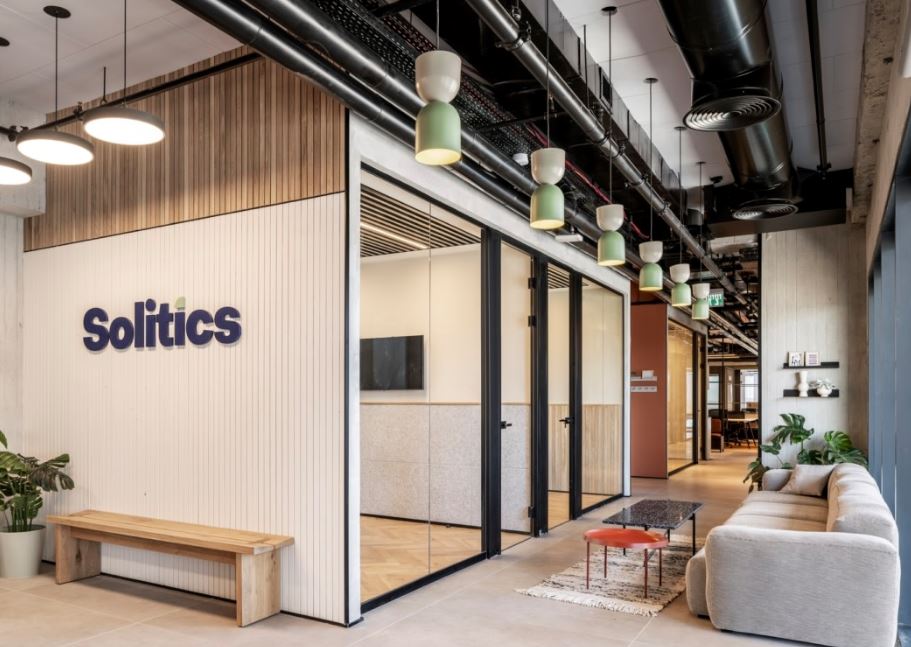
    Solitics, a leader in engagement automation for fintech and trading platforms, is set to debut its latest innovation—Market Pulse—at the iFX EXPO International 2025 in Limassol, Cyprus. This new feature, powered by the company’s proprietary Follow Engine, enables real-time, hyper-personalized user engagement based on live market activity.

    Unlike traditional platforms that send delayed or generic alerts, Market Pulse delivers instant, tailored messages to users based on the assets they follow, hold, or monitor. For example, a user tracking Bitcoin might receive a push notification when BTC spikes: “Bitcoin is moving. Time to act?” Similarly, someone holding Amazon stock could get an in-app alert when the price dips: “Amazon dropped—consider your next move.”

    This level of automation allows brokers to re-engage users at the exact moment market events occur, without the need for manual segmentation or campaign setup. The Follow Engine dynamically matches users with relevant market triggers and delivers content through the most effective channel—whether that’s email, push, in-app, or pop-up.

    Solitics will showcase Market Pulse at Booth 74 in Hall 1 of the City of Dreams Mediterranean venue on June 18–19. The company aims to demonstrate how this tool can help brokers boost engagement, conversion, and retention—at scale and with minimal operational effort.

    Solitics is a customer engagement and data analytics platform founded in 2013 and headquartered in Tel Aviv, Israel. It specializes in helping B2C companies—especially in fintech, banking, iGaming, and brokerage—deliver real-time, personalized customer experiences without the need for complex data infrastructure.

    At its core, Solitics connects disparate data sources and turns them into actionable insights. Its platform enables businesses to automate hyper-personalized messaging across channels like email, push notifications, in-app messages, and more. This is all powered by their proprietary data engine, which processes over a billion customer engagements and events daily.

    The company emphasizes a customer-centric approach and has earned multiple industry awards for its ease of use and business impact. It’s privately held, with a relatively small team of around 29 employees, and recently expanded into the UK with a registered office in London.

  • Singapore Traders Gain Access to Fractional Shares with Saxo

    Singapore Traders Gain Access to Fractional Shares with Saxo

    Saxo has introduced fractional trading for its clients in Singapore, allowing investors to purchase fractional units of over 1,000 instruments across multiple asset classes.

    This new feature enables traders to invest in high-priced stocks with smaller amounts of capital, making portfolio construction more flexible and accessible.

    Fractional shares allow investors to buy portions of a stock rather than full units, helping them optimize their available funds and diversify their investments more efficiently.

    The service is integrated across all Saxo platforms, ensuring seamless access for users on desktop, web, and mobile interfaces.

    Saxo’s initiative aligns with its broader strategy to democratize investing, providing tools that cater to both beginners and experienced traders.

    The company continues to expand its offerings, reinforcing its commitment to making global financial markets more accessible.

  • iFOREX Holds Off IPO Amid Ongoing Compliance Check

    iFOREX Holds Off IPO Amid Ongoing Compliance Check

    iFOREX Financial Trading Holdings Ltd. has announced a delay in its planned initial public offering (IPO) on the London Stock Exchange, originally expected to take place in late June.

    The postponement is due to a routine compliance inspection in the British Virgin Islands, which began earlier this year and was disclosed in the company’s registration documents.

    iFOREX has stated that the inspection process is nearing completion and anticipates only a brief delay before proceeding with the IPO.

    Despite the setback, investor interest remains strong, with institutional orders reportedly oversubscribed at the upper end of the valuation range.

    The company remains optimistic about its listing prospects once the compliance review is finalized.

  • Webull Names Walter Bishop Independent Director

    Webull Names Walter Bishop Independent Director

    Webull Corporation (NASDAQ: BULL) has announced the appointment of Walter Bishop as an independent director on its board, effective June 8, 2025 .

    Mr. Bishop brings extensive experience from across the financial sector. His career spans senior leadership roles at Deutsche Bank—including U.S. COO and Chairman of DB Trust Company Delaware’s board and audit committee (1997–2019)—as well as positions at Barclays Bank U.S. (Chief Administrative Officer), Nordbanken U.S. (Deputy General Manager & CFO), and KPMG Peat Marwick (audit manager)

    In his new role, Bishop will serve on Webull’s key oversight bodies: the Audit Committee, Compensation Committee, and the Nominating & Corporate Governance Committee

    Currently, he also holds positions as Lead Independent Director and Audit & Governance Committee Chair at Syntec Optics Holdings, Inc. (NASDAQ: OPTX), plus previous board roles at Highline Management Inc. (2019–2024) and advisory work with Thunder Bridge Capital Acquisition II / Indie Semiconductor

    Mr. Bishop’s academic qualifications include an MBA from St. John’s University and a Bachelor’s in Public Accounting from Baruch College, CUNY

    His addition increases Webull’s board to six members, including two independent directors—a move reinforcing stronger governance and oversight as the fintech firm continues its expansion.

  • ThinkMarkets Introduces Traders’ Gym: Revolutionizing Strategy Backtesting on Mobile

    ThinkMarkets Introduces Traders’ Gym: Revolutionizing Strategy Backtesting on Mobile

    ThinkMarkets, a global leader in online CFD trading, is enhancing its proprietary platform with the launch of Traders’ Gym, an exclusive backtesting tool, on the ThinkTrader mobile app for iOS and Android. This feature allows traders to test their strategies in real-time, 24/7, whether on the web or mobile. The addition aligns with ThinkMarkets’ commitment to building a powerful and seamless trading platform.

    Nauman Anees, CEO and co-founder of ThinkMarkets, expressed excitement about the launch, highlighting that Traders’ Gym has been a highly requested feature. He emphasized that the tool will enhance the overall trading experience by providing users with charting, signals, multiple order types, real-time backtesting, and market news resources.

    ThinkMarkets, established in 2010, offers access to 4,000 CFD instruments across various markets, including FX, indices, commodities, and equities. The company operates globally with offices in London and Melbourne, along with hubs in Asia-Pacific, Europe, and South Africa.

  • CMC Markets’ Profit Growth Fails to Prevent Share Price Collapse

    CMC Markets’ Profit Growth Fails to Prevent Share Price Collapse

    CMC Markets has reported a strong 33% increase in annual profit, reaching £84.5 million for the fiscal year ending March 31, 2025. However, despite the impressive growth, investors reacted negatively to earnings that fell short of expectations, leading to a staggering 18% drop in its share price.

    Profit Gains vs. Market Reaction

    The London-listed financial services firm saw its net operating income rise by 2% to £340.1 million, slightly exceeding analysts’ forecasts. Earnings per share improved to 22.6 pence, but still missed the projected 24 pence, causing concern among shareholders. While the company’s profit margin expanded to 24.8%, reflecting a significant improvement from the previous year’s 19%, these financial gains were not enough to sustain bullish sentiment in the market.

    CMC Markets had enjoyed an upward trajectory in its stock price since April, fueled by investor optimism about its revenue streams and profitability. However, following the earnings release on June 5, the stock plunged to a two-month low of 230.5 pence, marking a sharp contrast from its recent highs. As of June 9, the stock continued to struggle, trading at 241.5 pence, still down more than 2% for the week.

    Key Drivers Behind the Decline

    Despite positive fundamentals, several factors contributed to the steep sell-off:

    • Missed Earnings Forecasts: Investors were expecting a more substantial earnings beat, particularly after the company’s strong profit growth. Falling short of £90.6 million in expected profit raised concerns about future performance.
    • Market Sentiment & Volatility: The financial services sector has faced heightened volatility, with investors becoming increasingly sensitive to economic indicators and central bank policies.
    • Profit Margins vs. Growth Prospects: Although CMC Markets improved its profit margin, questions remain about whether the growth trajectory can be sustained in the coming quarters.

    Industry Trends & Future Outlook

    CMC Markets operates in a highly competitive industry, where global economic conditions and investor sentiment play a crucial role. As central banks adjust interest rates and inflation continues to be a key focus, trading activity and brokerage revenues remain under scrutiny.

    Looking ahead, analysts will be watching CMC Markets’ performance closely to determine whether this decline represents a short-term correction or a more prolonged trend. The company may need to address investor concerns by demonstrating stronger growth in revenue streams and improved profitability metrics in the next quarterly earnings report.

    The sharp decline in CMC Markets’ share price following its earnings report has several potential implications for its future performance:

    Investor Sentiment & Market Confidence

    • The 18% drop in share price suggests that investors were disappointed with the earnings miss, despite the company’s 33% profit growth. This could lead to lower investor confidence, making it harder for CMC Markets to attract new shareholders or maintain its valuation.
    • If the stock continues to struggle, the company may need to reassure investors through strategic moves such as cost-cutting, expansion into new markets, or stronger revenue growth.

    Financial Strategy Adjustments

    • CMC Markets has been investing in automation and infrastructure, which led to a 17% increase in IT costs. If the market reaction persists, the company may need to reassess its spending to ensure profitability remains strong.
    • The firm has also expanded into decentralized finance (DeFi) and Web 3.0, aiming to diversify its revenue streams. However, these investments require significant infrastructure upgrades, which could pressure short-term financial performance.

    Competitive Positioning

    • The financial services industry is highly competitive, with firms like IG Group and Plus500 vying for market share. If CMC Markets fails to meet profit expectations consistently, it could lose ground to competitors.
    • The company has seen strong growth in international trading revenue, particularly in Australia, where client activity has surged. Maintaining this momentum will be crucial to offset any negative investor sentiment.

    Future Outlook

    • Analysts will closely watch CMC Markets’ next earnings report to see if it can recover from this setback. If the company demonstrates strong revenue growth and improved profitability, the stock could rebound.
    • The firm’s cash reserves and financial investments have increased significantly, which could provide stability during this period of uncertainty.
    • The shift to Web 3.0 and DeFi presents long-term opportunities, but the company must navigate the challenges of integrating new technologies while maintaining profitability.

    For a detailed comparison of CFD brokers, you can check ADVFN Broker Listing.