Category: Trading and Investing

  • bp targets Upstream growth after best exploration year in a generation

    bp targets Upstream growth after best exploration year in a generation

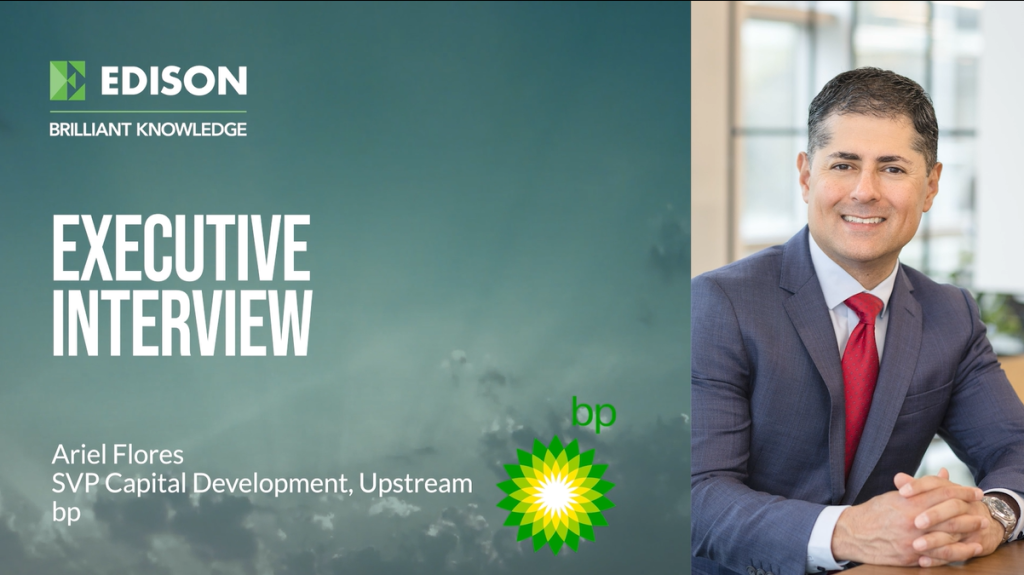
    Ariel Flores, SVP Capital Development, Upstream, steering bp’s global exploration and reservoir development, sat down with Edison TV to explain why the oil major’s growth story is gathering pace, and where the next barrels are coming from.

    In the second of Edison TV’s deep dives into bp (LSE:BP.), Executive Director Neil Shah put the questions that matter most to investors weighing the group’s upstream ambitions: is the growth plan working, where is the resource going to come from, and what difference is technology really making? Across the conversation, Ariel Flores, a 27-year bp veteran laid out a confident, numbers-backed case.

    “It’s a great proposition, one that is simpler, stronger, more valuable across our oil and gas portfolio,” Flores said, summing up the pitch he believes should bring investors back to the story.

    A Growth Plan That Is Delivering

    bp set out its stall at its 2025 capital markets update, promising to grow the upstream after years in which the division had taken a back seat. A year on, Flores says delivery has matched the rhetoric. “It’s gone very well since our capital markets update in 2025,” he told Shah, pointing to 96% plant reliability and a base business “performing well.”

    The numbers behind the momentum are specific. Seven of ten major projects are now online, contributing towards 150,000 barrels of additional production, while a final investment decision on the next wave of projects should add a further 250,000 barrels of oil equivalent at peak. bp’s reserve replacement ratio reached 90% in 2025, keeping the group on track for its aspiration of 100% by 2027.

    Cost discipline underpins the story. Operating efficiency is at “historic highs,” Flores said, with lifting costs running at around $6 per barrel of oil equivalent. A divestment programme aimed at strengthening the balance sheet is “going well,” and the organisation is moving towards a simpler upstream–downstream structure designed to cut cycle times and sharpen capital allocation. “Quality through choice features as we grow the hopper,” he said — bp’s shorthand for funding only the projects that clear a high value bar.

    The Best Exploration Year In A Generation

    If resource longevity has been the market’s nagging worry, 2025 went a long way to answering it. Flores did not undersell the headline: “I’ll start with the biggest discovery bp’s made in 25 years, our Bumerangue field in Brazil.” He described it as a “world-class structure” in a well-established basin, with the drill ship now on bp’s books and an appraisal programme to follow the Tupinamba well.

    Bumerangue was far from alone. bp logged a further 11 discoveries during the year: four gas finds in Egypt offering fast cycle times to first gas through existing infrastructure; the Frangipani discovery in Trinidad, earmarked for fast-tracking into existing LNG-linked facilities; successes at Capricornus and Volans across Angola and Namibia; and two further discoveries near existing infrastructure in the Gulf of America. “These all provide short cycle time, fast turnaround opportunities,” Flores said, “and that will lead to an accretive outlook to our plan as it relates to free cash.”


    The 2026 programme keeps the drill bit busy, with the Tupinamba well in Brazil and an “exciting” Conifer well in the Gulf of America towards year-end that could be tied back to the Kaskida project now under construction.

    Sweating Capital Already In The Ground

    Alongside the drill bit, bp has been buying its way to more resource through access deals that lean on infrastructure it already owns. Flores pointed to the Kirkuk opportunity in northern Iraq — built on bp’s delivery track record in the south at Rumaila — plus a prospect in Karabakh that would feed existing ACG infrastructure in partnership with SOCAR, and new gas access in India aimed at keeping existing facilities full.

    “All these provide for exciting, accretive opportunities,” he said, “because it’s harnessing capital that’s already deployed.”

    AI Moving “At Pace” Across The Upstream

    Perhaps the most forward-looking section of the interview concerned technology. bp is leaning on partnerships with Palantir, NVIDIA, AWS and Databricks to attack two fronts at once: stripping out cost by automating repetitive tasks, and squeezing more barrels from existing fields.

    On the subsurface, new NVIDIA GPUs in bp’s Houston computing centre are transforming seismic imaging. “This is allowing for processes to move from four times to 10 times to 50 times increase in productivity,” Flores said, letting more complex algorithms converge into sharper images and, ultimately, better-targeted wells and infill developments.

    On the drilling side, an AI-driven “offset well analyzer” now screens hundreds of well trajectories in minutes — work that “would take months in some cases to plan” — to identify the most cost-competitive, safe path to a target. Pulling it together through reservoir simulation and integrated asset modelling on a Palantir Foundry backbone, Flores argued, is “enhancing quality of product, shortening cycle times, improving the cost base” and, crucially, lifting recovery from capital already deployed.

    The Investment Case

    Asked the blunt question — why invest in bp? — Flores returned to the theme of focus and momentum carried from 2025 into 2026. The targets set out at the capital markets day for a 2027 outturn are “very well underpinned,” he said, supported by what he called a “rich hopper of organic opportunities” and 23 years of resource that is “both commercially and economically viable.”

    “It’s coming together nicely in the new upstream,” Flores concluded, “and we look forward to updating the market as we continue to progress our resources.”

    The full conversation is available on ADVFN and Edison TV.
  • Investa Unveils UK’s First Zero-Commission Options Trading App

    Investa Unveils UK’s First Zero-Commission Options Trading App

    Investa has launched the UK’s first zero-commission options trading platform, designed to make a traditionally complex and costly investment tool more accessible to retail investors.

    Created by former Citi options brokers in collaboration with Freetrade co-founder Ian Fuller, the app debuted on iOS after a soft launch that processed more than 1,400 trades. An Android version is planned in the coming months.

    Despite its popularity in the U.S.—where nearly 20% of retail investors trade options—adoption in the UK remains below 2%. Investa attributes this gap to high fees, complicated platforms, and limited access, issues it aims to solve with its streamlined design.

    The app gives users exposure to over 200 stocks and ETFs and more than 100,000 listed options contracts. It features plain-language explanations and simplified tools such as “options cards.” Investa runs on a zero-commission model, though other charges may apply, and trading is limited to cash accounts rather than margin.

    During its trial phase, U.S. tech stocks dominated activity, with Nvidia representing over 20% of trades.

    “Our mission is to make the options market more approachable for UK investors, who we believe are missing out on significant opportunities,” said Alec Beasley, Investa co-founder and CEO. “By removing high costs and overly complex systems, we’re opening the door to a broader audience.”

    The launch coincides with Investa’s second crowdfunding campaign on Crowdcube, where it is seeking at least £1 million to support growth and fund the Android rollout.

    Disclaimer

    This content is for informational purposes only and does not constitute financial, investment, or other professional advice. It should not be considered a recommendation to buy or sell any securities or financial instruments. All investments involve risk, including the potential loss of principal. Past performance is not indicative of future results. You should conduct your own research and consult with a qualified financial advisor before making any investment decisions.

  • Inside the XTB Hack: A Client’s $38,000 Loss Sparks Security Overhaul

    Inside the XTB Hack: A Client’s $38,000 Loss Sparks Security Overhaul

    In a chilling exposé that’s rattling the fintech corridors of Central Europe, Polish brokerage giant XTB finds itself at the center of a cybersecurity storm. A long-time client claims to have lost nearly 150,000 Polish zloty ($38,000) in what appears to be a calculated and highly technical account breach.

    The alleged victim, a five-year XTB user, took to social media over the weekend with a detailed account of how his portfolio—once valued at nearly 200,000 zloty—was systematically drained. The method? Hundreds of rapid-fire trades on obscure, low-liquidity assets, including nano-cap stocks like Spruce Power. The trades were executed in such a way that the victim’s account consistently lost money, while a suspected second account profited from the other side of each transaction.

    The client described the attack as a “programmed slaughter,” noting that even long-held securities and untouched ETFs were liquidated within minutes. Notably, the hacker didn’t attempt direct withdrawals—XTB restricts those to verified bank accounts—but instead exploited the trading mechanism itself.

    When the client reached out to XTB’s support, he claims he was met with indifference: “I get calls like yours all day, every day. Nothing can be done.” His formal complaints were reportedly dismissed twice, with the broker citing its terms of service that place password security squarely on the customer.

    The breach exposed a critical vulnerability: the client had not enabled two-factor authentication (2FA), a feature XTB introduced as optional in 2024. But the fallout was swift. Within hours of the viral post, XTB announced a sweeping security overhaul. Starting July 14, users will be able to activate Time-based One-Time Passwords (TOTP) via apps like Google Authenticator. By Q4 2025, 2FA will be mandatory for all new accounts.

    Adam Dubiel, XTB’s Chief Product & Technology Officer, stated: “Security of XTB client funds is our highest priority.” The firm is also launching a campaign to educate users on cybersecurity best practices.

    The scandal sent shockwaves through the Warsaw Stock Exchange, with XTB’s shares plunging over 6% on Monday before rebounding slightly the next day. Industry experts like Michał Masłowski of Poland’s Individual Investors Association stressed that 2FA should be non-negotiable: “Even small amounts require robust protection.”

    Mateusz Samołyk, a financial blogger who helped amplify the case, urged XTB to implement real-time monitoring of suspicious activity and location-based login alerts. He claims to have submitted these recommendations directly to the broker.

    The firm says it is investigating and encourages affected clients to use official complaint channels.

    As the fintech world grapples with rising cyber threats, this incident serves as a stark reminder: in the digital age, security isn’t optional—it’s survival.

    Founded in 2002, XTB has grown into a global fintech leader, offering trading in forex, commodities, indices, stocks, ETFs, and bonds across 13 countries. Headquartered in Warsaw, Poland, the firm serves over 1.36 million clients and employs more than 1,000 staff. It’s regulated by top-tier authorities including the FCA (UK), CySEC (Cyprus), and KNF (Poland). Listed on the Warsaw Stock Exchange since 2016, XTB reported PLN 1.87 billion ($445 million) in revenue for 2024.

    The company has built its reputation on proprietary technology like xStation, celebrity ambassadors including Zlatan Ibrahimović and José Mourinho, and a commitment to investor education and transparency.

  • Saxo Australia to Rebrand as Totality: A New Chapter Begins

    Saxo Australia to Rebrand as Totality: A New Chapter Begins

    Saxo Australia, a well-established name in the online trading and investment landscape, is preparing for a significant transformation. Beginning August 11, the company will rebrand as Totality, marking a strategic shift aimed at redefining its presence in the Asia-Pacific financial ecosystem.

    The rebrand follows Saxo Bank’s decision to divest the majority of its Australian business. An 80.1% stake was sold to SCM DMA Pty Ltd (DMA South Africa), a respected provider of financial software and trading technology solutions. Saxo Bank retains a 19.9% share, ensuring continued partnership and integration of core technologies.

    Despite the change in brand identity, clients will experience continuity in their platform performance, pricing, and service quality. The transition introduces a refreshed digital interface—including a revamped website, dashboard, and mobile app—designed to enhance user experience while maintaining the trusted functionality users rely on.

    Why Totality?

    The new brand reflects DMA’s ambition to build a borderless brokerage platform tailored to modern investors who demand flexibility, speed, and global reach. Embodying this vision is the platform’s new logo, a winged goddess, symbolizing agility, empowerment, and freedom.

    Totality aims to blend Danish fintech innovation with South African software craftsmanship, offering a next-generation multi-asset trading experience. The rebrand signals a broader mission: to evolve beyond regional boundaries and become a central player in global financial markets.

    What Clients Can Expect

    • Seamless Transition: No action is required from users. Assets and funds remain securely held under existing custodial arrangements.
    • Enhanced Platform: A guide will assist clients with downloading the new apps and accessing updated features.
    • Continued Support: Personalized client services and trading conditions will remain unchanged, ensuring stability throughout the transition.

    This move positions Totality as a dynamic force in online trading, committed to serving both experienced investors and emerging market participants with sophistication and scale.

    For a detailed comparison of brokers, you can check ADVFN Broker Listing.

  • ATFX Connect Expands Prime Brokerage Capabilities with Standard Chartered Partnership

    ATFX Connect Expands Prime Brokerage Capabilities with Standard Chartered Partnership

    ATFX Connect, the institutional division of ATFX Group, has announced a strategic collaboration with Standard Chartered Bank, marking the addition of the bank as its second foreign exchange prime broker. This move significantly enhances ATFX Connect’s institutional service offerings and strengthens its global market presence.

    The partnership integrates Standard Chartered’s top-tier prime brokerage services into ATFX Connect’s advanced liquidity infrastructure. This expansion is set to benefit a broader range of institutional clients by offering deeper market access and a more robust trading environment.

    “As we grow our FX prime brokerage services, our focus remains on delivering transparent, direct market access to institutional clients,” said Wei Qiang Zhang, Managing Director at ATFX Connect. “Standard Chartered’s capabilities align perfectly with our existing framework and elevate the quality of service we provide.”

    ATFX Connect caters to institutional and professional traders through both Agency Prime Brokerage and Margin accounts. Its liquidity pool is built from Tier 1 banks and non-bank providers, offering trading in Spot FX, NDFs, indices, commodities, and precious metals. Clients can connect via FIX API, third-party platforms, or ATFX’s proprietary systems.

    This development underscores ATFX Connect’s commitment to delivering tailored, high-performance trading solutions to hedge funds, banks, asset managers, and other institutional players.

    For a detailed comparison of brokers, you can check ADVFN Broker Listing.

  • Solitics Unveils Market Pulse at iFX EXPO International 2025

    Solitics Unveils Market Pulse at iFX EXPO International 2025

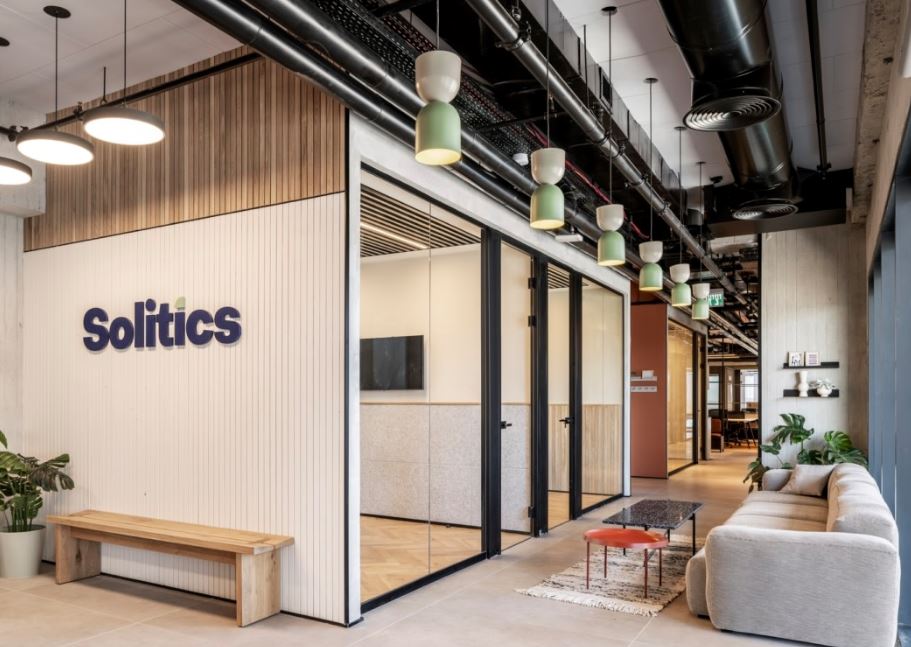
    Solitics, a leader in engagement automation for fintech and trading platforms, is set to debut its latest innovation—Market Pulse—at the iFX EXPO International 2025 in Limassol, Cyprus. This new feature, powered by the company’s proprietary Follow Engine, enables real-time, hyper-personalized user engagement based on live market activity.

    Unlike traditional platforms that send delayed or generic alerts, Market Pulse delivers instant, tailored messages to users based on the assets they follow, hold, or monitor. For example, a user tracking Bitcoin might receive a push notification when BTC spikes: “Bitcoin is moving. Time to act?” Similarly, someone holding Amazon stock could get an in-app alert when the price dips: “Amazon dropped—consider your next move.”

    This level of automation allows brokers to re-engage users at the exact moment market events occur, without the need for manual segmentation or campaign setup. The Follow Engine dynamically matches users with relevant market triggers and delivers content through the most effective channel—whether that’s email, push, in-app, or pop-up.

    Solitics will showcase Market Pulse at Booth 74 in Hall 1 of the City of Dreams Mediterranean venue on June 18–19. The company aims to demonstrate how this tool can help brokers boost engagement, conversion, and retention—at scale and with minimal operational effort.

    Solitics is a customer engagement and data analytics platform founded in 2013 and headquartered in Tel Aviv, Israel. It specializes in helping B2C companies—especially in fintech, banking, iGaming, and brokerage—deliver real-time, personalized customer experiences without the need for complex data infrastructure.

    At its core, Solitics connects disparate data sources and turns them into actionable insights. Its platform enables businesses to automate hyper-personalized messaging across channels like email, push notifications, in-app messages, and more. This is all powered by their proprietary data engine, which processes over a billion customer engagements and events daily.

    The company emphasizes a customer-centric approach and has earned multiple industry awards for its ease of use and business impact. It’s privately held, with a relatively small team of around 29 employees, and recently expanded into the UK with a registered office in London.