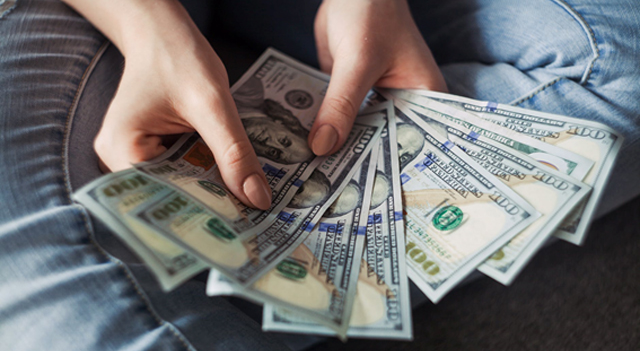
The U.S. dollar saw a slight uptick on Wednesday but remained close to its lowest levels in several years, as investors weighed dovish signals from Federal Reserve Chair Jerome Powell alongside the recent approval of President Donald Trump’s expansive fiscal package in the Senate.
As of 04:15 ET (08:15 GMT), the Dollar Index — which measures the greenback against a basket of six major currencies — inched up 0.1% to 95.512, just above its lowest point since February 2022.
Fiscal Bill and Fed Independence Under Scrutiny
The Senate, controlled by Republicans, narrowly passed a sweeping tax and spending bill overnight, with Vice President JD Vance casting the deciding vote. This legislation, projected to add roughly $3.3 trillion to the national debt, now returns to the House of Representatives for further deliberation before it can be signed into law.
Adding to the dollar’s pressure has been President Trump’s ongoing public criticism of Powell, shining a spotlight on the Federal Reserve’s independence.
At a recent central banking forum in Sintra, Portugal, Powell maintained a cautious stance, emphasizing a data-driven approach to monetary policy that will keep the dollar highly reactive to upcoming employment and inflation reports. Analysts at ING noted that Powell “did not dismiss the possibility of a rate cut in July,” suggesting that a disappointing jobs report could prompt markets to price in easing as early as this month.
Ahead of the official U.S. jobs figures due Thursday, market participants are also watching the ADP National Employment Report scheduled for release later Wednesday, which economists forecast will show private payrolls rising to 99,000 in June, an increase from 37,000 in May.
Recent data highlighted a mixed labor market, with job openings unexpectedly rising in May but hiring activity showing signs of slowing, hinting at a potential cooling of an otherwise resilient employment sector.
Euro Strength and Central Bank Outlook
In Europe, the euro edged down 0.2% against the dollar to 1.1778, just below its strongest level since September 2021. The euro has posted its best first-half performance ever, according to London Stock Exchange Group data.
European Central Bank President Christine Lagarde attributed the euro’s gains not only to market trends but also to the underlying strength of the eurozone economy. Speaking at the ECB’s Central Banking Conference, she stated, “It reflects both the market’s assessment and the robustness of our economy.”
After implementing its eighth rate cut within a year last month, the ECB indicated it is likely to hold steady at its next meeting while evaluating incoming economic data. ING analysts remarked, “The ECB shifted to a more hawkish tone in June and appears willing to wait before adjusting policy further.”
The EUR/USD exchange rate remains largely influenced by the dollar’s trajectory, with markets eager to buy on dips, as evidenced by a quick rebound following stronger U.S. economic data. ING also suggested that a move toward 1.20 could occur if the U.S. payrolls report disappoints significantly.
Sterling and Political Uncertainty
The British pound slipped 0.3% to 1.3709, retreating from Tuesday’s peak near 1.3787 — a level not seen since October 2021. Sterling’s weakness reflects ongoing political challenges faced by the Labour government, which recently made major concessions to secure passage of its welfare legislation in Parliament.
According to ING, “The UK government abandoned a planned £5 billion cut to benefits after a revolt by Labour backbenchers. This development raises questions about the stability of PM Starmer’s leadership and increases the likelihood of tax hikes this autumn.”
Asian Currencies and Trade Talks
In Asian markets, the dollar gained 0.3% against the Japanese yen to 143.83 as focus remained on trade negotiations between Washington and Tokyo, which President Trump recently described as tenuous.
Meanwhile, the USD/CNY pair rose slightly to 7.1672, with the Chinese yuan weakening marginally as the dollar steadied near three-year lows.
Leave a Reply