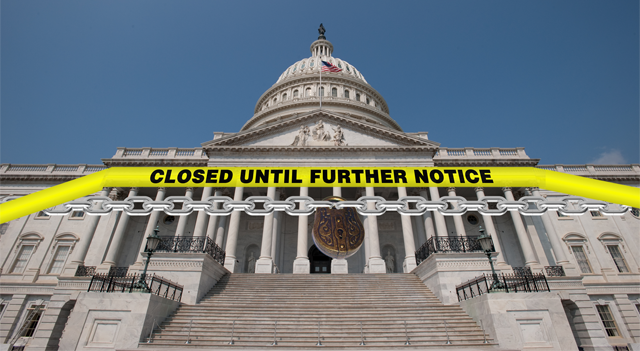
Once again, Democrats and Republicans failed to reach a funding agreement, and on October 1, the U.S. entered its fourth government shutdown under Donald Trump. Six days have passed, and negotiations are still at a standstill. Even so, the markets continue to behave as if nothing had happened. Why?
First, although federal spending equals to nearly a quarter of gross domestic product, at 23% in 2024, only discretionary spending, such as national parks and museums run by the federal government, stops during a shutdown. Mandatory spending, such as Medicare, continues automatically under existing legislation.
The direct impact is also relatively small in economic terms. Goldman Sachs estimated in 2023 that federal employee salaries, typically most affected during shutdowns, account for only about 2% of GDP. Also, about 65% of federal employees continue to report to work because their positions are considered essential.
As of now, it is estimated that the economy could lose around $15 billion per week as a result. However, that is pocket change compared to a GDP of over $30 trillion. Hence, the stock market’s muted reaction: the initial drop in S&P 500 futures quickly recovered, as is usually the case during previous shutdowns.
On the other hand, if the shutdown continues, it could begin to affect the labor market, but it could also push the Federal Reserve toward a more dovish stance. In fact, according to the CME FedWatch tool, the odds of another 25 basis point rate cut at the October meeting have already risen to 95%.
Gold could also benefit from the partial shutdown of the US government. Historically, the dollar tends to weaken slightly after the start of a shutdown, and interruptions in the release of key economic data only increase uncertainty, an environment in which defensive assets such as gold tend to thrive.
This content is for informational purposes only and does not constitute financial, investment, or other professional advice. It should not be considered a recommendation to buy or sell any securities or financial instruments. All investments involve risk, including the potential loss of principal. Past performance is not indicative of future results. You should conduct your own research and consult with a qualified financial advisor before making any investment decisions.
Leave a Reply