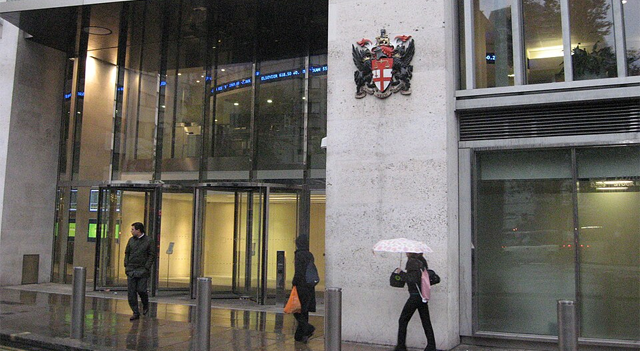
European equities traded mostly in the red on Wednesday as investors reacted to renewed geopolitical tensions surrounding the war in Ukraine, while softer-than-expected inflation data offered some support to the U.K. market.
By 07:05 GMT, Germany’s DAX slipped 0.2%, France’s CAC 40 lost 0.7%, while the U.K.’s FTSE 100 advanced 0.5%, outperforming its continental peers.
Geopolitical tensions dampen sentiment
Investor mood was hit after the White House announced that the planned summit between U.S. President Donald Trump and Russian President Vladimir Putin had been indefinitely postponed. Moscow rejected calls for an immediate ceasefire, casting doubt on any near-term peace deal in Ukraine.
Trump, who last week spoke with Putin by phone and met Ukrainian President Volodymyr Zelenskyy, had hoped a follow-up meeting after August’s unsuccessful Alaska summit would help move negotiations forward. Instead, markets now view the odds of a breakthrough as slim, weighing on global risk appetite.
Corporate earnings in focus
Investors also digested a wave of corporate results as earnings season gathers pace.
- UniCredit (BIT:UCG) reaffirmed its full-year and medium-term targets after posting third-quarter results that exceeded expectations, keeping the bank on track for a record year.
- Barclays (LSE:BARC) raised its full-year guidance and unveiled a £500 million share buyback, even as pretax profit fell 7% year-on-year to £2.1 billion.
- Hermès International S.A. (EU:RMS) reported a 9.6% rise in Q3 sales, highlighting a “slight improvement” in China as wealthy consumers continued to snap up its luxury handbags.
- Heineken N.V. (EU:HEIA) warned that 2025 beer volumes are expected to decline amid worsening macroeconomic headwinds, marking a second downward revision this year.
- Reckitt Benckiser Group (LSE:RKT) beat Q3 sales forecasts and reaffirmed its outlook, supported by strong emerging market demand and recovery in key developed regions.
U.K. inflation steady
Fresh economic data released earlier showed U.K. inflation holding at 3.8% in September, below expectations for a rise to 4.0%. This provides some breathing room for the Bank of England, which kept its benchmark rate unchanged at 4% last month — the lowest level in more than two years after starting 2025 at 4.75%.
Oil climbs on summit cancellation
Crude prices pushed higher after the cancellation of the U.S.-Russia summit raised concerns about longer-lasting disruptions to global energy supply.
Brent futures climbed 1.7% to $62.34 a barrel, while U.S. West Texas Intermediate rose 1.8% to $58.24.
The prolonged conflict is fueling fears of further supply risks, especially as Kyiv steps up strikes on Russian energy infrastructure. Oil prices were also supported by U.S. inventory data showing a drawdown and an announcement by the United States Department of Energy that it plans to buy one million barrels to replenish the Strategic Petroleum Reserve.
Leave a Reply