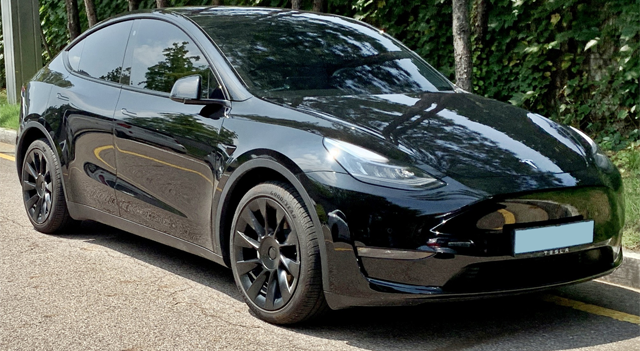
Tesla, Inc.’s (NASDAQ:TSLA) grip on the European EV market weakened further in September as sales fell by double digits, while Chinese competitor BYD Company Limited posted explosive growth, capturing a larger share of the region’s fast-growing electric vehicle segment.
Figures released by the European Automobile Manufacturers’ Association show that Tesla registrations in the EU, EFTA and the UK dropped 10.5% year-on-year to 39,837 units. The automaker’s market share declined to 3.2% from 4.0% a year earlier. That said, September sales rebounded sharply from August’s 14,831 units, reflecting a seasonal pickup in demand.
BYD (USOTC:BYDDY), in contrast, saw its registrations soar 398% compared with last year to reach 24,963 vehicles. Its market share climbed to 2% from just 0.4% previously. The strong growth was partly due to BYD’s limited European footprint last year, but also highlights its accelerated push into the region’s EV market. The company’s monthly sales also rose significantly from August’s 11,455 units.
Overall, new car registrations in Europe increased 10.7% year-on-year to 1.24 million units, supported by rising adoption of electric and hybrid vehicles. Both petrol and diesel models saw continued declines.
Hybrid vehicles led with a 34.7% market share, followed by petrol at 27.7%, while battery electric vehicles — Tesla’s primary focus — held 16.1%.
Although Tesla’s year-on-year decline has slowed, the company faces intensifying competition. Local European manufacturers are expanding their EV portfolios, and BYD continues to strengthen its presence with lower-priced models. Tesla’s brand perception in the region also remains fragile, weighed down by growing public criticism of CEO Elon Musk.
Tesla posted record deliveries globally in the third quarter as buyers rushed to take advantage of U.S. tax incentives before they expired. Yet, profitability missed expectations, pressured by shrinking margins and heavy investments in artificial intelligence and robotics.
BYD, which has outperformed Tesla in several months of 2025, continues its aggressive international expansion strategy. Both companies are also locked in an ongoing price war in China, which has squeezed their profit margins in recent quarters.
Leave a Reply