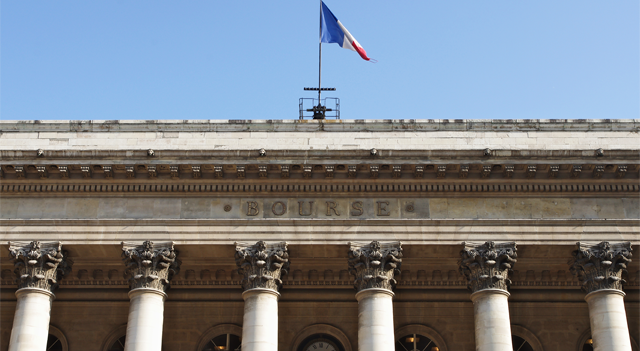
European markets opened slightly weaker on Thursday as investors weighed another wave of corporate earnings and awaited a closely watched monetary policy decision from the Bank of England.
At 08:05 GMT, Germany’s DAX slipped 0.2%, France’s CAC 40 fell 0.3%, and the UK’s FTSE 100 was down 0.1%.
Earnings Remain in Focus
Confidence has cautiously returned to global equity markets following a subdued start to the week, helped by stronger-than-expected U.S. economic data that eased concerns about stretched valuations.
In Europe, sentiment has been supported by a perception that the corporate outlook is improving, with many companies delivering results that have defied investors’ worst fears. Still, with the region’s major indices hovering near record highs, traders continue to take profits amid a heavy earnings calendar.
Commerzbank (TG:CBK) announced a share buyback of up to €1 billion after reporting its highest-ever nine-month operating profit, reflecting strong momentum across its core businesses.
BT Group (LSE:BT.A) posted a 3% decline in second-quarter revenue, with its Openreach division—responsible for the UK’s fixed-line network—losing 242,000 broadband customers during the quarter, a sharper drop than the 205,000 expected. The company attributed the losses to “stiff competition and a weaker broadband market.”
AstraZeneca (LSE:AZN) reported stronger-than-anticipated third-quarter earnings, driven by solid growth in its oncology, cardiovascular, and renal treatments, while maintaining its full-year guidance unchanged.
Volvo Car (BIT:1VOLVB) said it aims for a long-term operating margin above 8% as part of a strategic overhaul, expanding cooperation with majority shareholder Geely to reduce costs and strengthen cash generation.
Skanska (TG:SKNB) posted higher third-quarter profits despite significant property impairments in the U.S., as its core construction operations delivered stronger-than-expected margins.
Bank of England Policy Decision Ahead
Attention now turns to the Bank of England, which is set to announce its latest interest rate decision later in the session. Economists broadly expect the central bank to keep rates unchanged at 4.0%, as the UK continues to post the highest inflation rate among G7 economies.
However, the decision is not seen as guaranteed. Recent signs of easing inflation and expectations that Chancellor Rachel Reeves will raise taxes in the upcoming budget have created additional uncertainty. Earlier this week, Reeves acknowledged that she would have to make “hard choices” to safeguard public services while reducing national debt—comments seen as paving the way for fiscal tightening.
Elsewhere, German industrial production rose 1.3% in September, missing forecasts for a 3% increase and highlighting continued weakness in Europe’s largest economy.
Oil Prices Steady After Recent Declines
Crude oil prices stabilized Thursday following steep losses, as fears of oversupply and softer demand continued to weigh on sentiment. Brent futures were up 0.3% at $63.68 per barrel, while U.S. West Texas Intermediate gained 0.3% to $59.80.
Both benchmarks fell about 1% on Wednesday and posted their third consecutive monthly decline in October. Market concerns persist over weaker U.S. fuel demand amid a prolonged government shutdown and expectations of a supply glut next year. According to the U.S. Energy Information Administration, U.S. crude inventories rose by 5.2 million barrels last week to 421.2 million, far exceeding expectations for an increase of just 603,000 barrels.
Leave a Reply