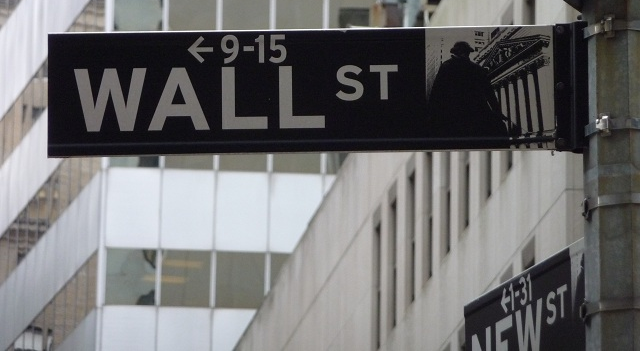
U.S. stock futures edged lower on Thursday as investors assessed a mix of corporate updates and policy developments, including skepticism from the Supreme Court over presidential tariff powers and an upcoming shareholder vote on Tesla (NASDAQ:TSLA) CEO Elon Musk’s massive pay package.
Futures Dip Slightly
After a rebound in the previous session, U.S. stock futures traded slightly weaker early Thursday, with investors cautious amid concerns about high valuations. By 02:27 ET, Dow futures slipped 42 points (0.1%), S&P 500 futures were down 7 points (0.1%), and Nasdaq 100 futures lost 47 points (0.2%).
Major U.S. indices rose on Wednesday, led by gains in large-cap technology stocks, which helped calm fears that valuations—especially in the AI-driven tech sector—had become excessive. Optimism was also supported by alternative data pointing to resilient U.S. economic conditions in October, even as the ongoing government shutdown has delayed official reports.
Media reports indicated that lawmakers in Washington could reach an agreement to end the shutdown by the weekend. Should it persist, Transportation Secretary Sean Duffy warned that air travel capacity across 40 major U.S. airports would be cut by 10% starting Friday.
Supreme Court Voices Doubt Over IEEPA Tariffs
Markets also reacted to signs of skepticism from the Supreme Court’s conservative supermajority regarding former President Donald Trump’s use of emergency economic powers to impose broad tariffs.
The justices began hearing arguments on the 1977 International Emergency Economic Powers Act (IEEPA), which Trump had invoked as the legal basis for the duties. Lower courts previously ruled that the president had exceeded his authority.
Debate has centered on whether the court’s 6–3 conservative majority—including three Trump appointees—will uphold or strike down the tariffs. Historically, the court has often sided with expanding executive authority during Trump’s second term.
Chief Justice John Roberts, however, questioned the IEEPA’s application to tariffs, noting that “the tariffs represented a tax on Americans” and adding that “that has always been the core power of Congress.”
Prediction markets saw reduced bets on the tariffs surviving the fall, though analysts at Vital Knowledge warned that overturning the levies could introduce new economic uncertainty. Meanwhile, Trump officials hinted they may use alternative legal tools to sustain the trade war if the measures are struck down.
Qualcomm Warns of Potential Samsung Business Loss
Qualcomm (NASDAQ:QCOM) shares fell more than 3% in after-hours trading after the company warned it may lose part of its business from key customer Samsung Electronics next year.
The disclosure overshadowed quarterly results that beat Wall Street expectations, boosted by demand for premium smartphones. Qualcomm supplies modem chips that power mobile data connectivity in many of these devices.
Samsung, a major buyer of Qualcomm’s chips for its Galaxy S25 models, may reduce its reliance on the company for future phones. Reuters reported that CEO Cristiano Amon said Qualcomm is preparing for a smaller role in Samsung’s next-generation devices.
Elsewhere, chip designer Arm Holdings (NASDAQ:ARM) delivered a stronger-than-expected fiscal third-quarter outlook, supported by rising AI-related spending across the tech sector. Shares of the U.K.-based firm rose in after-hours trading.
Tesla Shareholders to Vote on Musk’s $1 Trillion Pay Package
Tesla shareholders are set to vote Thursday on a record compensation plan for CEO Elon Musk, though not all investors are supportive.
Earlier this week, Norway’s sovereign wealth fund—the world’s largest—announced it would reject the proposed $1 trillion package, citing concerns over its size and structure. Norges Bank Investment Management, which manages $1.9 trillion in assets, said that while it “appreciate[s] the significant value created under Mr. Musk’s visionary role,” it remains “concerned about the total size of the award, dilution, and lack of mitigation of key person risk.”
Tesla’s board warned that a rejection could risk Musk leaving the company, which might put pressure on the stock.
Bank of England Decision Looms
Attention also turns to the Bank of England’s policy announcement later today, where expectations remain divided. Most analysts forecast the central bank will keep its benchmark rate unchanged at 4.0%, although markets still see roughly a one-in-three chance of a 25-basis-point rate cut.
Holding rates steady would mark a pause in the easing cycle that began last year, yet some economists believe a modest reduction could be on the table following weaker-than-expected—but still high—inflation and wage figures.
The BoE has lowered rates every three months since August 2024, though it’s unclear whether this pace will continue. Governor Andrew Bailey cautioned in September that the outlook ahead is “more uncertain.”
Leave a Reply