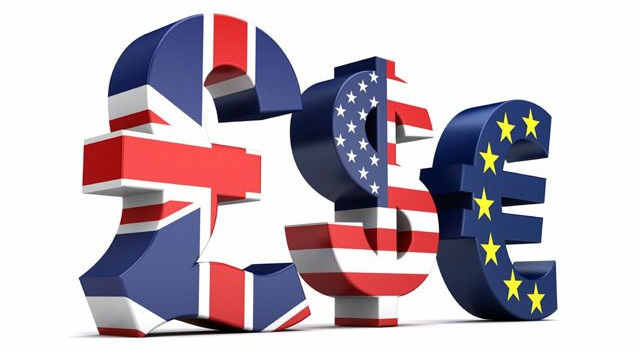
The U.S. dollar edged lower on Wednesday, with markets increasingly convinced that the Federal Reserve will deliver a rate cut next week. The British pound, meanwhile, continued to hold steady after gaining ground following last week’s U.K. budget announcement.
At 04:30 ET (09:30 GMT), the Dollar Index — which measures the currency against six major peers — slipped 0.2% to 99.107, positioning it for a yearly drop exceeding 8%.
Fed expectations dominate as Hassett speculation builds
Momentum toward a December 10 rate cut has strengthened as recent U.S. data has pointed to cooling economic conditions, placing pressure on the greenback.
Fresh indicators are also on deck this week, with the ADP private-sector employment report due later Wednesday and the November PCE inflation reading scheduled for Friday.
According to the CME FedWatch tool, traders now assign an 88% probability to a 25-basis-point cut — a sharp increase from the roughly 63% likelihood priced one month ago.
The dollar has also been weighed down by speculation that White House economic adviser Kevin Hassett could be chosen as the next Federal Reserve Chair. Hassett, who previously served as a senior economist at the central bank, is considered an ally of President Donald Trump and a proponent of quicker interest-rate reductions.
ING analysts noted: “Heading into Thanksgiving, betting markets gave roughly a 35% probability for both Hassett and [Christopher] Waller as the next Fed chair. This week, Hassett’s probability has shot up to 85%.”
They added: “Given perceptions of Hassett as quite dovish, the dollar is a little weaker across the board, the yield curve has seen some modest bullish steepening and risk assets have turned gently bid. This could be the dominant theme until next week’s FOMC meeting.”
Euro advances toward strongest yearly gain since 2017
EUR/USD climbed 0.2% to 1.1643, leaving the currency pair on track for annual gains above 12% — a performance that would mark its best year in eight years.
The European Central Bank is set to meet in mid-December, with markets widely expecting policymakers to keep rates unchanged after lowering them by 200 basis points between January and June.
Survey data released earlier Wednesday showed that eurozone business activity grew at its fastest pace in two and a half years in November, thanks to a strong services sector offsetting continued weakness in manufacturing.
ING commented: “If EUR/USD can nudge through the 1.1655/70 area – perhaps with the help of some softer US data – we could see a decent move through 1.17. We retain a year-end target of 1.18.”
GBP/USD rose 0.3% to 1.3259, trading near its highest level in a month. Analysts at Goldman Sachs said last week’s fiscal update delivered “a set of measures fairly close to market expectations,” avoiding the potential pitfalls that could have undermined the currency.
They added that the announcement “steered clear of the more currency-negative outcomes of either a larger near-term fiscal contraction than anticipated or of delivering too little of an overall consolidation that sees a reintroduction of U.K. fiscal risk premium in the currency.”
Aussie dollar rises on upbeat GDP; yen holds firm
Across Asian markets, USD/JPY eased 0.1% to 155.75, with rising expectations that the Bank of Japan could lift interest rates this month — a stark contrast with the U.S., where an 85% chance of a Fed cut is already priced in.
USD/CNY slipped 0.1% to 7.0654. AUD/USD gained 0.3% to 0.6576, reaching a one-month high after Australia’s third-quarter GDP report showed that annual growth accelerated to 2.1%, the strongest pace in two years, even as quarterly growth fell short of forecasts at 0.4%.
Leave a Reply