U.S. stock futures were slightly positive early Tuesday, with investors preparing for what could become one of the Federal Reserve’s most debated decisions in recent years. At the same time, markets were absorbing a major escalation in the takeover battle for Warner Bros Discovery (NASDAQ:WBD), new clarity on Nvidia’s (NASDAQ:NVDA) export permissions, and a modest pullback in Bitcoin (COIN:BTCUSD).
Futures move marginally higher
Equity futures hovered just above unchanged as traders positioned themselves ahead of Wednesday’s Fed announcement.
As of 02:55 ET, Dow futures were up 26 points (0.1%), S&P 500 futures added 8 points (0.1%), and Nasdaq 100 futures gained 26 points (0.1%).
Monday’s session ended in the red across the major U.S. indices, weighed down by rising Treasury yields. The benchmark 10-year yield climbed further after a strong earthquake struck near Japan, adding to volatility.
Tech earnings also loom large this week, with Oracle (NYSE:ORCL) and Broadcom (NASDAQ:AVGO) set to report as investors digest concerns around heavy, often debt-funded AI investment.
Among individual movers, Confluent (NASDAQ:CFLT) surged after IBM (NYSE:IBM) announced plans to acquire the company, while Tesla (NASDAQ:TSLA) slipped 3% following a downbeat forecast from Morgan Stanley.
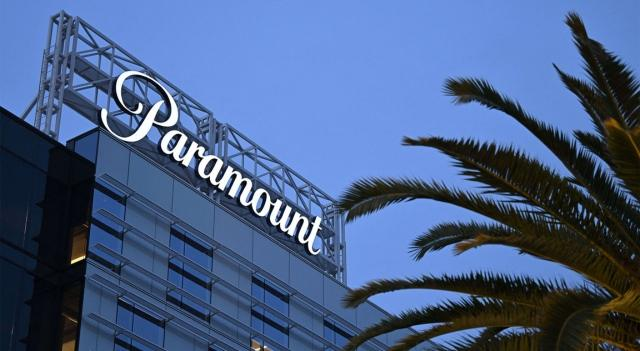
Paramount drops hostile $108.4B bid for Warner Bros Discovery
The effort to acquire Warner Bros Discovery has intensified dramatically.
Just days after reports suggested Netflix (NASDAQ:NFLX) had secured a $72 billion equity deal for its TV, film, and streaming operations, Paramount Skydance revealed a hostile bid valued at $108.4 billion. The offer represents a 139% premium to WBD’s pre-negotiation valuation and seeks to acquire the entire company, including its cable networks.
Warner’s board said Monday it will evaluate Paramount’s proposal but reaffirmed its backing for the Netflix agreement, advising the company not to act on the rival offer at this stage.
Trump administration clears Nvidia to ship H200 chips to China
President Donald Trump said the U.S. will now allow Nvidia to export its H200 processors to China and collect a 25% fee on those sales.
The decision marks a softening of earlier export curbs that limited Nvidia to selling only the lower-tier H20 chip into China due to U.S. national-security concerns. The H200 is thought to be roughly six times more powerful than the H20, according to Reuters citing the Institute for Progress.
However, Beijing’s crackdown on domestic firms using U.S. technology could limit the commercial benefits of the policy shift.
Nvidia shares rose in after-hours trading, extending Monday’s 3% advance.
Fed begins two-day meeting with rate cut expected
Investor focus has now shifted firmly to the Fed’s latest two-day policy meeting, which is widely expected to conclude with a 25-basis-point rate cut.
The odds of such a move have strengthened following soft economic data showing job-market stress, a modest uptick in consumer spending, and persistent inflation. FedWatch currently places the probability near 89%.
Still, policymakers could choose to hold steady, especially as some officials have questioned whether delivering a third cut since September is appropriate given the lack of fresh economic data during the record-breaking government shutdown.
Analysts say this could become one of the most contentious Fed decisions in years.
Bitcoin softens ahead of Fed decision
Bitcoin edged lower as traders avoided making bold bets before Wednesday’s announcement.
Lower interest rates typically weaken the U.S. dollar and trim yields on cash and bonds, a dynamic that can make non-yielding assets such as Bitcoin more appealing. But 2025 has been marked by sharp price swings tied to debates over monetary policy, tariffs, and artificial intelligence.
These moves have reinforced the view that Bitcoin’s correlation with equity-market risk has strengthened significantly.
Leave a Reply