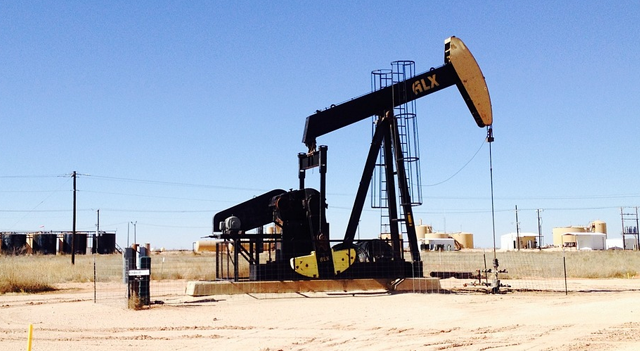
Oil prices were broadly steady on Monday, consolidating recent advances as investors balanced rising geopolitical tensions with ongoing concerns over a potential supply surplus, while awaiting guidance from the Federal Reserve later in the week.
At 22:18 ET (03:18 GMT), Brent crude futures for March delivery dipped 0.1% to $65.84 a barrel, while U.S. West Texas Intermediate crude also edged 0.1% lower to $61.03 a barrel.
Both contracts posted gains of more than 2% on Friday, driven by a sharp increase in geopolitical risk premiums.
Geopolitical backdrop supports prices
Markets remained sensitive after the United States signaled a more assertive military posture. President Donald Trump said an “armada” of U.S. naval assets — including an aircraft carrier strike group — was heading toward the Middle East amid escalating tensions with Iran. Any flare-up involving Tehran has heightened concerns about potential disruptions to oil flows from a key producing region.
Crude markets have also been influenced by Trump’s recent geopolitical maneuvering around Greenland, which has added to volatility across broader financial markets.
On the supply side, some of the downward pressure eased after Kazakhstan’s main export route returned to full capacity. The Caspian Pipeline Consortium confirmed that operations at its Black Sea terminal had resumed normally following repairs to a mooring point, allowing exports to continue at standard levels.
Oversupply risks linger as Fed meeting approaches
Despite near-term support from geopolitical risks, investors remain cautious about the medium-term balance between supply and demand. Concerns persist that oil markets could face a surplus later in the year if output growth outpaces consumption, particularly with non-OPEC production holding up well.
Attention now turns to the Federal Reserve’s policy meeting scheduled for this week, with markets largely expecting U.S. interest rates to remain unchanged. Traders will closely analyze the Fed’s guidance for clues on the timing of potential rate cuts later in the year, as interest rate expectations can influence oil demand through their impact on economic activity and the U.S. dollar.
Leave a Reply