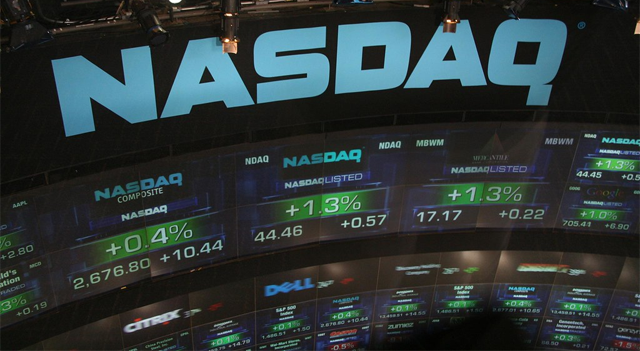
U.S. stock futures moved higher early Monday as investors prepared for a week packed with developments that could influence global markets. The ongoing conflict involving Iran continues to push oil prices higher and raise concerns about inflation. Meanwhile, a major developer conference hosted by Nvidia (NASDAQ:NVDA) could provide fresh signals about the direction of the artificial intelligence industry, while the Federal Reserve will headline a series of global central bank policy announcements in the days ahead.
Futures edge higher
Futures tied to the main U.S. stock indexes were up in early trading Monday as investors assessed the continued U.S.-Israeli military campaign against Iran, now entering its third week.
At 04:19 ET, Dow futures had risen 141 points, or 0.3%. S&P 500 futures advanced 33 points, or 0.5%, while Nasdaq 100 futures gained 131 points, also around 0.5%.
Wall Street’s main indexes finished last week lower as oil prices surged amid fears of disruptions to global supply. Iran has effectively closed the Strait of Hormuz, a strategic shipping route south of the country through which roughly one-fifth of the world’s oil tanker traffic normally passes. The closure has constrained energy flows and heightened risks to the global economy.
Although the United States has tried to calm supply concerns—including by easing some sanctions on Russian oil—crude prices have continued to climb. Higher oil costs have also pushed gasoline prices higher, an important factor in inflation data and a key issue for U.S. voters ahead of the November 2026 midterm elections.
Analysts at ING noted in a report that U.S. strikes carried out over the weekend on Kharg Island—through which most of Iran’s oil exports move—have heightened concerns about supply risks. However, they said the island’s energy facilities appear to have largely escaped damage.
Trump urges allies to help reopen Strait of Hormuz
U.S. President Donald Trump has meanwhile called on seven countries to work with Washington to secure the Strait of Hormuz, a critical energy corridor responsible for transporting around one-fifth of the world’s oil supply.
Speaking with reporters aboard Air Force One on Sunday, Trump did not indicate whether any of the nations had agreed to assist.
In comments to the Financial Times, Trump also suggested that NATO member states should contribute to reopening the route, warning that “it will be a very bad for the future of NATO” if they fail to respond or decline to support Washington.
Trump also singled out China, saying he could cancel a planned summit with Chinese President Xi Jinping in April if Beijing does not use its influence to help restore shipping through the strait. According to The New York Times, oil tankers heading toward China have been permitted to pass through the waterway, while others have reportedly come under attack.
Oil prices rise amid supply concerns
Oil prices advanced Monday in volatile trading as investors remained alert to potential disruptions to Middle East supply. Prices had briefly dipped after Trump urged several countries—including China—to help reopen the Strait of Hormuz.
U.S. officials continued to express confidence that the conflict with Iran would end quickly, while Tehran maintained that it remains capable of defending itself.
Separately, the International Energy Agency said over the weekend it plans to release 411.9 million barrels of crude from emergency reserves in an effort to offset possible supply shortages.
Brent crude futures, the global benchmark, climbed 2.7% to $105.90 per barrel, while U.S. West Texas Intermediate futures gained 2.0% to $98.75 per barrel at 04:06 ET. Earlier in the session, oil had risen as much as 3% before trimming gains and briefly trading flat.
Nvidia developer conference draws investor attention
Nvidia CEO Jensen Huang will take center stage at the company’s annual developer conference beginning Monday, as investors look for updates on how the chipmaker plans to maintain its leadership in the rapidly expanding artificial intelligence sector.
Huang’s presentation comes as Nvidia faces growing competition in the market for AI-focused semiconductors. Rivals such as Advanced Micro Devices and Intel are increasing their presence, while major technology firms—including Alphabet’s Google—are developing their own processors tailored to artificial intelligence applications.
The increasing importance of “inference” in AI—where systems perform tasks on behalf of users—also presents a challenge for Nvidia. These workloads often rely on different types of chips than those Nvidia has traditionally produced. Some of Nvidia’s largest customers, including OpenAI and Meta Platforms, have also indicated plans to design their own AI processors.
In December, Nvidia spent $17 billion to acquire Groq, a startup specializing in fast and cost-efficient inference computing. Last month, Huang said he would show how Groq’s technology could be integrated into Nvidia’s CUDA platform.
“[T]he big deliverable expected at this event is the unveiling by Nvidia of a new inference-focused chip that will contain IP obtained in the recent Groq acquihire deal,” analysts at Vital Knowledge said in a research note.
Fed policy decision in focus
Beyond developments in the technology sector, investors are also preparing for several central bank policy decisions this week.
The Federal Reserve will be the main highlight, with policymakers widely expected to leave interest rates unchanged when their two-day meeting concludes on Wednesday.
Fed Chair Jerome Powell—who is scheduled to step down in May—is also expected to use one of his final press conferences following a policy announcement to comment on the condition of the U.S. labor market and the outlook for inflation.
Recent employment data came in significantly weaker than expected, underscoring potential fragility in the job market. At the same time, inflation pressures could intensify due to rising energy prices linked to the conflict involving Iran.
These developments leave the Fed facing a difficult policy balancing act: lowering interest rates could help support hiring but risk fueling inflation, while raising rates could restrain price growth but potentially weaken the labor market.
Investors will be watching closely for signals about how the central bank intends to manage these competing risks in the months ahead.
Leave a Reply