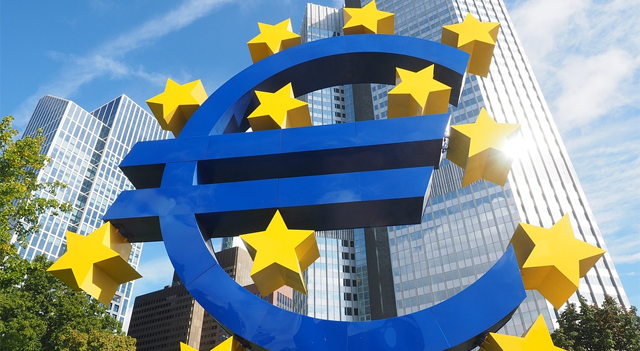
Economic growth across the eurozone slowed markedly in March as conflict in the Middle East pushed input costs to their highest levels in more than three years, according to preliminary figures released on Tuesday.
The S&P Global Flash Eurozone Composite PMI Output Index dropped to 50.5 in March from 51.9 in February, its lowest reading in ten months. Although the index remained above the 50 threshold that separates expansion from contraction—marking the fifteenth consecutive month of growth—the data indicated that overall economic activity expanded only marginally.
The slowdown was mainly driven by weaker performance in the services sector. The Services Business Activity Index fell to 50.1 from 51.9, also reaching a ten-month low. Manufacturing output eased slightly to 51.7 from 51.9, a two-month low, though the broader Manufacturing PMI rose to 51.4 from 50.8, its highest level in 45 months.
New orders fell for the first time in eight months, with the decline concentrated in services, while manufacturing orders continued to increase. New export orders also edged lower, extending a decline that has now lasted forty-nine consecutive months.
Cost pressures intensified across the economy. Input prices rose at the fastest rate since February 2023, with manufacturing experiencing a sharper increase than services. Companies passed some of these higher costs on to customers, raising selling prices at the quickest pace since February 2024, although the increase was less pronounced than the rise in input costs.
The conflict in the Middle East also disrupted supply chains. Manufacturers reported the most significant delays in supplier delivery times since August 2022. Purchasing activity in the manufacturing sector expanded for the first time in 44 months, but inventories of both raw materials and finished goods continued to decline.
Employment fell for the third straight month, driven mainly by job cuts in manufacturing. Workforce numbers in that sector have been shrinking every month since June 2023. In contrast, employment in services increased slightly, though the pace of hiring was the slowest since September.
Among the eurozone’s largest economies, Germany continued to record output growth, supported by the strongest expansion in manufacturing production in more than four years. France, however, saw output decline again, while the rest of the eurozone registered only modest growth—the weakest pace in 27 months.
Business confidence deteriorated sharply, falling to its lowest level in nearly a year. The decline in sentiment was the steepest since the early stages of Russia’s invasion of Ukraine in 2022.
Chris Williamson, Chief Business Economist at S&P Global Market Intelligence, said the survey data are indicative of eurozone GDP growth slowing to a quarterly rate of just below 0.1% in March. The survey’s price gauge is indicative of consumer price inflation accelerating close to 3%.
The survey data were collected between March 12 and March 20.
Leave a Reply