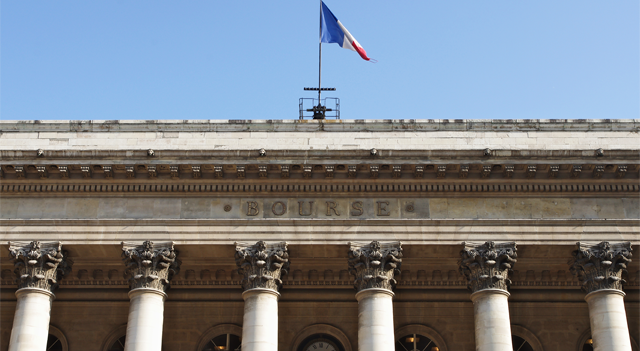
European equity markets began Monday with modest gains as investors monitored another rise in oil prices above the $100-per-barrel mark while the conflict involving Iran moved into its third week.
At 08:04 GMT, the pan-European Stoxx 600 was up 0.1%. Germany’s DAX also rose 0.1%, France’s CAC 40 gained 0.1%, and the UK’s FTSE 100 advanced 0.4%.
The joint military campaign by the United States and Israel against Iran continues to spread instability across the Middle East. Saudi Arabia reported intercepting more than 60 drones flying over its territory, although the country’s defense ministry did not specify where the drones originated or what their intended targets were.
At the same time, U.S. President Donald Trump has appealed to seven countries to support Washington in safeguarding the Strait of Hormuz, a crucial maritime route that carries roughly one-fifth of the world’s oil supply. However, Trump did not confirm whether any governments have agreed to participate.
Tehran has effectively halted tanker traffic through the strait, which is bordered by Iran on three sides. The disruption has pushed energy prices sharply higher and increased concerns about the outlook for the global economy.
For Europe in particular, the disruption risks reigniting inflation pressures in a region that only recently appeared to have brought price growth largely under control. Europe imports a large share of its energy through the strait, meaning the stoppage could further weigh on an economy that has already shown signs of stagnation.
The surge in oil and gas prices has also pushed borrowing costs higher across the continent, reflecting fears that the European Central Bank could once again face pressure to consider tightening monetary policy. The Stoxx 600 has already come under strain, falling more than 5% from the peak reached before the conflict began.
The ECB is set to announce its latest policy decision later this week, alongside several other major central banks including the Federal Reserve. Despite the escalation in the Middle East, economists surveyed by Reuters expect the ECB to keep interest rates unchanged for the remainder of 2026.
“Central banks are not expected to make major changes to monetary policy this month, but watch closely for how the Fed and others assess the inflation outlook after the surge in oil prices,” Laurence Booth, Global Head of Markets at CMC Markets, told Investing.com.
Oil prices rise
Oil markets were volatile on Monday as traders remained wary of potential supply disruptions linked to the Middle East crisis.
Prices briefly eased after Trump called on other nations, including China, to assist in reopening shipping lanes through the Strait of Hormuz.
Brent crude futures — the global benchmark — were up 2.7% at $105.90 per barrel, while U.S. West Texas Intermediate crude futures rose 2.0% to $98.75 a barrel by 04:06 ET. Earlier in the session, oil prices had surged by as much as 3% before paring gains and briefly trading flat.
Leave a Reply