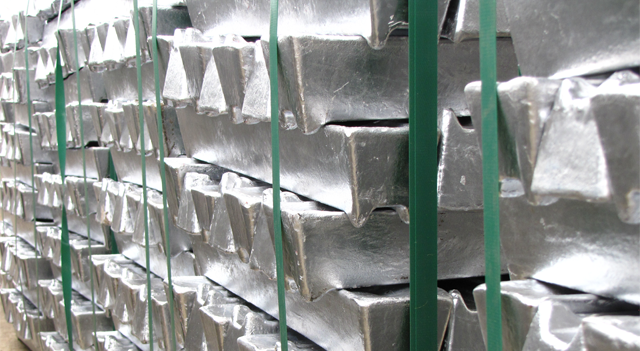
Aluminium prices climbed sharply on Monday as traders grew increasingly concerned about potential supply disruptions after Iranian attacks over the weekend struck two major aluminium producers in the Middle East.
The benchmark three-month aluminium contract on the London Metal Exchange rose 3.85% to $3,423 per metric ton by 0718 GMT. Earlier in the session it reached $3,492, its highest level since March 19 and close to the four-year peak of $3,546.50.
On the Shanghai Futures Exchange, the most-traded aluminium contract settled 3.43% higher at 24,725 yuan ($3,578.82) per ton. During the session it had climbed as much as 3.91% to 24,840 yuan, also marking its highest level since March 19.
Aluminium Bahrain, which operates the world’s largest aluminium smelter on a single site, said on Sunday it was evaluating the impact of the Iranian strikes. Emirates Global Aluminium reported that its facility suffered “significant damage”.
Concerns over potential supply disruptions have intensified since the outbreak of the U.S.-Israel conflict with Iran. Producers in the Gulf region—responsible for roughly 9% of global aluminium output—have been unable to transport shipments through the Strait of Hormuz.
Earlier this month Alba began shutting down smelting lines accounting for about 19% of its capacity. Traders said that if the damage to facilities proves severe, additional production cuts may follow and could take time to reverse.
“The latest attacks increase the probability of a prolonged disruption scenario, where supply losses could persist even if geopolitical tensions ease, reinforcing upside risks to prices,” analysts at ING Economics said.
Elsewhere, base metals generally moved higher as U.S. President Donald Trump repeatedly said that Washington and Tehran were holding discussions aimed at ending the conflict, even as additional American troops arrived in the Middle East and Iranian officials warned they would not accept humiliation.
Oil prices also advanced, with Brent crude on track to record a monthly surge of more than 60%.
On the London Metal Exchange, copper was the only metal to fall, slipping 0.02%. Zinc rose 1.44%, lead gained 0.42%, nickel increased 0.75%, and tin climbed 1.19%.
On the Shanghai Futures Exchange, copper edged up 0.06%, zinc advanced 1.23%, lead rose 0.12%, nickel added 0.47%, and tin surged 4.20%.
Leave a Reply