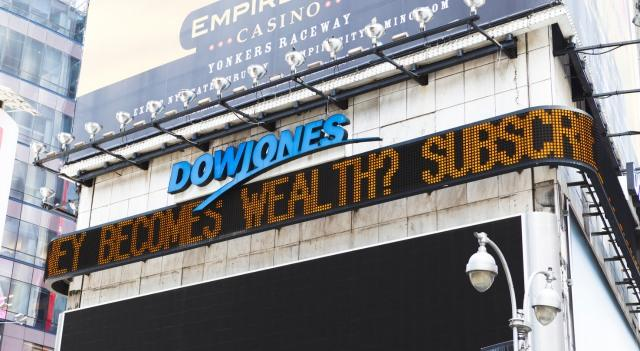
U.S. equity futures traded lower on Tuesday as investors remained cautious over the lack of progress in negotiations between Washington and Tehran, while also awaiting a closely watched U.S. inflation report.
As of 03:28 ET, Dow Jones futures were down 71 points, or 0.1%. Futures tied to the S&P 500 fell 25 points, or 0.3%, while Nasdaq 100 futures declined 193 points, or 0.7%.
Wall Street finished Monday’s session slightly higher, helped largely by continued strength in semiconductor and artificial intelligence-related shares. Investor appetite for AI-linked companies has remained firm despite ongoing geopolitical uncertainty.
Still, analysts at Vital Knowledge argued that broader market conditions appeared less robust beneath the surface.
“[W]e continue to think the price action in chips/components is extremely extended and unsustainable while an Iran deal, to the extent one arrives, is more likely to trigger a sell-the-news response than spur material additional gains (since it’s already assumed that an agreement will be struck),” the analysts wrote in a note.
They also noted that the equal-weight version of the S&P 500 lagged during Monday’s session, while rising government bond yields and higher oil prices added pressure to broader market sentiment.
Iran Negotiations Show Little Sign of Progress
Investor hopes for a near-term breakthrough in U.S.-Iran negotiations weakened further after comments from President Donald Trump suggested talks remained deadlocked.
Speaking to reporters on Monday, Trump said the ceasefire between the two countries was on “massive life support” after dismissing Iran’s latest response to a U.S. peace proposal.
Trump described the Iranian counteroffer as “unacceptable” and later referred to it as “a piece of garbage,” adding that he did not believe it was worth reading in full.
At the same time, concerns about renewed military escalation resurfaced. CNN reported that Trump is seriously considering restarting large-scale combat operations amid frustration over the slow pace of diplomatic discussions.
Some market participants believe Trump’s upcoming trip to China and expected meeting with Chinese President Xi Jinping could potentially help revive negotiations. China remains a major buyer of Iranian crude oil and may play a role in supporting any future peace arrangement.
For now, however, uncertainty surrounding the conflict continues to weigh heavily on the global economic outlook.
Oil Extends Rally Above $105 Per Barrel
Energy prices continued climbing as geopolitical risks remained elevated.
Brent crude futures rose 2.0% to $106.30 per barrel, staying far above pre-conflict levels near $70 earlier this year.
Much of the increase in oil prices has been linked to ongoing disruption in the Strait of Hormuz, the strategically critical shipping route off Iran’s southern coast that normally handles roughly 20% of global oil flows.
The waterway has effectively remained blocked for weeks because of military tensions involving both Iran and the United States, disrupting supply chains and fueling concerns over a broader energy shock.
Trump’s latest remarks reinforced expectations that any resolution could take time, providing further support for crude prices.
Investors Await Key U.S. CPI Report
The surge in oil prices has intensified concerns that inflationary pressures could remain elevated, increasing the likelihood that central banks maintain restrictive monetary policy.
Markets are now focused on Tuesday’s U.S. consumer price index report for further signals on inflation trends.
Economists expect headline CPI for April to rise 3.7% year-on-year, compared with 3.3% in March, largely reflecting higher gasoline prices. On a monthly basis, CPI growth is expected to slow to 0.6% from 0.9%.
Investors will also closely monitor core CPI, which excludes food and energy prices and is widely viewed as the Federal Reserve’s preferred inflation gauge. Core inflation is expected at 2.7% annually and 0.3% monthly, versus 2.6% and 0.2% previously.
The core reading is “ultimately what matters most” for the Federal Reserve, ING strategists said in a note.
“Still, it is probably too early to expect clear evidence of second round effects,” they added.
Sam Altman Faces Growing Republican Scrutiny
Separately, Sam Altman is reportedly facing increasing scrutiny from Republican lawmakers and several Republican state attorneys general ahead of a potential public listing of OpenAI later this year.
According to the Wall Street Journal, the Republican-led House Oversight Committee has launched an investigation into potential conflicts of interest involving Altman’s personal investments and OpenAI’s business relationships.
The committee has reportedly requested documents concerning OpenAI’s governance practices and ties to companies backed by Altman.
The newspaper also said Republican attorneys general from Florida, Montana, Nebraska, Iowa, West Virginia and Louisiana have urged the U.S. Securities and Exchange Commission to review OpenAI’s governance structure before any IPO proceeds.
The scrutiny follows earlier reports that Altman had encouraged OpenAI to support companies in which he held personal stakes, including nuclear fusion startup Helion and aerospace company Stoke Space.
Leave a Reply