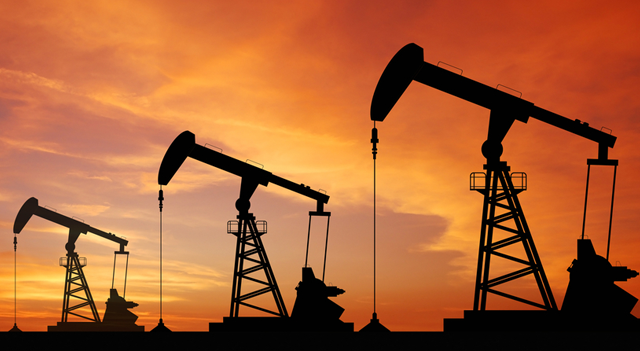
Oil prices moved lower on Wednesday, pulling back after three consecutive sessions of gains as markets weighed uncertainty surrounding the fragile situation in the Middle East and awaited high-level talks between U.S. President Donald Trump and Chinese President Xi Jinping in Beijing.
Brent crude futures fell $1.47, or 1.4%, to $106.30 a barrel by 0630 GMT, while U.S. West Texas Intermediate crude declined $1.41, or 1.4%, to $100.77 per barrel.
Both benchmarks have traded near or above $100 a barrel since the United States and Israel launched military operations against Iran in late February and Tehran effectively closed the Strait of Hormuz.
Supply disruption fears continue to underpin prices
Despite Wednesday’s decline, concerns over energy supply disruptions continued to provide support to the oil market.
“Concerns over supply disruptions and uncertainty surrounding the Middle East are keeping oil prices well supported, even as traders struggle to establish a clear direction,” said Priyanka Sachdeva, senior market analyst at Phillip Nova.
“The market remains highly reactive to every update from the region, meaning sharp swings are likely to persist. Any further escalation or direct threat to supply flows could quickly revive strong upside momentum in both Brent and WTI,” added Sachdeva.
Oil had surged more than 3% on Tuesday after hopes for a lasting ceasefire agreement between the United States and Iran weakened further, reducing expectations that the Strait of Hormuz would reopen in the near future. Around 20% of global oil and liquefied natural gas shipments normally pass through the strategic route.
Trump says China’s help on Iran may not be needed
Trump said Tuesday that he did not expect to require China’s assistance to end the conflict with Iran, even as the likelihood of a long-term peace agreement appeared to diminish and Tehran tightened its control over the Strait of Hormuz.
China remains the largest purchaser of Iranian crude despite sanctions imposed by Washington. Trump is scheduled to meet Xi Jinping in Beijing on Thursday and Friday.
Analysts at Eurasia Group said in a research note: “The length of the disruption and the scale of the supply loss – already more than 1 billion barrels – means oil prices are likely to remain above $80 per barrel for the rest of the year.”
Rising fuel costs increase pressure on the U.S. economy
The conflict involving Iran is increasingly affecting the U.S. economy as elevated crude prices push fuel costs higher for households and businesses. Economists also expect broader knock-on effects to emerge in the coming months.
Inflation figures released in April showed U.S. consumer prices rose sharply for a second straight month, resulting in the strongest annual inflation increase in nearly three years. The data reinforced expectations that the Federal Reserve could keep interest rates elevated for longer.
“The marked increase in inflation across advanced economies has yet to cause real spending to contract, but the widespread decline in consumer sentiment and hiring intentions points to worse to come,” analysts at Capital Economics wrote in a note to clients.
Higher interest rates typically increase borrowing costs, which can slow economic growth and weaken oil demand.
U.S. oil inventories extend decline
Meanwhile, U.S. crude stockpiles declined for a fourth consecutive week last week, while distillate inventories also moved lower, according to market sources citing figures from the American Petroleum Institute.
Leave a Reply