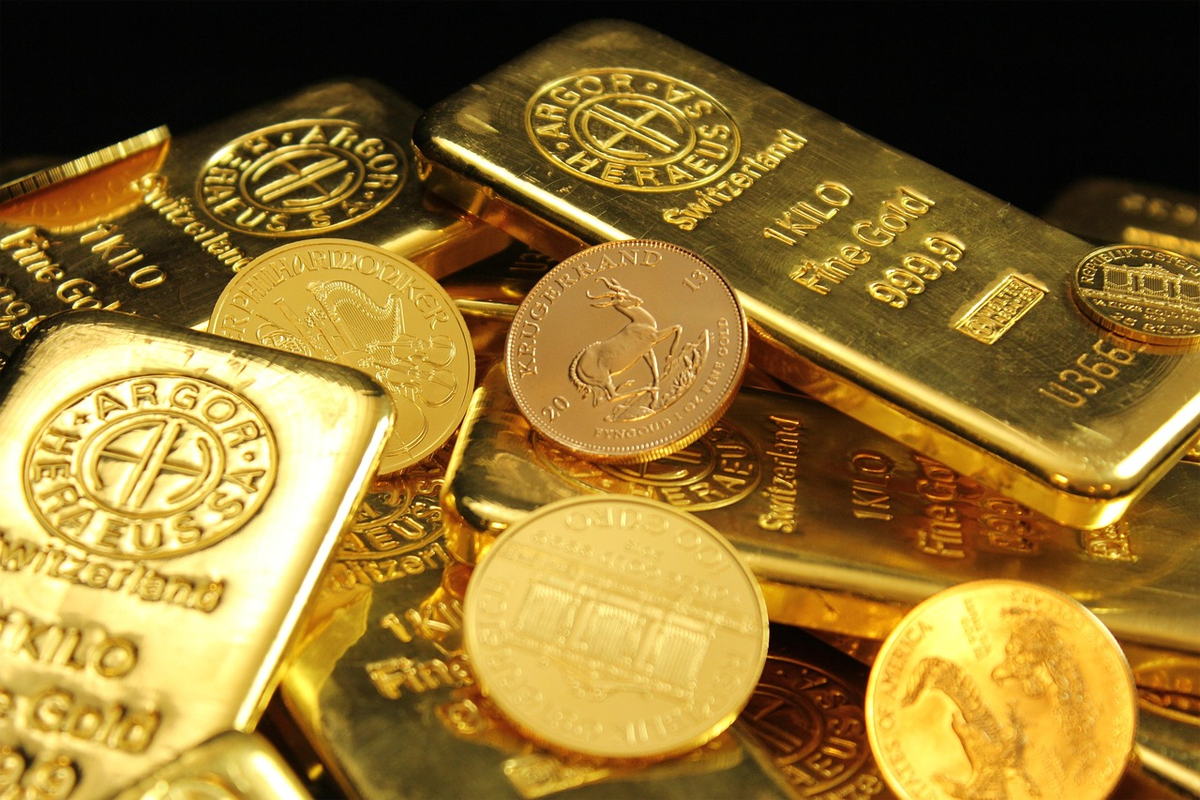
Gold prices moved lower on Monday, falling to an 11-week low as investors responded to stronger-than-expected U.S. economic data that reinforced expectations for higher interest rates, while a sharp rise in oil prices added to concerns over inflation.
Spot gold declined 0.8% to $4,296.08 an ounce by 02:49 ET (06:49 GMT), its weakest level since March 23. August gold futures in the United States also fell, losing 1% to trade at $4,322.60 an ounce.
The latest decline follows a steep sell-off on Friday, when bullion dropped more than 3% after the release of robust U.S. labour market figures prompted traders to reassess the likely path of Federal Reserve policy.
Strong employment figures reduce expectations for rate cuts
Government data released on Friday showed the U.S. economy added 172,000 jobs in May, comfortably surpassing market forecasts. Meanwhile, the unemployment rate remained unchanged at 4.3%.
The stronger-than-anticipated employment report led investors to scale back expectations for interest-rate reductions in 2026, helping drive Treasury yields and the U.S. dollar higher. Both developments tend to weigh on gold because the metal offers no yield.
“Despite the lack of consistent messaging in the labour market data, we now have a rate hike fully priced at the December FOMC meeting,” ING analysts said in a recent note.
The U.S. Dollar Index traded little changed during Asian trading hours on Monday after climbing to its highest level in two months during the previous session.
Rising Middle East tensions push crude prices higher
Geopolitical risks also remained a key focus for markets after Israel reported strikes on military facilities in western and central Iran, as well as a petrochemical site near Mahshahr. The attacks marked one of the most significant strikes against Iranian energy infrastructure since the ceasefire agreed in April.
The developments followed multiple rounds of Iranian missile launches targeting Israel in response to an earlier Israeli operation near Beirut.
Oil prices surged close to 5% as traders reacted to the renewed hostilities. The move intensified concerns that rising energy costs could reignite inflationary pressures around the world and complicate monetary policy decisions.
While gold often benefits from safe-haven demand during periods of geopolitical uncertainty, support from risk-averse investors was outweighed by the impact of a stronger dollar and expectations of tighter U.S. monetary policy.
Precious metals broadly weaker
The weakness extended across the precious metals sector. Silver fell 1.2% to $677.00 per ounce, while platinum lost 0.9% to trade at $1,764.58 per ounce.
Industrial metals were mixed. Benchmark copper futures on the London Metal Exchange gained 0.3% to $13,543.33 a tonne, while U.S. copper futures edged 0.1% lower to $6.28 a pound.
Leave a Reply