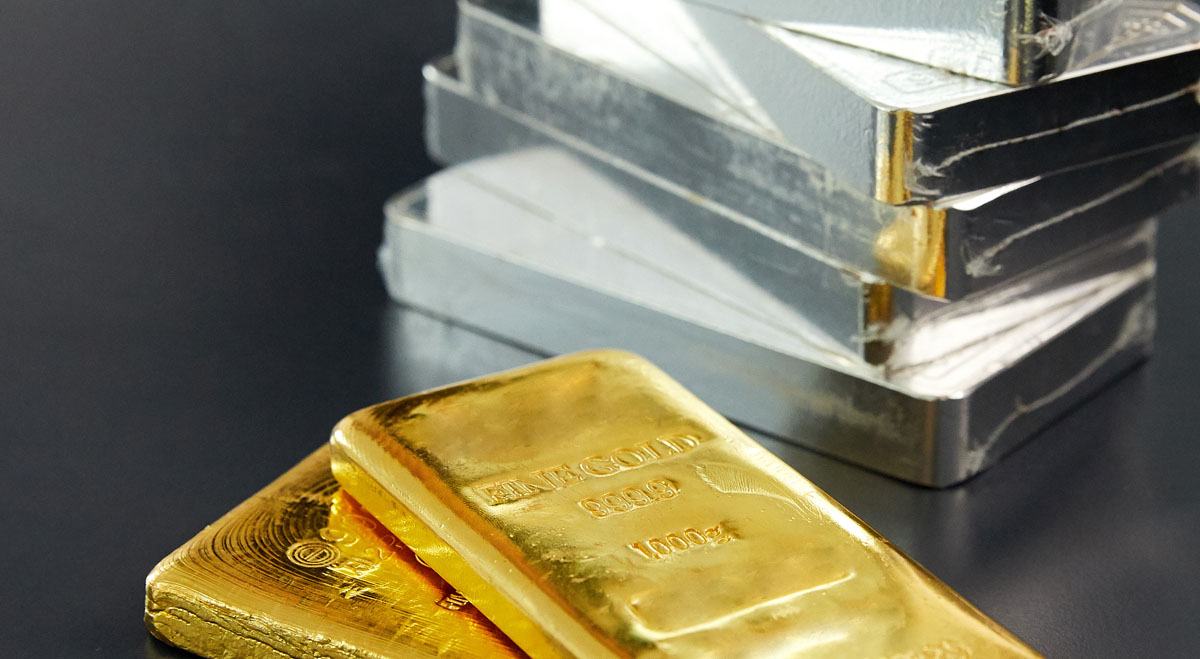
OCBC has revised down its end-2026 forecasts for gold and silver, citing rising real bond yields, a stronger U.S. dollar and weaker investment demand as near-term headwinds. Even so, the bank believes the longer-term fundamentals for precious metals remain intact.
Forecasts revised lower
The bank now expects gold (USD/XAU) to finish 2026 at US$4,360 per ounce, down from its previous estimate of US$5,100, while its silver (USD/XAG) target has been reduced to US$67 per ounce from US$89.50.
OCBC stressed that the revisions reflect short-term macroeconomic challenges rather than a reversal of its bullish long-term outlook.
Higher real rates continue to weigh on precious metals
According to the bank, rising real yields, renewed dollar strength and increasingly hawkish Federal Reserve expectations have significantly reduced investor appetite for non-income-producing assets such as gold.
OCBC forecasts gold will average US$4,180 per ounce by September 2026 before climbing to US$4,820 by September 2027. Silver is expected to rise from US$64 to US$74 per ounce over the same period.
Gold and silver extend recent weakness
Gold prices continued to decline on Tuesday, with spot gold down 0.7% and gold futures falling 1%. Silver lost 1.4%, while platinum declined 1%.
Long-term fundamentals remain intact
OCBC said central bank purchases, geopolitical uncertainty, fiscal risks and demand for portfolio diversification continue to support gold over the medium term.
However, it warned that these structural drivers are currently being overshadowed by elevated real yields and slowing ETF inflows.
The bank compared the current environment with the 2013 “taper tantrum,” when higher real yields led to a significant correction in gold before the Federal Reserve started raising rates.
OCBC also retained a positive long-term view on silver, highlighting structural supply shortages and industrial demand from solar energy, electrification and electronics.
Nevertheless, weaker ETF demand, higher real yields and subdued investor sentiment continue to create short-term downside risks.
The bank said softer U.S. inflation, weaker employment data or a dovish shift by the Federal Reserve could improve the outlook for precious metals, while persistent inflation and stronger economic data could delay any sustained recovery.
Leave a Reply