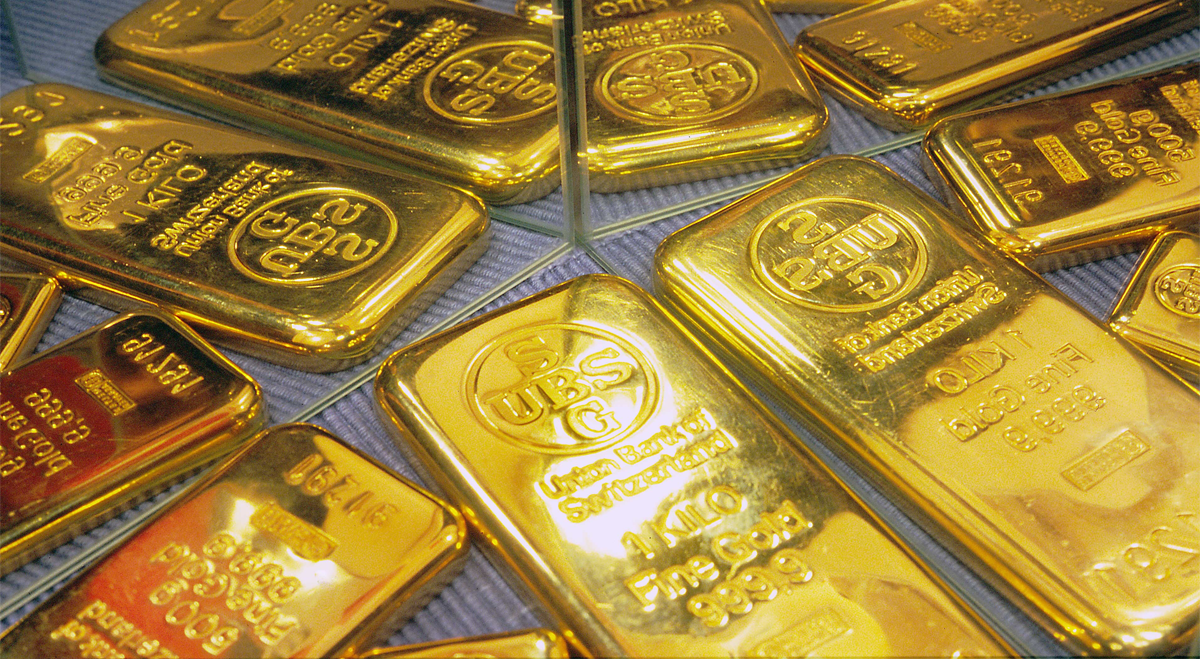
Gold prices posted modest gains on Friday as investors stepped in to buy after the previous session’s heavy losses. Even with the recovery, bullion remained on course for its sharpest weekly drop since early June as geopolitical tensions and inflation concerns continued to favour the U.S. dollar.
At 03:12 ET (07:12 GMT), spot gold (XAU/USD) advanced 0.47% to $3,995.35 an ounce, while Gold Futures rose 0.18% to $3,999.22. Silver (XAG/USD) slipped 0.18% to $55.43 an ounce and platinum (XPT/USD) fell 2% to $1,589.57.
Inflation concerns continue to weigh on gold
Despite Friday’s rebound, gold remained about 3% lower for the week as investors continued shifting towards yield-generating assets and the U.S. dollar.
The latest decline followed renewed U.S. military strikes on Iranian targets after an attack on an oil tanker near Iran’s principal export terminal. The prolonged conflict has kept oil prices elevated, increasing concerns that higher energy costs could slow progress in bringing inflation under control.
Persistent inflation could encourage the Federal Reserve to keep interest rates elevated for longer, supporting Treasury yields while reducing the attractiveness of gold, which does not generate income.
Although recent U.S. inflation reports showed softer consumer and producer prices, investors remain cautious that rising oil prices could reverse the recent improvement.
Federal Reserve officials remain cautious
Federal Reserve policymakers continue to stress that inflation remains above target despite encouraging economic data.
Tony Sycamore, Senior Market Analyst at IG, said the weak reaction following softer U.S. CPI and PPI data was “not a particularly encouraging sign” for gold.
He added: “The overnight decline now brings a stern test to the view that gold has formed a base around the late-June low of $3,942.”
According to Sycamore, a fall below that support could expose the October 2025 low near $3,886, while a move above resistance around $4,140 would strengthen the technical outlook.
“For now, the metal starts the day in a delicate spot, feeling the weight of a stronger dollar and risk aversion flows,” he added.
Gold has remained close to the key $4,000-an-ounce level as Federal Reserve officials continue to signal that inflation is still too high to justify lowering interest rates. Markets remain focused on incoming economic data and energy prices for clues about the future direction of monetary policy.
Leave a Reply