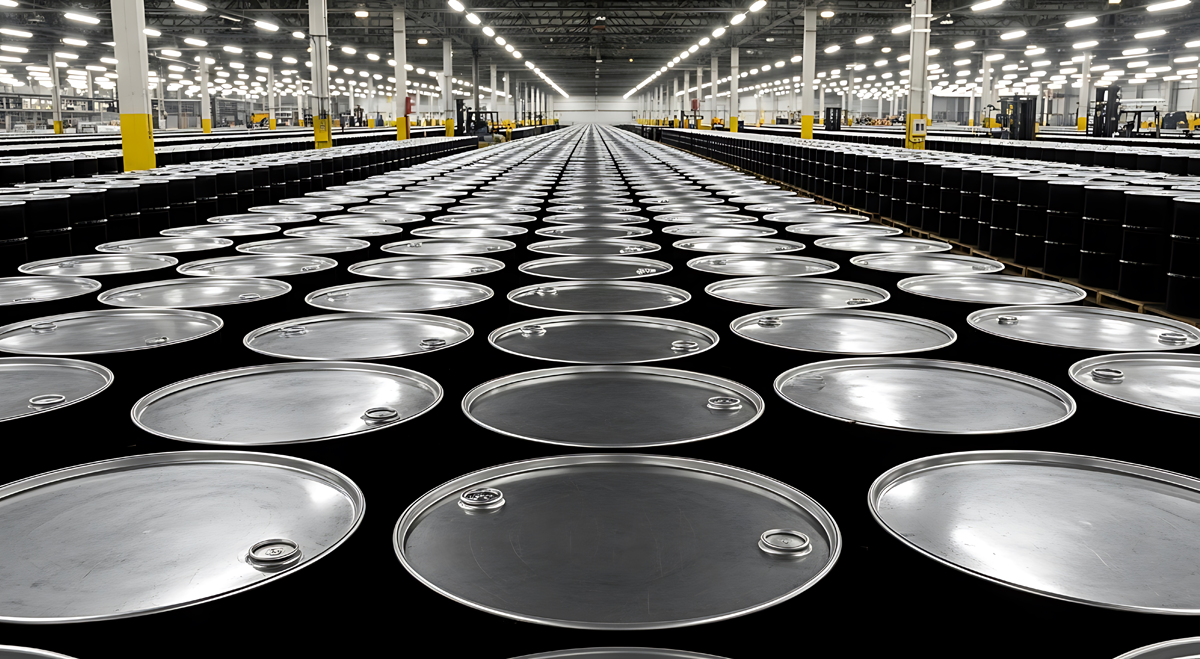
The disruption to global oil supplies caused by the U.S.-Iran conflict and the blockage of the Strait of Hormuz is producing sizeable inventory declines, although Citi believes worldwide stockpiles could continue providing substantial cover for several more years.
Citi analysts estimate that observed global oil inventories fell by approximately 519 million barrels between February and August 2026, equivalent to an average draw of roughly 3 million barrels per day.
Extending that rate of depletion into the future suggests OECD inventories could decline to around 70 days of cover by the end of 2027. Stocks excluding China could reach the same level by approximately mid-2028, while global inventories would not fall to 70 days until the first quarter of 2029.
Citi highlighted 70 days of supply as an important historical threshold. Global inventories reached similar levels during the second oil shock of the 1970s and 1980s, when energy costs rose to approximately 8% of economic output.
Applying an equivalent energy burden to today’s economy would imply all-in oil prices exceeding $200 per barrel, according to the bank, considerably higher than the current level of approximately $120.
The headline inventory figures may nevertheless understate the risks emerging in specific parts of the market.
“Specific refined products (especially diesel) are already facing distress now, which could worsen further, meaning more localized, product-specific crises earlier than these projections would suggest,” Citi wrote.
Crude prices have already responded to fading expectations for a rapid diplomatic resolution. Brent has risen from around $80 per barrel at its early-August low to more than $93, while WTI has climbed from approximately $75 to above $86.
Conditions in refined products are even more extreme. U.S. wholesale diesel has risen to a premium of more than $100 per barrel over WTI, while the weighted refinery margin has increased by around 350% since the beginning of the year to $33.
Citi therefore sees the possibility of individual fuel markets encountering severe shortages well before aggregate global oil inventories reach historically critical levels.
The bank’s central forecast remains considerably less severe. Citi continues to expect an agreement that allows the Strait of Hormuz to reopen during the fourth quarter, which would ease supply pressures and help push Brent crude back into the $60s during 2027.
Leave a Reply