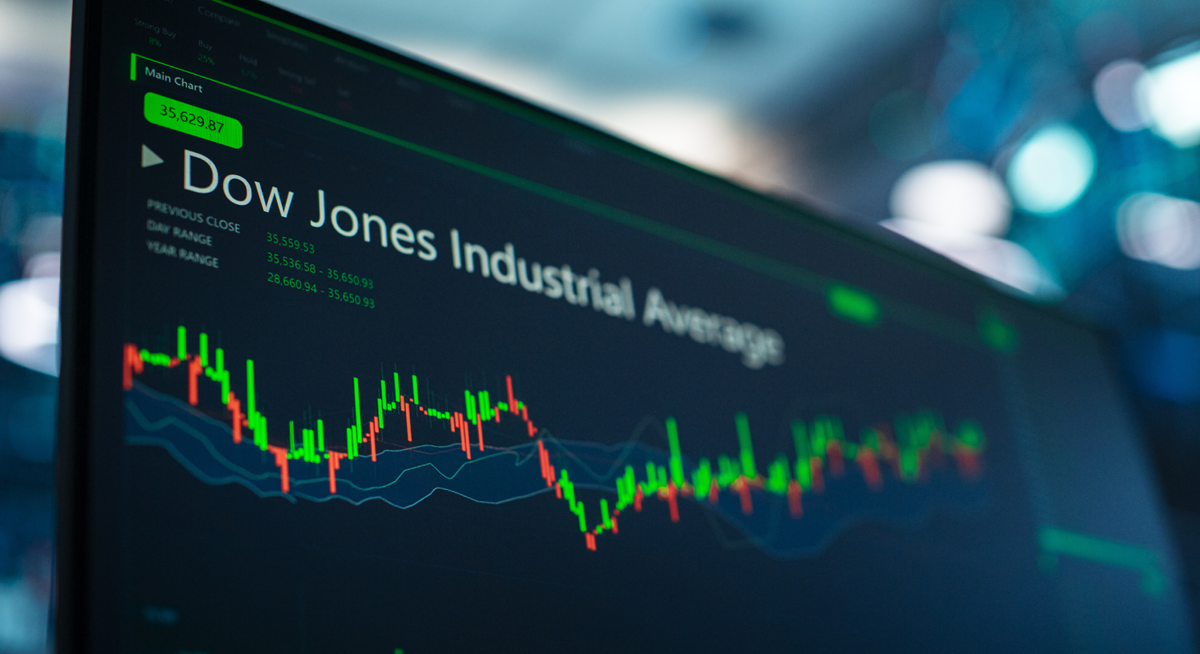
US equity futures indicated a strong start to Thursday’s session as falling oil prices and lower Treasury yields offered some relief following Wednesday’s late sell-off.
The prospective gains came after the Dow Jones Industrial Average ended the previous session at a three-month closing low, while the S&P 500 recorded its weakest close in more than a month.
Market attention remained focused on the Federal Reserve’s latest interest-rate increase and the possibility of further tightening before the end of the year.
Lower Oil Prices Support Pre-Market Sentiment
US crude futures declined 2.5% on Thursday, moving below $100 a barrel after falling more than 3% on Wednesday.
Oil prices retreated amid reports that Saudi Arabia was taking steps to prevent supply disruptions following the closure of its key East-West pipeline.
The decline helped alleviate some concerns about the inflationary impact of elevated energy costs.
Treasury yields also moved lower during the morning, with the benchmark 10-year yield retreating after finishing the previous session little changed.
Together, the movements in oil and government bonds provided a more favourable backdrop for US stock futures ahead of the opening bell.
Major Indices Reverse Earlier Gains on Wednesday
Wall Street had initially advanced on Wednesday as investors returned to equities following losses in the preceding two sessions.
The rally faded late in the day, however, as markets responded to the Federal Reserve’s interest-rate announcement and comments from Chair Kevin Warsh.
The Dow dropped 631.21 points, or 1.2%, to close at 51,461.90, its lowest closing level in three months.
The S&P 500 lost 33.92 points, or 0.5%, ending at 7,551.81, its weakest close in more than a month.
The Nasdaq Composite was comparatively resilient but still finished lower, slipping 3.15 points, or less than 0.1%, to 25,978.42.
The late reversal left all three benchmarks in negative territory despite their earlier advances.
Fed Signals Further Tightening Could Follow Rate Increase
The Federal Reserve raised its target range for the federal funds rate by a quarter of a percentage point to 3.75%–4%, marking its first increase since July 2023.
In its policy statement, the central bank said inflation remained elevated and indicated that the rate increase was intended to support progress towards its 2% target.
Updated projections showed that most Fed officials expected interest rates to stand above 4% at the end of 2026, pointing to at least one further increase this year.
Warsh reinforced the central bank’s focus on inflation during his post-meeting press conference.
“Our predominant focus is on the price stability side of our mandate. The plain fact is that inflation is too high, and has been for too long,” he said.
“This summer’s inflation readings do not tell me that underlying trends have meaningfully improved.”
His comments coincided with increased selling pressure in equities during the final part of Wednesday’s session.
Banks and Oil Services Stocks Record Sharp Losses
Several sectors contributed to Wednesday’s market decline.
The Philadelphia Oil Service Index dropped 3.1% as crude prices weakened, reaching its lowest intraday level in more than a month.
Banking shares also came under pressure, sending the KBW Bank Index down 2.9% to its lowest closing level in two months.
Brokerage firms, housing-related companies and gold stocks weakened later in the session, adding to the broader decline.
Thursday’s rise in index futures suggested that US equities could recover some of those losses at the open. Subsequent trading remained dependent on developments in commodity markets, bond yields and expectations for the Federal Reserve’s next policy moves.
Leave a Reply