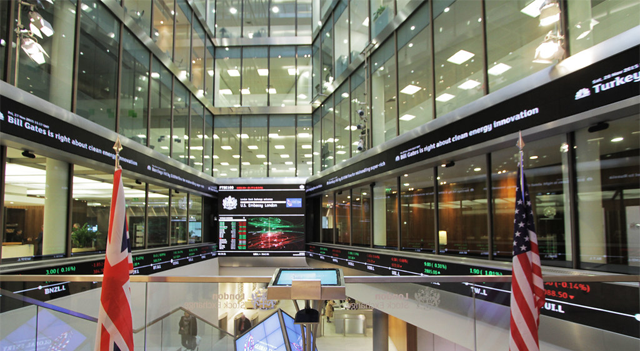
European equity markets posted modest gains on Monday, buoyed by expectations of an interest rate cut from the U.S. Federal Reserve, although political uncertainty in France capped broader upside. By 07:02 GMT, Germany’s DAX climbed 0.7%, France’s CAC 40 rose 0.4%, and the U.K.’s FTSE 100 advanced 0.3%.
Investor Optimism Driven by Fed Prospects
Risk assets received support after last week’s disappointing U.S. jobs report reinforced the likelihood of a Federal Reserve rate reduction during its September 16-17 meeting. The soft employment data underscored signs of a cooling U.S. economy, leaving markets confident of at least a 25-basis-point cut. Analysts now debate whether the Fed may opt for a more aggressive 50-basis-point reduction, with the upcoming U.S. inflation report on Thursday expected to provide critical guidance.
French Political Tensions Limit Gains
Gains in European equities remain constrained by developments in France, where Prime Minister François Bayrou, the country’s fourth premier in three years, faces almost certain defeat in a confidence vote later in the session. The eurozone’s second-largest economy is grappling with a budget deficit approaching twice the EU’s 3% GDP limit. Bayrou’s proposed budget is unlikely to secure sufficient support, raising concerns over France’s ability to manage its debt.
Recent turmoil has already affected French sovereign debt, with 30-year government bond yields last week reaching levels not seen since June 2009. Moody’s previously downgraded France’s credit rating after the last government collapse, and a repeat could pressure bonds further, risking forced sales of the nation’s already stressed debt.
Japanese Leadership Change Adds Uncertainty
Political instability also emerged in Japan over the weekend after Prime Minister Shigeru Ishiba announced he would step down as leader of the Liberal Democratic Party, weeks after the coalition suffered heavy losses in upper house elections. Ishiba’s resignation follows Tokyo securing a U.S. trade deal that lowers tariffs on Japanese exports, but it opens the door to a potential leadership contest in the world’s fourth-largest economy, especially after the LDP lost its upper house majority.
Mixed German Economic Data
Monday’s data from Germany showed a mixed picture: industrial production rose 1.3% in July compared with June, but exports unexpectedly fell by 0.6%, below the anticipated 0.1% gain. Imports also declined slightly, down 0.1% from the previous month.
Oil Prices Climb After OPEC+ Decision
Crude prices surged following OPEC+’s announcement to increase production at a slower pace than in previous months. At 03:02 ET, Brent futures gained 1.7% to $66.64 a barrel, while U.S. West Texas Intermediate crude rose 1.8% to $63.00 a barrel.
The producer group agreed to raise output by 137,000 barrels per day in October, far below the 555,000 bpd and 411,000 bpd hikes seen earlier this year. The decision comes after OPEC+, led by Saudi Arabia, had gradually increased supply to regain market share amid falling oil prices.
This content is for informational purposes only and does not constitute financial, investment, or other professional advice. It should not be considered a recommendation to buy or sell any securities or financial instruments. All investments involve risk, including the potential loss of principal. Past performance is not indicative of future results. You should conduct your own research and consult with a qualified financial advisor before making any investment decisions.
Leave a Reply