Author: Fiona Craig

  • Sound Energy Reaches Operational Milestones at Tendrara and Wins Extension for Anoual Exploration Permit

    Sound Energy Reaches Operational Milestones at Tendrara and Wins Extension for Anoual Exploration Permit

    Sound Energy (LSE:SOU) has reported further progress at its Tendrara Phase I gas development in eastern Morocco, where operator Mana Energy has successfully flowed both the TE-6 and TE-7 wells. The wells have now fully tested their respective sections of the gas gathering system, completing a key element of the project’s surface infrastructure.

    Operational and financial highlights

    The company is preparing to commission nine on-site power generation engines, including seven gas-fired units that are expected to transition to using Tendrara gas in the near term. This switch is intended to reduce diesel consumption, lower operating costs and cut Scope 1 emissions, as Sound Energy continues to evaluate bridging finance options ahead of first gas production.

    On the exploration front, Moroccan authorities have approved an extension to the complementary period of the Anoual Exploration Permits through to September 2028. As part of the extension, Sound Energy has committed to drilling the M5 exploration well targeting Triassic reservoirs, with the option to undertake further 3D seismic work and additional drilling. The agreement reinforces the company’s longer-term exploration position in a highly prospective area, while capping its cost exposure to the M5 well at US$2.57 million.

    From an investment perspective, the company’s outlook remains constrained by weak financial fundamentals, including sizeable recent losses, rising leverage and sustained negative cash flow. Share price technicals are moderately supportive, with the stock trading above key moving averages and a positive MACD signal. Management guidance points to potential upside from near-term production and contracted gas sales, although balance sheet pressure and project timing risks remain significant. Valuation support is limited by negative earnings and the absence of dividend yield.

    More about Sound Energy

    Sound Energy PLC is a UK AIM-listed transition energy company focused on onshore gas exploration, development and production in Morocco, alongside renewable power generation initiatives. Its core assets are centred on the Tendrara gas field, where the company holds a 25-year development concession. Development plans include a micro-LNG project currently under construction and a larger Phase II piped gas scheme awaiting final investment decision, targeting industrial and power customers across a 28,000 square kilometre onshore permit portfolio in Morocco.
  • Andrada Highlights High-Grade Lithium and Polymetallic Upside at Namibia’s Lithium Ridge

    Andrada Highlights High-Grade Lithium and Polymetallic Upside at Namibia’s Lithium Ridge

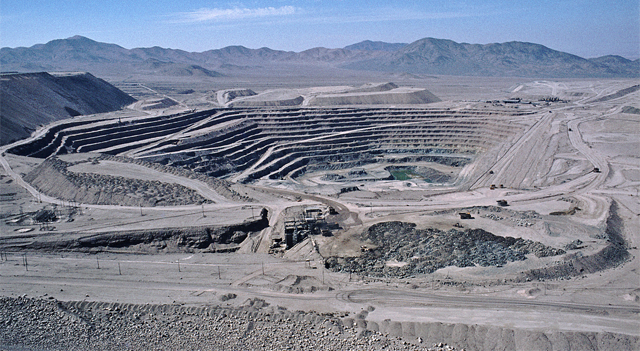
    Andrada Mining (LSE:ATM) has announced standout surface sampling results from its Lithium Ridge project in Namibia, confirming the presence of multiple high-grade lithium-bearing pegmatites. Grab samples returned lithium oxide grades in excess of 4% Li₂O, with a highest recorded value of 4.67% Li₂O.

    Operational and financial highlights

    An extensive mapping and sampling programme has now identified more than 1,500 pegmatite outcrops, materially extending the recognised mineralised corridor to around 6 kilometres. In addition to lithium, the work has confirmed economically meaningful tin and tantalum mineralisation, raising the prospect of attractive by-product credits. Mineralogical analysis shows lithium is predominantly hosted in spodumene.

    The surface results support the ongoing, SQM-funded Stage 1 drilling campaign, which comprises 14,000 metres designed to test the depth extent and continuity of the system. Collectively, the findings point to Lithium Ridge as a potentially large-scale, polymetallic project that could significantly bolster Andrada’s development pipeline and reinforce its positioning within the global critical minerals supply chain, alongside continued expansion at the Uis Mine.

    From a financial perspective, the investment case remains constrained by ongoing losses, negative returns on equity, and negative operating and free cash flow, despite healthy top-line growth. Share price trends remain constructive, with a clear uptrend in place, although elevated momentum indicators suggest an increased risk of near-term pullbacks. Valuation support is limited by a negative price-to-earnings ratio and the absence of dividend yield data.

    More about Andrada Mining

    Andrada Mining Limited is a Namibia-focused producer and developer of tin, with a broader portfolio of critical minerals assets that includes lithium and tantalum projects. The company is listed on AIM and the OTCQB and is pursuing a strategy of expanding beyond its flagship Uis Mine to establish a diversified regional platform in battery and technology metals, targeting long-term growth driven by rising global demand for lithium and associated critical minerals.

  • Kavango Drilling Validates Large High-Grade Gold System at Bill’s Luck Mine

    Kavango Drilling Validates Large High-Grade Gold System at Bill’s Luck Mine

    Kavango Resources (LSE:KAV) has released encouraging results from a 7,714-metre diamond and reverse circulation drilling programme at the historic Bill’s Luck Gold Mine, part of its Hillside Project in Zimbabwe. The campaign has confirmed a mineralised gold system extending beyond 220 metres below surface, with multiple parallel reef structures identified in both the hanging wall and footwall alongside the currently exploited Main Reef.

    Operational and financial highlights

    Drilling from surface and underground has returned a series of high-grade gold intersections, including assays exceeding 100g/t over narrow intervals. These results are now being incorporated into a maiden Mineral Resource Estimate, which is under preparation and expected to support detailed mine planning and longer-term production evaluations. The findings reinforce Kavango’s strategy to lift gold output at Bill’s Luck while advancing other Hillside targets such as Nightshift and Steenbok, positioning the company as an emerging mechanised gold producer in Zimbabwe.

    Despite early-stage revenue generation, the investment outlook remains constrained by weak financial fundamentals, including sizeable losses and ongoing cash burn, which heighten near-term funding and execution risks. Market technicals add further pressure, with the share price showing a sustained downtrend and negative momentum. Valuation support is limited by the loss-making profile and the absence of dividend yield.

    More about Kavango Resources

    Kavango Resources is a Southern Africa–focused metals exploration and gold production company listed in London and on the Victoria Falls Stock Exchange. The group is focused on rapidly advancing both open-pit and underground gold deposits in Zimbabwe using modern mechanised mining and processing methods. Its Zimbabwean portfolio is centred on the Hillside Gold Project, which includes Bill’s Luck, Nightshift—where a maiden resource has already been defined—and Steenbok, forming a pipeline of assets aimed at delivering scalable, near-term gold production.

  • Oxford BioDynamics Announces Board Departure as Largest Shareholder Maintains Strategic Role

    Oxford BioDynamics Announces Board Departure as Largest Shareholder Maintains Strategic Role

    Oxford BioDynamics (LSE:OBD) has confirmed that Stephen Diggle has stepped down from his position as a non-executive director with immediate effect, concluding a nine-year tenure on the board. The move follows previously communicated intentions and aligns with standard corporate governance practices regarding long-serving directors.

    Operational and financial highlights

    Although Diggle has exited the board, his investment firm, Vulpes Investment Management, remains Oxford BioDynamics’ largest shareholder. The firm intends to appoint a replacement non-executive director in due course, ensuring it continues to exert meaningful influence over governance and strategic oversight. This continuity comes at a key stage for the company, as it advances the commercial rollout of its EpiSwitch-based diagnostic tests and works to strengthen its competitive position in the precision diagnostics market.

    From an investment perspective, Oxford BioDynamics continues to face notable headwinds. The group is characterised by ongoing losses, elevated leverage and weak share price momentum. Valuation metrics offer little support, with a negative price-to-earnings ratio and no dividend yield, leaving financial performance as the dominant risk factor shaping the near- to medium-term outlook.

    More about Oxford BioDynamics

    Oxford BioDynamics Plc is an international biotechnology company specialising in precision clinical diagnostics. It develops and commercialises blood-based tests built on its proprietary EpiSwitch 3D genomics platform, which is designed to identify disease presence and predict patient response to treatment. Key products include the EpiSwitch PSE prostate cancer screening test, which enhances the accuracy of conventional PSA testing, and the EpiSwitch CiRT test, used to predict response to immuno-oncology checkpoint inhibitor therapies. The company is expanding its pipeline across oncology, neurology, inflammation, hepatology and animal health, and operates laboratories in Oxford (UK), Maryland (USA) and Penang (Malaysia), with its shares listed on AIM in London.

  • Cobra Resources Expands Boland Footprint with New Tenements to Fast-Track Rare Earth Drilling

    Cobra Resources Expands Boland Footprint with New Tenements to Fast-Track Rare Earth Drilling

    Cobra Resources (LSE:COBR) has finalised the assignment of three exploration licences from Tri-Star Group, materially enlarging the landholding and upside potential of its Boland ionic rare earth project in South Australia. The additional ground strengthens the company’s ability to advance high-priority rare earth element (REE) targets that are considered suitable for in situ recovery, allowing drilling activity to be brought forward.

    Operational and financial highlights

    With regulatory approvals, environmental reviews and community engagement processes being accelerated, Cobra intends to roll out a phased drilling programme across the Boland, Head and Stokes prospects ahead of the cropping season. Results from this work are expected to underpin a resource estimate and economic scoping study targeted for mid-2026. In parallel, metallurgical test work is progressing to define a mixed rare earth carbonate product, which is aimed at supporting early offtake discussions. The company is also advancing plans for an in-field ISR pilot recovery trial, provisionally scheduled for late 2026, as it seeks to establish a competitive position within the emerging low-cost rare earths space.

    From a financial standpoint, the investment case continues to be weighed down by the absence of revenue, ongoing losses and persistent cash outflows, although this is partly offset by the group’s debt-free balance sheet. On the technical side, the shares are trading above key moving averages with constructive momentum indicators. Valuation remains difficult to assess given negative earnings and the lack of dividend yield metrics.

    More about Cobra Resources

    Cobra Resources Plc is a South Australia–focused critical minerals developer advancing a portfolio of pre-production assets. Its flagship project is the Boland ionic rare earth discovery within the wider Wudinna Project on the Gawler Craton, currently regarded as Australia’s only rare earth project suited to in situ recovery mining — a low-impact, low-cost extraction method targeting bottom-quartile recovery costs. Beyond rare earths, the company is developing the Manna Hill Copper Project, aimed at large-scale copper discoveries, and has previously monetised its Wudinna gold assets through a sale to Barton Gold for up to A$15 million in cash and shares, reflecting a strategic pivot toward critical minerals.

  • Proteome Sciences Secures £840,000 Fundraise to Drive Proteomics Growth and Revises Loan Conversion Terms

    Proteome Sciences Secures £840,000 Fundraise to Drive Proteomics Growth and Revises Loan Conversion Terms

    Proteome Sciences (LSE:PRM) has secured £840,000 through a placing and subscription involving 48 million new ordinary shares priced at 1.75p each, equivalent to roughly 14% of the company’s enlarged share capital. The group also plans to raise up to a further £60,000 from retail investors at the same price via the BookBuild platform.

    Operational and financial highlights

    The new capital will be directed toward expanding the company’s proteomics offering and supporting recent commercial momentum. Planned initiatives include scaling TMT plexing capacity to 96-plex, rolling out new DXT isotopic tagging products, and introducing solvent-shift chemoproteomic workflows. The company also expects to complete a DXT licence agreement, increase headcount, and expand mass spectrometry capabilities at its San Diego operations, alongside providing additional working capital. These investments follow a series of sizeable GCLP contract wins and new biopharma partnerships across Europe and the United States.

    Major shareholder Vulpes Life Science Fund and Chief Commercial Officer Richard Dennis participated in the fundraising, with the transactions classified as related-party dealings and assessed as fair and reasonable by independent board members. Separately, Executive Chairman Christopher Pearce has agreed to amend the terms of his £5 million loan facility by increasing the conversion price from 1p to a minimum of 4p per share, a move intended to limit future dilution as the newly issued shares are admitted to trading in London.

    From a market perspective, the company continues to face pressure from weak underlying financial metrics, including negative profitability, shareholders’ equity, and operating and free cash flow. Technically, the share price remains above key moving averages with a positive MACD signal, although a high RSI suggests near-term overbought conditions. Valuation metrics remain constrained, with a negative P/E ratio and no dividend yield.

    More about Proteome Sciences

    Proteome Sciences plc is a UK-based life sciences company quoted on AIM, specialising in proteomics services and technologies for biopharmaceutical clients in Europe and the United States. Its portfolio includes Tandem Mass Tag (TMT) and DXT isotopic tagging solutions, as well as advanced chemoproteomic workflows. The group is expanding its operational presence, particularly in San Diego, to capitalise on rising demand in the global proteomics market, which is forecast to grow strongly through to 2030.

  • UK Watchdog Probes Meta Over WhatsApp Data Provided to Regulator

    UK Watchdog Probes Meta Over WhatsApp Data Provided to Regulator

    UK communications regulator Ofcom has opened a formal investigation into Meta Platforms (NASDAQ:META) over concerns related to information the company submitted about WhatsApp during a regulatory market review.

    The inquiry is focused on whether the details provided by Meta were incomplete or inaccurate during Ofcom’s assessment last year of the wholesale market for business bulk SMS services, which are commonly used by companies for notifications such as delivery updates and appointment reminders.

    “Last year, we carried out a review of the wholesale market for business bulk SMS messages, which are often used for things like appointment reminders and parcel delivery notifications,” Ofcom said in a statement on Friday.

    The regulator added that “the available evidence suggests that the information we received in response from Meta may not have been complete and accurate.”

    Ofcom said it will now examine whether Meta complied with its legal obligations when responding to requests for information as part of the review.

  • Wall Street Futures Signal a Pause After Strong Two-Day Recovery: Dow Jones, S&P, Nasdaq

    Wall Street Futures Signal a Pause After Strong Two-Day Recovery: Dow Jones, S&P, Nasdaq

    U.S. equity futures are indicating a modestly weaker start to Friday’s session, as markets appear set to pause following a sharp two-day rebound that erased much of the losses suffered earlier in the week.

    After the recent rally, some investors are opting to lock in gains, particularly after the bounce largely offset Tuesday’s steep decline. The advance was fueled by easing concerns around President Donald Trump’s plans for Greenland, after he ruled out the use of military force and softened his tone on potential tariffs against European countries.

    That relief may be short-lived, however, as geopolitical uncertainty resurfaced following fresh comments from Trump regarding Iran. Speaking to reporters aboard Air Force One on Thursday, the president said a U.S. “armada” was moving toward the Middle East.

    “We’re watching Iran,” Trump said. “You know we have a lot of ships going in that direction just in case. We have a big flotilla going in that direction and we’ll see what happens.”

    Trump had previously stepped back from threatening military strikes against Iran amid its crackdown on nationwide protests, but the renewed rhetoric has unsettled market sentiment.

    Adding to the early pressure, Intel (INTC) shares slid nearly 13% in premarket trading. The chipmaker came under heavy selling after posting better-than-expected fourth-quarter earnings while issuing weaker-than-anticipated guidance for the current quarter.

    On Thursday, Wall Street extended its rebound, with stocks closing mostly higher and building on Wednesday’s strong gains. The advance helped further neutralize Tuesday’s selloff, pushing the Dow into positive territory for the week.

    While the major indices finished below their session highs, gains remained solid across the board. The Dow Jones Industrial Average rose 306.78 points, or 0.6%, to 49,384.01. The Nasdaq Composite advanced 211.20 points, or 0.9%, to 23,436.02, and the S&P 500 climbed 37.73 points, or 0.6%, to end at 6,913.35.

    Markets have been supported by diminishing tensions tied to Trump’s Greenland ambitions. On Wednesday, the president publicly ruled out military action and later said he had reached the “framework” of an agreement over the Arctic territory.

    Following that “framework” arrangement with NATO Secretary General Mark Rutte, Trump retreated from earlier threats to impose sanctions on European nations opposing his plans.

    Some analysts see the recent surge in equities as a revival of the so-called “TACO trade,” shorthand for “Trump Always Chickens Out,” a term used to describe a pattern of market-rattling threats followed by policy reversals.

    “There are a lot of similarities with the Liberation Day market wobble in April 2025 and now,” said Russ Mould, investment director at AJ Bell. “In both situations, Trump took an aggressive stance and then backed down after financial markets wobbled.”

    He added, “The US president has a keen eye on what happens with bonds and stocks, and the last thing he wants is to be accused of destroying people’s wealth.”

    On the economic front, data from the U.S. Labor Department showed a small increase in initial jobless claims for the week ended January 17. Claims edged up to 200,000, rising by 1,000 from the prior week’s revised reading of 199,000.

    Economists had expected claims to climb to 205,000 from the previously reported 198,000.

    Meanwhile, separate figures from the Commerce Department indicated that consumer prices rose in November broadly in line with economists’ forecasts.

    Sector moves were mixed in Thursday’s session. Gold-related stocks surged as bullion prices jumped, with the NYSE Arca Gold Bugs Index gaining 4.4% to a record close. Telecom stocks also performed strongly, as the NYSE Arca North American Telecom Index advanced 2.1% to a new high.

    Technology-linked sectors including software, networking and biotechnology supported the Nasdaq’s outperformance, while real estate and housing stocks lagged.

  • European Markets Edge Lower as Greenland Tensions Weigh on Sentiment: DAX, CAC, FTSE100

    European Markets Edge Lower as Greenland Tensions Weigh on Sentiment: DAX, CAC, FTSE100

    European equity markets drifted modestly lower on Friday, with indices on course to end a five-week run of gains as investors remained cautious amid renewed geopolitical and trade-related tensions tied to Greenland.

    On the data front, preliminary survey figures from S&P Global indicated that private-sector activity across the euro area continued to expand at a steady pace in January. Manufacturing output returned to growth territory, while momentum in the services sector eased to its weakest level in four months.

    The HCOB flash composite output index held steady at 51.5 in January, matching December’s reading and falling just short of expectations for a slight uptick to 51.6.

    The pan-European Stoxx 600 index slipped 0.2%, a modest pullback following a strong 1% rally in the previous session. France’s CAC 40 declined 0.3%, while Germany’s DAX hovered around flat territory. In contrast, the UK’s FTSE 100 outperformed slightly, rising 0.1%.

    In corporate developments, shares of French banking group BNP Paribas (EU:BNP) moved lower following reports that the lender plans to cut roughly 1,200 jobs by the end of 2027.

    UK defense firm Babcock International (LSE:BAB) also traded down after announcing changes to its chief executive leadership.

    Germany’s BASF (TG:BAS) came under pressure after the chemicals group cautioned that earnings are likely to weaken.

    On the upside, Swiss composite materials specialist Gurit Holding (LSE:0QQR) surged after reporting 2025 sales that exceeded its own guidance.

    Swedish telecom equipment maker Ericsson (NASDAQ:ERIC) was another standout performer, with shares jumping after the company topped quarterly earnings forecasts and unveiled a SEK 15 billion share buyback program.

  • Crude Prices Advance After Trump Signals Naval Move Toward Iran

    Crude Prices Advance After Trump Signals Naval Move Toward Iran

    Oil prices moved higher during Asian trading on Friday after U.S. President Donald Trump suggested that American naval forces were being positioned near Iran, fuelling fresh concerns over potential supply disruptions from a key Middle Eastern producer.

    While crude had dipped earlier in the week, prices remained on track for a fifth consecutive weekly gain. Traders have increasingly priced in geopolitical risk, alongside expectations of firmer demand, as global tensions heighten the threat of interruptions to oil flows.

    Brent crude futures for March delivery climbed 0.9% to $64.62 a barrel, while U.S. West Texas Intermediate futures also rose 0.9% to $59.89 a barrel by 22:48 ET (03:48 GMT).

    Trump highlights ‘armada’ deployment

    Speaking to reporters aboard Air Force One on Thursday night, Trump said the United States had dispatched a fleet toward Iran and warned Tehran against escalating domestic crackdowns or reviving its nuclear programme.

    “We have an armada… heading in that direction, and maybe we won’t have to use it,” Trump told reporters. “I’d rather not see anything happen, but we’re watching them very closely,” Trump said.

    Media reports indicated that a U.S. aircraft carrier and several destroyers are expected to reach the Middle East in the coming days, reigniting fears of renewed military confrontation in the region.

    Iran is among the largest oil producers within the Organization of the Petroleum Exporting Countries and is also a major supplier to China, the world’s biggest crude importer. Any military action involving the United States would likely disrupt Iranian oil exports.

    The country has faced nationwide protests since January against the ruling Nezam, with reports suggesting that thousands were killed during the latest unrest.

    Fifth weekly gain in sight

    On a weekly basis, oil prices were up between 0.6% and 0.8% after a volatile stretch, as investors also responded to shifting signals from Washington on Greenland.

    Additional support came from modestly positive economic data out of China and the International Energy Agency’s decision to lift its oil demand outlook for 2026. Crude has also attracted bargain hunters following a weak showing through much of 2025.

    A softer U.S. dollar further underpinned prices, with markets continuing to expect the Federal Reserve to cut interest rates later this year, a dynamic that tends to support dollar-denominated commodities.