Author: Fiona Craig

  • Bellway Publishes 2025 Annual Report and Sets Date for AGM

    Bellway Publishes 2025 Annual Report and Sets Date for AGM

    Bellway p.l.c. (LSE:BWY) has released its Annual Report and Accounts for the financial year ended 31 July 2025, together with the Notice of its upcoming Annual General Meeting, which will take place on 27 November 2025. Shareholders can access these documents through the National Storage Mechanism and the company’s official website. The announcement reflects a standard disclosure aimed at maintaining transparency and keeping investors informed of the company’s financial position and governance plans.

    Bellway’s outlook presents a mixed financial picture. While the company maintains a strong balance sheet, it continues to face headwinds from declining revenue and cash flow pressures. Technical analysis indicates a bearish short-term trend, though current valuation levels suggest fair pricing in the market. The recent earnings call also provided constructive operational insights but underscored the need for further improvement in areas such as RoCE and cost efficiency.

    More about Bellway

    Bellway p.l.c. is a major UK residential property developer, building a broad range of homes that cater to different segments of the housing market. With a nationwide presence, the company focuses on delivering quality developments while maintaining a disciplined approach to growth and capital management.

  • Rosslyn Data Technologies Delivers Strong FY2025 Results and Expands AI Capabilities

    Rosslyn Data Technologies Delivers Strong FY2025 Results and Expands AI Capabilities

    Rosslyn Data Technologies (LSE:RDT) has announced its financial results for the year ended 30 April 2025, highlighting clear gains in both financial performance and operational execution. Revenue increased to £3.0 million, supported by improved gross margins and a reduced cash burn rate—strengthening the company’s financial position.

    Operationally, Rosslyn secured new contracts with a leading global technology company and a Fortune 500 healthcare solutions provider. It also launched AICE, its new AI-powered classification solution, underscoring its commitment to AI-driven innovation and enterprise-focused services. These milestones reflect Rosslyn’s ability to attract major clients and position itself for sustained growth.

    Although financial pressures related to revenue and cash flow remain, recent developments provide a positive counterweight. Technical indicators point to moderate short-term momentum, but valuation concerns tied to negative profitability continue to influence the outlook.

    More about Rosslyn Data Technologies

    Rosslyn Data Technologies PLC is a leading provider of a cloud-based enterprise spend intelligence platform. Its award-winning solution uses automated workflows, artificial intelligence, and machine learning to extract and consolidate procurement data. This enables organizations to gain better visibility into complex supplier networks, uncover cost-saving opportunities, mitigate risks, and achieve rapid ROI through smarter, data-driven decision-making.

  • Empire Metals unveils major titanium discovery at Pitfield project

    Empire Metals unveils major titanium discovery at Pitfield project

    Empire Metals Ltd (LSE:EEE) announced on Tuesday that a maiden mineral resource estimate at its Pitfield project in Australia revealed “one of the largest and highest-grade titanium resources reported globally”.

    The company said the Thomas and Cosgrove deposits at Pitfield contain an estimated 2.2 billion tonnes at 5.1% titanium dioxide, amounting to 113 million tonnes of contained titanium dioxide.

    Empire noted that drilling at the Thomas deposit is expected to yield enough feedstock to sustain more than 30 years of initial mine life. The project also benefits from existing rail connections to deep-water ports, offering direct access to key global markets including Asia, the United States, Europe and Saudi Arabia.

    The firm added that further resource development drilling is planned and is “fully anticipated” to expand the maiden resource estimate.

    Managing Director Shaun Bunn commented: “Pitfield is truly one of the natural geological wonders of the world: a district scale, giant titanium rich ore deposit which has remained hidden in plain sight until recently discovered by Empire.”

    He continued: “We have already commenced engineering, environmental and marketing studies which combined, will help confirm the commercial viability of Pitfield and form the basis for a final investment decision.”

    Despite the scale of the discovery, Empire Metals’ shares dropped 14% in London trading on Tuesday, closing at 50.60 pence.

  • Dow Jones, S&P, Nasdaq, Futures, Wall Street poised for weaker open as earnings disappoint and geopolitical tensions rise

    Dow Jones, S&P, Nasdaq, Futures, Wall Street poised for weaker open as earnings disappoint and geopolitical tensions rise

    U.S. stock index futures were pointing to a slightly lower open on Thursday, suggesting that markets may extend the pullback seen in the prior session as traders react to disappointing corporate earnings and geopolitical developments.

    Much of the early downward pressure is tied to investor response to quarterly results from several major companies, including Tesla, Inc. (NASDAQ:TSLA) and International Business Machines Corporation (NYSE:IBM).

    Tesla shares were down 3.7% in pre-market trading after the electric vehicle maker posted weaker-than-expected third-quarter earnings, despite setting new delivery records. IBM also slipped sharply ahead of the opening bell: although the tech giant topped analysts’ profit estimates, growth in its cloud computing business slowed, tempering investor enthusiasm.

    By contrast, Honeywell International Inc. (NASDAQ:HON) was expected to see early gains after the industrial group beat both revenue and earnings forecasts for the quarter.

    Geopolitical uncertainty is also hanging over the market. The Trump administration unveiled new sanctions targeting Russia’s two largest oil producers, Rosneft and Lukoil. The United States Department of the Treasury said the move was a response to Russia’s “lack of serious commitment to a peace process to end the war in Ukraine.”

    President Donald Trump had recently voiced optimism about the prospect of ending the Russia-Ukraine war, only to abruptly cancel a planned meeting with Russian President Vladimir Putin. Such sudden shifts in tone — including on U.S.-China trade policy — have been a notable source of volatility for the markets in recent months.

    Stocks ended Wednesday lower across the board, extending losses from earlier in the week. The Nasdaq fell 213.67 points, or 0.9%, to 22,740.40; the Dow dropped 334.33 points, or 0.7%, to 46,590.41; and the S&P 500 slid 35.95 points, or 0.5%, to 6,699.40. All three major indexes bounced off their lows into the close but remained firmly in negative territory.

    The tech-heavy Nasdaq was dragged down in part by a steep selloff in Netflix, Inc. (NASDAQ:NFLX), which plunged 10.1% to a five-month low. Netflix came under pressure after reporting weaker third-quarter earnings, citing a tax dispute in Brazil.

    Texas Instruments Incorporated (NASDAQ:TXN) also weighed on the semiconductor sector, slumping 5.6% after issuing a soft fourth-quarter outlook. In contrast, Intuitive Surgical, Inc. (NASDAQ:ISRG) soared 13.9% after its robotic surgery systems business beat earnings expectations.

    Renewed uncertainty over U.S.-China trade relations further pressured sentiment. Over lunch with Republican lawmakers at the White House on Tuesday, Trump said he hoped to reach a “good deal” with Chinese President Xi Jinping but signaled a meeting might not happen.

    “Maybe it won’t happen,” Trump said. “Things can happen where, for instance, maybe somebody will say, ‘I don’t want to meet, it’s too nasty.’ But it’s really not nasty. It’s just business.”

    Markets took another hit after a Reuters report said the Trump administration is weighing a proposal to restrict a range of software-related exports to China — part of its response to Beijing’s rare earth export curbs. The report noted the move is “not the only option” but would advance Trump’s threat to block “critical software” shipments.

    Chipmakers bore the brunt of the selloff, with the PHLX Semiconductor Sector Index tumbling 2.4%. Airline stocks also weakened notably, as reflected by a 1.9% drop in the NYSE Arca Airline Index.

    Retail, housing, and networking stocks saw additional pressure, while energy shares bucked the downtrend thanks to a sharp rise in crude oil prices.

  • DAX, CAC, FTSE100, European stocks trade mixed as EU unveils new Russian sanctions package

    DAX, CAC, FTSE100, European stocks trade mixed as EU unveils new Russian sanctions package

    European equities showed a mixed performance on Thursday as investors digested another busy round of corporate earnings and kept an eye on trade developments between the U.S. and China.

    On the geopolitical front, EU member states officially approved a 19th package of sanctions against Russia over its war in Ukraine. The new measures include a ban on imports of Russian liquefied natural gas.

    “It’s a significant package that targets main Russian revenue streams through new energy, financial, and trade measures,” the Danish rotating presidency of the EU said.

    Among major indexes, Germany’s DAX slipped 0.2%, France’s CAC 40 added 0.2%, and the U.K.’s FTSE 100 advanced 0.6%.

    In earnings news, SAP SE (TG:SAP) fell 2% after third-quarter revenue missed analyst expectations. Orange S.A. (EU:ORA) gained 1% after raising its full-year guidance thanks to stronger-than-expected core profit.

    Catering giant Sodexo (EU:SW) tumbled 8% as it projected slower revenue growth in 2026, pointing to U.S. market headwinds. Defense and aerospace group Thales Group (EU:HO) added 2% after posting a 9% increase in sales over the first nine months of 2025 and reaffirming its full-year outlook.

    Automaker Renault Group (EU:RNO) lost 1.4% despite beating third-quarter revenue estimates, while Dassault Systèmes SE (EU:DSY) plunged 16% after trimming its full-year revenue growth forecast.

    Semiconductor maker STMicroelectronics (BIT:STMMI) dropped nearly 5% following weaker-than-expected fourth-quarter guidance. In contrast, Volvo Car AB (TG:8JO1) soared 34% after reporting a slight profit increase for Q3, supported by major cost-cutting efforts.

    Rentokil Initial (LSE:RTO) jumped 10% as organic revenue growth beat expectations, while InterContinental Hotels Group (LSE:IHG) slipped 1.2% despite stronger room revenue.

    Lloyds Banking Group (LSE:LLOY) gained around 1% even after reporting a sharp drop in profit and lowering annual guidance. Consumer goods giant Unilever (LSE:ULVR) rose 2% after reporting a 3.9% increase in underlying sales for Q3 2025.

    Nokia Corporation (EU:NOKIA) rallied 9% after third-quarter profit beat forecasts. Roche Holding AG (BIT:1ROG) declined 2.3% as nine-month sales came in below expectations, while Lonza Group (BIT:1LONN) climbed 3.5% after confirming its full-year guidance.

  • Pensana Plc shares climb after signing rare-earth supply deal with German firm

    Pensana Plc shares climb after signing rare-earth supply deal with German firm

    Pensana Plc (LSE:PRE) saw its stock jump 7.5% in London on Thursday after announcing a new supply agreement with Vacuumschmelze GmbH & Co. KG. The memorandum of understanding outlines a five-year partnership to provide rare-earth materials for the German company’s upcoming magnet manufacturing facility in South Carolina.

    Under the deal, Pensana will deliver mixed rare-earth carbonate sourced from its Longonjo mine in Angola. The company said the agreement is designed to “strengthen and secure the global rare earth value chain.”

    Vacuumschmelze’s South Carolina plant is expected to begin with an annual output of 2,000 tons of magnets, with plans to ramp up production to 12,000 tons by 2029.

    To align with this timeline, Pensana is moving to accelerate the launch of production at Longonjo to late 2026 — earlier than its initial target of early 2027. That accelerated schedule is intended to meet the start date of a U.S. ban on imports of Chinese rare-earth products for defense applications, which will take effect in 2027.

    Vacuumschmelze joins a growing group of companies setting up magnet production facilities in the U.S. as part of a broader push to build critical supply chains independent of China.

  • Kering shares surge as turnaround softens sales decline

    Kering shares surge as turnaround softens sales decline

    Kering (EU:KER) reported a smaller-than-expected drop in third-quarter revenue on Wednesday, with signs that its luxury fashion portfolio is stabilizing. The French luxury group is moving aggressively to reduce debt and strengthen its focus on its core labels.

    Shares of Kering listed in the U.S. jumped nearly 10% after the earnings release.

    Group revenue for Q3 2025 came in at €3.42 billion, representing a 10% decline on a reported basis and a 5% drop on a comparable basis. That result outperformed analysts’ projections of a 9.6% decline, according to Visible Alpha, despite a 5% negative currency effect. The performance was a notable rebound from the 15% comparable drop recorded in the second quarter.

    Sales through the directly operated retail network slipped 6%, while wholesale and other channels were down 2%.

    “Kering’s third-quarter performance, while representing a clear sequential improvement, remains far below that of the market,” said CEO Luca de Meo.

    As part of its streamlining strategy, the company also announced plans to sell its beauty business to L’Oréal S.A. for €4 billion ($4.7 billion) — a major early move by de Meo as he works to reshape the group and lower its debt.

    Gucci weighs, but shows improvement

    Gucci, the group’s biggest brand, posted revenue of €1.3 billion, down 18% on a reported basis and 14% on a comparable basis. Retail sales fell 13% but showed sequential improvement thanks to stronger demand in North America and Western Europe and new momentum in leather goods.

    Wholesale revenue for Gucci fell 25%, while its La Famiglia collection was unveiled toward the end of the quarter.

    Yves Saint Laurent sees mixed performance

    Yves Saint Laurent generated €620 million in revenue, down 7% reported and 4% comparable. Retail declined 2%, with growth in North America offsetting a slight dip in Western Europe. Ready-to-Wear and Shoes segments recorded double-digit gains, while wholesale fell 16% as part of ongoing distribution rationalization.

    Bottega Veneta edges higher on comparable basis

    Bottega Veneta reported revenue of €393 million, down 1% reported but up 3% on a comparable basis. Retail sales grew 5%, supported by North American demand and strength in Ready-to-Wear and Shoes. Wholesale revenue slipped 9%.

    Commenting on the update, broker Kepler Cheuvreux said Kering’s “turnaround [is] well underway.”

    “The turnaround remains at an early stage, with significant upside potential if Kering returns to normative margin levels,” analyst Charles-Louis Scotti added.

    Other Houses and Eyewear drive growth

    The “Other Houses” segment brought in €652 million, down 5% reported but up 1% comparable. Retail was stable while wholesale rose 5%, helped by solid performance from Balenciaga, Alexander McQueen, Brioni, and jewelry houses such as Boucheron, Pomellato, and Qeelin.

    Kering Eyewear and Corporate revenue rose to €448 million, up 2% reported and 6% on a comparable basis. Eyewear climbed 7%, supported by strong regional demand and a new partnership with Valentino. Kering Beauté grew 3% thanks to launches from Balenciaga and Creed.

    Morgan Stanley analysts said this was “an encouraging Q3 results from Kering this evening and management sounded more upbeat than it had for relatively long time.”

    “The stock remains our Top Pick in the European Luxury Goods space.”

  • Dow Jones, S&P, Nasdaq, Wall Street Futures, Tesla drops on earnings miss; Intel next up — what’s driving markets

    Dow Jones, S&P, Nasdaq, Wall Street Futures, Tesla drops on earnings miss; Intel next up — what’s driving markets

    U.S. equity futures showed little clear direction early Thursday as investors weighed a flood of earnings reports against renewed trade headlines. Shares of Tesla, Inc. (NASDAQ:TSLA) fell in after-hours trading following weaker-than-expected third-quarter results, while Intel Corporation (NASDAQ:INTC) is set to take center stage later in the day. Meanwhile, Beyond Meat, Inc. (NASDAQ:BYND) pulled back after a volatile session dominated by retail traders.

    U.S. futures edge mixed

    Futures pointed to a muted open, with investors digesting earnings and looking for signs of progress in U.S.–China trade discussions. As of 02:55 ET, Dow futures slipped 36 points, or 0.1%, while S&P 500 futures ticked up 11 points, or 0.2%. Nasdaq 100 futures gained 66 points, or 0.3%.

    Wall Street had retreated the previous session, led by a sharp selloff in Netflix, Inc., (NASDAQ:NFLX) whose shares tumbled more than 10% after its quarterly operating margin spooked investors worried about stretched valuations. Texas Instruments Incorporated (NASDAQ:TXN) also weighed on sentiment, issuing a disappointing forecast that sent its stock down 5.6%.

    Despite some soft spots, the early earnings season has mostly been encouraging. Roughly 86% of companies reporting so far have beaten expectations. Aggregate earnings for the S&P 500 are projected to climb 9.3% year-over-year, according to LSEG data cited by Reuters.

    Trade remained another key theme. President Donald Trump said he expects to strike agreements with President Xi Jinping when the two potentially meet in South Korea next week.

    Tesla earnings fall short

    Shares of Tesla slid more than 3% in extended trading after the automaker’s Q3 results missed analyst forecasts. Robust sales were undercut by rising costs as the company braces for a slowdown in domestic demand following the end of an EV tax credit.

    For the third quarter, Tesla posted adjusted EPS of $0.50 on $28.1 billion in revenue, shy of Wall Street expectations of $0.54 a share and $26.22 billion in sales. Vehicle deliveries climbed 7% year-on-year to 497,098 as buyers rushed to secure a $7,500 credit before its expiration. That surge was offset by higher operating expenses.

    Gross margins excluding regulatory credits came in at 17%, roughly flat compared with last year.

    “[I]t’s clear that margins have taken a solid hit from tariffs — both directly through higher material costs and indirectly by forcing more ad-hoc inventory management, traditionally one of Tesla’s strengths,” said Thomas Monteiro, Senior Analyst at Investing.com.

    Intel set to report

    Intel will headline Thursday’s earnings lineup after the close. Shares of the chipmaker have climbed in recent weeks on the back of capital infusions from NVIDIA Corporation (NASDAQ:NVDA), SoftBank Group Corp., and a 10% U.S. government stake announced by Trump in August. The president also said Intel CEO Lip-Bu Tan should step down over conflict-of-interest concerns.

    While Tan has sought strategic partners, Intel’s near-term outlook remains uncertain. It continues to trail competitors like NVIDIA and Advanced Micro Devices, Inc. (NASDAQ:AMD) in AI development, and its contract manufacturing unit lags Taiwan Semiconductor Manufacturing Company Limited.

    The company is expected to report roughly break-even results, with pressure from its data center and AI businesses contributing to a projected 1.2% decline in revenue to $13.12 billion.

    Beyond Meat retreats after meme-stock surge

    Beyond Meat shares sank more than 11% after hours, pulling back from a dizzying rally earlier in the week. The stock closed down 1.1% at $3.58 after soaring earlier in the session amid heavy meme-stock activity. More than 2 billion shares changed hands, according to FactSet data cited by The Wall Street Journal.

    The plant-based meat maker’s stock had hovered near $0.52 just last week as investors fretted over its debt situation. But a Tuesday announcement that Walmart Inc. would expand its product distribution triggered a massive short squeeze.

    Over the past year, the stock has mostly traded between $2 and $4 amid weak demand, layoffs, and financial pressures.

    U.S. sanctions Russian oil giants

    In a policy shift, Trump announced sanctions against Lukoil PJSC and Rosneft, citing Moscow’s “lack of serious commitment to a peace process to end the war in Ukraine.” Treasury Secretary Scott Bessent added that the firms funded “the Kremlin’s war machine” and pledged additional action if needed.

    The move lifted oil prices by easing fears of oversupply. Benchmark Brent crude rose 3.3% to $64.67 a barrel, while West Texas Intermediate futures climbed 3.5% to $60.50.

  • Gold climbs nearly 1% as safe-haven demand rises amid renewed U.S.-China tensions

    Gold climbs nearly 1% as safe-haven demand rises amid renewed U.S.-China tensions

    Gold prices moved higher in Asian trading on Thursday, recovering part of their recent sharp losses as renewed friction between Washington and Beijing prompted investors to seek safe-haven assets ahead of key U.S. inflation data.

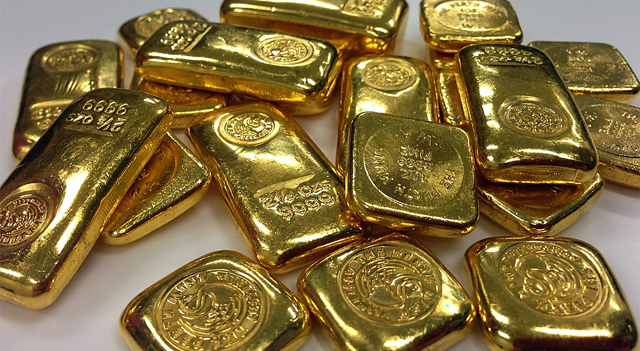
    By 06:15 GMT, spot gold gained 0.9% to $4,137.40 per ounce, while U.S. gold futures advanced 2% to $4,144.89. The rebound comes after bullion tumbled more than 5% on Tuesday and fell further on Wednesday, hitting a two-week low of $4,003.39 an ounce.

    The earlier slump had been driven by profit-taking at recent highs, supported by hopes that trade tensions between the U.S. and China were easing.

    Trade tensions spark renewed safe-haven buying

    Market sentiment shifted midweek after a Reuters report revealed that the Trump administration was considering restrictions on a wide range of software-powered exports to China in response to Beijing’s latest rare earth export curbs.

    The prospect of a further escalation in the U.S.–China trade conflict boosted gold’s safe-haven appeal.

    Fresh sanctions against Russia also added to geopolitical risk. The U.S. imposed Ukraine-related sanctions on Rosneft and Lukoil on Wednesday, while the European Union approved its 19th package of measures against Moscow, including a ban on Russian LNG imports and new listings of tankers in its “shadow fleet.”

    Investors eye delayed U.S. inflation data

    Market attention is now turning to Friday’s release of the U.S. Consumer Price Index for September, which was postponed due to the prolonged government shutdown.

    The data are expected to guide the Federal Reserve’s next policy decision at its meeting next week. Anticipation of further rate cuts this year has helped stabilize gold, as lower interest rates reduce the opportunity cost of holding non-yielding assets.

    Other metals rebound

    A broadly steady U.S. dollar also supported other precious and base metals. Silver futures surged 2% to $48.632 per ounce, while platinum futures rose 1% to $1,593.60 per ounce.

    Benchmark copper futures on the London Metal Exchange climbed 0.4% to $10,712.20 per metric ton, with U.S. copper futures up 0.4% at $5.03 per pound.

  • Oil climbs over 3% as India weighs Russian imports following new U.S. sanctions

    Oil climbs over 3% as India weighs Russian imports following new U.S. sanctions

    Oil prices rallied more than 3% on Thursday, building on the previous session’s gains, after India signaled it may reassess its Russian crude purchases in response to fresh U.S. sanctions targeting Rosneft and Lukoil.

    By 06:14 GMT, Brent crude futures had gained $2.12, or 3.4%, to $64.71 per barrel, while U.S. West Texas Intermediate crude futures were up $2.09, or 3.6%, at $60.59.

    The U.S. warned it was prepared to take additional measures as it urged Moscow to agree to a ceasefire in its war against Ukraine. Last week, the U.K. imposed its own sanctions on Rosneft and Lukoil, while EU countries approved a 19th sanctions package, including a ban on imports of Russian LNG.

    “President Trump’s fresh sanctions hitting Russia’s biggest oil houses aim squarely at choking Kremlin war revenues – a move that could tighten physical flows of Russian barrels and force buyers to re-route volumes onto the open market,” said Phillip Nova’s senior market analyst Priyanka Sachdeva.

    Immediately after the sanctions were unveiled, Brent and WTI futures spiked more than $2 a barrel, with prices also supported by an unexpected drop in U.S. inventories.

    “If New Delhi trims purchases under U.S. pressure, we could see Asian demand pivot toward U.S. crude, lifting Atlantic prices,” Sachdeva added.

    According to industry sources, Indian refiners are preparing to sharply reduce imports of Russian crude following the new measures. India has emerged as the largest buyer of discounted Russian seaborne crude since Moscow’s 2022 invasion of Ukraine, taking in around 1.7 million barrels per day in the first nine months of 2025.

    Two people familiar with the matter said privately owned Reliance Industries — India’s top buyer of Russian oil — intends to scale back or even halt purchases entirely.

    Indian state-owned refiners generally don’t buy directly from Rosneft or Lukoil, relying instead on intermediaries for most transactions, trade sources added.

    Still, skepticism in the market limited the upside for crude, as some questioned whether the new U.S. sanctions would materially shift supply-demand balances.

    “The new sanctions are certainly upping the ante between US and Russia but I see the oil price jump more like a knee-jerk reaction by the markets rather than a structural shift,” said Rystad Energy’s global market analysis director, Claudio Galimberti.

    “So far, almost all the sanctions against Russia for the past 3.5 years have mostly failed to dent either the volumes produced by the country or the oil revenues,” he noted, adding that Indian and Chinese buyers have largely kept their flows intact.

    Looking ahead, traders are monitoring potential supply increases from OPEC+ as production cuts are unwound, which could weigh on prices in the near term.

    “The three factors I will be watching going into Nov are OPEC+ unwinding, China’s crude stockpiling, and the wars in Ukraine and Mid-east, in this order,” said Galimberti.