Author: Fiona Craig

  • Physiomics Lands Fresh Agreement with Numab Therapeutics for Autoimmune Antibody Project

    Physiomics Lands Fresh Agreement with Numab Therapeutics for Autoimmune Antibody Project

    Physiomics plc (LSE:PYC) has entered into a new engagement with Numab Therapeutics AG to aid in the pre-clinical progress of a multi-specific antibody aimed at treating autoimmune disorders. Under this partnership, Physiomics will design a mechanistic PK/PD model to better characterize how the therapy behaves in the body and to guide dose-selection strategies for both early-stage and future clinical trials. The initiative underscores the growing importance of Model-Informed Drug Development and further positions Physiomics as a key contributor to antibody program advancement across oncology and autoimmune pipelines.

    Despite developments on the operational front, Physiomics continues to face substantial financial headwinds. Revenue contraction, persistent losses, and weak technical signals all point to a challenging near-term outlook. Although recent strategic moves could support longer-term growth, valuation pressures and ongoing financial instability remain core concerns.

    More about Physiomics

    Physiomics plc specializes in mathematical modelling, data analytics, and biostatistics to support the creation of new therapies and personalized medicine approaches. By applying Modelling & Simulation, Biostatistics, Data Science, and Bioinformatics, the company assists pharmaceutical and biotech organizations in refining drug development strategies, mitigating risk, and improving study design from early discovery through clinical testing. The firm has worked on more than 100 commercial assignments and maintains collaborations with recognized industry partners including Merck KGaA, Astellas, Bicycle Therapeutics, Numab Therapeutics, and Cancer Research UK.

  • Best Forex Brokers In The UK For 2026

    Best Forex Brokers In The UK For 2026

    The UK stock market is one of the most influential in Europe, and forex trading has become increasingly popular among retail and institutional investors. Traders in the UK enjoy a secure and transparent environment because of strict regulations under the Financial Conduct Authority (FCA).

    However, choosing the right broker is critical for success. This comprehensive guide explores the best forex brokers in the UK for 2026, their features, and what makes them stand out.

    Forex trading in the UK is regulated by the FCA, ensuring brokers comply with stringent standards. Key protections include:

    • Leverage Cap: Retail traders are limited to 1:30 leverage under FCA rules.
    • Negative Balance Protection: You cannot lose more than your deposit.
    • Segregated Accounts: Client funds are kept separate from broker funds.
    • Transparency: Brokers must provide clear pricing and risk disclosures.

    Always verify a broker’s FCA license before opening an account.

    © Shutterstock

    Best Forex Brokers In The UK For 2026

    Capital.com

    • Regulation: Financial Conduct Authority (FCA)
    • Platforms: Web Platform, MetaTrader 4, TradingView, Mobile Apps
    • Key Features:
      • Low forex fees.
      • Wide range of currencies.
      • Superb account opening process.
    • Why choose Capital.com? Ideal for investors and CFD traders looking for a great trading platform and excellent customer service

    60% of retail investor accounts lose money when trading spread bets and CFDs with this provider.

    Click here to go to Capital.com’s website


    CMC Markets

    • Regulation: Financial Conduct Authority (FCA)
    • Platforms: Web platform, CMC Mobile App, MetaTrader 4, TradingView
    • Key Features:
      • Immense number of currency pairs.
      • Low withdrawal fee.
      • FX spreads are competitive.
    • Why choose CMC Markets? Ideal for forex and CFD traders looking for an advanced trading platform with many research tools

    67% of retail investor accounts lose money when spread betting and/or trading CFDs with this provider.

    Click here to go to CMC Markets’ website


    Hantec Markets

    • Regulation: Financial Conduct Authority (FCA)
    • Platforms: MetaTrader 4, Hantec FIX API, Client Portal
    • Key Features:
      • Low forex and CFD fees.
      • No deposit or withdrawal fees.
      • Extensive forex and CFD offering.
    • Why choose Hantec Markets? Ideal for traders who prefer the MetaTrader platform and value a reliable mobile trading experience for trading on the go.

    65% of retail investor accounts lose money when trading CFDs with this provider.

    Click here to go to Hantec Markets’ website


    Pepperstone

    • Regulation: Financial Conduct Authority (FCA)
    • Platforms: TradingView, MetaTrader 4, MetaTrader 5, cTrader
    • Key Features:
      • Low FX commission and tight spreads.
      • Low withdrawal fee.
      • Excellent account opening.
    • Why choose Pepperstone? Ideal for forex traders looking for great account opening and customer service

    72% of retail investor accounts lose money when trading spread bets and CFDs with this provider.

    Click here to go to Pepperstone’s website


    Saxo

    • Regulation: Financial Conduct Authority (FCA)
    • Platforms: Sax Investor, SaxoTrader, Open API for Excel, Trading View, Multicharts
    • Key Features:
      • 190 currency pairs.
      • Low withdrawal fee.
      • High-quality charting.
    • Why choose Saxo? Ideal for investors and traders looking for a great trading platform and solid research.

    Saxo is a multi-asset investment platform. The value of your investments may go up or down. Your capital is at risk.

    Click here to go to Saxo’s website


    Tips for Successful Forex Trading in the UK

    • Start with a Demo Account: Practice before risking real money.
    • Understand Risk Management: Use stop-loss orders and proper position sizing.
    • Stay Updated: Follow economic news and central bank announcements.
    • Choose the Right Account Type: Standard, ECN, or professional accounts based on your strategy.
    © M4D GROUP

    The UK offers one of the safest environments for forex trading thanks to strict regulations and robust investor protections.

    Whether you’re a beginner looking for educational resources or a professional seeking advanced tools, the brokers listed above provide excellent options for 2026.

  • Dow Jones, S&P, Nasdaq, Wall Street Futures, Fed Decision Approaches; Oracle and Adobe Earnings in Focus – Here’s What’s Driving Markets

    Dow Jones, S&P, Nasdaq, Wall Street Futures, Fed Decision Approaches; Oracle and Adobe Earnings in Focus – Here’s What’s Driving Markets

    U.S. equity futures were marginally higher early Wednesday as traders positioned themselves ahead of a pivotal Federal Reserve rate announcement. Markets broadly expect the central bank to deliver what has been dubbed a “hawkish cut”—a rate reduction paired with guidance that further easing may be limited. Even so, traders continue to pencil in more rate cuts for 2026, particularly as President Donald Trump — a long-standing advocate for swift monetary loosening — reportedly prepares to conduct his final set of interviews for candidates to succeed Jerome Powell as Fed Chair.

    Oracle (NYSE:ORCL) will also draw considerable attention after the closing bell, with investors eager for updates on the tech giant’s artificial intelligence initiatives.

    Futures hold steady as markets wait for clarity

    U.S. futures were mostly unchanged in pre-market trading. By 02:52 ET, Dow futures were flat, while S&P 500 and Nasdaq 100 futures posted small gains of 0.1%.

    Tuesday’s trading session ended mixed: the Dow Jones Industrial Average and S&P 500 slipped, whereas the Nasdaq Composite edged 0.1% higher. A slight uptick in October job openings — coupled with subdued hiring and a five-year low in resignations — added to concerns about broad economic uncertainty, which some analysts have tied to sweeping U.S. tariff policies.

    Fed likely to take a cautious approach with a “hawkish cut”

    The Labor Department’s recent data release cemented expectations for a rate cut, but markets believe the Fed will emphasize a more restrictive tone around additional easing. According to CME FedWatch, the probability of a quarter-point cut stands near 88%. The central bank has already trimmed rates twice—in September and October—bringing the target range to 3.75%–4%.

    Policymakers appear unusually divided, according to media reports, with inflation concerns and a lack of timely economic data — due to the record-breaking U.S. government shutdown — complicating their deliberations. A fresh summary of the Fed’s economic projections is also due.

    Jerome Powell is expected to support a cut but use his press conference to telegraph a high threshold for further reductions. Whether this stance holds will become clearer early next year, once officials have access to more up-to-date employment and inflation numbers.

    Trump preparing final interviews for Fed Chair — WSJ

    The Wall Street Journal reports that President Trump is preparing to launch the final round of interviews for the next head of the Federal Reserve.

    Trump is expected to meet former Fed Governor Kevin Warsh on Wednesday, with additional candidates scheduled shortly afterward. One of the leading contenders is Kevin Hassett, a White House adviser who has repeatedly echoed Trump’s calls for aggressive rate cuts. Although a Fed Chair holds significant influence, Hassett would still represent only one vote on the 12-member FOMC.

    ING analysts note that rate markets have already priced in “so much easing,” despite expectations for a “hawkish cut” today. They argue:

    “Presumably, this is the Kevin Hassett effect, where his arrival at the Fed in February can throw a dovish cloak over the FOMC outlook.”

    Oracle to reveal quarterly performance

    Oracle’s upcoming earnings release is set to dominate the corporate calendar. Analysts are keen to hear more about the company’s AI ambitions.

    Following its deepening partnership with OpenAI, Oracle has shifted from a secondary cloud provider to a critical backbone for processing-intensive AI workloads. Earlier this year, the company’s contract backlog surged above $400 billion, fueling a dramatic rally that briefly pushed its valuation close to $1 trillion and lifted Larry Ellison among the world’s wealthiest individuals.

    However, some of that enthusiasm has faded, amid fears that Oracle is overly dependent on OpenAI and has taken on substantial debt to expand its data center network.

    Adobe earnings incoming

    Adobe (NASDAQ:ADBE) will also report results after the market close. Its shares have declined more than 21% year-to-date, trailing the Nasdaq Composite by a wide margin.

    In a research note, Stifel analysts wrote that it is “no secret” that a central “overhang” for the stock is the belief that AI could reshape creative workflows, “making creators more efficient by orders of magnitude and shrinking the number of addressable seats over time.”

    Stifel added that catalysts to “quickly turn sentiment around” remain “foggy,” though they see the company in the “early days” of a “critical and successful AI-induced strategy pivot.”

    They also suggested Adobe could gain a competitive edge by acting as a neutral hub within the AI ecosystem — a “Switzerland” of sorts — where users can “test, leverage, and pay for third-party model usage.”

  • DAX, CAC, FTSE100, European Markets Hold Steady as Investors Look to Key Fed Decision

    DAX, CAC, FTSE100, European Markets Hold Steady as Investors Look to Key Fed Decision

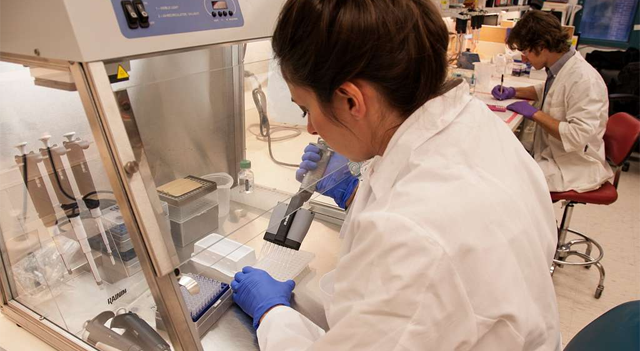
    European equities showed little direction on Wednesday, with traders largely on the sidelines ahead of a major policy announcement from the U.S. Federal Reserve.

    As of 08:05 GMT, Germany’s DAX was down 0.1%, France’s CAC 40 eased 0.1%, while the UK’s FTSE 100 inched up 0.1%.

    Fed meeting takes center stage

    Global investors are focused on the Fed’s final policy meeting of the year, where the central bank is widely expected to cut interest rates by 25 basis points. The Fed previously reduced its benchmark range on October 29, lowering it to 3.75%–4.00% from 4.00%–4.25%.

    That said, the decision may not be unanimous—five of the 12 FOMC members have either pushed back against or expressed doubt about further easing.

    Adding to the complexity, the Fed still lacks full visibility into the economy. The record-length U.S. government shutdown has delayed the November jobs report until December 16, meaning policymakers must act without a complete data set.

    Before the Fed announcement, the Bank of Canada is expected to keep rates unchanged at 2.25%, with many economists believing the current level may hold until at least 2027.

    Tui shines in its 2025 results

    In corporate news, Tui (TG:TUI1) delivered record adjusted earnings for fiscal 2025, beating its upgraded guidance from August and posting a 12.6% annual increase. The travel group also announced its first dividend.

    Norway’s Storebrand (TG:A3KNZ7) raised its 2028 financial targets, lifting its return-on-equity goal to 17% from 14%.

    Sweden’s Husqvarna (TG:HRZ) updated its long-term strategy and unveiled a significant cost-cutting program ahead of its capital markets event.

    Attention will also turn to Oracle (NYSE:ORCL) after the U.S. close, with markets watching closely for results from the cloud and software heavyweight.

    “Bookings [are] expected to be explosive (once again) while cash flow suffers from the company’s aggressive spending,” said analysts at Vital Knowledge, in a note.

    Oil firms after steep stockpile drop

    Crude prices ticked higher on Wednesday, supported by a sharper-than-forecast decline in U.S. crude inventories, ongoing Ukraine peace discussions, and expectations of a Fed rate cut later in the day.

    Brent futures rose 0.2% to $62.05 per barrel, while U.S. West Texas Intermediate contracts gained 0.2% to $58.38.

    Both benchmarks had fallen nearly 3% across the previous two sessions amid speculation that a Russia-Ukraine peace agreement could trigger the lifting of sanctions on Russian companies, potentially unlocking restricted crude exports.

    But Tuesday’s American Petroleum Institute data offered a counterweight: U.S. commercial crude inventories slid by 4.8 million barrels in the week ending Dec. 5—far more than the roughly 1.7 million-barrel decline analysts had forecast.

    The larger-than-expected draw points to either stronger consumption or tighter supply, providing a short-term boost to sentiment, along with the anticipated Fed rate cut.

  • Magnum’s New Life as a Stand-Alone Company: Sweet Upside or a Messy Beginning? Barclays Offers Its View

    Magnum’s New Life as a Stand-Alone Company: Sweet Upside or a Messy Beginning? Barclays Offers Its View

    Barclays has initiated coverage on The Magnum Ice Cream Company B.V. (LSE:MICC) with an “equal weight” rating and a €13.7 price target, striking a cautiously optimistic tone on the newly independent ice cream group while highlighting several early hurdles that may complicate its growth story.

    The bank expects the world’s largest dedicated ice cream producer to face slight margin erosion in the near term, forecasting a drop of roughly 30 basis points in reported EBITDA margins in 2026—counter to management’s plan for annual improvements of 40–60 basis points. Barclays anticipates margins of 16.4% in 2025, followed by a dip in 2026 and a modest rebound to 16.6% in 2027.

    “We see a compelling margin story, but somewhat back-end-weighted In our view, there is no denying that Magnum has a compelling margin story going forward, and we believe that demerging from Unilever is the right move to unlock its full margin potential,” the brokerage said.

    Analysts flagged three major areas of concern. First, the acquisition of Kwality Wall’s in India is expected to add approximately €200 million in revenue but contribute no EBITDA, creating dilution. The Indian business has seen margins plunge from 7.1% in FY 2024–25 to 0.0% in the first half of FY 2025–26 due to cocoa inflation and GST-related price resets. Second, royalty fees from Kwality Wall’s—€16 million in 2024—will disappear once the business is fully integrated, weighing margins by another 20 basis points. Finally, depreciation expenses will shift from non-cash to cash items, creating a further 20 basis point drag.

    Volume growth is viewed as the biggest unknown. From 2019 to 2024, Magnum delivered average organic growth of 3.9%, but volumes declined 0.6% while pricing contributed 4.5%. Quarterly volumes have been volatile, ranging from a 10.1% drop in Q3 2023 to a 6.7% increase in Q3 2024.

    “We usually prefer companies, especially newly listed companies, to build a track record and create a ’meet or beat’ culture,” analysts wrote, expressing doubt about whether Magnum can sustain the momentum required to hit its 3–5% organic growth target.

    Barclays also questioned the brand’s pricing power given its sizable exposure to Turkey, which accounts for 7–8% of revenue but an estimated 14–15% of EBIT. Turkey is considered a hyperinflationary market, and U.S. pricing has recently slipped into negative territory.

    Another factor weighing on the long-term outlook is the rise of weight-loss drugs. U.S. per-capita ice cream consumption has dropped about 25% since 2000—from 26.1 pounds per year to 19.5 pounds in 2023. With roughly one in eight U.S. adults using GLP-1 medications as of May 2024, research from Cornell University suggests these consumers cut spending on indulgent items by 6.7% to 11.1%.

    Capital allocation is under scrutiny as well. Management expects capital expenditure to rise from 4% to 5% of sales to refresh freezer infrastructure and fund expansion in emerging markets. Barclays questioned whether that level is sufficient, noting that “nearest peer Froneri has been running with higher capex requirements than Magnum on average in the last three years.”

    Free cash flow is projected to fall to €527 million in 2026 from €814 million in 2024. Net debt is expected to reach €3.5 billion by the end of 2025, which would put leverage at roughly 2.6x adjusted EBITDA, with €139 million in net interest costs forecast for 2026.

    Despite the caution, Barclays emphasized several enduring strengths. Magnum now stands alone after its 2025 separation from Unilever and operates a global network of 3 million freezer cabinets—twice that of competitor Froneri. It also owns six of the world’s top ten ice cream brands and holds roughly 20% of global market share. Research investment was €92 million (1.2% of revenue) in 2024, compared with Froneri’s €14.8 million (0.3%).

    The €13.7 price target is based on a discounted cash-flow model using a 7.5% weighted average cost of capital and 2% long-term growth rate, equating to 8.7x expected 2026 adjusted EBITDA.

  • Optima Health Posts 17% Revenue Growth in First Half of 2025

    Optima Health Posts 17% Revenue Growth in First Half of 2025

    Optima Health Plc (LSE:OPT), a leading UK provider of workplace health services, reported that revenue rose 17% to £59.5 million for the six months to September 30, matching market expectations.

    Adjusted EBITDA slipped 5% to £8.3 million from £8.7 million a year earlier, with the company attributing the decline to higher national insurance costs and the additional expenses of operating as a publicly listed business.

    During the period, Optima completed two strategic acquisitions: Cognate Health in Ireland—its first international purchase—and the Care first Employee Assistance Business, which broadens its mental health support capabilities.

    Operating cash flow strengthened considerably, rising to £6.5 million from a £0.6 million outflow in the prior year. Net debt excluding lease liabilities increased to £4.7 million, compared with £0.6 million a year earlier.

    Optima also secured £1.9 million in annualised new business during the half, with a further £8.3 million signed or at preferred bidder status shortly after the period ended. The company reported a healthy new business pipeline valued at £11.5 million in annualised revenue.

    “Optima has continued to deliver on its strategic objectives,” said Jonathan Thomas, Chief Executive Officer. “We have successfully grown our underlying business, which has helped us achieve 17% top line growth year on year.”

    The company has launched a transformation programme aimed at improving its platform and boosting margins. It is also mobilising operations for a £210 million contract to provide medical assessment services to UK Armed Forces in partnership with Serco.

  • FTSE 100 Rises as Pound Strengthens; Cohort and Berkeley in Focus

    FTSE 100 Rises as Pound Strengthens; Cohort and Berkeley in Focus

    UK equities edged higher early Wednesday, with the FTSE 100 posting modest gains and the pound advancing against the U.S. dollar, even as broader European markets slipped into negative territory.

    By 08:30 GMT, the FTSE 100 was up 0.2%, while sterling gained 0.2% versus the dollar, moving above the 1.33 mark. In contrast, Germany’s DAX declined 0.1%, and France’s CAC 40 dipped 0.2%.

    UK corporate roundup

    Cohort (LSE:CHRT) reported a 9% rise in first-half revenue to £128.8 million. Adjusted operating profit eased to £9.7 million, reflecting weaker margins in the Sensors and Effectors division. The company pointed to a less favourable mix on its Italian sonar programme and continued low-margin work at SEA as the main pressures on profitability. Chess, however, returned to profit after posting a loss last year.

    Berkeley Group Holdings (LSE:BKG) posted interim results slightly ahead of analyst expectations, despite slower sales in the run-up to last month’s UK budget amid heightened market speculation. The developer delivered £254 million in adjusted pre-tax profit for the first half of FY26—2% above consensus forecasts—though this figure was 8% lower year-on-year.

    Elsewhere, Volution Group plc (LSE:FAN) announced a deal to purchase AC Industries in Australia for £75 million upfront, with up to £14.5 million in potential additional payments. AC Industries, founded in 1991 and rebranded in 2013, produces specialist ventilation ducting for the Australian underground mining sector, supplying 120 mines—representing 79% of revenue—and expanding internationally across EMEA and APAC.

    Optima Health PLC (LSE:OPT) reported a 17% increase in half-year revenue to £59.5 million, in line with expectations. Adjusted EBITDA slipped 5% to £8.3 million, with the company citing higher national insurance costs and expenses associated with being publicly listed.

    Meanwhile, Redcentric (LSE:RCN) said it has agreed to sell its data centre division for up to £127 million in cash to Stellanor Datacenters Group Limited. The deal, announced on October 23, is expected to close by March 2026, pending regulatory clearance and customary conditions. The divestment will allow Redcentric to sharpen its focus on core managed services operations.

  • Gulf Keystone Petroleum Reports Landmark Year with Export Restart and Strong Financial Delivery

    Gulf Keystone Petroleum Reports Landmark Year with Export Restart and Strong Financial Delivery

    Gulf Keystone Petroleum (LSE:GKP) has highlighted a milestone year following the resumption of pipeline exports from the Shaikan Field, which resulted in the company receiving its first payment for exported volumes. Strong operational execution has positioned Gulf Keystone to meet its 2025 production and financial guidance, while also enabling the distribution of $50 million in dividends to shareholders.

    Looking ahead, the company plans to prioritise ongoing projects and is evaluating a restart of drilling in 2026, dependent on the reliability of future export payments. Gulf Keystone is additionally exploring the possibility of a secondary listing on Euronext Growth Oslo, subject to supportive market conditions.

    Gulf Keystone’s outlook reflects solid financial foundations and encouraging corporate progress, though valuation pressures and operational uncertainties remain important considerations. Sustaining cash flow generation and navigating geopolitical dynamics will be key to maintaining performance momentum.

    More about Gulf Keystone Petroleum Ltd.

    Gulf Keystone Petroleum Ltd. is an independent oil and gas company operating in the Kurdistan Region of Iraq. Its activities centre on the exploration and production of hydrocarbons, with the Shaikan Field serving as its flagship asset.

  • Cohort plc Posts Revenue Growth and Maintains Strong Order Book in H1 2025

    Cohort plc Posts Revenue Growth and Maintains Strong Order Book in H1 2025

    Cohort plc (LSE:CHRT) reported a 9% rise in revenue to £128.8 million for the first half of 2025, supported by strong contributions from EM Solutions and other group companies, with the exception of MCL. Adjusted operating profit edged down slightly to £9.7 million, but the group continued to demonstrate resilience, ending the period with an order book of £604.5 million. Reflecting confidence in future performance, Cohort increased its interim dividend by 10%. The Communications and Intelligence division delivered a notable uplift in profit, while margins in the Sensors and Effectors division softened due to specific project impacts. Management expects momentum to build in the second half, aided by the company’s substantial order pipeline and a favourable outlook across core defence markets.

    Cohort’s positive financial results and supportive corporate developments are tempered by bearish technical indicators and a moderate valuation profile. While the company’s revenue trajectory and strategic execution remain strengths, broader market sentiment suggests a degree of caution.

    More about Cohort plc

    Cohort plc is a defence-focused technology group with operations in the UK, Australia, Germany, and Portugal. The company is organised into two primary divisions: Communications and Intelligence—encompassing EID, EM Solutions, MASS, and MCL—and Sensors and Effectors, comprising Chess Dynamics, ELAC SONAR, and SEA. Cohort provides a wide range of products and services to both domestic and international defence customers.

  • CRISM Therapeutics Launches £100,000 Retail Offer to Support Phase 2 Clinical Trial

    CRISM Therapeutics Launches £100,000 Retail Offer to Support Phase 2 Clinical Trial

    CRISM Therapeutics Corporation (LSE:CRTX), a healthcare and pharmaceuticals company, has announced a retail share offer aimed at raising up to £100,000. The offer consists of new ordinary shares priced at 9 pence each and forms part of the company’s broader funding strategy for its Phase 2 clinical trial evaluating irinotecan-ChemoSeed in patients with glioblastoma. The offer is open to UK investors and is being coordinated by SP Angel Corporate Finance LLP. Completion remains subject to the admission of the new shares to trading on AIM.

    More about CRISM Therapeutics Corporation

    CRISM Therapeutics Corporation is a UK-based clinical-stage biotech company focused on improving cancer treatment through localized, sustained chemotherapy delivery. Its lead technology, ChemoSeed, is designed for implantation directly into tumors or surgical margins—particularly in the treatment of glioblastoma—allowing therapeutic agents to bypass the blood–brain barrier and more effectively target cancerous tissue.