Author: Fiona Craig

  • Moonpig Raises Earnings Outlook and Announces £65m Share Buyback

    Moonpig Raises Earnings Outlook and Announces £65m Share Buyback

    Moonpig Group plc (LSE:MOON), a leading online greeting card retailer in the UK and the Netherlands and a major participant in the UK gift experiences market, operates well-known brands including Moonpig, Buyagift, Red Letter Days and Greetz. Through its proprietary digital platforms, the company offers personalised greeting cards, curated gifts and fast delivery services, supported by a data-driven operating model and strong consumer brand recognition.

    The group reported trading performance in line with expectations for the financial year ending 30 April 2026. Management now anticipates mid-single-digit growth in both adjusted EBITDA and adjusted EPS, placing results at the upper end of its previously communicated 8%–12% guidance range. Strong free cash flow generation continues to support shareholder returns.

    Revenue at the core Moonpig brand is expected to increase at a high-single-digit rate, while the Greetz business in the Netherlands is forecast to deliver modest growth. The Experiences segment, however, is projected to record a mid-single-digit revenue decline. Solid cash generation has enabled the company to complete a £60m share buyback during FY26 and announce a further £65m repurchase programme for FY27. Following these distributions, leverage is expected to remain around 1.1 times EBITDA. The new buyback also signals management’s confidence in long-term growth prospects under recently appointed CEO Catherine Faiers.

    Despite these positive developments, Moonpig’s outlook remains mixed. While technical indicators appear favourable and corporate actions such as share buybacks and leadership changes provide strategic support, concerns persist around profitability and leverage. Valuation metrics also warrant caution, particularly due to the company’s negative price-to-earnings ratio.

    More about Moonpig Group plc

    Moonpig Group plc is a digital-first greeting card and gifting platform serving primarily the UK and Dutch markets. The company operates the Moonpig, Buyagift and Red Letter Days brands in the UK, alongside the Greetz platform in the Netherlands. Moonpig holds the leading online market position for greeting cards in both countries and is also the UK’s top provider of gift experiences. Its business model leverages proprietary technology, data science and mobile applications to personalise products and enable next-day delivery for customers celebrating key occasions.

  • Ilika’s Goliath Solid-State Cells Receive UK Defence Safety Validation

    Ilika’s Goliath Solid-State Cells Receive UK Defence Safety Validation

    Ilika plc (LSE:IKA), the UK developer of solid-state batteries, has announced encouraging safety test outcomes for its Goliath large-format cells following evaluations conducted by a UK defence agency, highlighting their suitability for demanding defence-related applications.

    Independent firing-range trials found that the Goliath 10Ah cells delivered comparable — and in some cases improved — thermal safety performance relative to conventional NCA lithium-ion batteries. Notably, the Goliath cells stored roughly three times more energy while exhibiting safer thermal characteristics, including a delayed onset of thermal runaway and lower temperatures during runaway events.

    The results reinforce Ilika’s strategy of positioning enhanced safety as a key differentiator for its Goliath battery platform. This safety profile is particularly relevant for high-risk operational environments such as defence systems and unmanned aerial vehicles. Feedback from a UK defence power-systems specialist involved in the evaluation indicated interest in continuing the assessment process for potential defence deployment, suggesting opportunities for Ilika to strengthen collaborations in safety-critical sectors and move closer to commercialising its solid-state battery technology.

    However, Ilika’s broader outlook remains constrained by financial headwinds. The company has reported declining revenue, ongoing losses, and negative operating and free cash flow. Technical indicators also remain weak, with the shares trading below major moving averages and showing a negative MACD trend. Valuation metrics are further pressured by the absence of positive earnings.

    These concerns are partially balanced by operational progress highlighted in recent earnings discussions, including customer shipments, incoming purchase orders, and development milestones for battery prototypes. Even so, continued cash burn and the long timelines associated with licensing agreements remain important risks for investors to monitor.

    More about Ilika plc

    Ilika plc is a UK-based developer of solid-state battery technologies serving industries such as electric vehicles, medical technology, and consumer electronics. The company produces Stereax miniature solid-state batteries designed for medical implants, industrial sensors, and IoT devices, alongside its Goliath large-format batteries aimed at electric vehicles and cordless equipment. Ilika’s business model centres on licensing its proprietary battery technology to OEMs and manufacturing partners in exchange for fees and future royalty streams.

  • Futures indicate higher start for Wall Street: Dow Jones, S&P, Nasdaq

    Futures indicate higher start for Wall Street: Dow Jones, S&P, Nasdaq

    U.S. stock futures are signaling a positive opening for markets on Tuesday, suggesting equities may build on the rebound recorded in the previous session.

    The expected gains come as investors try to move past recent swings in crude oil prices tied to the escalating tensions in the Middle East.

    Crude oil for April delivery is currently rising more than 2 percent after dropping by over 5 percent during Monday’s trading.

    The latest increase in oil prices follows a wave of Iranian attacks on the United Arab Emirates, reportedly targeting Dubai International Airport and the Fujairah oil port in what marks a major escalation in the conflict.

    A drone strike caused a fire at the Fujairah Oil Industry Zone in the UAE, although reports indicate that no casualties were recorded. The facility is located roughly 93 miles east of Dubai.

    Reports of loud explosions and air defense activity emerged across the UAE, Saudi Arabia and Qatar as the U.S.-Israel conflict with Iran entered its eighteenth day.

    The Israeli military said it had launched a “wide-scale wave of strikes” across Iran’s capital and was also intensifying operations against Iran-backed Hezbollah targets in Lebanon.

    At the same time, several U.S. allies—including Germany, Spain, Italy, Australia and Japan—have declined President Donald Trump’s request to assist in securing the Strait of Hormuz, a critical passage for roughly one-fifth of the world’s energy shipments.

    After trending lower over several sessions, U.S. stocks posted a strong recovery on Monday. All three major indexes ended the day higher, led by gains in technology shares.

    The benchmarks closed below their intraday peaks but still recorded solid advances. The Nasdaq jumped 268.82 points, or 1.2 percent, to 22,374.18, the S&P 500 climbed 67.19 points, or 1.0 percent, to 6,699.38, and the Dow Jones Industrial Average rose 387.94 points, or 0.8 percent, to 46,946.41.

    Monday’s rally coincided with a steep drop in oil prices, with crude for April delivery falling nearly 5 percent after having surged 8.6 percent last week.

    Oil prices retreated after President Donald Trump urged other countries to help protect the Strait of Hormuz.

    “I’m demanding that these countries come in and protect their own territory, because it is their territory. It’s the place from which they get their energy,” Trump told reporters aboard Air Force One on Sunday. “And they should come and they should help us protect it.”

    “Why are we maintaining the Hormuz Strait when it’s really there for China and many other countries?” he asked. “Why aren’t they doing it?”

    The decline in oil prices helped ease some of the market’s recent inflation concerns, although the Federal Reserve is still widely expected to keep interest rates unchanged at its upcoming meeting.

    Value buying may also have supported the market’s recovery after the major averages closed at their lowest levels in more than three months last Friday.

    On the economic front, a report from the Federal Reserve showed U.S. industrial production rose slightly more than anticipated in February.

    The Fed said industrial production increased by 0.2 percent in February after a 0.7 percent gain in January. Economists had forecast a more modest increase of 0.1 percent.

    Computer hardware companies were among the session’s top performers, with the NYSE Arca Computer Hardware Index advancing 2.6 percent.

    Networking and semiconductor stocks also posted strong gains, contributing to the broader rally in the technology-heavy Nasdaq.

    Outside the tech sector, steel stocks also moved higher, pushing the NYSE Arca Steel Index up by 1.7 percent.

    Airline, brokerage and housing stocks also recorded notable gains, rising alongside most other major sectors.

  • European stocks rise despite renewed increase in oil prices: DAX, CAC, FTSE100

    European stocks rise despite renewed increase in oil prices: DAX, CAC, FTSE100

    European equity markets traded mostly higher on Tuesday, even as oil prices climbed again amid ongoing concerns about tightening global supply.

    U.S. President Donald Trump criticized several Western allies after they declined his request to deploy naval vessels to escort oil tankers through the Strait of Hormuz, as the U.S.-Israeli conflict with Iran entered its 18th day.

    Iran has carried out a series of attacks against the United Arab Emirates (UAE), reportedly targeting Dubai International Airport and the Fujairah oil port, in what marks a significant escalation in the conflict.

    Germany’s DAX Index was up 0.6 percent during the session, while France’s CAC 40 Index and the U.K.’s FTSE 100 Index both advanced by 0.8 percent.

    Shares of Trustpilot Group (LSE:TRST) surged in London after the online review platform released strong full-year 2025 results and said it expects revenue to increase “in the high teens” on a constant-currency basis in 2026.

    German life sciences company Sartorius (TG:SRT3) also posted solid gains after announcing new medium-term financial targets.

    Industrial components manufacturer Essentra (LSE:ESNT) moved higher as well after reporting full-year 2025 results that matched analyst expectations.

    In contrast, Close Brothers (LSE:CBG) declined sharply. Although the lender reported a smaller loss for the first half of its financial year, it also announced plans to eliminate about 600 jobs by 2027 as part of a broader cost-cutting program.

  • Oil surges more than 2% with Brent above $100 as Iran conflict threatens supply

    Oil surges more than 2% with Brent above $100 as Iran conflict threatens supply

    Oil prices advanced sharply during Asian trading on Tuesday, with Brent crude staying above the $100-per-barrel level as markets remained concerned about potential supply disruptions tied to the ongoing U.S.-Israel conflict with Iran.

    Crude benchmarks rebounded after sliding roughly 5% in the previous session, following reports that some vessels had successfully navigated the Strait of Hormuz. Nevertheless, the vital shipping corridor remains largely restricted, and U.S. efforts to secure allied support for policing the waterway have met limited response.

    By 00:58 ET (04:58 GMT), Brent crude futures had climbed 2.8% to $103.01 per barrel, while U.S. West Texas Intermediate futures rose 2.6% to $95.54 per barrel.

    Iran conflict intensifies as Hormuz shipping remains constrained

    Clashes involving the United States, Israel and Iran showed little sign of easing on Tuesday, with the conflict entering its third week.

    Iran warned it could target U.S.-linked industries across the Middle East after the United States and Israel carried out strikes last week on Kharg Island, one of Iran’s key oil export terminals.

    During the early hours of Tuesday, Iran and Israel exchanged fresh air strikes, while drones and rockets were also launched toward the U.S. embassy in Baghdad.

    Over the weekend, U.S. President Donald Trump called on several countries, including China, to assist in restoring shipping through the Strait of Hormuz. However, his appeal gained little traction, with several American allies saying they had no immediate plans to send naval forces to the region.

    The control of the strait has become a focal point of the conflict, as approximately 20% of the world’s oil supply passes through the narrow waterway. Iran had effectively closed the route earlier this month.

    Still, reports on Monday indicated that some liquefied gas tankers flying Indian and Pakistani flags managed to transit the strait. Iran had previously indicated it might allow vessels from certain countries to pass while targeting ships linked to the United States and its allies.

    Oil prices have climbed significantly since the conflict began, supported by fears that disruptions to supply could persist. Many Asian economies depend heavily on crude shipments transported through the Strait of Hormuz.

    The inflationary impact of the conflict has also become a key concern for markets, as higher energy prices could push global central banks toward tighter monetary policy.

    Several major central banks—including the Federal Reserve, the European Central Bank and the Bank of Japan—are scheduled to hold policy meetings later this week.

  • Gold climbs above $5,000 as Iran conflict and central bank decisions dominate market outlook

    Gold climbs above $5,000 as Iran conflict and central bank decisions dominate market outlook

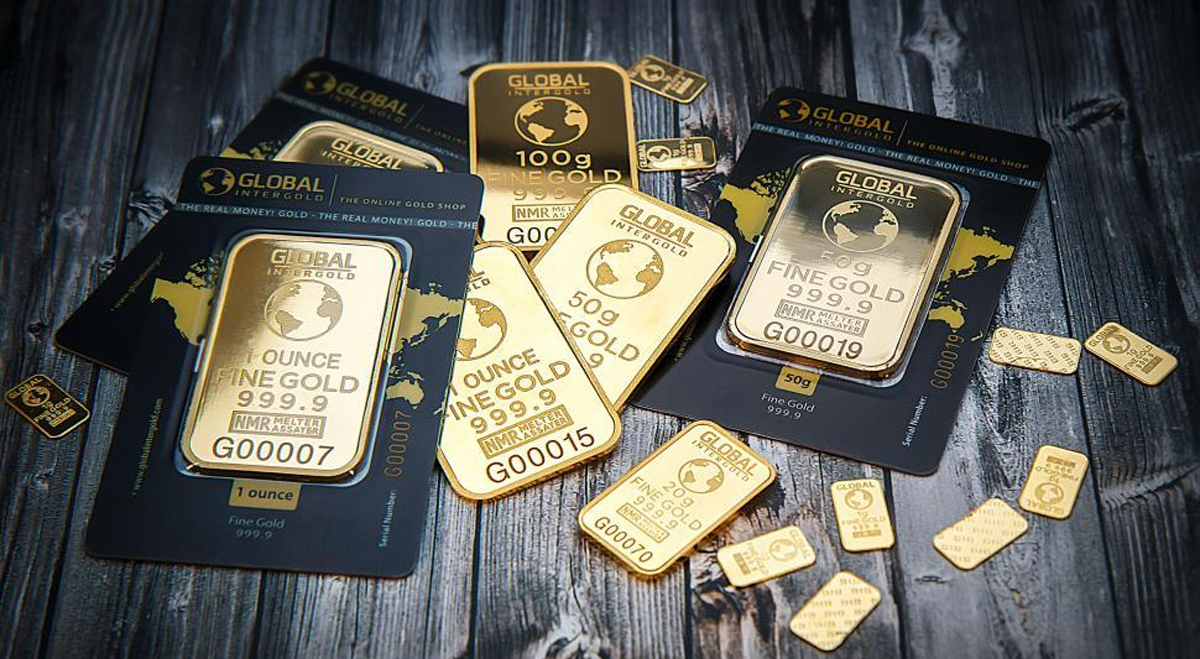
    Gold prices moved higher in Asian trading on Tuesday, pushing back above the $5,000-per-ounce threshold as investors tracked developments in the U.S.-Israel conflict involving Iran, movements in oil markets and several central bank policy meetings scheduled for this week.

    The precious metal had briefly dipped below $5,000 per ounce in the previous session. However, it rebounded as a decline in oil prices helped ease some concerns that the conflict could trigger stronger inflationary pressures.

    Spot gold rose 0.6% to $5,035.62 per ounce by 01:26 ET (05:26 GMT), while gold futures increased 0.8% to $5,039.94 per ounce.

    Gold holds steady within recent range amid geopolitical uncertainty

    Despite the latest gains, gold continued to trade within the $5,000 to $5,200 per ounce band that has dominated price action for roughly the past three weeks, reflecting mixed signals from the evolving situation in Iran.

    Demand for safe-haven assets provided support for bullion, though the rally was tempered by fears that the conflict could push global inflation higher.

    Other precious metals also advanced during the session. Spot platinum climbed 1.9% to $2,156.27 per ounce, while spot silver gained 1% to $81.785 per ounce.

    However, like gold, both metals have mostly traded sideways since pulling back from record highs reached in late January.

    Central bank meetings take centre stage

    Investors are also closely watching a series of central bank meetings taking place this week, with the Federal Reserve’s policy announcement on Wednesday drawing the greatest attention. The Fed is broadly expected to keep interest rates unchanged as policymakers assess the potential inflationary impact of the Iran conflict.

    The Bank of Canada is also scheduled to meet on Wednesday, while the Bank of Japan, Swiss National Bank, Bank of England and the European Central Bank will announce their interest rate decisions on Thursday.

    Market participants are focusing particularly on inflation trends and the outlook for monetary policy, especially as rising energy prices linked to the Iran conflict could influence central bank decisions.

    There are increasing concerns that a surge in oil-driven inflation could prompt central banks to adopt a more hawkish stance, potentially keeping borrowing costs elevated for longer.

    Higher interest rates generally weigh on non-yielding assets such as gold because they reduce the opportunity cost of holding cash or interest-bearing securities. Much of gold’s rally earlier in 2026—which pushed the metal to record highs near $5,600 per ounce—was fueled by expectations that interest rates would fall during the year.

  • Futures dip as oil advances, RBA hikes rates and Nvidia outlines massive AI chip demand: Dow Jones, S&P, Nasdaq, Wall Street

    Futures dip as oil advances, RBA hikes rates and Nvidia outlines massive AI chip demand: Dow Jones, S&P, Nasdaq, Wall Street

    U.S. equity futures moved lower early Tuesday as investors weighed rising geopolitical risks linked to Iran and potential disruptions to global energy supply. Oil prices climbed after fresh security incidents near the Strait of Hormuz, while gold edged higher ahead of a crucial Federal Reserve policy decision later this week. Meanwhile, the Reserve Bank of Australia raised interest rates, and Nvidia (NASDAQ:NVDA) CEO Jensen Huang predicted enormous future demand for artificial intelligence chips.

    Futures edge lower

    U.S. stock futures declined in early trading as markets monitored crude prices, which have remained above the $100-per-barrel mark amid the continuing conflict involving Iran.

    At 04:24 ET, Dow Jones futures were down 163 points, or 0.4%. S&P 500 futures fell 28 points, also 0.4%, while Nasdaq 100 futures dropped 124 points, or 0.5%.

    Wall Street’s main indices had finished the previous session higher, supported by hopes that a coalition of countries might assist the United States in reopening the Strait of Hormuz—a critical maritime route south of Iran that carries about one-fifth of the world’s oil shipments.

    While the United Kingdom and France said they would consider discussions with Washington, several other U.S. partners—including Germany and Japan—declined President Donald Trump’s request for assistance in reopening the strategic shipping lane.

    Trump previously suggested the United States might not require outside help to restore tanker traffic through the strait, though he noted that “numerous countries” had told him that “they’re on the way” to offering support.

    Oil prices gain

    Crude prices rose in early European trading Tuesday, highlighting ongoing concerns that maritime disruptions in the Strait of Hormuz could persist.

    Several container shipping companies have largely halted voyages through the narrow passage, citing safety concerns for crews and challenges securing insurance coverage. Iran has also warned that it will block vessels carrying goods that could benefit the United States or its allies.

    According to a report from the New York Times, a projectile struck a tanker anchored near a port in the United Arab Emirates early Tuesday. Citing the United Kingdom Maritime Trade Operations Center, the newspaper said the vessel, located near the port of Fujairah at the southern entrance of the strait, suffered only limited damage.

    Authorities in the UAE also reported that a drone had caused a fire at a major oil facility.

    In a separate development, Trump said he had requested that a planned meeting with Chinese President Xi Jinping next month be postponed. The U.S. president had previously warned the summit could be delayed if China did not use its influence to help reopen the strait. Iran, which exports oil to China, has continued allowing Chinese vessels to pass safely through the passage.

    Gold edges up

    Gold prices climbed in Asian trading as investors focused on oil market developments, the ongoing U.S.-Israel conflict involving Iran and several key central bank meetings scheduled for this week.

    The precious metal briefly slipped below $5,000 per ounce in the previous session. Increased demand for safe-haven assets has been offset by concerns that the conflict could intensify inflationary pressures, while a stronger U.S. dollar has also tempered gains.

    Gold has largely traded within a $5,000 to $5,200 per ounce range over the past three weeks.

    Market attention is now shifting to a series of central bank policy decisions this week, particularly the Federal Reserve’s meeting on Wednesday. The Fed is widely expected to keep interest rates unchanged as policymakers assess the potential inflation impact of the Iran conflict.

    The Bank of Canada will also meet on Wednesday, while the Bank of Japan, Swiss National Bank, Bank of England and European Central Bank are scheduled to announce interest rate decisions on Thursday.

    RBA raises interest rates

    The Reserve Bank of Australia raised its benchmark interest rate by 25 basis points on Tuesday, as expected, responding to a resurgence in inflation toward the end of 2025 and potential energy price shocks linked to Middle East tensions.

    The central bank lifted its policy rate to 4.1%, marking its second rate increase this year after a similar move in February.

    However, the decision revealed divisions among policymakers, with four of the nine members of the rate-setting board voting to keep rates unchanged.

    Speaking at a press conference following the announcement, RBA Governor Michele Bullock said all board members agreed that tighter policy was needed, but differed over the timing—a comment markets interpreted as hawkish.

    “Developments in the Middle East remain highly uncertain, but under a wide range of possible scenarios could add to global and domestic inflation,” the RBA said in a statement.

    Nvidia CEO forecasts $1 trillion in AI chip sales

    “This is the AI future. This is where AI wants to go.”

    Nvidia CEO Jensen Huang offered an upbeat vision for artificial intelligence during a widely watched keynote at a developer conference in California on Tuesday.

    Huang highlighted the rapid expansion of AI inference computing, which allows AI models to generate faster and more efficient responses to user queries. According to Huang, the technology has reached an “inflection” point, adding “[t]his is the secret sauce.”

    During the presentation, Huang introduced new server systems that combine Nvidia’s latest Vera Rubin architecture with a next-generation chip developed by Groq, a startup focused on AI inference whose leadership Nvidia secured through a $20 billion licensing agreement last year.

    The new platform is expected to deliver computing performance 350 times faster than Nvidia’s earlier Hopper graphics processing units.

    Against this backdrop, Huang projected that Nvidia could generate $1 trillion in AI chip sales by the end of 2027, compared with roughly $500 billion expected for the current year.

  • First Class Metals reports further visible gold at Roy prospect on Sunbeam project

    First Class Metals reports further visible gold at Roy prospect on Sunbeam project

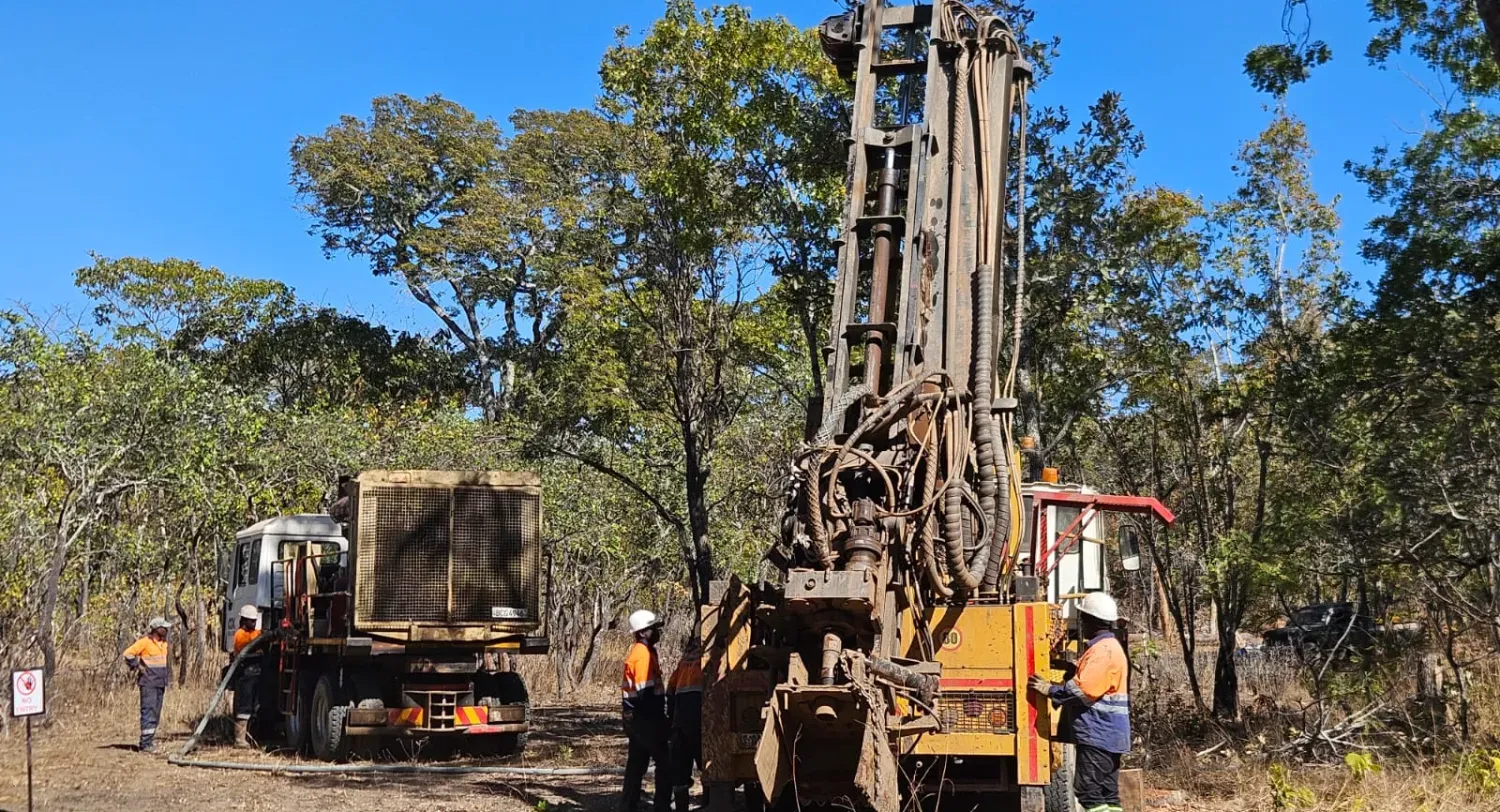
    First Class Metals (LSE:FCM) has announced the discovery of additional visible gold within drill core from a second hole at the Roy prospect on its Sunbeam property in Ontario, providing further evidence of gold mineralisation along the targeted structure. The company has now completed its planned drilling campaign at Roy, which comprised 12 holes totalling 1,030 metres and confirmed the presence of the mineralised zone across a strike length exceeding 300 metres.

    Geological logging and sampling activities are continuing, with six drill holes logged so far and eight remaining to be cut and sampled. The first two holes have already been sent to Thunder Bay for laboratory assay. According to management, the drilling campaign has produced encouraging early results, with multiple occurrences of visible gold and its association with galena strengthening the exploration potential of the Roy structure and enhancing the overall prospectivity of the wider Sunbeam property for future gold development.

    More about First Class Metals Plc

    First Class Metals is a UK-listed exploration company focused on identifying economically viable metal deposits in Ontario, Canada, particularly within the prolific Hemlo gold district near Marathon. The company fully owns seven claim blocks covering more than 250 km² and holds options on three additional blocks. While its primary exploration focus is gold, the group is also investigating opportunities in base and critical metals, including through a joint venture project at West Pickle Lake.

  • European stocks subdued as oil climbs amid ongoing Iran conflict: DAX, CAC, FTSE100

    European stocks subdued as oil climbs amid ongoing Iran conflict: DAX, CAC, FTSE100

    European equity markets opened cautiously on Tuesday, with major indices struggling to gain momentum as oil prices moved higher following reports that several U.S. allies declined President Donald Trump’s request to assist in reopening a key maritime route near Iran.

    At 08:03 GMT, the pan-European Stoxx 600 index slipped 0.1% to 598.08. Germany’s DAX declined 0.3%, France’s CAC 40 was broadly flat, while the UK’s FTSE 100 edged up 0.1%.

    Brent crude, the global oil benchmark, surged 3.3% to $103.58 in early European trading after Japan, Germany and Australia signaled they would not participate in U.S.-led efforts to restore shipping through the Strait of Hormuz. The strategic waterway handles roughly one-fifth of global oil shipments.

    Following the launch of joint U.S.-Israeli military strikes against Iran in late February, Tehran responded by threatening to target ships attempting to pass through the narrow strait, effectively disrupting traffic.

    As a result, several container shipping companies have suspended operations in the area, citing crew safety concerns and difficulties securing insurance coverage for voyages through the region.

    The jump in oil prices has heightened concerns about renewed global inflationary pressures, raising the possibility that central banks could reconsider the pace of interest rate cuts. With inflation risks increasing, both the European Central Bank and the U.S. Federal Reserve are widely expected to keep interest rates unchanged at their upcoming policy meetings this week.

  • IP Group shares surge 8% after Pfizer-linked obesity deal lifts 2025 NAV

    IP Group shares surge 8% after Pfizer-linked obesity deal lifts 2025 NAV

    IP Group (LSE:IPO) shares rose more than 8% on Tuesday after the UK-based science investor reported a 13% increase in net asset value per share for 2025, supported largely by gains tied to Pfizer Inc’s acquisition in the obesity drug sector.

    Net asset value per share climbed to 110.4 pence as of Dec. 31, 2025, up from 97.7 pence a year earlier. The increase followed the recognition of £128.2 million in licensing income after Pfizer agreed in November to acquire weight-loss drug developer Metsera in a deal worth up to $10 billion.

    The financial boost also triggered an unexpected accounting shift. In December, IP Group reclassified itself as an “investment entity” under IFRS 10 standards, changing the way its subsidiaries are consolidated within the group’s financial statements.

    That adjustment led to a technical breach of covenants tied to the company’s £120 million private placement. Noteholders defined qualifying cash as funds held solely at the parent company level, whereas IP Group had previously included cash held across the wider group structure.

    At the end of the year, the company held £87.8 million in cash equivalents and £123.2 million in deposits, but not enough of those funds were held directly by the parent entity.

    The group secured a waiver from noteholders and subsequently transferred cash to the parent company. However, the covenant breach required £119.7 million of borrowings to be reclassified from long-term to current liabilities.

    Despite posting a profit of £66.9 million compared with a loss of £207 million in 2024, and holding gross cash of £211 million, IP Group’s shares continue to trade at a steep discount to net asset value of nearly 47%.

    The stock ended 2025 at 58.6 pence versus a NAV of 110.4 pence. Management acknowledged the gap, noting that the company completed a £75 million share buyback during the year, retiring roughly 9% of its outstanding shares.

    Cash generated from portfolio exits totalled £68.1 million, significantly lower than the £183.4 million recorded in 2024. Meanwhile, companies within the portfolio collectively raised £914 million in funding over the course of the year.

    The group’s exposure to the Pfizer-related deal remains conditional. The £128.2 million valuation depends on royalty income linked to drug candidates including PF’3944, which has not yet completed Phase 3 clinical trials. IP Group’s sensitivity analysis indicates that the valuation could shift significantly depending on trial outcomes and discount rate assumptions.

    Chief Executive Greg Smith said the company remained confident it could achieve more than £250 million in portfolio exits between 2025 and the end of 2027.

    IP Group also revealed that it is partnering with Aberdeen to manage a portfolio of UK venture investments and said it has set aside an additional £30 million earmarked for future shareholder returns.