Author: Fiona Craig

  • Flowtech Fluidpower Delivers Modest Revenue Growth Despite Industry Headwinds

    Flowtech Fluidpower Delivers Modest Revenue Growth Despite Industry Headwinds

    Flowtech Fluidpower (LSE:FLO) has reported a 2.1% rise in group revenue for the first half of 2025 compared with the same period last year, overcoming ongoing pressures in the industrial sector. The company highlighted stronger momentum in its sales pipeline and order book, supported by internal growth initiatives. Since the start of 2025, the sales order book has expanded by 25%.

    Looking ahead to the second half of the year, Flowtech expects improved profitability and solid cash generation, aided by higher gross margins and tighter cost controls.

    Even with these positive developments, the company’s overall outlook remains mixed. Financial performance continues to be weighed down by negative profit margins and uneven cash flow. Technical analysis points to a bearish trend, while weak valuation metrics—driven by negative earnings—limit investor confidence.

    Company Overview

    Flowtech Fluidpower operates within the fluid power sector, supplying a wide range of products and delivering specialized engineering solutions. The company focuses on providing motion control systems and positioning itself as a trusted partner in the industry.

    This content is for informational purposes only and does not constitute financial, investment, or other professional advice. It should not be considered a recommendation to buy or sell any securities or financial instruments. All investments involve risk, including the potential loss of principal. Past performance is not indicative of future results. You should conduct your own research and consult with a qualified financial advisor before making any investment decisions.

  • Likewise Group Posts Strong First-Half 2025 Performance with Higher Sales and Profit

    Likewise Group Posts Strong First-Half 2025 Performance with Higher Sales and Profit

    Likewise Group Plc (LSE:LIKE) has delivered strong interim results for the first half of 2025, reporting a 10.2% year-on-year increase in total revenue to £77.9 million. Sales of Likewise-branded products climbed 14.1%, while underlying profit before tax surged 120% to £0.74 million. This performance was driven by solid revenue growth and efficiency gains across the business.

    Despite facing a tough trading environment, the company has continued to invest heavily in logistics and processing capacity, laying the groundwork for sustained expansion and greater market share. Reflecting its confidence in future prospects, the board has raised the interim dividend by 10%.

    Looking forward, Likewise’s outlook is underpinned by strong top-line growth and healthy cash flow, although profitability pressures remain. Technical analysis suggests a neutral to slightly bearish trend, while the elevated P/E ratio raises questions of overvaluation. The dividend yield offers some stability but is not considered a major driver of investor returns.

    Company Overview

    Likewise Group Plc is a fast-growing flooring distributor headquartered in the UK. The company supplies a broad range of flooring products and has built a strong presence among independent retailers and contractors. Supported by its extensive logistics network, Likewise continues to expand infrastructure to fuel its growth ambitions.

    This content is for informational purposes only and does not constitute financial, investment, or other professional advice. It should not be considered a recommendation to buy or sell any securities or financial instruments. All investments involve risk, including the potential loss of principal. Past performance is not indicative of future results. You should conduct your own research and consult with a qualified financial advisor before making any investment decisions.

  • Anglo American and Teck to Merge, Creating a Global Critical Minerals Powerhouse

    Anglo American and Teck to Merge, Creating a Global Critical Minerals Powerhouse

    Anglo American and Teck Resources Limited (LSE:AAL) have agreed to merge on equal terms, forming a new entity called Anglo Teck. The combined company is set to become a leading force in critical minerals and one of the world’s top five copper producers.

    The merger is projected to unlock significant value through synergies, including an estimated US$800 million in annual pre-tax savings, alongside an additional US$1.4 billion in yearly EBITDA gains expected between 2030 and 2049. The new group will be headquartered in Canada, benefit from a strong balance sheet, and enjoy greater access to global capital markets. Completion is targeted within 12 to 18 months, subject to regulatory approvals and customary conditions. Management emphasized that the deal is designed to deliver sustainable, long-term benefits for both shareholders and stakeholders.

    Anglo American’s market outlook is shaped by a mix of financial and technical factors. The company continues to face profitability pressures, yet technical indicators point to upward momentum in its stock. At the same time, a negative P/E ratio and modest dividend yield remain challenges, weighing on valuation metrics.

    Company Overview

    Anglo American is a major international mining group with operations spanning critical minerals such as copper, iron ore, and zinc. The company maintains a significant presence across Canada, South Africa, and the United Kingdom.

    This content is for informational purposes only and does not constitute financial, investment, or other professional advice. It should not be considered a recommendation to buy or sell any securities or financial instruments. All investments involve risk, including the potential loss of principal. Past performance is not indicative of future results. You should conduct your own research and consult with a qualified financial advisor before making any investment decisions.

  • Griffin Mining Shows Signs of Recovery Despite Lower Revenues

    Griffin Mining Shows Signs of Recovery Despite Lower Revenues

    Griffin Mining Limited (LSE:GFM) has released its unaudited interim results for the first half of 2025, reporting a notable rebound in output during the second quarter following the full operational halt in late 2024. While revenues dropped 25.7% compared with the same period last year, the company still recorded a gross profit of $25.1 million. This was largely supported by elevated gold prices, which made up 46.5% of total gross revenues.

    Looking ahead, Griffin will stop issuing quarterly trading updates, citing production fluctuations, and instead focus on half-yearly and annual reports. The company also expects the upcoming commissioning of Zone II at the Caijiaying Mine to significantly boost production capacity.

    The outlook for Griffin remains underpinned by a solid financial position and a strong balance sheet. However, headwinds persist, including shrinking revenues, weaker profitability, and negative free cash flow. Analysts also point to potential short-term weakness based on technical indicators, while the stock’s elevated P/E ratio raises questions about its valuation.

    Company Overview

    Griffin Mining Limited specializes in the extraction and processing of zinc, gold, silver, and lead. Its primary operations are centered at the Caijiaying Mine in China. The company’s shares are traded on the Alternative Investment Market (AIM) of the London Stock Exchange.

    This content is for informational purposes only and does not constitute financial, investment, or other professional advice. It should not be considered a recommendation to buy or sell any securities or financial instruments. All investments involve risk, including the potential loss of principal. Past performance is not indicative of future results. You should conduct your own research and consult with a qualified financial advisor before making any investment decisions.

  • Dow Jones, S&P, Nasdaq, Wall Street Futures Signal Modest Gains Ahead of Key Inflation Data

    Dow Jones, S&P, Nasdaq, Wall Street Futures Signal Modest Gains Ahead of Key Inflation Data

    U.S. stock futures are pointing to a slightly higher open on Monday, as investors anticipate a rebound after last week’s session closed mostly lower, despite pulling back from intraday lows.

    Optimism surrounding potential interest rate cuts appears to be supporting early gains following Friday’s weaker-than-expected U.S. employment report.

    CME Group’s FedWatch Tool shows a 90.1% probability that the Federal Reserve will reduce rates by 25 basis points later this month, after the Labor Department reported that payrolls increased by just 22,000 in August, far below economists’ expectations of 75,000. The report also revised June’s employment figure downward from a 14,000-job gain to a 13,000-job decline, while the unemployment rate ticked up to 4.3% from 4.2%, in line with forecasts.

    “In the near-term, weaker jobs data will increase the odds of a Fed rate cut, but could create shorter-term volatility, as a weaker labor market is not a sign of strength,” said Larry Tentarelli, Chief Technical Strategist for Blue Chip Daily Trend Report.

    Trading activity may remain subdued ahead of this week’s inflation reports, with producer prices scheduled for Wednesday and consumer prices on Thursday. Economists expect the annual producer price increase to hold at 3.3% in August, while consumer prices are forecast to rise 2.9% from 2.7% in July. Core consumer prices, which exclude food and energy, are expected to stay at 3.1%.

    Last Friday, stocks initially rose but reversed course after reaching intraday highs. The Dow closed down 220.43 points, or 0.5%, at 45,400.86; the S&P 500 fell 20.58 points, or 0.3%, to 6,481.50; and the Nasdaq dipped 7.31 points, or less than 0.1%, to 21,700.39. Over the week, the Nasdaq gained 1.1%, the S&P 500 added 0.3%, and the Dow lost 0.3%.

    Sector performance was mixed. Financials lagged, with the NYSE Arca Broker/Dealer Index and the KBW Bank Index dropping 1.9% and 1.8%, respectively. Oil producers also suffered from extended weakness in crude prices, sending the NYSE Arca Oil Index down 1.6%. In contrast, gold stocks surged 2.5% alongside rising gold prices, while steel, biotech, and housing sectors showed notable strength, partially offsetting declines in other areas.

    This content is for informational purposes only and does not constitute financial, investment, or other professional advice. It should not be considered a recommendation to buy or sell any securities or financial instruments. All investments involve risk, including the potential loss of principal. Past performance is not indicative of future results. You should conduct your own research and consult with a qualified financial advisor before making any investment decisions.

  • DAX, CAC, FTSE100, European Stocks Rise Slightly Ahead of Key French Vote

    DAX, CAC, FTSE100, European Stocks Rise Slightly Ahead of Key French Vote

    European markets edged higher on Monday as investors awaited a pivotal confidence vote in France, with Prime Minister François Bayrou expected to face defeat.

    Despite the Sentix survey showing eurozone investor sentiment falling sharply in September to its lowest point since April—dropping to -9.2 from -3.7 in August—markets remained relatively steady.

    In Germany, industrial output rebounded in July, rising 1.3% month-on-month after a 0.1% decline in June, led by a 9.5% surge in machinery and equipment manufacturing, according to Destatis. However, the country’s trade surplus narrowed as exports fell 0.6% in July, reversing a 1.1% gain in June, while imports edged down 0.1% after a 4.1% increase.

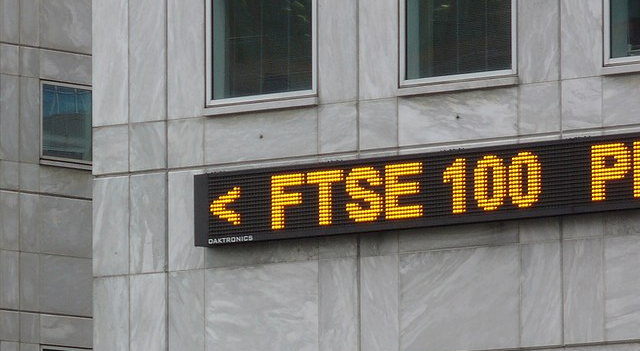
    On the stock front, the French CAC 40 gained 0.5%, Germany’s DAX added 0.4%, and the U.K.’s FTSE 100 rose 0.2%.

    Corporate movers included Swedish medical technology firm Elekta AB (BIT:1EKTA), which climbed following the appointment of a new CFO. U.K. homebuilder Vistry (LSE:VTY) rallied after partnering with Homes England to speed up large-scale housing developments. In contrast, British insurer Phoenix Group Holdings (LSE:PHNX) dropped after releasing its interim results for H1 2025.

    This content is for informational purposes only and does not constitute financial, investment, or other professional advice. It should not be considered a recommendation to buy or sell any securities or financial instruments. All investments involve risk, including the potential loss of principal. Past performance is not indicative of future results. You should conduct your own research and consult with a qualified financial advisor before making any investment decisions.

  • Five Key Market Events to Watch This Week

    Five Key Market Events to Watch This Week

    Investors are keeping a close eye on U.S. inflation data, set to dominate economic headlines, as the Federal Reserve’s upcoming interest rate decision later this month remains a central concern. In the corporate sphere, Oracle (NYSE:ORCL) is expected to release its latest quarterly earnings, offering insights into the ongoing momentum behind artificial intelligence investments. Meanwhile, political developments in France and decisions by the European Central Bank (ECB) could also influence market sentiment.

    U.S. Consumer Price Index in Focus

    The Consumer Price Index (CPI) for August, due Thursday, is shaping up as the week’s most critical economic report. Analysts expect a year-on-year increase of 2.9%, slightly higher than July’s 2.7%. Such a reading would pose a challenge for the Federal Reserve, as it balances its dual mandate of maximizing employment while maintaining price stability around its 2% long-term inflation target.

    With the labor market showing signs of slowing, Fed policymakers face the delicate task of managing both softening job growth and persistent price pressures. The risk of entering a period of stagflation—characterized by high inflation, weak growth, and elevated unemployment—remains a key concern. Federal Reserve officials, including Chair Jerome Powell, have suggested that supporting employment may take precedence over curbing inflation, with a potential rate cut seen as a measure to stimulate investment and hiring, albeit with inflationary risks.

    Oracle Earnings Release

    Oracle’s upcoming earnings report will be closely watched for clues on the state of the AI-driven software sector. Analysts at Vital Knowledge highlight two key metrics: backlog, measured by remaining performance obligations, and free cash flow. Wall Street anticipates a backlog of around $150 billion and free cash flow of $1.8 billion, rebounding from a negative $2.9 billion in the previous quarter due to lower capital expenditures.

    In June, Oracle raised its annual revenue forecast, citing robust demand for its cloud services that support AI infrastructure. CEO Safra Catz projected total fiscal 2026 revenue of at least $67 billion, implying growth of roughly 16.7% for the year, up from the previous outlook of 15%.

    French Confidence Vote

    Political developments in France are also in focus, with a confidence vote scheduled for Monday on Prime Minister François Bayrou’s fiscal plan. A likely defeat could force Bayrou to resign, further heightening political uncertainty. The government aims to reduce the deficit from 4.6% of GDP next year to 2.8% by 2029, with spending cuts and structural reforms valued at €43.8 billion. Resistance to measures such as reducing public holidays has already fueled skepticism among voters.

    Following the announcement of the vote, French government bond yields climbed to their highest levels since March, with the 30-year yield reaching levels unseen since June 2009. Analysts at ING note that opposition parties appear more focused on challenging the government than addressing the deficit, adding to market uncertainty.

    European Central Bank Decision

    The ECB is expected to hold interest rates steady at its meeting this week. Analysts caution, however, that debates within the central bank—between those advocating steady rates and those favoring cuts—may be more intense than market expectations suggest. Hawkish commentary from ECB President Christine Lagarde in July, alongside faster-than-expected growth and slightly elevated inflation, has tempered expectations for immediate policy shifts. The key deposit rate is expected to remain at 2% for a second consecutive meeting.

    Chinese Economic Data

    Finally, investors will monitor economic figures from China. Export growth slowed in August to 4.4% year-on-year in dollar terms, missing expectations of 5.0% and down from July’s 7.2%. Imports also slowed, reflecting weak domestic demand. The trade surplus, however, widened to $102.3 billion, surpassing forecasts of $99.4 billion. Midweek inflation data, including consumer and producer prices, will provide additional guidance on China’s economic trajectory, an important indicator for global markets.

    This content is for informational purposes only and does not constitute financial, investment, or other professional advice. It should not be considered a recommendation to buy or sell any securities or financial instruments. All investments involve risk, including the potential loss of principal. Past performance is not indicative of future results. You should conduct your own research and consult with a qualified financial advisor before making any investment decisions.

  • Dow Jones, S&P, Nasdaq, Wall Street, U.S. Futures Rise Ahead of Key Inflation Data; Global Politics and Oil Prices in Focus

    Dow Jones, S&P, Nasdaq, Wall Street, U.S. Futures Rise Ahead of Key Inflation Data; Global Politics and Oil Prices in Focus

    U.S. stock futures moved higher on Monday as investors positioned themselves ahead of critical inflation data and considered the likelihood of upcoming interest rate cuts by the Federal Reserve. At the same time, political uncertainty in France and Japan, along with a surge in oil prices following OPEC+ production announcements, are shaping investor sentiment.

    Futures Tick Up

    By 03:32 ET, S&P 500 futures were up 13 points (0.2%), Nasdaq 100 futures rose 90 points (0.4%), and Dow Jones futures gained 65 points (0.1%). Last Friday, the main U.S. indices retreated after softer-than-expected August nonfarm payrolls highlighted a cooling labor market. The data reinforced expectations that the Fed may reduce rates by at least 25 basis points during its September 16-17 meeting, with the possibility of a larger 50-point cut also being discussed.

    Despite Friday’s pullback, the S&P 500 remains near record highs reached on Thursday. Analysts note that September historically presents weaker market sentiment. Elevated valuations, uncertainties over U.S. trade policies, rising government bond yields, and concerns about the sustainability of the AI sector all weigh on investor confidence heading into the week.

    Inflation Data in Focus

    Investors’ attention now turns to Thursday’s U.S. consumer price index (CPI) for August, a key measure of inflation. Consensus forecasts suggest a 2.9% year-on-year increase, up from 2.7% in July. At this pace, the Fed faces the delicate challenge of balancing its dual mandate: supporting employment while keeping inflation near its 2% long-term target.

    A rate cut could help stimulate hiring and investment, but it may also risk fueling higher prices. Fed officials, including Chair Jerome Powell, have indicated that they may prioritize labor market support, leaving markets to interpret prior statements as guidance ahead of the next policy decision.

    French Confidence Vote

    Political developments in France may limit market upside. A confidence vote on Prime Minister François Bayrou’s fiscal plan is expected on Monday. If opposition parties reject the plan, Bayrou may be required to resign and submit his resignation to President Emmanuel Macron.

    The French government aims to reduce its deficit from 4.6% of GDP to 2.8% by 2029 through a combination of spending cuts and structural reforms totaling €43.8 billion. The plan has faced opposition from voters, including resistance to proposals such as the elimination of certain public holidays. Following the announcement of the vote, French 30-year bond yields have climbed to levels not seen since June 2009.

    Japan’s Leadership Change

    In Japan, political instability also increased after Prime Minister Shigeru Ishiba announced his resignation as leader of the Liberal Democratic Party, weeks after a significant defeat in upper house elections. The resignation, which follows a U.S.-Japan trade agreement reducing tariffs on Japanese goods, opens the possibility of a leadership contest in the world’s fourth-largest economy.

    The Japanese yen initially weakened against the U.S. dollar following Ishiba’s announcement but recovered part of its losses. The Nikkei 225 rose, while 10-year government bond yields remained relatively unchanged.

    Oil Prices Surge

    Crude oil prices jumped after OPEC+ agreed to raise output at a slower pace than earlier this year. At 03:25 ET, Brent futures increased 1.7% to $66.59 a barrel, while U.S. West Texas Intermediate futures rose 1.7% to $62.92 a barrel.

    OPEC+ plans to increase production by 137,000 barrels per day in October, significantly lower than the 555,000 bpd and 411,000 bpd increases implemented in previous months. The latest decision follows gradual production increases earlier this year, led by Saudi Arabia’s efforts to regain market share amid declining oil prices.

    This content is for informational purposes only and does not constitute financial, investment, or other professional advice. It should not be considered a recommendation to buy or sell any securities or financial instruments. All investments involve risk, including the potential loss of principal. Past performance is not indicative of future results. You should conduct your own research and consult with a qualified financial advisor before making any investment decisions.

  • DAX, CAC, FTSE100, European Stocks Edge Higher as Fed Cut Expectations Rise; French Politics Weigh

    DAX, CAC, FTSE100, European Stocks Edge Higher as Fed Cut Expectations Rise; French Politics Weigh

    European equity markets posted modest gains on Monday, buoyed by expectations of an interest rate cut from the U.S. Federal Reserve, although political uncertainty in France capped broader upside. By 07:02 GMT, Germany’s DAX climbed 0.7%, France’s CAC 40 rose 0.4%, and the U.K.’s FTSE 100 advanced 0.3%.

    Investor Optimism Driven by Fed Prospects

    Risk assets received support after last week’s disappointing U.S. jobs report reinforced the likelihood of a Federal Reserve rate reduction during its September 16-17 meeting. The soft employment data underscored signs of a cooling U.S. economy, leaving markets confident of at least a 25-basis-point cut. Analysts now debate whether the Fed may opt for a more aggressive 50-basis-point reduction, with the upcoming U.S. inflation report on Thursday expected to provide critical guidance.

    French Political Tensions Limit Gains

    Gains in European equities remain constrained by developments in France, where Prime Minister François Bayrou, the country’s fourth premier in three years, faces almost certain defeat in a confidence vote later in the session. The eurozone’s second-largest economy is grappling with a budget deficit approaching twice the EU’s 3% GDP limit. Bayrou’s proposed budget is unlikely to secure sufficient support, raising concerns over France’s ability to manage its debt.

    Recent turmoil has already affected French sovereign debt, with 30-year government bond yields last week reaching levels not seen since June 2009. Moody’s previously downgraded France’s credit rating after the last government collapse, and a repeat could pressure bonds further, risking forced sales of the nation’s already stressed debt.

    Japanese Leadership Change Adds Uncertainty

    Political instability also emerged in Japan over the weekend after Prime Minister Shigeru Ishiba announced he would step down as leader of the Liberal Democratic Party, weeks after the coalition suffered heavy losses in upper house elections. Ishiba’s resignation follows Tokyo securing a U.S. trade deal that lowers tariffs on Japanese exports, but it opens the door to a potential leadership contest in the world’s fourth-largest economy, especially after the LDP lost its upper house majority.

    Mixed German Economic Data

    Monday’s data from Germany showed a mixed picture: industrial production rose 1.3% in July compared with June, but exports unexpectedly fell by 0.6%, below the anticipated 0.1% gain. Imports also declined slightly, down 0.1% from the previous month.

    Oil Prices Climb After OPEC+ Decision

    Crude prices surged following OPEC+’s announcement to increase production at a slower pace than in previous months. At 03:02 ET, Brent futures gained 1.7% to $66.64 a barrel, while U.S. West Texas Intermediate crude rose 1.8% to $63.00 a barrel.

    The producer group agreed to raise output by 137,000 barrels per day in October, far below the 555,000 bpd and 411,000 bpd hikes seen earlier this year. The decision comes after OPEC+, led by Saudi Arabia, had gradually increased supply to regain market share amid falling oil prices.

    This content is for informational purposes only and does not constitute financial, investment, or other professional advice. It should not be considered a recommendation to buy or sell any securities or financial instruments. All investments involve risk, including the potential loss of principal. Past performance is not indicative of future results. You should conduct your own research and consult with a qualified financial advisor before making any investment decisions.

  • Dollar Edges Lower Ahead of Fed Meeting; Global Politics Influence Currencies

    Dollar Edges Lower Ahead of Fed Meeting; Global Politics Influence Currencies

    The U.S. dollar weakened slightly on Monday, extending losses from Friday after disappointing U.S. employment data reinforced expectations that the Federal Reserve may cut interest rates later this month. At 04:15 ET (08:15 GMT), the Dollar Index, which measures the greenback against six major currencies, fell 0.1% to 97.590, following a decline of more than 0.5% on Friday.

    Fed Rate-Cut Speculation Intensifies

    The dollar came under pressure at the end of last week after the U.S. nonfarm payrolls report revealed a sharp slowdown in job growth for August and an increase in the unemployment rate to 4.3%, a near four-year high. Investors now anticipate that the Federal Reserve could resume cutting rates after keeping them steady this year.

    Analysts at ING noted that the report was “soft enough to trigger market speculation about a potential 50-basis-point rate cut, similar to last September.” According to the CME FedWatch tool, markets are currently pricing in roughly a 10% chance of such an outsized cut, compared with zero a week ago.

    This week, markets will focus on the U.S. consumer price index for August. ING highlighted that a month-on-month increase of 0.4% (versus the 0.3% consensus) could provide temporary support for the dollar.

    European Currencies Impacted by Political Developments

    In Europe, the euro edged up 0.1% to 1.1730 against the dollar, supported by data showing German industrial production rose 1.3% in July from the previous month. However, gains were limited as French political uncertainty weighed on sentiment. Prime Minister François Bayrou, France’s fourth in three years, faces near-certain defeat in a confidence vote.

    France’s efforts to reduce its budget deficit—almost double the EU’s 3% of GDP limit last year—remain under pressure. ING noted that few opposition parties have concrete plans to tackle the 5%-plus deficit, and political instability could continue to weigh on government bonds, with the 30-year yield last week hitting levels not seen since June 2009.

    The British pound traded slightly higher at 1.3520 against the dollar, following a 0.5% gain on Friday. ING observed that with little U.K. economic data this week and few Bank of England speakers, trading ranges may remain narrow until next week’s BoE meeting and potential updates on quantitative tightening.

    Yen Weakens Amid Japanese Political Turmoil

    USD/JPY rose 0.3% to 147.80 after Japanese Prime Minister Shigeru Ishiba resigned, adding to political uncertainty and unsettling markets. Ishiba stepped down following heavy election losses and internal party dissent, raising questions about Japan’s fiscal and monetary policy direction.

    ING analysts noted that “FX markets appear to be taking fiscal risks more seriously, pushing USD/JPY above 148,” but caution that the pair may stall around 148.50–149.00 rather than break 150. Japan’s economy grew faster than initially estimated in Q2, supported by stronger consumption and inventory growth.

    Elsewhere, USD/CNY was largely steady at 7.1325, while AUD/USD gained 0.3% to 0.6580.

    This content is for informational purposes only and does not constitute financial, investment, or other professional advice. It should not be considered a recommendation to buy or sell any securities or financial instruments. All investments involve risk, including the potential loss of principal. Past performance is not indicative of future results. You should conduct your own research and consult with a qualified financial advisor before making any investment decisions.